The Enduring Majesty of India’s Rock-Cut Buddhist Monasteries Revealed Through Decades of Dedicated Scholarship

Dr. David S. Efurd, a distinguished art historian and associate professor, has dedicated over two decades to an intensive study and photographic documentation of the ancient Buddhist cave sites in western India. His monumental effort, resulting in over 10,000 photographs and detailed notes, has culminated in a publicly accessible archive through Artstor. This invaluable collection offers an unprecedented glimpse into remarkably preserved monastic complexes carved directly into volcanic basalt cliffs, showcasing religious art, intricate monuments, architectural marvels, and sacred spaces that date back as far as the second century BCE. Efurd’s approach, characterized by "slow looking," emphasizes a deliberate and extended observation of these sites, revealing them not merely as historical relics but as vibrant, living centers of spiritual practice and ongoing cultural significance.
Genesis of a Lifelong Pursuit: The Allure of the Ancient Caves
Efurd’s profound interest in early Buddhist monasteries was ignited by the renowned scholar Walter Spink, a leading authority on the Ajanta caves. "Every year, he would visit Ajanta," Efurd recounts, "renting a room at the MTDC hotel near the caves and hosting a site seminar for students every July. He invited me many years ago." While the seminars primarily focused on the later caves of Ajanta and Ellora, a pivotal excursion took the group to Pitalkhora, a remarkable, though partially ruined, site. "It is probably among the earliest of the caves in western India and dates from the second or first century BCE," Efurd explains. "I had never heard of the place and was completely enthralled by what was left there and what the remains suggested it once was. That was about a quarter of a century ago, and I find myself continuing to revisit these early cave sites." This encounter marked the beginning of a deep and enduring fascination with the spiritual and architectural legacy of these rock-cut sanctuaries.
The Strategic Selection of Sacred Sites: Geography, Durability, and Devotion
The choice of specific volcanic basalt cliff faces for the construction of these monastic complexes was a confluence of practical, geographical, and spiritual considerations. "Many factors were at work in their selection," Efurd states. "They include social and economic geography, durability of stone, and religious practice, to name a few." Western India is characterized by extensive outcroppings of volcanic basalt, locally known as "ghats." This readily available and durable material facilitated the carving of monumental and enduring structures with a low risk of structural failure.

Crucially, these rock-cut caves provided essential shelter for monks during the vassa, the annual three-month monsoon season. During this period of heavy rainfall, monks would cease their itinerant lifestyle and establish fixed residences. Beyond providing refuge, these sites were strategically located. "However, these sites were not chosen for total isolation," Efurd clarifies. "While the ghats offered a quiet space for meditation and instruction, they were located along major trade routes and often within walking distance of villages or cities." This proximity was vital for the symbiotic relationship between the monastic and lay communities in Buddhism. The laity provided sustenance through alms, while the monastic community offered spiritual guidance and opportunities for merit-making.
The Celestial Alignment: Architects of Light and Spirituality
A particularly captivating aspect of many of these caves lies in their sophisticated understanding and manipulation of natural light. Efurd highlights the work of Walter Spink, who discovered that two caves at Ajanta were precisely aligned with the winter solstice. These caves feature a distinctive "caitya window," a large, circular aperture carved into their facades, designed to channel sunlight directly onto the relic monument within. "Once a year, the light falls directly on the image of a Buddha sculpted on the relic monument housed within a cave," Efurd notes.

A similar phenomenon occurs at nearby Ellora, where a cave possesses a much smaller aperture that directs a narrow beam of sunlight onto the face of a Buddha carved in the central hall, twice a year. "It is an extraordinary technical achievement of the ancient world, visible even today," Efurd remarks. This event is celebrated annually in March as Kirnotsav, or the Festival of the Sun’s Rays. Even in earlier caves, the play of light throughout the day transforms the interior spaces, with the period preceding sunset often yielding the most dramatic visual effects.
Unveiling the Intricacies of Monastic Life
Efurd’s research delves beyond the grand facades to illuminate the daily lives of the monks who inhabited these sanctuaries. "One aspect of the caves I find so thought-provoking, and it served as the focus of my early research, was that these cave sites really are not just a grouping of the largest, densely-ornamented monuments that typically attract our attention," he explains. "They can also be modest spaces, or modular components of larger caves, where the monks lived their lives and tended to their duties."

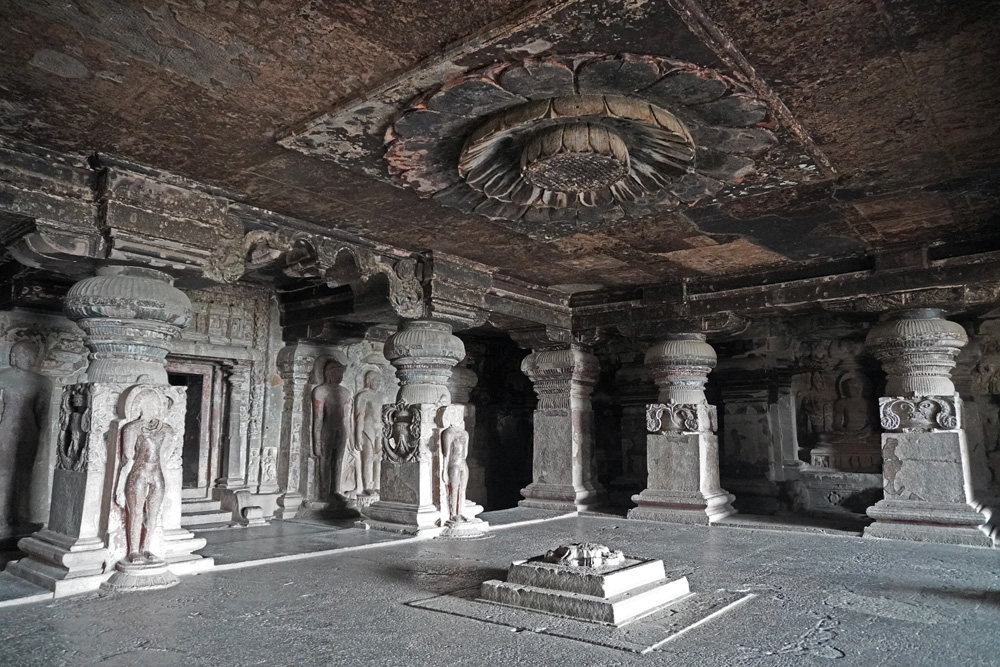
These modest spaces often included monastic cells arranged around a central hall, with some caves comprising as few as a pair of cells. Within these small rooms, rock-cut beds provided sleeping quarters, and in some instances, modest chambers with benches or shelves served as spaces for meditation. Inscriptions and rows of low seats often indicate areas that functioned as refectories for the monks. The presence of cisterns and tanks carved into the rock further reveals their ingenuity in managing water resources, particularly after the monsoon season.
The Language of Art: Symbolism and Philosophy Carved in Stone
The artwork within these caves offers profound insights into the philosophical underpinnings of early Buddhism. While many early Buddhist sites predate the widespread use of Buddha images, with symbolic representations like railings and motifs denoting sanctity, caves dating from the fourth and fifth centuries CE began to feature depictions of Buddhas and Bodhisattvas.

Among the common motifs in earlier caves are railings, signifying sanctity, and the Triratna, or "triple gem"—representing refuge in the Buddha, the Dharma (teachings), and the Sangha (community). Efurd also points to the recurring presence of mithuna, amorous figural groupings. "While images of lovers might seem an unusual choice for a Buddhist cave, they are considered auspicious and a powerful representation of fertility and abundance in the world," he explains. Additionally, representations of nature spirits known as yakshas are found, signifying their subordination to the Buddha and their acceptance of the Dharma.
A Shifting Landscape: Buddhism’s Evolution and the Caves’ New Roles
As Buddhism experienced a decline in India, the role and character of these monastic sites evolved. Many early Buddhist cave sites were revitalized by Buddhists in the fourth and fifth centuries, who added paintings of Buddhas and Bodhisattvas or carved new sculptures. Over time, however, some remote sites, like Ajanta, were abandoned and largely forgotten, known only to local populations. More accessible sites, such as Karle, were eventually appropriated by Hindu communities. Buddhist halls were often rededicated for Hindu worship, and some Buddhist deities were integrated into the Hindu pantheon.

The Art of Observation: Efurd’s Methodological Approach
Dr. Efurd’s research methodology is deeply rooted in "slow looking," a practice that involves extended periods of observation to gain a profound understanding of a site’s design, layout, and spatial characteristics. "Spending long periods of time in a cave, including over a number of days or during return trips, provides a means to gain deep insights about its design, layout, and spatial characteristics, as well as its decorative program," he states. He emphasizes the importance of taking measurements, noting that rock-cut caves, unlike conventional architecture, do not always adhere to strict rectilinear principles, and deviations are often imperceptible without careful examination.
His photographic process aims to capture not only architectural and sculptural details but also the experiential essence of being within these ancient spaces. "I believe that photographs often may serve as documentation while fulfilling aesthetic goals, including conveying through visual means the aesthetic experience of visiting the site," Efurd explains.

A Vast Legacy: The Scale of India’s Rock-Cut Heritage
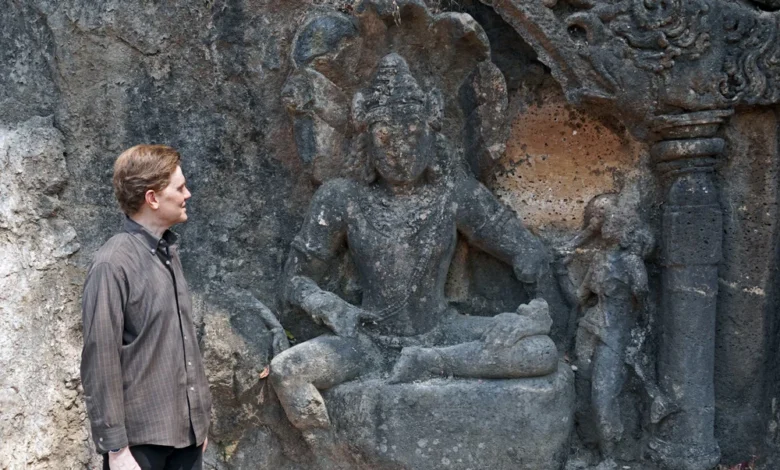
Efurd estimates having visited approximately 82 sites across India, encompassing Buddhist, Hindu, and Jain rock-cut excavations. His explorations have also extended to Sri Lanka, China, and Korea, where he documented predominantly Buddhist sites, along with a Daoist site in China. He speculates that "somewhere there is a major site yet to be found" in India, citing instances of isolated caves being discovered and the potential for uncovering entire subterranean levels. The recent discovery of a carved nagaraja (serpent king) at Ghatotkacha, previously unseen for centuries, underscores the possibility of further significant finds.
Encounters with the Living Traditions: Reverence and Revelation
Efurd’s work often involves encounters with individuals and communities who continue to inhabit or worship within these ancient caves. He notes the tradition of gurus and saints residing in these sites long after their original monastic inhabitants departed. In such instances, he approaches his role with utmost respect, often being invited as an honored guest. "It is important in these cases to understand my role as a visitor and be respectful towards their wishes," he emphasizes.

He recounts a particularly memorable experience of being granted access to a cave typically off-limits, featuring a colossal sculpture. "I felt very fortunate to be one of the few people allowed in to see it," he shares.
The Present and Future of the Cave Sites: Preservation and Reverence
Today, these cave sites largely function as historical monuments, managed with a focus on preservation by organizations like the Archaeological Survey of India. Efurd observes a delicate balance struck between conservation efforts and the continuation of religious expression within these sacred spaces. He notes the common practice of requiring visitors to remove their shoes before entering, a gesture of respect observed at Hindu, Buddhist, and Jain sites alike. While photography is generally permitted at sites under archaeological supervision, restrictions may apply in certain areas. Efurd consistently finds practitioners of various religious traditions to be welcoming to respectful visitors.

Protocols of Respect and Scholarly Pursuit
Efurd’s research is often facilitated by an Indian research visa, requiring him to petition regional circles of the Archaeological Survey of India for specific permissions to photograph and take measurements. On other occasions, he has visited as a tourist, always carrying a notebook to meticulously document his observations and nascent ideas. The special permissions he obtains are invaluable for allowing him the extended time necessary for in-depth study, contrasting with the brief visits of typical tourists.
A Dual Perception: Historical Significance and Living Spirituality
Efurd experiences these caves as both profound historical sites and living spiritual spaces. While his scholarly eye is drawn to the technical aspects of rock excavation and architectural execution, he remains keenly aware of the caves’ original purpose and their ongoing role in religious life. "I find it a profound experience when I am in a cave, and visitors perform rituals at the site," he remarks. He acknowledges that these practices, such as music, chanting, and ritualistic prostrations, may not always align with his immediate photographic focus but are integral to the spiritual vibrancy of these locations.

Unveiling the Unseen: Ongoing Mysteries and Future Discoveries
Efurd believes that current scholarship is entering a phase of recognizing the immense care and thoughtfulness that informed the design and execution of these caves. Earlier interpretations, sometimes influenced by Western architectural standards, may have overlooked subtle mathematical relationships and proportional systems that are now becoming evident. "The more we observe and measure, the more connections and correspondences become visible," he states.
His own research on the caitya hall at Karle, one of the largest early Buddhist caves, investigates how its proportions, architectural features, and ornamentation follow specific mathematical relationships. These findings are supported by similar observations at other early Buddhist caves, suggesting a consistent use of precise measurements and proportions in their design. "Without a close reading of these sites, leaving preconceived notions behind, we risk not understanding the intent of creating these ancient sacred spaces," Efurd concludes, emphasizing the imperative for meticulous observation and an open mind in deciphering the enduring legacy of India’s rock-cut monasteries.