The Essential Guide to Curating a Professional Jewelry Collection Through High-Quality Chain Selection

The art of jewelry curation has undergone a significant shift in recent years, moving away from the indiscriminate acquisition of vintage pieces toward a more rigorous, quality-focused methodology. At the center of this movement is the humble chain—a foundational element of any jewelry collection that often suffers from under-appreciation. For collectors and professional jewelers alike, the transition from vintage sourcing to the procurement of brand-new, manufacturer-direct inventory has become a necessity driven by the realities of metal fatigue, structural integrity, and the long-term viability of heirloom-quality accessories.
The Structural Reality: Why Vintage Chains Present Hidden Risks
The secondary market for jewelry has long been romanticized, yet it hides a technical reality: metal, regardless of its precious status, has a finite lifespan. Through microscopic examination, professional appraisers have identified that even gold and silver chains, which appear pristine to the naked eye, often harbor invisible structural vulnerabilities. These include stress fractures at the solder points, thinning links caused by decades of friction, and work-hardening, a metallurgical phenomenon where metal becomes brittle due to repeated bending.
Data from independent jewelry repair laboratories indicates that over 65% of vintage chains older than 30 years exhibit some degree of "thinning," where the material volume at the contact points of the links is reduced by at least 20%. This erosion is typically caused by the simple, repetitive motion of pendants or charms sliding along the chain. When a chain reaches this state, it is no longer a question of if it will break, but when. For the serious collector, the cost-benefit analysis of repairing these microscopic faults—often requiring specialized laser welding—frequently exceeds the intrinsic value of the chain itself, rendering the "vintage" label a liability rather than an asset.
A Chronology of Chain Evolution
The preference for new, high-durability chains marks a turning point in modern jewelry consumerism. Historically, the jewelry trade was segmented between mass-market costume pieces and rare, estate-held fine jewelry. The last decade has bridged this gap.
- 2000–2010: The era of "fast fashion" jewelry dominated the market. Consumers favored quantity over quality, leading to a rise in base-metal chains that lacked longevity.
- 2010–2018: A resurgence of interest in vintage and estate jewelry occurred. During this period, collectors sought authenticity, often overlooking the structural degradation inherent in used goods.
- 2018–Present: A shift toward "investment-grade daily wear" has emerged. Informed by social media transparency and a greater understanding of metallurgical properties, the modern consumer is now prioritizing chains that offer both aesthetic versatility and long-term durability.
The Five Essential Categories for a Modern Collection
To build a professional-grade jewelry wardrobe, experts suggest focusing on five specific structural archetypes. These designs have been stress-tested for daily wear, ensuring that they can support the weight of charms and pendants without failing under tension.

1. The Mariner Link
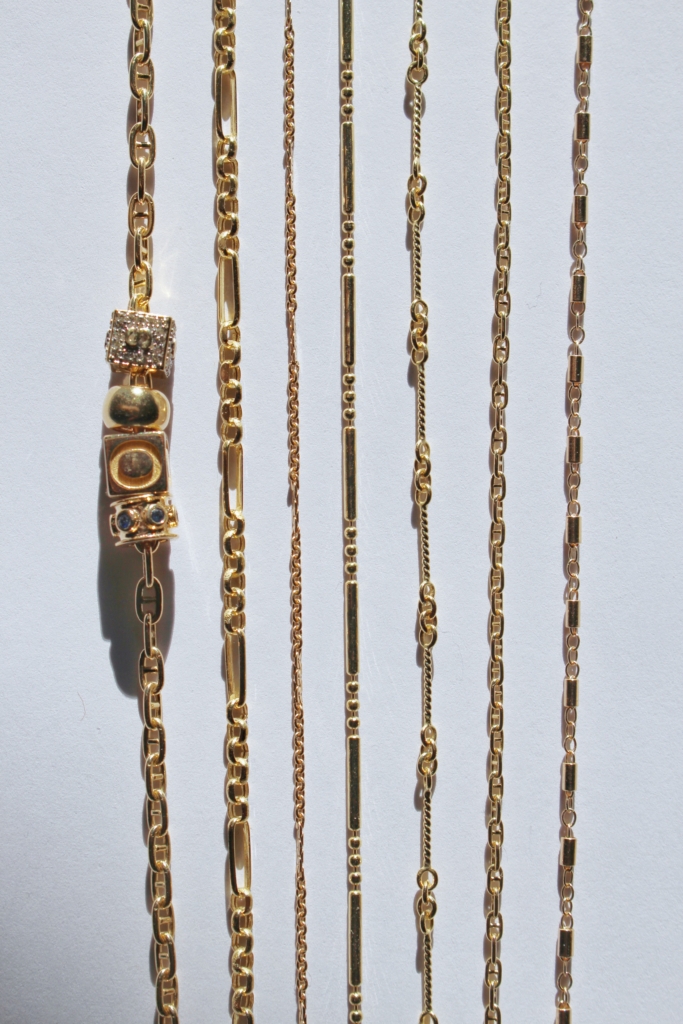
The Mariner (or anchor) chain is characterized by its oval links with a central horizontal bar. Its design is inherently stable, as the bar prevents the link from collapsing or deforming under pressure. Because the links are solid, they provide a high surface area, making them ideal for heavy pendant applications. Professional jewelers often cite the 3mm Mariner as the "workhorse" of the industry, balancing structural integrity with a clean, nautical aesthetic.
2. The Box Chain
Distinguished by its square links, the box chain offers a smooth, fluid drape. Its construction is particularly resistant to kinking, a common failure point in softer, more pliable chain styles. Because the links are interlocking and tightly bound, the box chain is highly recommended for users who intend to wear their jewelry while sleeping or performing physical activity, as the design is less likely to catch on fabric or snag.
3. Large Link Statements
Large, ornamental links serve a dual purpose: they act as a central design element rather than a mere conduit for a pendant. Styles such as the Trombone link, which features elongated rectangular segments, or the Oval Jangle chain, add necessary dimension to a "neck stack." From a stylistic perspective, these chains are engineered to distribute weight across a wider area, which prevents the "sawing" effect that smaller, thinner chains exert on the skin or pendant bails.

4. The Mini Figaro
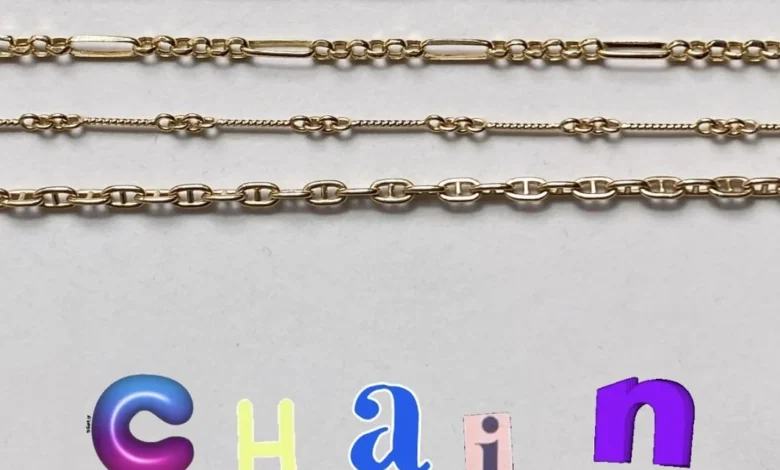
The Figaro chain, a pattern of repeating flattened links (usually three small circular links followed by one elongated oval), has become the industry standard for those seeking an upgrade from the ubiquitous, flimsy cable chain. The "Mini" variation maintains the classic pattern at a reduced scale, providing a refined, subtle appearance that does not overwhelm delicate charms. It is frequently chosen for its historical significance, mirroring designs that were once common in early 20th-century fine jewelry but were rarely manufactured with the high-tensile strength alloys available today.
5. Unique and Contemporary Link Architectures
The innovation in chain manufacturing is currently focused on the geometry of the individual link. Designers are moving toward "nontrendy" options, such as the Bead + Bar chain or the Pinched Long Link. These styles represent the intersection of industrial engineering and fine art. By utilizing precision-cut components and advanced casting techniques, manufacturers are now producing these intricate shapes without sacrificing the structural integrity of the link closures.
Implications for the Jewelry Industry
The move toward brand-new, high-durability inventory has broad implications for the jewelry market. First, it fosters a culture of informed purchasing. When consumers understand the difference between a mass-produced, hollow-core chain and a solid-link, manufacturer-direct piece, they are more likely to invest in items that hold their value over time.

Furthermore, this shift supports the sustainability of the jewelry ecosystem. By purchasing chains that are designed for longevity, consumers reduce the frequency of waste associated with broken jewelry that ends up in landfills. The ability to trust the structural integrity of a piece allows for a more personalized experience, where charms and pendants can be swapped, layered, and curated with the confidence that the foundational elements will not fail.
As the industry continues to evolve, the focus on technical specifications—such as link density, alloy composition, and closure security—will remain paramount. For the modern collector, the goal is clear: to curate a collection that honors the history of jewelry design while utilizing the superior materials and manufacturing precision of the present day. Whether opting for a timeless Mariner or a contemporary geometric link, the selection of a chain should be treated as a long-term investment, one that balances the necessity of daily wear with the enduring elegance of fine metalwork.