The Great Beauty Paradox: Why Maximalist Makeup Predictions Are Clashing With Mainstream Retail Sales

The contemporary beauty industry is caught in a fascinating tug-of-war between high-fashion forecasts and everyday consumer purchasing habits. For the past several years, the global cosmetics market has been thoroughly dominated by the "clean girl aesthetic"—a minimalist approach emphasizing dewy complexions, groomed brows, neutral lip glosses, and the illusion of wearing little to no makeup. However, as beauty conglomerates, industry executives, and trend forecasters looked ahead, a loud consensus emerged: maximalism was staging a triumphant return. Trade publications and top-tier executives from major beauty giants—including Sephora, Ulta Beauty, and Revlon—confidently predicted that maximalist, expressive, and colorful makeup would reclaim the throne.
Yet, as the industry moves through the current market cycle, that predicted mass-market pivot has not materialized at scale. A disconnect now exists between what trend forecasters see on the horizon and what consumers are actually scanning at cash registers. To unpack this ongoing industry tension, the latest episode of the Glossy Beauty Podcast featured host Lexy Lebsack in a candid conversation with veteran celebrity makeup artist Jamie Greenberg. By examining runway signals, consumer psychology, and earnings reports from major industry players, the discussion sheds light on where beauty culture is truly heading and why the transition from minimalism to maximalism is proving to be far more complex than anticipated.
The Chronology of a Trend: From Pandemic Minimalism to the Clean Girl Era
To understand the current tension in the cosmetic aisles, it is essential to trace how the beauty landscape evolved over the early 2020s. The COVID-19 pandemic fundamentally altered daily routines, shifting consumer focus away from heavy foundations, bold lipsticks, and elaborate eye shadow looks toward skincare-first regimens. As society moved out of lockdowns around 2021, the desire for low-maintenance beauty did not fade; instead, it crystallized into a highly specific cultural phenomenon known as the clean girl aesthetic.
Propelled heavily by TikTok, Instagram, and Pinterest, this aesthetic prioritized effortless radiance. Sales figures from major public beauty conglomerates—such as L’Oréal Group and E.l.f. Beauty—consistently validated this consumer preference. Year after year, top-performing categories remained steadfastly anchored in no-makeup makeup staples. Tinted sunscreens, lightweight complexion enhancers, cream blushes, bronzers, setting sprays, and multitasking lip treatments like balms, glosses, and subtle liners dominated quarterly earnings reports.
By late 2024 and moving into subsequent forecasting cycles, beauty executives anticipated fatigue with the minimalist look. Industry leaders heralded upcoming seasons as the definitive return of bold, vibrant, maximalist self-expression. They anticipated that consumers, exhausted by uniformity, would rush to embrace graphic liners, heavy contouring, and richly pigmented lip colors.
The Reality of Retail: Earnings Reports vs. Runway Projections
Despite the bold predictions made by corporate executives, financial data and retail sales figures reveal a more nuanced reality. Mainstream shoppers have been slow to abandon their trusted everyday staples. The everyday bag for the average consumer still contains tinted lip balms and hydrating skin tints rather than heavy-duty pigments and dramatic theatrical palettes.
This divergence highlights a recurring friction point within the beauty business: the timeline of high fashion versus mass-market adoption. Runways dictate avant-garde concepts months or even years before they trickle down to commercial retail shelves. While elite fashion weeks in New York, Paris, Milan, and London frequently showcase dramatic, high-impact makeup looks, the average consumer requires time, incentive, and cultural momentum to translate those runway experiments into daily wearable habits. Consequently, the transition is proving to be evolutionary rather than revolutionary, creating a prolonged period where minimalism and maximalism coexist awkwardly on the market.
Expert Insight: Jamie Greenberg on the Evolution of Color and Self-Expression
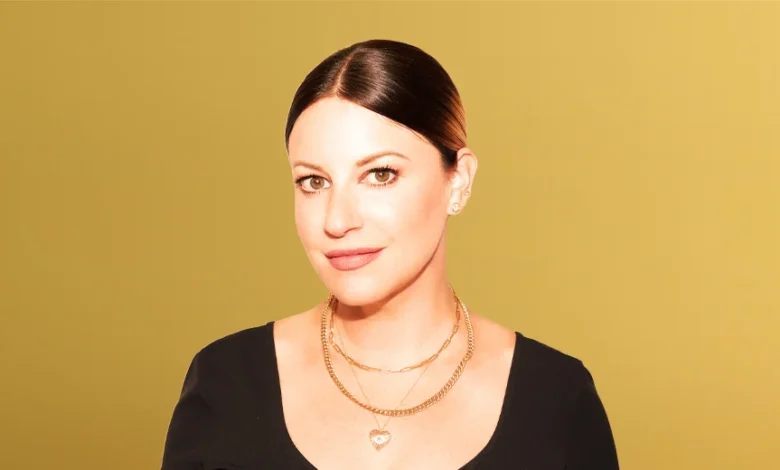
Enter Jamie Greenberg, a seasoned professional with over two decades of hands-on experience in the celebrity beauty sphere. Greenberg’s impressive client roster includes prominent Hollywood figures such as Rashida Jones, Kaley Cuoco, Chelsea Handler, Tracee Ellis Ross, and Kristen Stewart. Beyond her red-carpet work, Greenberg has successfully transitioned into a multifaceted beauty entrepreneur and digital creator. She is the founder of the direct-to-consumer brand Jamie Makeup—celebrated for innovative hybrid products like the Blighlighter (a combination blush and highlighter) and the B.F.M.R. Mist (a spray makeup remover). With a combined social media following exceeding 700,000 across TikTok and Instagram, alongside her curated monthly subscription beauty box, SwagBag, Greenberg maintains a direct pulse on consumer desires.
During her discussion on the Glossy Beauty Podcast, Greenberg offered a grounded perspective on the inevitable pendulum swing of trends. "We’ve been [wearing the] ‘clean girl aesthetic’ for a minute," Greenberg noted. "But everything comes back around, you know? It’s just always with a little twist on it."
According to Greenberg, the shift away from strict minimalism is already visible if one looks closely at the architectural cues of fashion weeks. "Based on all of the fashion shows and what we’re seeing on the runways, which usually indicates where the trends are going, we’re seeing a lot more color. A lot more eyeshadow. We’re seeing bold lips, but blurred—not so much with pencil anymore. We’re seeing blush again."
Significantly, Greenberg points out a fundamental shift in how complexion products will be utilized in upcoming beauty cycles. For the past several years, skin has been the undisputed star of the show, driven by glass-skin trends and heavy skincare integration. Moving forward, Greenberg suggests that skin will take a supportive role. "Skin is going to take a backseat, whereas, for the past year or two, I feel like skin has taken a front seat. [But now] skin is just going to be part of the show, but we’re not going to pay attention to it [as much]. It’s not going to be glassy, it’s not going to be matte; it’s just going to be skin."
The Rise of Personal Style and Gen Z as Trendsetters
Another critical factor driving the evolution of makeup trends is the changing psychological relationship consumers—particularly younger demographics—have with cosmetics. Makeup is increasingly viewed not as a tool for correction or conformity, but as a dynamic fashion accessory and a canvas for personal identity.
"People are not afraid to wave their personality a little bit," Greenberg observed, highlighting how experimentation is returning to the mainstream. Whether it is mastering the application of false eyelashes, experimenting with bold blue eyeshadow, or swiping on a vibrant green liquid liner, consumers are rediscovering the joy of play.
This renaissance of individuality is being spearheaded by younger generations who reject monolithic beauty standards in favor of hyper-personalized expression. "That’s especially [true of] the younger generation. They are all over the place," Greenberg explained. "You’re getting your California girls wearing, like, the ‘clean girl aesthetic’. You’re getting your anime furry girls putting on crazy [makeup], and you’re just seeing such a creative movement from the youth… They’re the trendsetters now."
Broader Implications and Market Analysis for the Beauty Sector
The tension between maximalist forecasts and minimalist sales data carries important implications for beauty brands, product developers, and retail buyers alike. For major conglomerates and indie brands, the challenge lies in balancing commercial viability with creative innovation. While everyday revenue continues to be anchored by foolproof complexion and lip hydration products, brands cannot ignore the burgeoning appetite for color and artistic expression championed by digital natives.
For product developers, this means engineering hybrid formulations that bridge the gap—such as sheer wash-of-color eyeshadows, buildable pigments, and versatile face products that allow consumers to experiment without committing to heavy, intimidating application techniques. Retailers, meanwhile, must curate their floor plans and digital discovery zones to cater to both the comfort-seeking minimalist and the trend-hungry maximalist.
Ultimately, the beauty industry is not experiencing a sudden, jarring replacement of one trend by another. Instead, it is witnessing a diversification of the market. As consumers reclaim makeup as a playful accessory of self-expression, the future of beauty will likely belong to brands that can successfully cater to a wide spectrum of personal styles—proving that minimalism and maximalism can peacefully coexist in the modern cosmetic bag.
Related posts: