The Legacy of Brooke Astor Lives On Through a Record-Breaking Sotheby’s Charity Auction

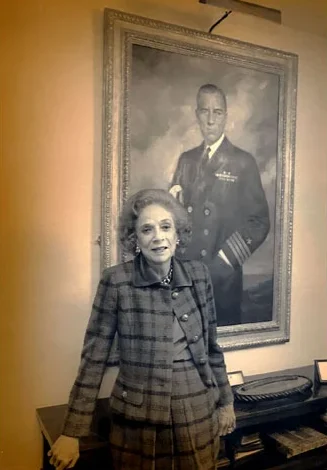
The life of Brooke Astor, the quintessential New York socialite and indefatigable philanthropist, was defined by a philosophy as pragmatic as it was generous: “Money is like manure; it’s not worth a thing unless it’s spread around.” Although Astor passed away in 2007 at the age of 105, her commitment to the civic and cultural life of New York City continues to manifest through the deliberate distribution of her estate. This week, that legacy reached a new milestone at Sotheby’s, where a high-profile auction of her personal effects and jewelry collection generated $18.8 million, with all proceeds earmarked for the institutions she championed throughout her long and storied life.
The auction event, which drew collectors, historians, and admirers of mid-century high society from across the globe, served as a final act of stewardship for a woman who was long considered the "First Lady of New York." Among the hundreds of items offered—ranging from fine art and decorative objects to personal correspondence—the 64 lots of jewelry emerged as the undisputed centerpiece of the sale. These pieces alone accounted for $5.7 million in proceeds, shattering pre-sale expectations by an impressive $2 million margin.
The Provenance and Significance of the Collection
The jewelry collection was not merely a display of wealth; it was a curated timeline of the American Gilded Age’s final chapter. Brooke Astor’s taste was refined, characterized by a preference for bold, architectural pieces and an enduring affinity for emeralds, which she wore with a signature flair that defined her personal style for decades.

The crown jewel of the event was a magnificent platinum necklace, commissioned from the legendary house of Bvlgari in 1959. The piece, a breathtaking example of mid-century craftsmanship, is set with 13 drop emeralds totaling approximately 71 carats, complemented by 14 cabochon emeralds weighing 41 carats, 14 marquise-cut diamonds totaling 8.5 carats, and a constellation of brilliant-cut diamonds weighing 50 carats.
The story of the necklace carries an emotional weight that transcends its monetary value. According to Astor’s 1980 autobiography, The Patchwork Child, she and her husband, the philanthropist Vincent Astor, visited London in the autumn of 1958. During this trip, Vincent secretly commissioned the necklace and matching earrings from Bvlgari. Tragically, Vincent passed away the following spring, leaving the jewelry order incomplete and unknown to Brooke. Nearly two years after his death, Brooke received a letter from Bvlgari containing the finalized designs and a poignant note from her late husband, requesting that the gift be delivered on her birthday. She moved forward with the purchase, viewing the necklace not as a mere accessory, but as the final, enduring sentiment from a partner she deeply admired. The market responded to this provenance with fervor; estimated to sell for between $250,000 and $350,000, the piece fetched a final price of $686,500.
Chronology of a Philanthropic Icon
Brooke Astor’s influence on New York’s cultural landscape spanned over half a century. To understand the significance of the recent auction, one must examine the timeline of her involvement in the city’s most vital institutions.
- 1953: Following her marriage to Vincent Astor, Brooke begins her tenure as a trustee of the New York Public Library, marking the start of a lifelong commitment to literacy and public education.
- 1959: Vincent Astor dies, leaving his widow to manage the Vincent Astor Foundation, which she would lead with singular focus for decades.
- 1960s-1990s: Astor directs millions of dollars toward the Metropolitan Museum of Art, the Pierpont Morgan Library, and the Animal Medical Center of New York. Her funding was often targeted toward the "forgotten" needs of these institutions, such as building repairs, staff endowments, and community outreach.
- 2007: Brooke Astor passes away at age 105. Her estate becomes the subject of a highly publicized legal dispute, yet her original intent—to benefit the city’s institutions—remains the guiding principle for the executors.
- 2012: The Sotheby’s auction of her estate takes place, finalizing the liquidation of personal assets to fulfill the charitable mandates outlined in her will.
Analysis of Auction Performance and Market Impact
The results of the Sotheby’s auction provide a compelling case study on the impact of provenance in the luxury market. While fine jewelry often commands high prices based on the quality of stones and the prestige of the jeweler, the "Astor premium" was clearly evident throughout the sale.
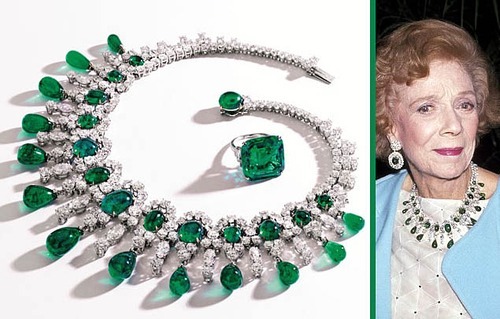
For instance, her platinum and diamond engagement ring, featuring a 22.84-carat emerald, saw the most dramatic appreciation. With a pre-auction valuation of $100,000 to $150,000, the ring ultimately sold for $1.2 million—nearly ten times the high estimate. Similarly, a pair of platinum, emerald, and diamond earclips by the famed house of Verdura, estimated at $30,000 to $40,000, realized $152,000. A brooch by Van Cleef & Arpels, similarly adorned with emeralds and diamonds, moved from an estimate of $60,000-$80,000 to a final sale price of $254,500.
These figures indicate a robust demand for items with historical, rather than purely aesthetic, significance. Collectors are increasingly seeking pieces that tell a story, and the narrative of Brooke Astor—a woman who navigated the complexities of 20th-century high society while maintaining a grounded, civic-minded perspective—adds a layer of cultural value that cannot be replicated in a retail environment.
Beneficiaries and the Broader Civic Impact
The $18.8 million raised is not merely a transfer of wealth; it is a vital infusion of capital for the non-profit sector. The institutions designated to receive the funds are pillars of the New York community, each having experienced the direct impact of Astor’s generosity during her lifetime.
- The New York Public Library: A frequent beneficiary of her largesse, the library relies on such endowments to preserve its historical archives and fund public access programs.
- The Metropolitan Museum of Art: Astor was instrumental in the museum’s expansion and the acquisition of key works that now define its permanent collection.
- The Pierpont Morgan Library: Her support helped modernize the facility, ensuring that its rare manuscript collection remained accessible to researchers and the public.
- The Animal Medical Center of New York: Astor’s fondness for animals led her to support this institution, which provides specialized veterinary care and conducts vital medical research.
- New York City Schools: A portion of the funds will continue to support programs aimed at improving literacy and educational outcomes for students in the city’s public school system.
Professional and Public Reaction
The success of the auction has been viewed by curators and philanthropic experts as a fitting closure to a tumultuous chapter in the Astor estate’s history. Following her death, the estate was embroiled in high-profile legal battles that centered on the mismanagement of her care and finances. The professional consensus within the art world is that the Sotheby’s sale serves to shift the public narrative back to where it belongs: on her lifetime of charitable achievement.
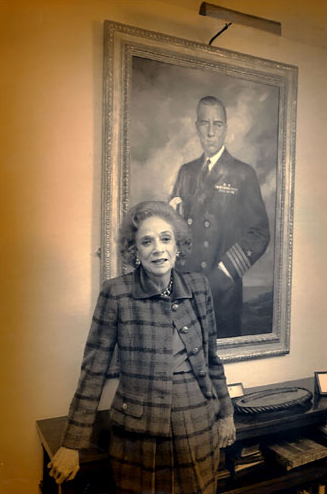
"It is rare to see an auction where the narrative of the owner is so inextricably linked to the objects themselves," said one market analyst who observed the proceedings. "The buyers were not just purchasing jewelry; they were acquiring a piece of New York history. The fact that the proceeds are going exactly where Mrs. Astor intended reinforces the integrity of her final wishes."
The Legacy of the "Manure" Philosophy
Brooke Astor’s motto regarding the "spreading" of money was more than a clever turn of phrase; it was a blueprint for the role of the wealthy in a democratic society. In an era where private philanthropy is essential to the survival of public institutions, Astor’s life stands as a testament to the idea that inherited wealth or social standing carries an inherent obligation to the public good.
As the final lots were sold and the proceeds were accounted for, the significance of the event became clear: the auction did not represent the end of Brooke Astor’s influence, but rather a continuation of it. By liquidating these physical mementos of her life, the estate has successfully converted tangible luxury into intangible civic capital. The emeralds, once worn at galas and private dinners, have now been transformed into library books, museum exhibitions, and medical research—a literal manifestation of her belief that wealth must be put to work to be truly valuable.
In the final assessment, the $18.8 million generated by this sale ensures that while the physical possessions of Brooke Astor are now dispersed, the institutions she held dear will remain stable for future generations. Her legacy, much like the emeralds she loved so dearly, remains resilient, polished, and enduring. The auction was not just a commercial success; it was a final, graceful fulfillment of a life’s mission, proving that even after death, Brooke Astor found one last way to make sure her fortune was well spent.