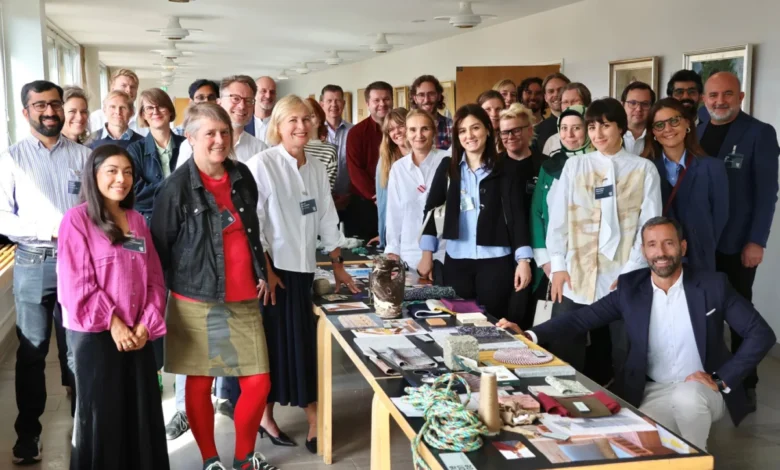
The textile industry, long criticized for its significant environmental footprint, is facing a paradigm shift. On September 14, 2026, a new consortium launched the Melange Horizon Europe project, an ambitious initiative designed to overhaul how colour is applied to interior textiles. Led by Aalto University in Finland and supported by a consortium of nine international partners, the project seeks to move away from the traditional, energy-intensive "finish-stage" dyeing processes toward "fibre-stage" colouration. By addressing the industry’s obsession with perfect uniformity, the project hopes to reduce water and chemical consumption by up to 50%, setting a new standard for sustainable manufacturing in a sector often overlooked in climate discussions.
The Problem with Conventional Colouration
In the contemporary textile industry, the drive for near-perfect uniformity in fibres, yarns, and fabrics has become a significant barrier to circularity. Traditionally, textiles are woven or knitted in a neutral state and dyed at the very end of the manufacturing process. While this "finishing-stage" approach ensures high repeatability and precise colour matching—meeting the rigid demands of commercial interior design—it is notoriously resource-heavy.
Each stage of this process requires vast amounts of water, synthetic chemical dyes, and high-temperature energy for fixing and washing. Furthermore, the industry’s standard practice of discarding material that does not meet stringent uniformity criteria creates massive waste. This system also discourages the use of recycled materials, which are inherently variable, as they do not easily conform to the "perfect" colour standards expected by industrial buyers.
A Heritage-Inspired Solution
The Melange project draws its primary inspiration from a historical practice rooted in Prato, Tuscany. For generations, textile producers in this region have utilized a technique of blending pre-coloured recycled fibres to create specific shades. Rather than attempting to re-dye material—a process that consumes water and pollutes ecosystems—these artisans treated slight variations in colour as an aesthetic signature of the material’s history.
By adopting this heritage-led approach, the Melange project aims to modernize and scale these techniques. The core objective is to shift colouration upstream to the fibre stage using technologies such as spin, dope, and solution dyeing. By embedding colour into the fibre before the textile is even formed, the industry can bypass the water-intensive finishing phase entirely. Most importantly, the project intends to rebrand "imperfection" as a desirable aesthetic quality, helping to destigmatize recycled textiles and encouraging a more circular economy.

Structural Barriers and the Design Locks Framework
Recognizing that systemic change cannot be achieved through technology alone, the Melange consortium has developed a "design locks" framework. This interdisciplinary approach addresses four critical pillars that have historically prevented the adoption of sustainable colouration:
- Aesthetics: Challenging the market-driven demand for hyper-uniformity and promoting the beauty of blended, variable tones.
- Production Practices: Transitioning industrial machinery and manufacturing flows to support fibre-stage colouration.
- Business Models: Redesigning supply chain relationships to favour long-term durability and recycled material integration over rapid, low-cost, high-volume production.
- Policy: Proposing industry-wide standards that recognize the environmental benefits of fibre-stage colouration and incentivize the reduction of chemical use.
Timeline and Implementation Strategy
The Melange project is structured as a multi-year effort that integrates research, prototyping, and industry-wide dissemination. The following timeline outlines the consortium’s trajectory:
- Phase 1: Diagnostic Research: The initial phase involves a comprehensive analysis of dominant current colouration practices compared with historical fibre-stage techniques. Researchers are currently cataloging the specific "design locks" within the current interior textile market.
- Phase 2: Prototyping and Testing: Following the research phase, the consortium will begin designing and prototyping textiles specifically engineered for fibre-stage colouration. This will involve testing these materials against industrial performance standards to ensure they meet the durability requirements of the interior design sector.
- Phase 3: Industrial Scaling and Marketing: The latter stages of the project focus on transforming B2B marketing approaches. The goal is to demonstrate to interior designers, architects, and manufacturers that sustainable textiles can be as commercially viable and aesthetically appealing as their conventional counterparts.
- Phase 4: Policy Recommendations: The project will conclude by synthesizing its findings into a set of formal recommendations for European industry standards and environmental policies, aimed at fostering long-term circularity.
The Role of Textile ETP and Ecosystex
The Textile ETP (European Technology Platform) in Brussels serves as a vital bridge between the project’s research and the broader industry. By managing dissemination and stakeholder engagement, the ETP ensures that the insights gained from Melange are not confined to academic or experimental circles.
A central component of this strategy is the integration of Melange into Ecosystex, an initiative fostering collaboration among various EU-funded projects. By building a community of practice, the ETP hopes to create a permanent, self-sustaining network of European textile innovators. Lutz Walter, Secretary General of the Textile ETP, emphasized the strategic importance of this project: "While everybody focuses on clothing and fashion, next-gen fibres and recycling, Melange will tackle two stepchildren of the textile sustainability transformation—interior textiles and colour management."
Impact on the Interior Textile Market
Interior textiles, including upholstery, curtains, carpets, and wall coverings, account for approximately one-third of global textile production. Despite this massive volume, they are frequently excluded from the sustainability discourse, which remains dominated by apparel and footwear.
The potential for impact is significant. By shifting the industry’s focus to fibre-stage colouration, the Melange project seeks to decouple industrial growth from resource depletion. If successful, the project will demonstrate that the environmental cost of "fast interiors"—characterized by disposable, trend-driven decor—is not a necessity, but a choice.

Furthermore, the shift towards embracing material variation could significantly increase the demand for post-consumer textile waste. Recycled fibres, which are often discarded because they cannot be dyed to a "perfect" Pantone match, could suddenly become high-value inputs. This would incentivize the development of better collection and sorting infrastructure across Europe, directly supporting the European Green Deal’s objectives for a circular economy.
Expert Perspectives and Broader Implications
The transition away from finish-stage dyeing represents one of the most difficult hurdles for the textile industry. For decades, manufacturers have invested billions in infrastructure designed to dye fabric in bulk. Changing this infrastructure requires significant capital expenditure and a fundamental shift in how designers view their work.
Industry analysts suggest that the "design locks" approach is particularly insightful because it acknowledges that designers are often bound by client expectations. By providing tools and best practices to help designers market "sustainable aesthetics," Melange is essentially changing the "language" of interior design. When natural variation is framed as an intentional design choice rather than a manufacturing error, the market value of recycled textiles increases.
The project also aligns with emerging EU regulations regarding textile durability and waste. As the European Union moves toward stricter "Ecodesign" requirements for products, the ability to produce high-quality textiles with reduced chemical footprints will become a significant competitive advantage for European manufacturers.
Conclusion
As the Melange project begins its work, it stands at the intersection of heritage craftsmanship and modern industrial science. By challenging the industry’s narrow definition of quality and promoting a more holistic view of the textile lifecycle, the consortium is laying the groundwork for a more resilient, less wasteful interior textile sector. While the road to widespread industrial adoption is long, the focus on "design-led" sustainability offers a promising blueprint for how the broader fashion and textile industries might eventually untangle themselves from their dependence on resource-heavy, finish-stage processing. Through collaboration, policy advocacy, and a reimagining of aesthetic values, Melange is setting the stage for a quieter, greener revolution in the world of interior design.