TrusTrace Launches AI-Driven Supply Chain Platform to Bridge the Growing Compliance Gap Amid Global Regulatory Pressure

STOCKHOLM, Sweden — As the global regulatory landscape for corporate sustainability undergoes a period of unprecedented transformation, multinational brands are finding themselves at a critical crossroads. The proliferation of mandatory due diligence laws—ranging from the European Union’s Corporate Sustainability Due Diligence Directive (CSDDD) to various regional forced labor prevention acts—has created a massive demand for granular, verifiable supply chain data. However, for many enterprises, the ability to collect data has far outpaced the ability to process, analyze, and act upon it.
On September 15, 2026, Stockholm-based TrusTrace, a recognized leader in supply chain traceability and compliance, announced the launch of a comprehensive new platform designed to resolve this persistent disconnect. By integrating advanced artificial intelligence with a robust, enterprise-proven traceability foundation, the platform aims to transition corporate sustainability departments from manual data collection to automated, intelligence-driven decision-making.
The Challenge of Scale and Complexity
In the modern global economy, a single consumer product may pass through dozens of tiers of suppliers, from raw material extraction to final assembly. For a brand managing tens of thousands of suppliers across 80 countries, the challenge is not merely visibility, but the ability to translate fragmented data points into actionable insights.
Historically, sustainability teams have relied on manual spreadsheets, periodic audits, and siloed software solutions. This "analog" approach is increasingly untenable in the face of modern compliance requirements. Regulators no longer accept vague promises; they demand proof of chain-of-custody, chemical compliance, and adherence to human rights standards. Failure to provide this evidence is no longer just a reputational risk—it is a legal liability that can lead to significant fines, import bans, and loss of "social license" to operate.
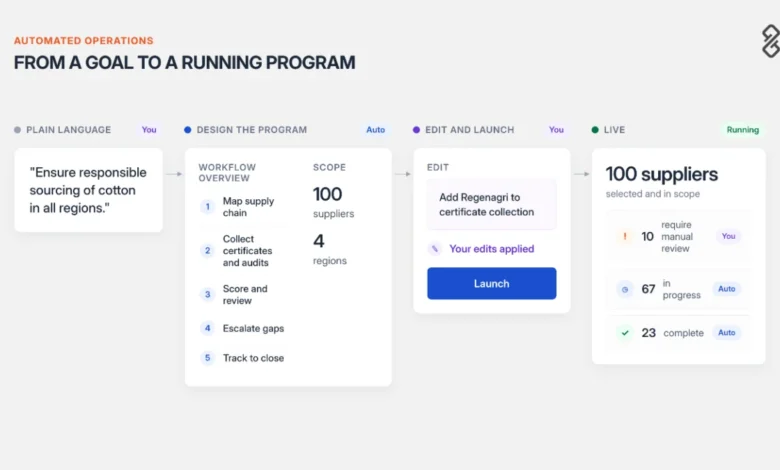
The TrusTrace platform seeks to bridge this gap by automating the workflows that underpin compliance. Instead of static reporting, the system offers dynamic, real-time insights that allow teams to identify bottlenecks or non-compliance risks before they escalate into systemic failures.
A New Architectural Approach to Supply Chain Intelligence
The newly unveiled platform is anchored by three primary pillars: Supplier Compliance, Product Compliance, and the newly introduced Supply Chain Intelligence. This modular architecture allows brands to scale their operations regardless of their current maturity level.
At the heart of the new capabilities is the Supply Chain Intelligence module. This feature utilizes natural language processing (NLP), allowing users to query their supply chain data as if they were talking to a data scientist. A manager can ask questions such as, "Which facilities in Southeast Asia are currently missing their social audit certification?" or "Show me the Tier 3 suppliers for this specific material category that lack updated environmental impact data." The system retrieves, cross-references, and visualizes this information in seconds.
By leveraging AI for data extraction and validation, the platform minimizes the human error associated with manually reviewing thousands of supplier documents. This automated validation ensures that when a brand reports data to a regulator, the underlying evidence is clean, traceable, and audit-ready.
Chronology of Development and Validation
The rollout of this platform follows an intensive year of development and "co-creation" with some of the world’s most prominent global brands. Recognizing that a one-size-fits-all solution rarely works for complex enterprises, TrusTrace initiated a beta phase in late 2025 to stress-test the system against real-world, high-volume supply chains.

- Q3 2025: TrusTrace begins internal development of the AI-powered intelligence layer.
- Q4 2025 – Q2 2026: A select group of leading global brands partners with TrusTrace to validate the platform, focusing on integration with existing enterprise resource planning (ERP) systems.
- July 2026: Final performance tuning, focusing on the "program orchestrator" that automates multi-step compliance workflows.
- September 15, 2026: Official launch of the platform, with initial access to Supply Chain Intelligence for existing and new clients.
According to the company, a new compliance program can now be operational within as little as three days. This rapid deployment capability is a stark departure from legacy enterprise software, which often requires months of implementation and custom coding.
Official Perspectives on the Compliance Landscape
Shameek Ghosh, CEO and Co-Founder of TrusTrace, framed the launch as a necessary evolution for the global retail and manufacturing sectors. "Every regulation ultimately asks the same question: can you prove it?" Ghosh stated during the launch event. "But proving compliance starts much earlier, with understanding your supply chain, knowing where the gaps are, and acting before they become problems."
The industry reaction has been one of cautious optimism. Compliance officers at major fashion and electronics firms have long complained that the "manual tax"—the administrative burden of chasing suppliers for documents—prevented their teams from engaging in higher-value strategic work. By automating the "janitorial" aspects of data collection, such as vendor onboarding and recurring evidence requests, TrusTrace aims to shift the role of the sustainability professional from that of a clerk to that of a strategist.
"We have spent years helping brands build trusted supply chain data," Ghosh added. "Now we are making that data work harder, turning it into intelligence, decisions, and action. The goal is to help brands scale increasingly complex compliance programs without scaling their teams at the same rate."
Fact-Based Analysis: The Implications for Global Trade
The launch arrives at a pivotal moment for global trade. The World Economic Forum, which has previously recognized TrusTrace as a Top Innovator for its contribution to the UN Sustainable Development Goals, has frequently noted that transparency is the prerequisite for any meaningful progress on climate or human rights.
From an analytical standpoint, the implications of this technology are twofold:
- Standardization of Evidence: By providing a common platform for brands and their suppliers to communicate, TrusTrace is effectively pushing the industry toward a standardized language of compliance. When thousands of suppliers are using the same platform to submit data, the quality and consistency of that data improve, reducing the cost of compliance for the entire ecosystem.
- Proactive Risk Management: The transition from reactive reporting to proactive, AI-assisted monitoring allows firms to perform "what-if" analyses. For example, if a specific region is hit by a climate event or a political disruption, a brand can instantly visualize how that impact propagates through their supply chain tiers, allowing for rapid mitigation efforts.
The Role of Artificial Intelligence in Traceability
While "AI" has become a ubiquitous buzzword in the software industry, TrusTrace’s application is specific and functional. The platform utilizes AI for three distinct tasks:
- Data Normalization: Translating disparate data formats from different global regions into a coherent, comparable dataset.
- Predictive Pattern Recognition: Identifying potential compliance risks by analyzing historical supplier behavior and geopolitical data.
- Workflow Automation: Using intelligent agents to manage the "back-and-forth" of compliance. For example, if a supplier certificate is set to expire, the system automatically triggers a request for renewal, tracks the progress, and flags the issue to a human manager only if the supplier fails to comply within a set timeframe.
Looking Ahead: The Future of Regulatory Intelligence
The current launch is only the first phase of a broader roadmap. TrusTrace has confirmed that upcoming updates will introduce "Regulatory Intelligence" and "Enterprise Intelligence" layers. These features will connect external regulatory databases directly to a brand’s internal supply chain data.
In practice, this means the platform will automatically alert a company if a change in local law—such as a new chemical regulation or an updated import requirement—impacts their existing list of suppliers. This creates a "closed-loop" system where the brand is not only aware of its supply chain but is also perpetually informed about the regulatory environment in which that supply chain operates.
As of September 2026, the TrusTrace data foundation covers over 120,000 suppliers. With the addition of these new automation tools, the company is positioning itself to be the central nervous system for corporate sustainability. For brands, the message is clear: in an era of mandatory disclosure, those who master their data will be the ones who maintain market access and consumer trust.