Unspun’s 3D Weaving Technology Poised to Revolutionize Global Apparel Manufacturing with On-Demand, Localized Production


The global apparel industry stands at a critical juncture, grappling with the inefficiencies, environmental toll, and geopolitical vulnerabilities inherent in its traditional supply chains. Against this backdrop, unspun, a deep-tech company specializing in 3D weaving, is advancing a transformative solution that promises to redefine how woven garments are designed, produced, and delivered. At the helm is Arne Arens, a seasoned executive who transitioned from leading major brands like The North Face and Boardriders to spearheading unspun’s mission, bringing a unique perspective forged on both sides of the manufacturing divide. His leadership marks a pivotal moment for unspun as it moves from pioneering innovation to widespread industrialization and commercialization.
The Global Apparel Crisis: A Call for Transformation
For decades, the apparel manufacturing landscape has been dominated by a model heavily reliant on offshore production, primarily in Asia, driven by the pursuit of lower labor costs. This paradigm, while offering cost efficiencies, has cultivated systemic issues. Brands are forced to forecast demand 9 to 12 months in advance, leading to significant overproduction and an alarming amount of unsold inventory. Industry reports consistently highlight that a substantial percentage of garments produced globally are never sold, contributing to colossal financial losses and an immense environmental footprint. The World Resources Institute, for example, estimates that 80% of all textiles produced end up in landfills or incinerators, with fashion production accounting for 10% of global carbon emissions.

The challenges extend beyond waste. The traditional process involves numerous steps: flat fabric weaving, cutting, and then labor-intensive sewing – each contributing to long lead times, increased logistical complexity, and material waste on cutting floors. This elongated and fragmented supply chain became acutely vulnerable during recent global disruptions, including the COVID-19 pandemic, which exposed weaknesses in just-in-time inventory systems and exacerbated shipping delays and costs. Furthermore, escalating geopolitical tensions and the imposition of tariffs have amplified the financial risks and uncertainties associated with distant manufacturing, prompting a renewed imperative for localized production.
The discourse around domestic manufacturing is not new. As early as 2025, industry leaders like Nick Reed, founder of sustainable menswear brand Neem London, voiced frustrations over the lack of necessary infrastructure in countries like the UK to support a "made in the UK" collection. These sentiments underscored a broader industry consensus: a dramatic shift, either through technological leaps or substantial government support, would be required to enable in-country production models. Recent advancements in upstream technologies, such as those discussed with Stephen Bates, CEO of Rheon Labs, have demonstrated the difficulty innovators face in translating novel concepts into commercially viable propositions. unspun’s approach, however, appears to be charting a different course, addressing these entrenched problems with a tangible, scalable solution.
Arne Arens: A Visionary Shift from Brand to Tech
Arne Arens’s journey to unspun’s CEO chair is particularly noteworthy, reflecting a growing trend of industry veterans transitioning to technology-driven solutions. His distinguished career includes serving as Global Brand President at The North Face from 2017 to 2021, CEO of Boardriders (parent company of Quiksilver, Billabong, Roxy, and DC Shoes), and a board member at Everlane. This extensive background provided him with an intimate understanding of the operational complexities, financial pressures, and environmental impacts faced by global apparel brands.

Arens’s decision to move into deep tech with unspun was driven by a firsthand appreciation of the systemic problems plaguing the traditional supply chain. He observed the inherent disconnect between supply and demand, the financial drain of excess inventory, and the environmental cost of overproduction. His current role at unspun is a demanding blend of strategic and operational responsibilities, typically divided into three core areas: approximately one-third engaging with commercial partners (brands and manufacturers) to showcase unspun’s machinery and technology; another third dedicated to capital fundraising and board relations, a permanent fixture for a deep-tech company in its industrialization phase; and the final third focused on internal operations, including engineering reviews, test plan validation, hiring, and nurturing unspun’s corporate culture.
Arens describes the tangibility of his current role as a significant departure from his previous positions. At The North Face or Boardriders, the product was often manufactured thousands of miles away. At unspun’s micro-factory in Emeryville, California, he can witness a pair of trousers emerging directly from the machine, a concrete manifestation of the technology’s promise. This immediacy and direct connection to production offer a profound shift in leadership and team interaction, reinforcing the company’s mission with every garment produced.
Understanding 3D Weaving: unspun’s Vega Platform
At the heart of unspun’s innovation is its proprietary 3D weaving technology, embodied in the Vega platform. To understand its significance, it’s essential to differentiate it from traditional fabric production methods. The apparel market broadly consists of woven and knit fabrics, each accounting for roughly 50% of the total. Traditional weaving produces flat fabric, which then undergoes a multi-step process of cutting shapes and sewing them together to form a final product. This method is inherently wasteful, generating significant material scrap during the cutting phase and requiring extensive manual labor for assembly.

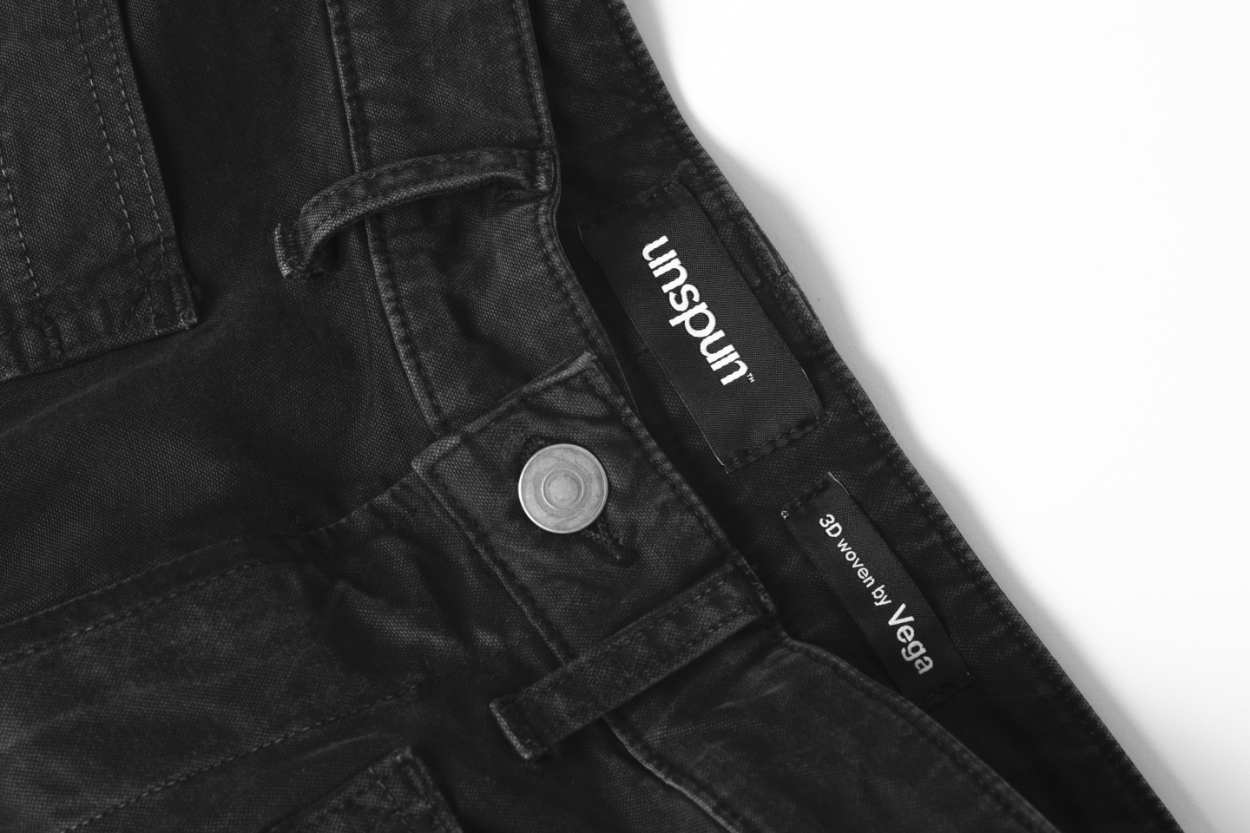
unspun’s Vega technology represents a fundamental departure. Instead of producing flat fabric, the Vega machine directly weaves a seamless, three-dimensional tube. This is achieved by feeding thousands of individual yarns (up to 3,000 in unspun’s case) into a specialized loom that interlaces warp and weft in a circular motion. This circular weaving creates a continuous tube, which for trousers, forms a complete leg. Crucially, the Vega machine can dynamically change the geometry and diameter of the tube as it weaves, widening or tapering precisely where needed. This eliminates the need for cutting pattern pieces and subsequent sewing, dramatically reducing material waste and labor input.
The result is a pair of trousers that is effectively seamless, a feat previously unachieved in woven garments. This seamless construction provides enhanced comfort and durability, retaining the characteristic structure and hand-feel of woven cloth. The entire process, from yarn to final fabric, is consolidated into a single step through the loom.
Unlike 3D knitting, which also creates seamless garments but is often slower and thus relegated to higher price points or niche applications, unspun’s 3D weaving offers speed and scalability. A pair of trouser legs can be produced in approximately eight minutes, making the process viable for mass production at competitive costs. This speed and efficiency are what convinced Arens to join unspun; the ability to produce woven garments economically and at scale, cutting out the inefficiencies of the traditional supply chain, presents a compelling solution to long-standing industry challenges. The cost-effectiveness of Vega ensures that its innovative products are not confined to a premium market, but can address a broader commercial spectrum, democratizing advanced manufacturing.

From Concept to Commercialization: unspun’s Strategic Evolution
unspun’s journey has been one of strategic evolution, transitioning from an outward-facing direct-to-consumer (D2C) brand to a focused B2B technology provider. In its earliest days, unspun operated as a brand offering custom-fit jeans, leveraging this consumer-facing model to validate its underlying technology and prove its core vision: to produce garments only after a confirmed demand exists, thereby eliminating overproduction. This "on-demand" model has remained a consistent conviction throughout the company’s development.
The pivot saw unspun shift from selling custom jeans directly to consumers to selling its Vega machines and technology to manufacturers worldwide. This change allowed unspun to scale its impact by enabling a multitude of partners to benefit from reduced lead times and enhanced efficiency. The company’s innovative approach also extends to its software ecosystem. While 3D weaving is a new production method, unspun has ensured compatibility with existing design paradigms. Instead of requiring brands to invest in entirely new, specialized software, unspun has developed a layer of software that seamlessly translates designs created in industry-standard programs like CLO 3D into machine instructions. This digital workflow ensures that pattern-making knowledge and 3D design expertise, rather than being made redundant, become even more critical and valuable as they directly inform the machine’s production. In this model, the garment essentially becomes a digital file, containing all the necessary information—3D geometry, weave structure, and construction—that can be sent to any manufacturing node equipped with a Vega machine, ensuring consistent production globally.
This strategic evolution has culminated in significant traction, demonstrated by letters of support from major US retailers like REI Co-op and Walmart. These commitments signal a readiness within the industry to embrace innovative solutions that address the inherent flaws of traditional manufacturing, moving towards a more agile, responsive, and sustainable supply chain.

Economic and Environmental Imperatives for Reshoring
The drive for reshoring manufacturing, particularly in the US and Europe, is gaining unprecedented momentum, fueled by a complex interplay of economic, geopolitical, and environmental factors. While current tariffs and global instability provide a strong tailwind, unspun’s model offers fundamental advantages that transcend these transient conditions. The core benefit—reducing lead times from 9-12 months to 1-2 months—is inherently valuable, irrespective of trade policies or geopolitical shifts.
The financial case for brands adopting unspun’s technology is compelling. Arens highlights that an average apparel retailer typically discounts approximately 40% of its seasonal inventory. This widespread discounting, often at around 30% off, is a direct consequence of inaccurate long-term forecasting necessitated by extended offshore lead times. By drastically shortening lead times, brands can improve forecasting accuracy, bringing their discounting rates closer to industry best practices, such as Zara’s estimated 15% discount rate for its localized European supply chain. This reduction in discounting alone can translate into a 400 to 500 basis point improvement in gross margin for brands. Additional financial gains come from eliminating tariffs and reducing transportation costs through local production.
For manufacturers, the benefits are equally significant. The automation inherent in unspun’s 3D weaving technology eliminates multiple steps in the traditional production process—weaving flat fabric, shipping it, cutting, and sewing—collapsing them into a single, integrated operation. This streamlining can reduce material costs by 50-60% by minimizing cutting waste. Combined with automation, manufacturers can potentially double their operating margins within four to five years compared to legacy supply chain models.

Beyond the financial incentives, the environmental benefits are substantial. By reducing overproduction, eliminating cutting waste, and minimizing the need for long-distance transport, unspun’s technology significantly lowers the carbon footprint of apparel manufacturing. A company study indicated that its process can reduce the carbon footprint by approximately 50% compared to the legacy supply chain. This aligns with increasing consumer and regulatory pressure for more sustainable practices across the fashion industry.
The portability of the unspun model is another key advantage. Arens asserts that the model is financially feasible anywhere, as the core benefits of automation and inventory forecasting are universal. While the US is a primary target, Europe presents an equally, if not more, attractive market, particularly in regions like Turkey and Portugal where existing apparel production infrastructure and slightly lower wage rates further enhance the economic viability of localized 3D weaving hubs.
Building the Future Supply Chain: Partnerships and Hubs
The transition to a new manufacturing paradigm necessitates overcoming a classic "chicken-and-egg" problem: brands are hesitant to place on-demand orders without established local infrastructure, while manufacturers are reluctant to invest in new infrastructure without guaranteed, predictable demand. unspun is actively addressing this by fostering a "triangle" of partnerships—connecting brands, manufacturers, and its technology—to build robust, localized production hubs.

The company is seeing significant traction across multiple fronts:
- Global Manufacturers: Advanced conversations are underway with leading vertically integrated apparel manufacturers like Arvind in India. Arvind, which works with major global brands such as Gap, Levi’s, and PVH, is exploring unspun’s technology, with an initial focus on deployment in India and potential expansion into the US. This partnership with a world-class, innovation- and sustainability-minded manufacturer provides a strong foundation.
- International Brands: Muji, a prominent Japanese brand, is in the final stages of advanced sample development with unspun, indicating strong interest in integrating the technology into its product lines.
- US Market Hubs: In the United States, unspun is in advanced stages of sample development with Walmart and is actively connecting them with potential manufacturing partners. Recognizing the scarcity of existing apparel manufacturing in the US, unspun has announced its intent to build a facility in New Mexico. This initiative is bolstered by significant state government support, leveraging subsidies aimed at attracting advanced manufacturing back to the region, directly addressing the need for governmental backing mentioned by UK brand owners.
- Pilot Programs: To further de-risk adoption for brands, unspun is leveraging its micro-factory in Emeryville for pilot production runs. Brands like Filson, Patagonia, J.Crew, and Banana Republic (part of the Gap family) are engaging in these smaller-scale runs. These pilots allow brands to test the technology, assess product quality, gauge consumer uptake, and build confidence before committing to larger orders, effectively bridging the gap between initial interest and reliable purchase orders.
These multi-pronged strategies are designed to create a self-reinforcing ecosystem where demand from brands fuels manufacturer investment in Vega machines, leading to the establishment of distributed, localized manufacturing hubs.
Reshaping the Workforce: New Skills for a New Era
The rise of automation in manufacturing often sparks concerns about job displacement. However, unspun’s vision is not merely about replacing human labor but about creating new, skilled manufacturing jobs in regions where they have long been absent. Arens emphasizes that the jobs being created in Europe and the US are "net new" to the garment industry, effectively bringing back roles that left decades ago.

These new roles differ significantly from the low-wage, entry-level sewing jobs that characterized much of offshore apparel production. Instead, unspun’s facilities require highly skilled industrial roles, including textile technicians, maintenance personnel, and quality engineers. These positions command industrial wages and contribute to a higher-skilled manufacturing base.
Furthermore, skills traditionally associated with apparel production, such as pattern-making and 3D design expertise, do not disappear but become more critical and valuable. In unspun’s digital-first approach, every garment must be fully engineered digitally before a single yarn is woven. Pattern knowledge is integrated directly into the product file, which then serves as the machine instruction. This means that designers and pattern-makers are not being "AI-ed away" but are instead elevated into roles that involve digital engineering and machine instruction, enhancing their value within the production ecosystem. This represents a positive step in creating specialized, high-value manufacturing jobs that are less susceptible to automation than repetitive manual tasks.
The Next Decade: A Distributed, On-Demand Future
Looking a decade ahead, Arne Arens envisions a fundamental transformation in apparel production for woven garments. The single most significant change will be the eradication of overproduction, driven by a shift towards an on-demand, custom-made manufacturing model. By integrating unspun’s current technological capabilities with the company’s original premise of personal fit, the industry can move away from mass manufacturing to a system where garments are produced only when a consumer wants them, and ideally, tailored to their specific measurements.
This future model will be characterized by distributed, localized manufacturing. While Arens cautions against the "3D printer in every house" fantasy, he suggests a network of regional hubs – perhaps one on the East Coast, one on the West, and one in the middle for the US, or even thirty-five smaller facilities across the country. These micro-factories, powered by technologies like unspun’s Vega, would enable unprecedented responsiveness to market demand, further reducing lead times, minimizing inventory risk, and significantly lowering the environmental impact of transport.
The concept of the "garment as a file" will become central, allowing product designs to be digitally engineered and then transmitted to any local manufacturing node for immediate production. This digital agility, coupled with automated, localized weaving, promises to fundamentally alter how apparel is made, fostering a more sustainable, efficient, and consumer-centric industry. unspun, with its proven technology and strategic partnerships, is positioned as a key facilitator of this inevitable evolution, paving the way for a responsive, on-demand future in woven apparel.