Hermès Snow Faubourg Sellier Birkin 20 Realizes HK$4.2 Million at Christie’s Hong Kong as Rare Handbag Market Shows Resilience

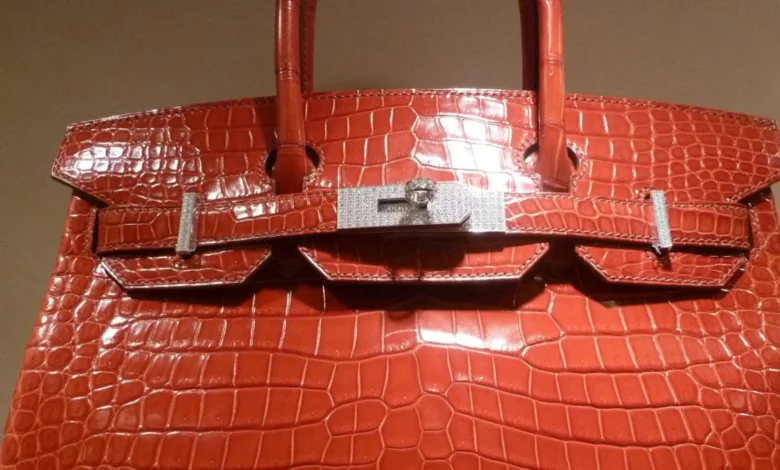
The global secondary market for ultra-luxury accessories reached another milestone on 23 November 2026, as a 2021 Hermès Snow Faubourg Sellier Birkin 20 commanded a staggering HK$4,224,000 (approximately US$538,606) at Christie’s Hong Kong. While the figure represents an extraordinary valuation for a single handbag, it fell just short of the record-breaking performance achieved by a similar model earlier in the year. The sale, which served as the centerpiece of the auction house’s Autumn Handbags & Accessories event, highlights the enduring appetite for the most exclusive items in the Hermès catalog, even amidst shifting macroeconomic currents and cooling demand in other luxury sectors.
A Chronology of Record-Breaking Results
The market for the Snow Faubourg Sellier Birkin—a bag modeled after the architecture of the legendary Hermès flagship store at 24 Rue du Faubourg Saint-Honoré in Paris—has become a barometer for the high-end collectible industry. In May 2026, Christie’s Hong Kong witnessed a landmark moment when a 2022 example of the same model achieved HK$4,318,000 (US$551,243). That sale was widely heralded as a record for an Hermès Faubourg Birkin across all iterations and solidified the bag’s status as the most valuable handbag ever sold at auction in Asia.
When the 2021 model appeared on the block this November as Lot 111, observers closely monitored whether the momentum of the spring season would continue. While the HK$4.224 million result remains one of the highest figures ever paid for a modern handbag, the slight variance from the May peak suggests that even the most coveted assets are subject to the nuances of specific auction-day sentiment and the composition of the bidding pool. Despite the marginal difference, both results underscore the premium placed on the "Snow" variant, which is renowned for its intricate use of matte alligator, Togo calfskin, and H matte crocodile, mimicking the appearance of the Parisian boutique’s facade during winter.
The Dynamics of the Auction Landscape
The November sale, officially designated as sale 24052, took place during the highly anticipated Hong Kong Luxury Week. According to official reports, the auction house saw a 93% sell-through rate by lot, demonstrating that while the top-tier "trophy" items command global attention, there is a deep and consistent demand for the broader category of luxury accessories. The hammer total for the entire sale reached 126% above the low estimate, a figure that suggests Christie’s conservative pre-sale valuation strategy successfully catalyzed competitive bidding.
A central point of discussion among market analysts has been the relationship between pre-sale estimates and final prices. The Snow Faubourg Sellier Birkin 20 was initially listed with a conservative estimate of HK$1.4 million to HK$2.8 million. The eventual realization of HK$4.224 million—more than three times the low estimate—confirms that the market for Hermès "Holy Grail" pieces remains largely decoupled from standard luxury retail trends. However, industry experts caution that comparing these figures requires careful consideration: estimates are provided exclusive of the buyer’s premium, whereas the final sale price includes these additional fees. This discrepancy often leads to public confusion regarding the actual appreciation of such assets, though it remains a standard practice in the auction world to report the "all-in" price to illustrate the final capital commitment of the buyer.
Broadening Global Participation
The success of the 23 November event was not driven by local demand alone. Christie’s reported that collectors from 31 countries and five continents participated in the bidding process. This geographic diversity is essential to the health of the handbag market; while Greater China remains the primary engine of growth for luxury auctions, the rise of Southeast Asian buyers has provided a necessary buffer during periods of economic volatility in the mainland.
Furthermore, the integration of digital infrastructure has fundamentally altered how these high-value transactions are conducted. With 67% of the lots sold through Christie’s digital platforms, the barriers to entry for international collectors have been significantly lowered. The fact that 25% of the participants were new to the auction house suggests that the pool of high-net-worth individuals interested in "investable fashion" is expanding, rather than contracting. This influx of fresh capital is vital, as it provides liquidity for long-term collectors looking to exit certain positions and rotate into new acquisitions.
Economic Implications and Market Maturity
The results from the November sale brought the total annual sales for Christie’s Hong Kong Handbags & Accessories category to HK$172,896,060 (US$22,046,149). This figure represents the highest annual Asia sales total for the category to date, confirming that the region remains the epicenter of the global handbag trade. By leading the global auction market in this category, Christie’s Hong Kong has effectively set the standard for how provenance, rarity, and condition are translated into monetary value.
However, the slight cooling of the record-breaking pace seen between May and November provides a moment for reflection. The luxury collectibles market has historically been viewed as a "safe haven" asset class, but as interest rates fluctuate and global wealth distributions change, the volatility of these items has become more apparent. The Snow Faubourg Birkin, while aesthetically iconic, is a manufactured object produced in the modern era; its value is derived entirely from brand exclusivity and artificial scarcity rather than historical age or utility. As such, the market is highly sensitive to the perceived prestige of the bag at any given moment.
The Broader Context of Luxury Collecting
The Hermès market exists within a wider ecosystem of high-end asset liquidation. Concurrent with the major auction house events, smaller boutique sales continue to shape the narrative of what constitutes a "collectible" item. For instance, the recent sale of Jane Birkin’s personal black Birkin 30 at Bonhams Paris for €64,600 highlights a different segment of the market—one driven by provenance and sentimental value rather than the technical specifications of a "Snow" boutique model.
For the average observer, the distinction between a "record-breaking" bag and a "personal" bag is critical. The record prices achieved for models like the Snow Faubourg represent the intersection of luxury goods and speculative investment. Collectors are no longer just purchasing handbags to wear; they are curating portfolios of assets that are expected to hold, or increase, in value over time. The professionalization of this hobby—evidenced by the rise of authentication guides, condition report standardization, and the reliance on auction house experts—reflects a market that has matured significantly over the last decade.
Looking Ahead: Challenges and Opportunities
As we look toward the 2027 calendar, the luxury accessory market faces several challenges. First, the supply of pristine-condition "investment-grade" bags is finite, and Hermès maintains strict control over the primary market, which in turn fuels the secondary market’s volatility. Second, the issue of authentication remains the single greatest threat to market confidence. As models become more complex and fakes become more sophisticated, the role of established auction houses in guaranteeing authenticity becomes the primary value proposition.
The events of 23 November 2026 serve as a testament to the resilience of the luxury sector. While the final price of the Snow Faubourg Sellier Birkin 20 did not eclipse the May record, the fact that it cleared HK$4 million with such ease indicates that the demand for blue-chip luxury assets remains fundamentally intact. For collectors, the takeaway is clear: the market for rare Hermès pieces is no longer a niche hobby, but a sophisticated global financial landscape. Whether this momentum can be sustained in the face of broader economic shifts remains the central question for the industry as it moves into the next fiscal year. The data collected from this autumn season suggests that as long as the allure of the "Faubourg" remains, the demand from global collectors will continue to provide a robust floor for prices, regardless of the fluctuations at the very top of the market.