How to Authenticate a Burberry Check Cashmere Scarf Before You Buy Second-Hand

The secondary luxury market has seen a surge in the trade of heritage accessories, yet the prevalence of sophisticated counterfeit goods continues to challenge even the most experienced collectors. For those seeking the iconic Burberry check cashmere scarf, the challenge is compounded by the brand’s official policy: Burberry does not provide authentication services for secondary market items. Consequently, the burden of verifying authenticity rests entirely on the consumer. Without a direct line to the manufacturer’s verification systems, buyers must rely on a rigorous examination of the textile’s weave, the craftsmanship of the fringe, the integrity of the labeling, and the physical properties of the material itself.
The Landscape of the Second-Hand Luxury Market
The market for pre-owned luxury goods has grown exponentially over the last decade, driven by increased environmental awareness and the desire for high-quality, long-lasting investment pieces. According to industry reports from 2026, the resale of classic accessories—particularly those made from high-end fibers like cashmere—has become a cornerstone of the sustainable fashion movement. However, this popularity has invited a proliferation of high-quality replicas.
A classic Burberry check cashmere scarf typically measures approximately 168 x 30 cm, excluding the fringe. New retail prices for these items generally oscillate between $480 and $620. When a listing appears on a resale platform at a price significantly below this threshold, and lacks accompanying documentation, it serves as an immediate indicator for heightened scrutiny. The absence of a verifiable sales receipt or order confirmation from an authorized retailer or the official Burberry website leaves the buyer to decode the authenticity of the product through physical inspection.
Chronology and Evolution of the Burberry Scarf
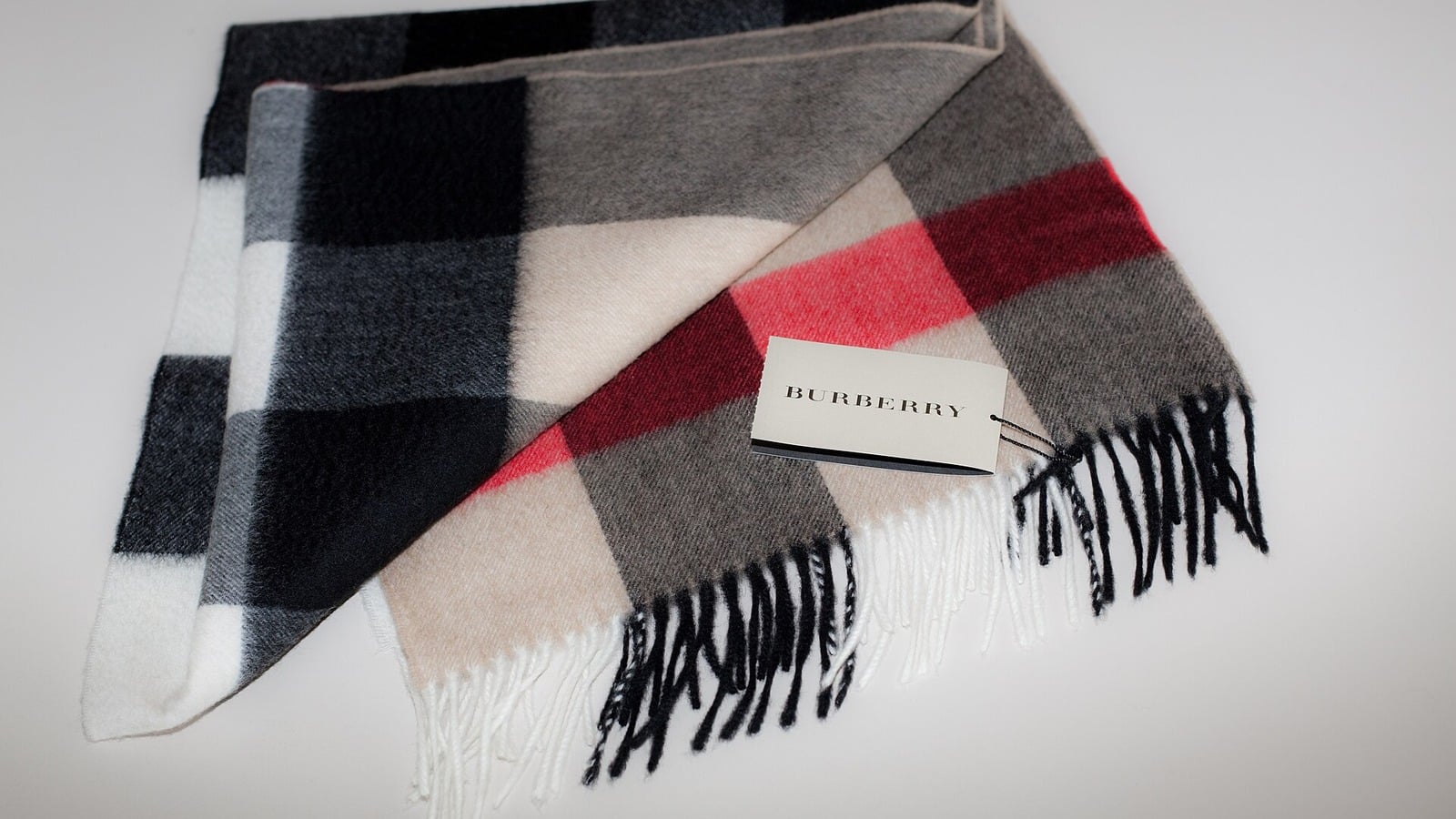
The Burberry check—a pattern defined by its camel base, black and white stripes, and a signature fine red line—has remained relatively consistent in its visual aesthetic since its rise to prominence in the mid-20th century. However, the manufacturing standards have evolved.
Historically, genuine Burberry scarves were produced in both England and Scotland. Vintage pieces may feature labels reading "Burberrys of London" or "Burberry London" with a "Made in England" designation. In recent decades, production shifted predominantly to Scotland, and modern labels reflect this with "Made in Scotland" alongside fiber content details. Understanding this timeline is crucial for collectors; a label indicating "Made in England" on a scarf that clearly utilizes modern synthetic blends or contemporary construction methods is often a sign of a counterfeit attempting to mimic vintage provenance.
Technical Authentication: The Weave and Tactile Properties
The primary hallmark of an authentic Burberry cashmere scarf is the weave. The check pattern must be integrated into the cloth itself, appearing on both sides. On a genuine piece, the reverse side should mirror the front, though the colors will appear slightly softer due to the nature of the loom process. If the pattern appears printed or sits only on the surface of the fabric, the item is, by definition, a counterfeit.
Beyond the visual, the tactile experience is an essential component of authentication. Genuine cashmere is characterized by a "halo"—a fine, soft fuzz that develops on the surface of the fiber. It should feel airy and light while retaining warmth, and it should possess a natural, subtle luster. When a corner of a genuine cashmere scarf is bunched in the palm, it should demonstrate natural elasticity, springing back into shape without retaining deep, permanent creases.
In contrast, synthetic alternatives—often labeled as "cashmere-feel" or "pashmina-blend"—tend to feel slippery, waxy, or uncomfortably coarse. These materials often fail the "scrunch test," staying limp and creased, and are highly susceptible to pilling even when sold as new.
The Anatomy of the Fringe and Label
The fringe serves as one of the most reliable indicators of production quality. Authentic Burberry scarves feature fringe bundles that are uniform in length, cleanly finished, and hand-knotted or hand-twisted using the same yarn as the scarf body. Counterfeiters frequently cut corners here; machines often leave the edges frayed, uneven, or sealed with adhesive, which is never a practice utilized by the Burberry house.
The label, too, requires careful inspection. Genuine labels are woven with high-precision threading; the lettering should be crisp, legible, and devoid of loose, fuzzy threads. Red flags include labels that appear to have the text printed on a synthetic strip rather than woven into a high-quality fabric. Furthermore, specific color deviations—such as a dark, caramel-brown label where a classic beige or cream label should exist—are common in low-quality imitations. While counterfeiters can easily replicate the text of a country of origin, they rarely replicate the precise weave density and font clarity of the authentic brand tag.
Official Responses and the Role of Documentation
Burberry’s official stance is definitive: the only absolute proof of authenticity is a receipt or order confirmation from an authorized source. The company’s customer service representatives maintain that they do not authenticate goods for third parties, a policy designed to mitigate liability and prevent the inadvertent validation of sophisticated fakes.
Consequently, provenance has become the gold standard in the resale market. Collectors should prioritize listings that include original purchase documents, or those handled by reputable consignment platforms that employ in-house authentication teams. These professional intermediaries use a combination of expert knowledge and forensic tools to verify the item, acting as a buffer between the buyer and the seller.
Broader Implications for the Resale Economy
The issue of authentication is not unique to Burberry. Similar challenges persist across the heritage fashion sector, from Barbour wax jackets to Moncler outerwear and UGG footwear. The rise of the "circular economy" depends entirely on the trust of the consumer. If the market becomes flooded with untraceable, low-quality replicas, the value of the original pieces is diluted, and the environmental benefits of buying pre-owned are undermined by the rapid degradation of inferior, synthetic goods.
Analysis suggests that the "green" value of the secondary market is tied to longevity. A single, well-maintained cashmere scarf can last for decades, reducing the need for new production. However, this longevity is predicated on the quality of the raw materials. When a consumer unknowingly purchases a synthetic counterfeit, they are not buying a durable investment, but rather a disposable item that will likely end up in a landfill within a few seasons.
Guidelines for the Secure Purchase
To navigate the secondary market safely, prospective buyers should adhere to a strict set of inquiries before finalizing a transaction:
- Request Macro Imagery: Ask for high-resolution, close-up photos of the label, the fringe, and a cross-section of the weave to ensure the pattern is consistent on both sides.
- Verify Provenance: Request copies of original receipts, order numbers, or gift confirmations. Be wary of sellers who provide only a photograph of the box, as packaging is the most easily forged element of the luxury experience.
- Question the Seller: A transparent seller will be able to provide details on where and when the item was purchased. Resistance to answering basic questions regarding the item’s history is a significant indicator of potential fraud.
- Leverage Third-Party Platforms: When in doubt, prioritize platforms that offer an "authentication guarantee." The fees associated with these services are generally a fraction of the cost of purchasing a counterfeit item and provide a necessary safety net for the investment.
In conclusion, the acquisition of a Burberry cashmere scarf remains a sought-after milestone for many fashion enthusiasts. By prioritizing the structural integrity of the weave and the material quality over the presence of packaging or documentation, buyers can protect themselves against the risks of the secondary market. As the industry continues to evolve, the ability to discern the genuine from the imitation will remain the most valuable skill a collector can possess.