The Rise of Pura: How the Smart Home Fragrance Disruptor Reached Nine-Figure Success Through Strategic Brand Collaborations

Since its commercial introduction in 2014, the smart home fragrance enterprise Pura has quietly revolutionized the olfactory technology market, establishing a firm blueprint for modern direct-to-consumer (DTC) expansion. By implementing a hardware-software ecosystem that mirrors the razor-and-blade model popularized by single-serve coffee giant Keurig, the privately held company has successfully scaled its operations to cross the nine-figure revenue threshold. Supported by a robust 15% year-over-year growth rate, Pura continues to redefine how consumers interact with home scenting, transforming a traditionally static household category into a dynamic, app-controlled, and highly curated lifestyle experience.
At the core of Pura’s technological and commercial appeal is its internet-connected hardware. The system utilizes smart diffusers that allow users to manage, schedule, and seamlessly rotate dual fragrance oil cartridges using a companion smartphone application. With an active digital user base exceeding two million people, the platform fosters ongoing customer engagement. The fragrance vials, which typically last roughly a month under normal usage, retail affordably between $11 and $16, ensuring a steady, recurring stream of consumable sales that drives long-term customer lifetime value (LTV).
The Evolution of Scent: A Chronological Look at Pura’s Growth
The trajectory of Pura’s market penetration did not happen overnight; it represents a carefully calculated chronology of scaling proprietary capabilities while simultaneously leveraging high-profile external partnerships.
In its foundational years following the 2014 launch, the company focused heavily on developing its core hardware architecture and establishing baseline in-house formulations. As the technology gained traction, leadership recognized an opportunity to bridge the gap between niche perfumery and mainstream smart-home automation.
By the late 2010s, Pura began testing the waters with external licensing deals and brand collaborations, realizing that partnering with established, beloved consumer brands could drastically reduce customer acquisition costs (CAC). Brands that already possessed devout followings could introduce their signature scents directly into the Pura ecosystem, mutually benefiting both parties.
As the brand entered the 2020s, it accelerated its hybrid strategy: simultaneously building out a diverse, permanent, and seasonal in-house portfolio while aggressively expanding its roster of external partners. Names like Capri Blue, Thymes, and Nest New York quickly became bestselling staples on the platform. Collaborations with cultural institutions, lifestyle brands, and nonprofits—including Disney, The Met, the Malala Fund, and interior design studio Studio McGee—further legitimized Pura as a serious player in the luxury home décor space.
By 2026, the company officially surpassed nine figures in annual revenue. Furthermore, its distribution footprint expanded beyond its native DTC channel into major traditional wholesale and prestige retail partners, including Nordstrom, Target, and Ulta. Looking ahead to 2027, the brand’s pipeline of collaborative partners includes high-profile names such as sunscreen and lifestyle brand Vacation and functional genderless fragrance startup DedCool.
Strategic Brand Partnerships as a Retention Engine
Central to Pura’s ongoing commercial strategy is the deliberate curation of external partnerships. According to Co-founder Bruno Lima, while securing and executing brand collaborations requires heavy operational investment and year-round creative development, these alliances are vital to the brand’s positioning and retention mechanics.
In an interview with retail trade publications, Lima emphasized that Pura’s subscriber base increasingly anticipates seasonal and exclusive drops. Rather than treating home fragrance as a set-it-and-forget-it utility, Pura customers regularly swap out their cartridges to match changing holidays, weather patterns, or personal moods.
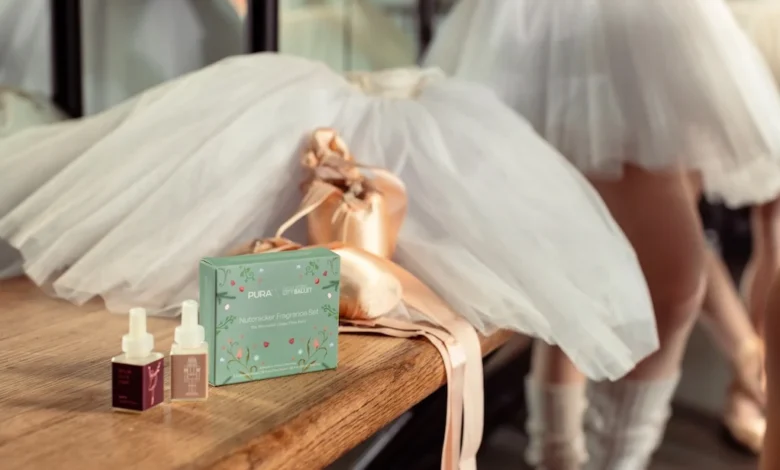
A prime example of this philosophy is the company’s holiday collection rollout, created in partnership with the New York City Ballet. The limited-edition holiday set features two distinct fragrances—The Nutcracker and Sugar Plum Fairy—launched exclusively on Pura’s website to capture peak seasonal shopping momentum during the Black Friday weekend. To elevate the campaign, Pura produced an immersive digital content series shot on location with New York City Ballet principal dancer Tiler Peck and members of the corps de ballet.
"The fragrances are beautiful, and the content is stunning because we worked with the actual ballerinas and shot everything on-site," Lima noted. This meticulous attention to storytelling demonstrates how modern home fragrance brands must intersect with arts, culture, and experiential marketing to maintain consumer interest.
Balancing Private-Label Value with Prestige Collaborations
Pura operates a dual-pronged product strategy: offering its own growing catalog of proprietary private-label scents alongside high-end partner collaborations.
The company’s in-house permanent and seasonal collections allow for greater pricing flexibility. Typically priced lower than their branded counterparts, Pura’s proprietary SKUs lower the barrier to entry, encouraging budget-conscious consumers to experiment with multiple fragrance profiles.
Conversely, premium collaborations—featuring brands such as LAFCO, Anthropologie, and Glasshouse—command higher perceived value and capitalize on existing brand equity. This symbiotic relationship ensures that whether a customer is looking for everyday affordability or a luxury lifestyle experience, the Pura ecosystem accommodates their preferences.
Moreover, the sheer scale of Pura’s digital community has flipped the script on how partnerships are initiated. Where the company once had to aggressively pitch external brands, it now fields a steady stream of inbound inquiries. "We have a lot of inbound requests from really cool brands now that we’ve gotten to the scale of having millions of customers," Lima stated.
The "Spotify for Fragrance" Vision and User-Driven Curation
Pura’s leadership frequently invokes a specific metaphor to describe the company’s ultimate market ambition: becoming the "Spotify for fragrance."
Just as streaming music platforms aggregate diverse artists and genres to satisfy every possible listening mood, Pura aims to curate a comprehensive library of olfactory experiences. This philosophy heavily influences how the company conducts user experience research. Instead of arbitrarily developing scents behind closed doors, Pura frequently polls its subscriber base to identify market gaps.
"A lot of what we call user experience research is about asking customers which brands we do not have that they want to see at Pura," Lima explained. "So it’s like us asking, ‘Which songs and which artists are you not finding here?’"
This data-backed approach extends into wellness and functional categories. Earlier in the year, Pura launched a strategic collaboration with meditation and sleep application Calm. Designed to correspond with Calm’s audio sleep and relaxation stories, the partnership was born directly from customer feedback indicating a strong desire for functional wellness fragrances tailored to evening relaxation routines.
Discipline in Product Development: Mastering the Art of Saying "No"
Despite the massive influx of inbound partnership proposals, Pura maintains strict internal metrics to evaluate potential projects. The leadership team assesses every prospective collaboration through the lens of specific consumer pain points and audience expansion opportunities.
"We probably say ‘no’ more often than ‘yes,’" Lima admitted.
The strategic challenge lies in maintaining a consistent, predictable release calendar that introduces exciting newness without inducing consumer fatigue or diluting brand identity. Successful execution requires pairing customers with a specific brand partner whose aesthetic and ethical positioning closely mirrors Pura’s own standards.
Broader Market Implications and Future Outlook
Pura’s ascent offers a compelling case study for the broader direct-to-consumer and smart-home hardware sectors. By successfully transitioning from a pure DTC startup into a hybrid omnichannel brand distributed through retail giants like Target and Nordstrom, Pura has mitigated the traditional customer acquisition roadblocks that frequently plague single-category e-commerce companies.
Furthermore, the brand’s ability to turn routine household consumables into high-margin lifestyle accessories highlights the power of experiential commerce. As Pura prepares for its next phase of growth heading into 2027—anchored by upcoming partnerships with Vacation and DedCool—the company is well-positioned to cement its status as an enduring category leader. By treating scent not merely as a deodorizer, but as a dynamic medium for art, wellness, and self-expression, Pura has successfully future-proofed its business model for the modern digital consumer.