French Design Unites in Milan to Challenge Italian Dominance and Boost Global Visibility

MILAN – France, with its intrinsic proximity and distinct savoir-faire, has long held a captivating allure for Italy, a dynamic that extends deeply into the world of luxury design. In a significant strategic move to amplify its global presence and redefine perceptions, a formidable collective of French luxury furniture firms has descended upon Milan, the undisputed capital of international design, for the inaugural “Le Design Défilé” – French for “The Design Fashion Show.” This ambitious exhibition, set to open on Monday on Milan’s prestigious Via Statuto, is not merely a display of exquisite craftsmanship but a carefully orchestrated declaration of intent: to elevate French high-end design onto the world stage and directly challenge the long-standing hegemony of its Italian counterparts.
Milan as the Global Epicenter for Design Ambition
The choice of Milan as the launching pad for "Le Design Défilé" is no coincidence. The city transforms annually into a vibrant nexus of innovation and style during Design Week, encompassing the renowned Salone del Mobile and the widespread Fuorisalone events. This period offers an unparalleled platform for designers, manufacturers, and industry professionals from across the globe to converge, network, and showcase their latest creations to a discerning international audience. For the French consortium, comprised of 13 heritage and contemporary houses presenting 53 meticulously selected furniture pieces, Milan represents the ultimate proving ground.
Isabelle Hernio, international director at l’Ameublement Français, articulated the strategic imperative in an interview, stating, “Milan is the city, the main city to show our innovation, our design… This is the place where we gather, we collaborate, we put money to have a huge visibility all together.” Her remarks underscore a collective recognition within the French design industry that individual efforts, while commendable, often fall short in securing the global reach and impact necessary to compete effectively against more established players. The exhibition, conceived as a dramatic scenographic journey by the Paris-based architectural and design practice Jakob+MacFarlane, aims to present a singular, compelling vision of French design, specifically engineered to boost the consortium’s business-to-consumer (B2C) potential on a global scale. This shift from a traditional business-to-business (B2B) focus to a more consumer-centric approach is a cornerstone of the French strategy, acknowledging a critical gap in their past market engagement.
Historical Context: A Tale of Two Design Giants

The narrative of French and Italian design is deeply intertwined with centuries of cultural exchange, yet distinct trajectories have emerged, particularly in the modern era. Both nations possess rich design heritages, with their furniture design practices flourishing significantly during the Neoclassical era. This period, fueled by the opulent tastes of figures like Marie Antoinette and her 18th-century court, saw the patronage of master craftsmen such as cabinetmaker Jean-Henri Riesener and chair maker Georges Jacob. While the furniture itself was largely manufactured in France, the aesthetic and technical inspirations often drew from Italian antiquity discoveries, which profoundly influenced European design trends of the late 18th century. The fascination with chinoiserie, a Chinese-inspired style, further demonstrated the international influences at play.
However, the post-World War II landscape saw a divergence. Italy, with its remarkable resurgence driven by a potent blend of industrial innovation, artisanal skill, and a robust design culture, rapidly established itself as a global leader in furniture. The establishment of the Salone del Mobile in 1961 cemented Milan’s role and provided a consistent, powerful platform for Italian brands to showcase their prowess. Companies like Molteni&C, Minotti, Rimadesio, Poliform, Cassina, and Poltrona Frau became household names, synonymous with high-quality, avant-garde, and industrially produced luxury furniture. Italy developed a comprehensive ecosystem, from skilled manufacturers to a sophisticated distribution network, making its high-end potential globally recognized and accessible.
Conversely, France’s high-end design potential, despite its deep roots in luxury and bespoke craftsmanship, has often remained comparatively overshadowed. While French design excelled in ultra-luxury and custom creations for an exclusive clientele, its broader market penetration and B2C presence lagged. This historical context forms the backdrop for the current exhibition, as France seeks to recalibrate its market position and present a more unified, accessible face to the global consumer.
Economic Disparities and Market Dynamics
The economic data further illustrates the competitive landscape and the scale of the challenge for French design. Federlegno Arredo, the powerful consortium representing Italy’s wood supply chain, encompasses approximately 2,800 firms and employs around 370,000 individuals, with a significant concentration in the high-end market. In 2025, the value of sales from Italy’s wood supply chain surged to an impressive 52.2 billion euros. This figure highlights a robust, diversified, and highly organized industry with a strong emphasis on luxury production and an effective distribution system.
In stark contrast, France’s furniture makers registered sales of 13.6 billion euros in the same year, a figure that experienced a slight decline, primarily dragged down by the performance of its indoor and outdoor furniture sectors. While specialty or collectible establishments did register modest growth of 1.6 percent year-over-year, representing 25.6 percent of the total market, the larger-scale distribution segment, accounting for 38.4 percent of market share, saw its sales fall by 2.7 percent in 2025. These statistics underscore a fundamental difference in market structure and commercialization strategies between the two nations.

Isabelle Hernio elaborated on these disparities, explaining that while the Italian market boasts a larger, more diverse, and heavily B2C-oriented ecosystem with a well-organized distribution system, the French market, though smaller, traditionally focuses more on ultra-luxury and draws deeply from its cultural heritage and savoir-faire. However, this focus has come at a cost: France struggles with exports, faces erosion in its middle-range market, and grapples with significant gaps in commercialization and distribution. "In France, we didn’t integrate the trade or commercialization of goods for final consumers. We’ve been more B2B [focused] than B2C. The focus has been on being a good manufacturer – producing the best volume, the best value, being competitive – but they haven’t taken care of distribution," she explained.
The Threat of Mass-Market Imports and the Drive for Differentiation
Beyond the internal structural issues, the French furniture industry, particularly its mass-market segment, faces intense external pressures. Hernio pointed to the "invasion" of the European market by Chinese imports, which significantly contributes to France’s trade deficit. Countries like Poland and Romania also pose considerable competition, but China’s dominance in mass-market production is particularly impactful. "The mass market is suffering because of fierce competition from countries like Poland, Romania, and especially China. Imports from China are booming," Hernio stated.
This fierce competition in the lower and mid-range segments has reinforced the imperative for French manufacturers to differentiate themselves. The strategic response, as championed by l’Ameublement Français, is to double down on high-quality, innovative, design-focused, and luxury products. This pivot towards the higher end of the market is seen not just as a defensive measure against cheaper imports but as an offensive strategy to leverage France’s inherent strengths in craftsmanship, aesthetic innovation, and cultural heritage. Brands like Ligne Roset, founded in 1860, exemplify French manufacturers with a global reach comparable to leading Italian firms, yet they represent a minority within a fragmented French high-end and mid-sector that has historically struggled to mobilize collectively.
The French Living in Motion Collective: A United Vision
At the heart of "Le Design Défilé" is the French Living in Motion collective, with l’Ameublement Français serving as a major pillar. This collective is dedicated to fostering collaborations across disciplines – between creators, designers, architects, scientists, artisans, manufacturers, and publishers – with the overarching goal of envisioning the living spaces of tomorrow. Their presence in Milan is a powerful manifestation of this philosophy.

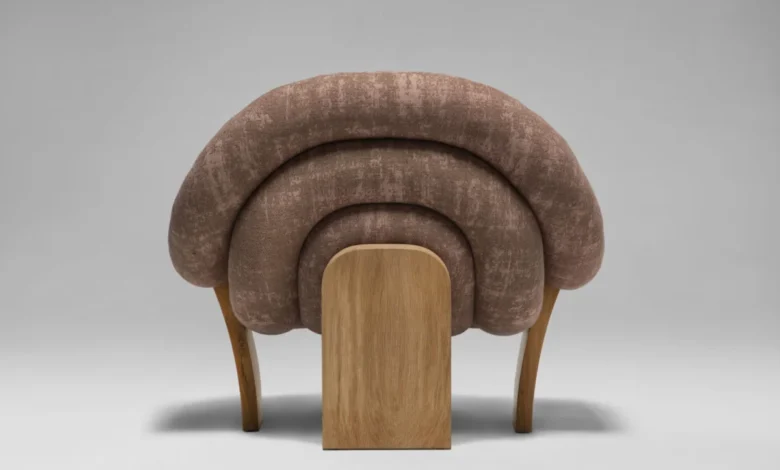
During Milan Design Week, the consortium is spotlighting modern living through an exquisite selection of 15 furniture pieces. These creations come from a diverse array of designers and Maisons, each presenting three emblematic pieces that encapsulate their unique identity. The lineup includes legendary interior decorator Andrée Putman, known for her minimalist and elegant aesthetic, as well as the innovative Constance Guisset Studio. Heritage brands like Alki, Clen x Manade, Duvivier Canapés, Fermob, Franck Genser, Gautier, Lafuma Mobilier, Ligne Roset, Maison Sarah Lavoine, Mercœur Édition, Objekto, Philippe Hurel, and Sokoa are all participating. From Maison Sarah Lavoine’s "Full Moon chair," a striking circular seat reflecting silvery light, to the innovative designs of Petite Friture, exemplified by the Eclipse Daybed, the exhibition promises a comprehensive showcase of French ingenuity.
Hernio powerfully underscored the importance of this collaborative approach: "If they do separate, they are too small, they don’t have the means to develop their visibility. Otherwise, we split throughout the city, and it’s dead. So, let’s be together." This sentiment is echoed by Philippe Courtois, CEO of Philippe Hurel, a company founded over a century ago and a staunch believer in the group exhibition model. Courtois remarked, "Of course, we share everyone’s contacts and networks, but also each person’s energy, experience, and creativity. It’s extremely stimulating and enriching." He further emphasized Milan’s critical role in building international business, drawing distributors from across the globe. The collective exhibition model, therefore, provides a vital mechanism for smaller French firms to pool resources, gain critical visibility, and make a stronger, more cohesive impact in a key global venue like Milan.
Broader Impact and Future Implications
The implications of "Le Design Défilé" extend beyond a single exhibition. It signifies a strategic reorientation for the French design industry, aiming to carve out a more prominent and competitive niche in the global luxury market. By uniting under a common banner and leveraging Milan’s international platform, French firms are signaling a concerted effort to overcome historical disadvantages in commercialization and distribution. This collective action could foster greater collaboration within the industry, leading to shared best practices, increased innovation, and a more streamlined approach to market entry and expansion.
Looking ahead to 2026, l’Ameublement Français has identified the kitchen market as a significant driver for the full year, indicating specific areas of focus for growth. Furthermore, the organization is actively engaged in addressing challenges posed by unfair trade practices. They are pursuing legal action against foreign marketplaces, such as Temu, which they accuse of encouraging ultra-fast consumption and violating product safety standards. A legal analysis by a specialized attorney has reportedly claimed that Temu’s commercial practices jeopardize consumer safety, particularly that of children, and contribute negatively to the environmental impact of disposable furniture. This proactive stance highlights a broader commitment to protecting domestic manufacturers, upholding quality standards, and promoting sustainable practices within the industry, further distinguishing French design in the competitive global arena.
Ultimately, "Le Design Défilé" is more than an exhibition; it is a strategic maneuver designed to assert French design’s rightful place on the global stage. By embracing collaboration, focusing on ultra-luxury and high-quality differentiation, and strategically targeting key international platforms like Milan, France aims to transform its inherent savoir-faire into a formidable economic force, challenging established hierarchies and enriching the global tapestry of design.