OAD Transforms Soviet Era Bunkers into a Resilient Multi Generational Coastal Retreat on the Latvian Baltic Shore

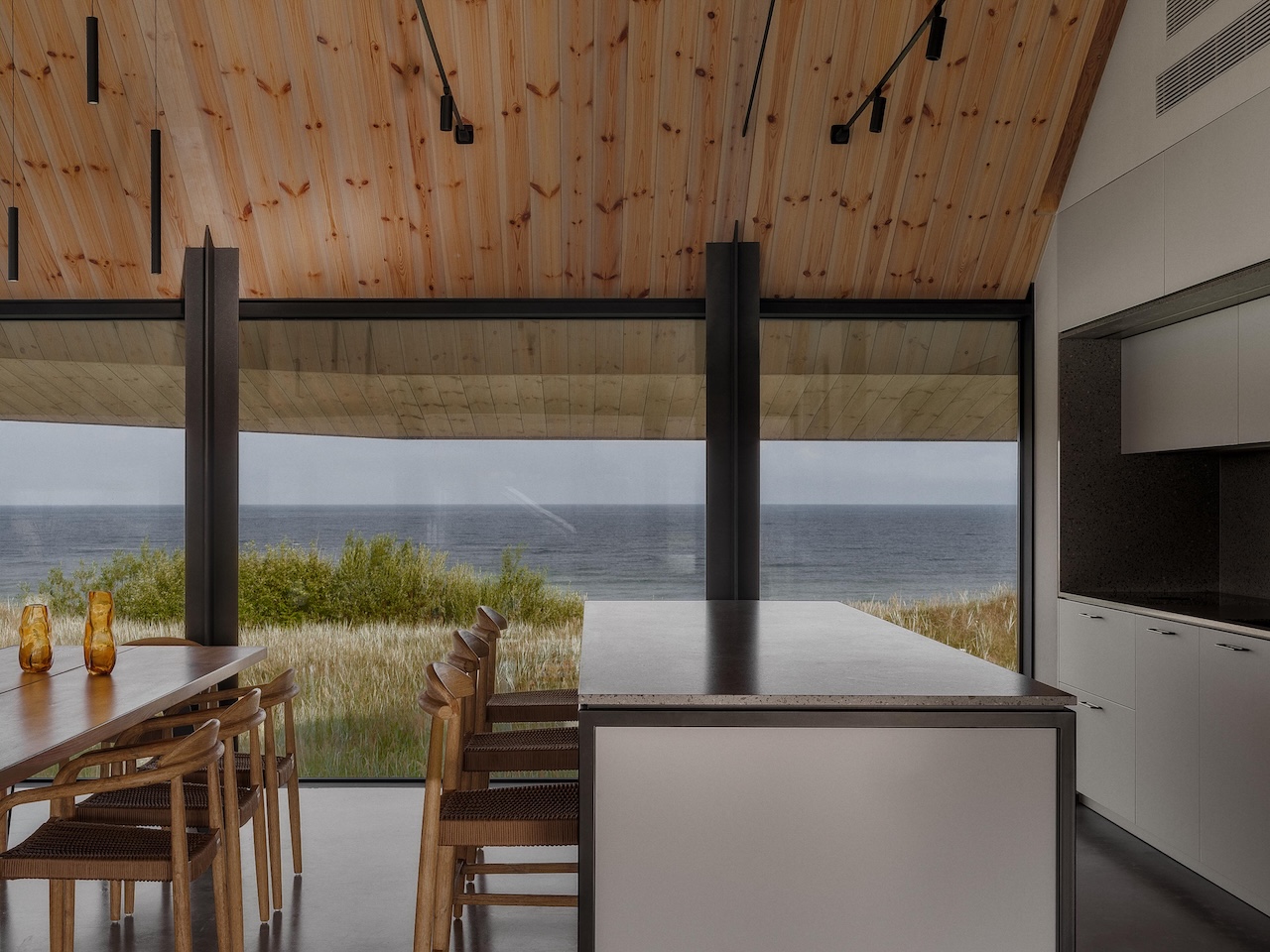
The Latvian coastline, a stretch of the Baltic Sea defined by shifting dunes and a complex geopolitical history, has become the site of a significant architectural intervention that balances historical preservation with modern domesticity. Riga-based architecture firm OAD (Open AD), led by founder and lead architect Zane Tetere-Sulce, has completed "SAR," a residential compound built upon the foundations of four Soviet-era military bunkers. The project represents a sophisticated response to the dual challenges of building within a protected ecological biotope and addressing the heavy cultural legacy of the Soviet occupation. By repurposing defensive structures into a sanctuary for a multi-generational family, OAD has created a site-specific architectural language that emphasizes safety, environmental stewardship, and historical continuity.
Historical Context and the Military Legacy of the Baltic Coast
The site of SAR carries a weight that is common across Northern Europe but rarely addressed with such architectural nuance. During the decades of Soviet occupation, the Baltic coastline was a heavily militarized zone, forming part of the western border of the USSR. Access to the sea was strictly controlled, and the landscape was dotted with bunkers, watchtowers, and radar stations designed for defense and surveillance. Following the restoration of Latvian independence in 1991, many of these structures were abandoned, eventually becoming overgrown and integrated into the natural landscape of the dunes.
In many contemporary developments, such remnants are either demolished to make way for pristine new builds or ignored entirely. However, the SAR project takes a different stance. The presence of four grass-covered bunkers provided the literal and conceptual foundations for the retreat. Rather than erasing the scars of the past, OAD opted to "fold" this history into a working premise for the present. The defensive logic of the original bunkers—built to protect inhabitants from a hostile external environment—has been translated into a contemporary reading of the home as a "safe haven" against the harsh Baltic elements.
Architectural Chronology: From Defensive Remnants to Domestic Compound
The development of SAR began with the discovery of the bunker cluster situated within a sensitive coastal zone. Construction in such areas is governed by rigorous environmental and architectural regulations in Latvia, intended to prevent dune erosion and protect local flora and fauna. The project’s timeline involved a careful negotiation between these legal constraints and the technical challenges of building on existing, decades-old military concrete.
The design process was divided into the treatment of two distinct types of structures: the guest houses and the main residence. The two guest houses were designed to be recessive, sinking back into the dune habitat. Their roofs were sown with living grass, a move that extends the ecological logic of the site. By maintaining a low profile, these structures minimize their visual impact on the horizon and provide expanded habitats for local fauna.
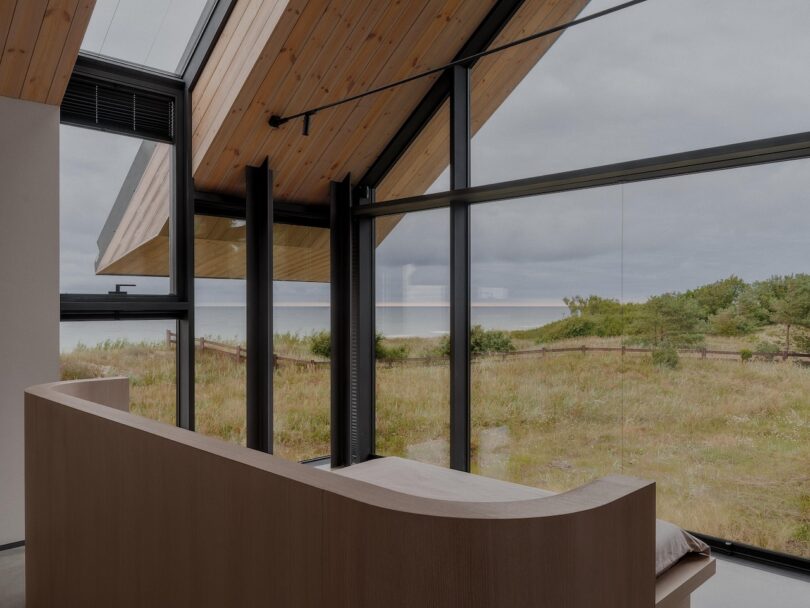
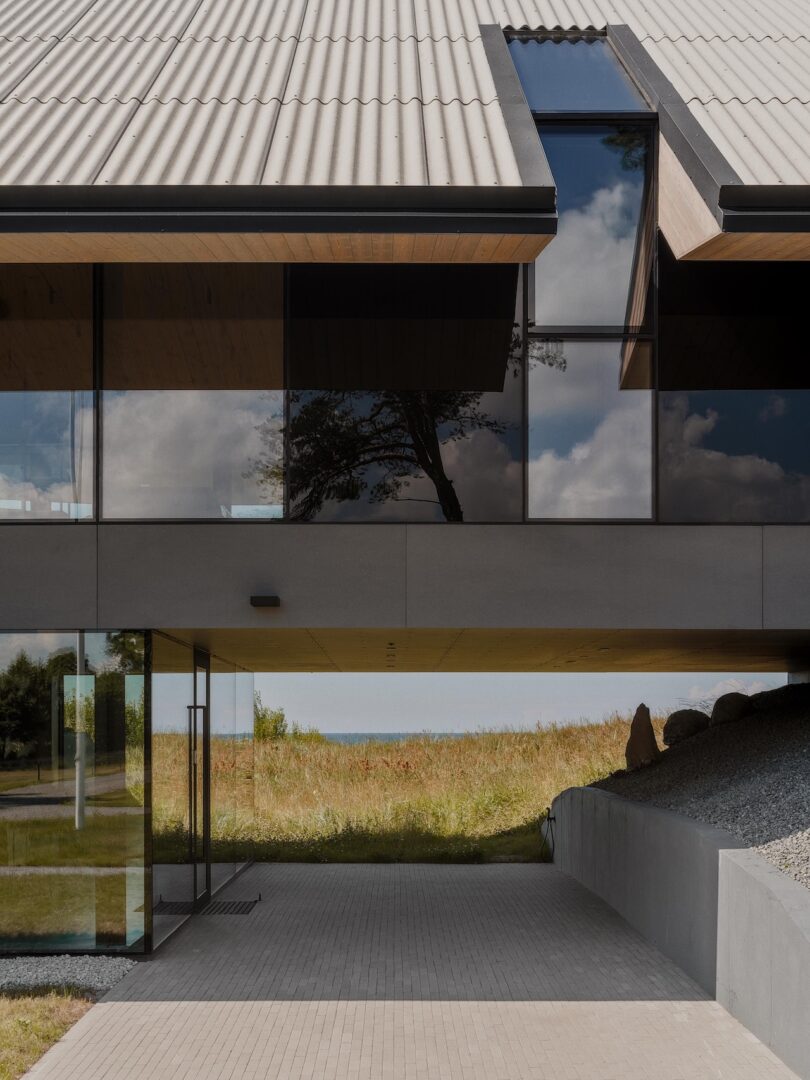
In contrast, the construction of the main residence followed a more complex chronological path. The architects decided to bridge two of the original bunker foundations, creating an elevated volume that lifts the primary living spaces above the sea horizon. This required a sophisticated engineering solution to support a heavy, traditional-looking roof over a fully glazed facade. The completion of the structure involved the installation of a bespoke metal frame, left intentionally exposed to serve as both a structural necessity and an aesthetic expression of the building’s "groundedness."
Technical Specifications and Materiality
The materiality of SAR is a deliberate nod to both the regional environment and the Soviet era. The primary external cladding for the main residence is fiber-cement, a contemporary material chosen for its durability in salt-heavy coastal air and its subtle resemblance to the industrial textures of the Soviet period.
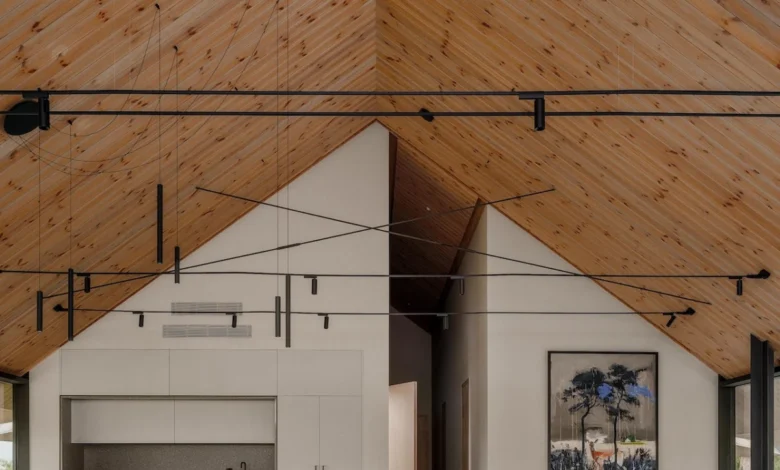
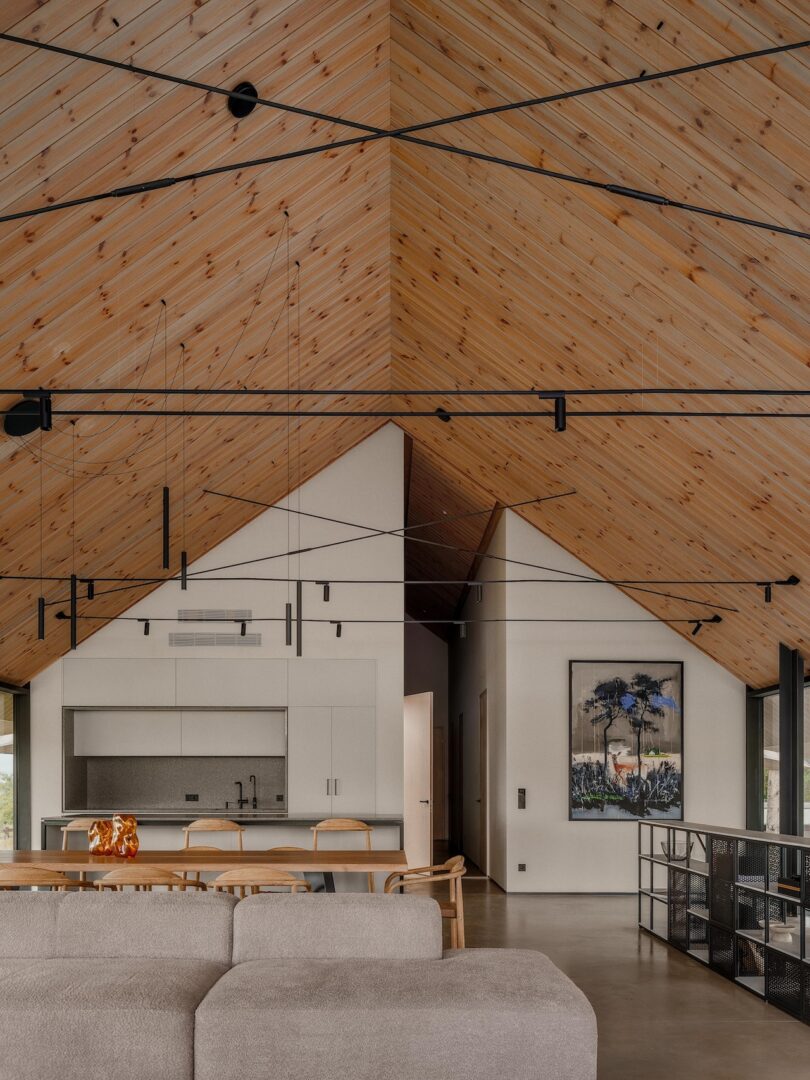
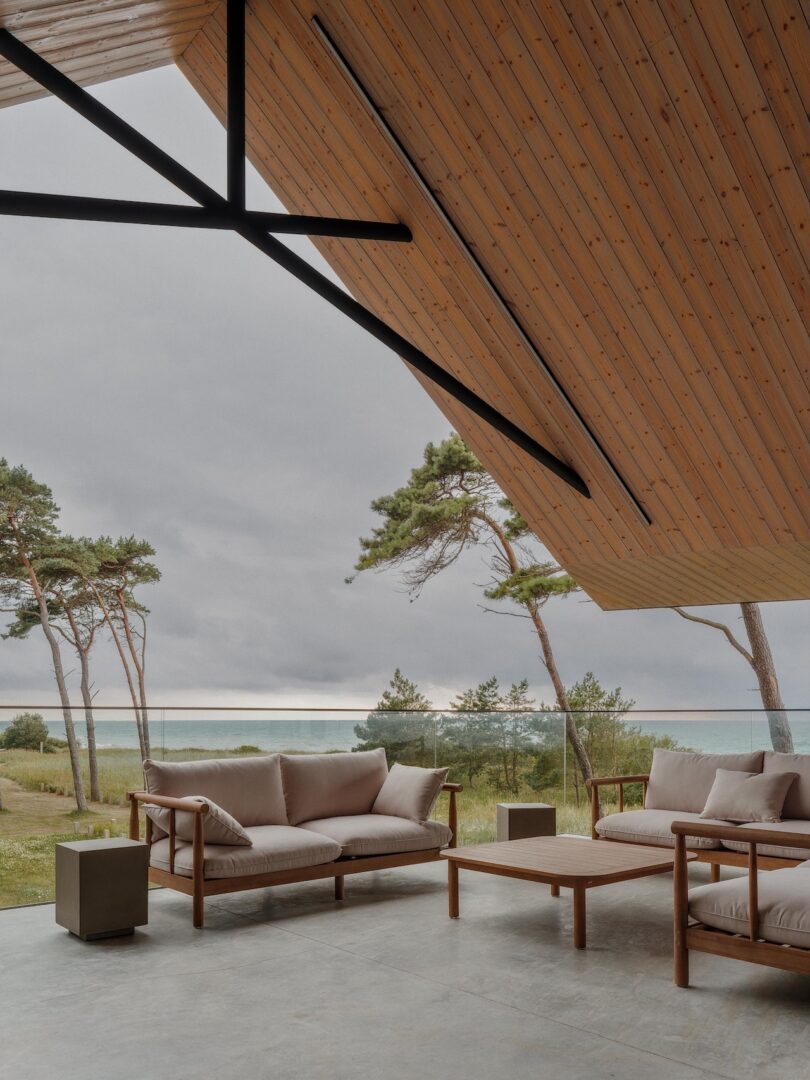
The main residence features a pronounced dual-slope roof, a requirement mandated by local architectural regulations. OAD chose to amplify these proportions rather than minimize them. The heavy, dual-sloped profile serves a psychological function, providing a sense of "grounded heaviness" that counterbalances the transparency of the glass walls below.
Technical data regarding the building’s performance includes:
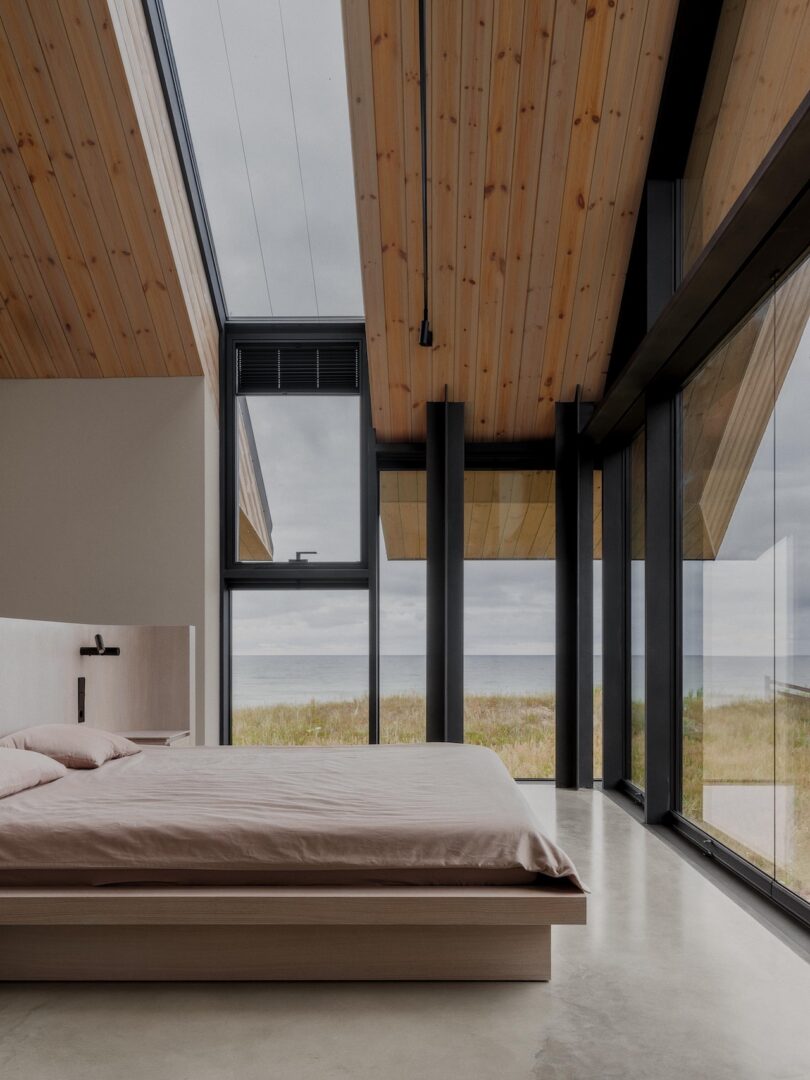
- Environmental Orientation: The master bedroom is oriented to the west to capture the long Baltic sunsets, while the communal terraces face south to maximize light exposure during the short winter days.
- Solar Calibration: The southern overhangs feature upward-sloping soffits, a design choice that shields the interior from the high-angle summer sun while allowing low-angle afternoon light to penetrate deep into the living spaces.
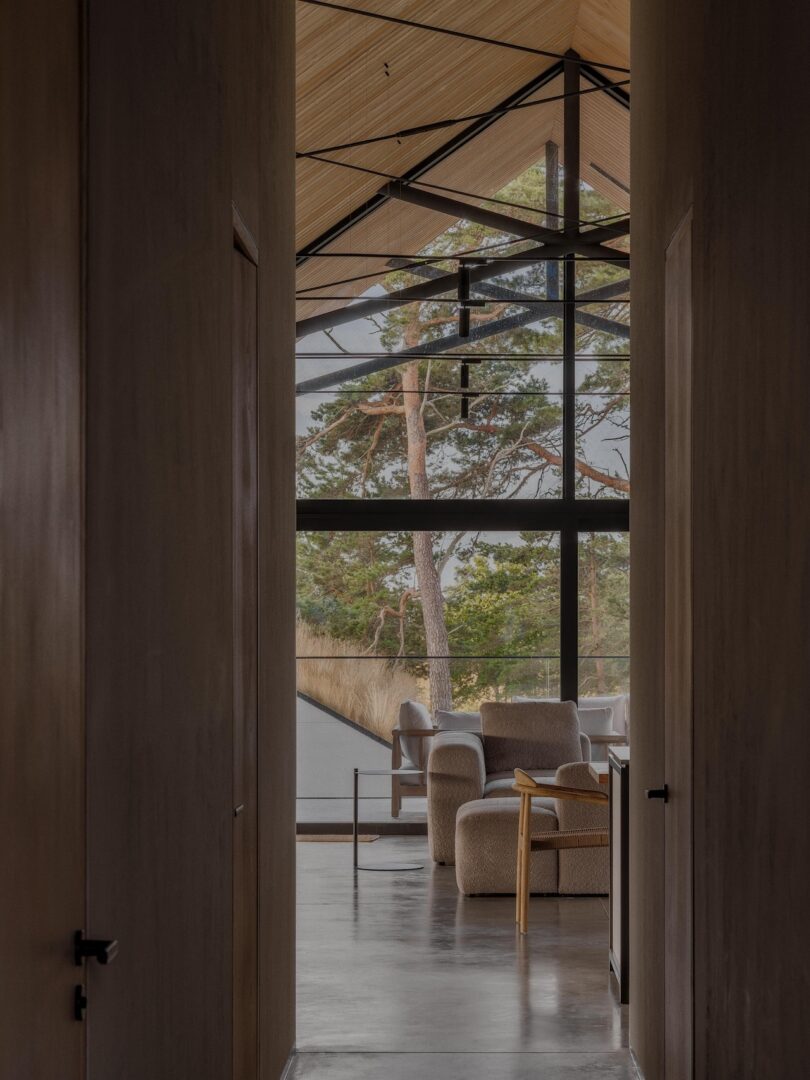
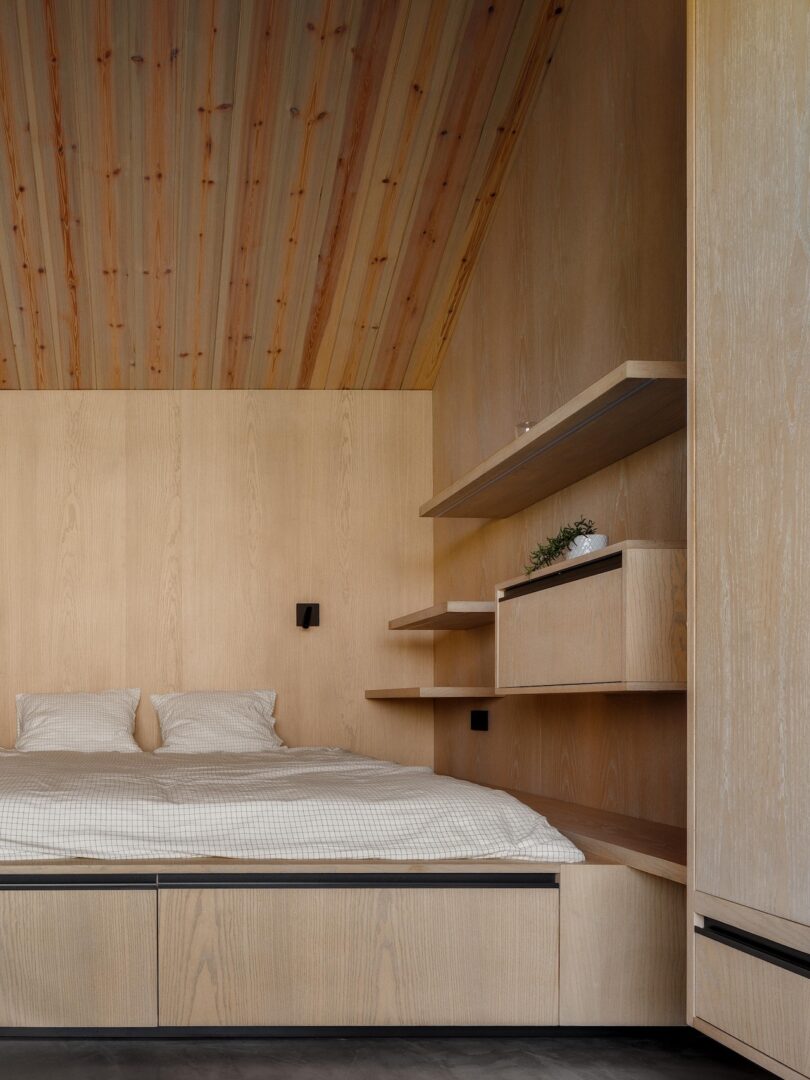
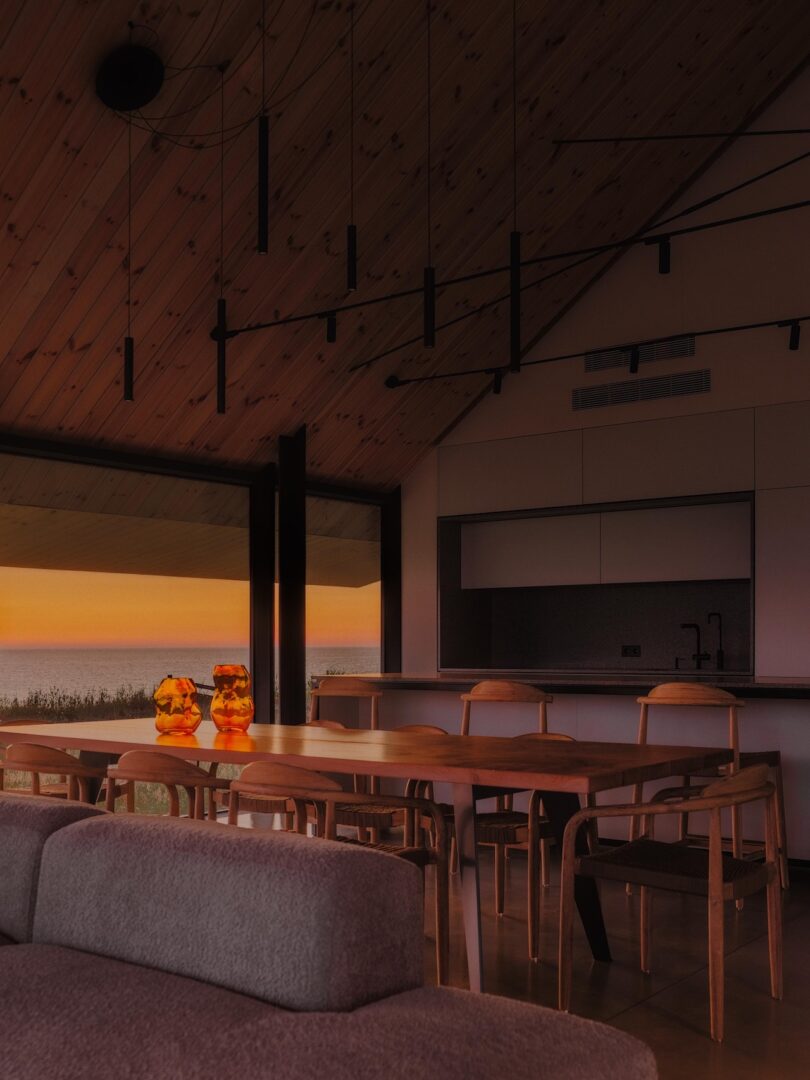
- Interior Finishes: The palette is restricted to concrete floors, wood-clad vaulted ceilings, and tactile surfaces, prioritizing atmospheric quality over decorative color.
Official Philosophy: Redefining Security
In statements regarding the project’s completion, Zane Tetere-Sulce emphasized that the goal was not to celebrate the military history of the site, but to repurpose its core intent. "Instead of focusing on the conflict aspect of a military site, the attention is redirected towards the bunker’s core purpose—to keep its inhabitants safe from the hostile outside environment," Tetere-Sulce stated.
The architectural firm OAD further explained that the project was conceived as a "safe haven" for three generations of a single family. This focus on security is particularly relevant given the local climate. The northern winds along this stretch of the Baltic are famously powerful, capable of bending century-old pines into gnarled, sculptural forms. The architecture of SAR mirrors this resilience; while the guest houses hide within the earth, the main house stands firm against the wind, its heavy roof acting as a psychological and physical anchor.
Tetere-Sulce noted that the constraints of the local building codes actually aided the final design: "By elevating the glass structure above the ground, we created a tension where the protective weight of the top balances the openness below." This tension is central to the project’s identity—it is a building that is simultaneously open to the beauty of the Baltic landscape and closed against its occasional ferocity.
Ecological Impact and Dune Preservation
One of the most significant implications of the SAR project is its approach to "protected biotopes." The Latvian coast is a fragile ecosystem, and the construction of new foundations can often lead to irreversible damage to the dune structures. By utilizing the existing foundations of the Soviet bunkers, OAD significantly reduced the project’s ground-level footprint.
The use of living roofs on the guest houses serves a dual purpose: it provides natural insulation, reducing the energy required for heating and cooling, and it ensures that the buildings remain part of the "green corridor" for local wildlife. The project demonstrates that adaptive reuse is not limited to urban industrial lofts; it is a viable strategy for sensitive rural and coastal environments where the preservation of the landscape is as important as the preservation of history.
Broader Implications for Adaptive Reuse in Northern Europe
The SAR project arrives at a time when the Baltic states are increasingly grappling with how to handle the physical remains of the 20th century. Throughout Estonia, Latvia, and Lithuania, thousands of Soviet-era structures remain in varying states of decay. The traditional approach has often been one of two extremes: total neglect or total demolition.
SAR offers a third way: the "re-reading" of historical structures. By identifying the functional value of the bunkers—their stability and their defensive geometry—OAD has shown how "conflict architecture" can be rehabilitated into "peaceful architecture." This approach has broader implications for sustainable development. Reusing existing concrete foundations significantly lowers the carbon footprint of a project compared to pouring new cement, which is one of the most carbon-intensive aspects of modern construction.
Furthermore, the project serves as a model for multi-generational living. As global housing trends shift toward communal family structures to address both economic and social needs, the SAR compound provides a blueprint for how privacy and togetherness can be balanced within a single site. The separation of the guest houses from the main residence allows for independence, while the shared communal spaces in the elevated main house foster family cohesion.
Analysis: Architecture as a Calibrated Response
Ultimately, SAR is less an imposition on the Latvian coast and more a calibrated response to it. The project succeeds because it does not attempt to "conquer" the land or "rewrite" its difficult history. Instead, it "lives lightly upon it," as Tetere-Sulce describes.
The architecture functions as a mediator between the past (the bunkers), the present (the family home), and the future (the shifting dunes). It acknowledges that the Baltic Sea is a rising and changing force, and that the best way to build in such an environment is to create structures that are grounded in history but flexible enough to endure the elements. In the transition from a site of military defense to a site of domestic refuge, SAR exemplifies a quiet resilience that mirrors the very landscape it occupies. The project stands as a testament to the idea that architecture can be both a protective shell and an open window, provided it is built with a deep understanding of the "charged site" upon which it sits.