FREITAG Unveils Easy Riders Collection as Circular Design Meets Urban Cycling Functionality

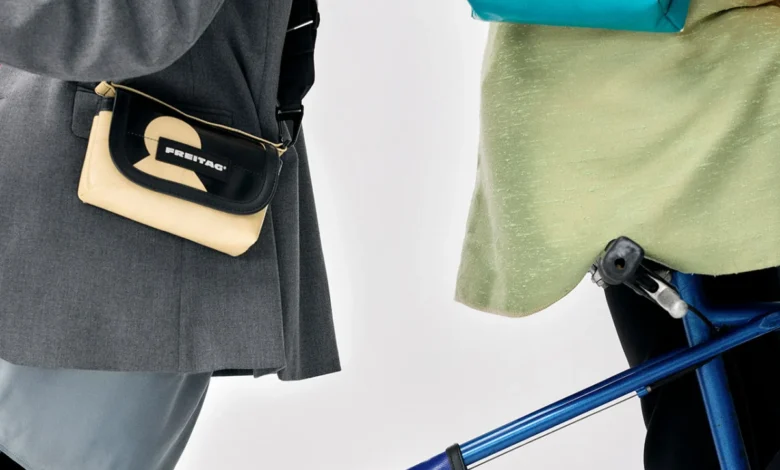
The Swiss accessory manufacturer FREITAG has officially launched its Easy Riders collection, a series of modular cycling bags designed to bridge the gap between technical bike equipment and everyday urban utility. Built upon the brand’s foundational commitment to circularity, the new line utilizes reclaimed truck tarps and discarded billboard materials to create one-of-a-kind pieces that cater to the growing demographic of urban commuters and bikepacking enthusiasts. This launch represents a significant expansion of the Zurich-based company’s portfolio, emphasizing versatility through bags that transition seamlessly from bicycle frames to the human body.

The Easy Riders collection is characterized by its "one-of-a-kind" manufacturing process. Because each bag is cut from used truck tarps that have spent years on European highways, no two items are identical in color, weathering, or pattern. This individualistic approach to mass production has become FREITAG’s signature, but the Easy Riders line introduces new technical refinements specifically engineered for the rigors of cycling.
Technical Overview of the Easy Riders Product Line
The collection is anchored by three primary models, each designed for a specific mounting point on a bicycle while maintaining the ability to be worn as a personal accessory.

The F140 FRAN: The Hybrid Handlebar Vessel
The F140 FRAN serves as the most versatile entry in the collection. Designed primarily as a handlebar bag, it utilizes a secure clipping system that attaches to the front of a bike’s cockpit. The design addresses a common pain point for urban cyclists: the need to quickly remove valuables when parking in public spaces. The FRAN features an integrated crossbody strap, allowing the user to unclip the bag and transition it into a shoulder-worn pouch in seconds. Its dimensions are optimized for daily essentials such as smartphones, wallets, and keys, serving as a "day-to-night" transition piece that works as well in a professional setting as it does on a gravel trail.
The F141 BERYL: Asymmetrical Frame Optimization
For riders requiring stability and mid-frame storage, the F141 BERYL offers an asymmetrical geometry tailored for the top tube. Unlike traditional symmetrical frame bags, the BERYL is shaped to maximize volume without interfering with the rider’s pedaling motion. It features a primary attachment for the top tube and a secondary stabilizing strap for the seat tube, ensuring the bag remains stationary during high-cadence riding or over uneven terrain. This model highlights the durability of the truck tarp material, which provides natural water resistance and structural rigidity.

The F142 HEINZ: Compact Under-Saddle Utility
The smallest of the trio, the F142 HEINZ, is a saddle bag designed to mount directly to the seat post and the underside of the saddle rails. Despite its compact footprint, the HEINZ is engineered for maximum protection against the elements. Positioned directly in the line of "wheel spray," the bag’s recycled polyester and PVC-coated tarp exterior are designed to be mud-proof and highly water-resistant. Beyond its role on the bike, the HEINZ features a modular clipping mechanism that allows it to be attached to belts, larger backpacks, or worn as a standalone miniature crossbody bag.
A Chronology of Circular Innovation: 1993 to the Present
To understand the significance of the Easy Riders collection, one must look at the three-decade evolution of the FREITAG brand. The company was founded in 1993 by brothers Daniel and Markus Freitag, who were looking for a functional, water-repellent bag for their daily commutes in Zurich.

- 1993: The Prototype: Inspired by the multicolored heavy traffic passing their apartment, the brothers cut a messenger bag out of an old truck tarp, used inner tubes for edging, and a recycled seatbelt for the strap. This became the F13 TOP CAT.
- 1995-2003: Scaling Upcycling: The brand moved from a home-based operation to a dedicated factory (the "Noerd" in Zurich-Oerlikon). During this period, the company formalized its sourcing of used tarps, establishing a logistics network to acquire materials that had reached the end of their 5-to-10-year lifespan on the road.
- 2011: The Flagship Expansion: FREITAG opened its iconic flagship store in Zurich, built from 19 stacked shipping containers, further cementing its architectural and design commitment to industrial reuse.
- 2020: Circularity Beyond Upcycling: The company began experimenting with fully compostable textiles (F-ABRIC) and circular tarp prototypes designed to be recycled back into new tarps, moving from "downcycling" to a truly closed-loop system.
- 2024: The Easy Riders Launch: The introduction of the Easy Riders collection marks a return to the brand’s cycling roots but with a modern emphasis on modularity and "multimodal" transportation.
Supporting Data: The Environmental Impact of Tarp Reclamation
The environmental data supporting FREITAG’s manufacturing model highlights the scale of industrial waste reduction. According to internal sustainability reports and industry standards for PVC-coated fabrics, truck tarps are typically composed of a polyester fabric base coated with PVC (polyvinyl chloride). While highly durable, these materials are difficult to recycle through traditional chemical or thermal means.
By reclaiming these tarps, FREITAG diverts approximately 640 tons of material from landfills and incinerators annually. The process of preparing these materials is labor-intensive: tarps must be stripped of metal eyelets and straps, washed in large industrial machines using harvested rainwater, and then hand-cut by "tarp designers" who ensure the most aesthetically pleasing patterns are utilized for the bags. This manual intervention ensures that the energy expenditure remains significantly lower than the production of virgin synthetic fabrics.

Furthermore, the longevity of the materials is a key data point. A truck tarp is designed to withstand UV exposure, extreme temperature fluctuations, and physical abrasion for a decade on a truck. When converted into a personal accessory, the material’s lifespan is effectively doubled, providing a durable alternative to the "fast fashion" cycle of disposable nylon and polyester bags.
Official Strategy and Brand Philosophy
FREITAG’s mission extends beyond the initial sale of the product. The brand has implemented a suite of "Circular Services" intended to keep bags in active use for as long as possible, a strategy the company refers to as "keeping bags in the loop."

- Repair Services: FREITAG operates dedicated repair centers where bags with worn corners, broken zippers, or punctured tarps can be restored. This service aligns with the "right to repair" movement, emphasizing that a product’s end-of-life should be determined by its repairability rather than its age.
- Take-Back Program: Through the "S.W.A.P." (Shopping Without Any Payment) initiative, owners can trade their unique bags with other users globally, facilitating a secondary market that values the uniqueness of the patterns.
- Rental Infrastructure: Recognizing that certain high-volume bags (like travel duffles) are only needed occasionally, the brand offers rental services to reduce the need for individual ownership of specialized gear.
Industry analysts suggest that this "service-based" approach to retail is a response to shifting consumer values, particularly among Gen Z and Millennial demographics who prioritize sustainability and brand transparency over traditional luxury markers.
Broader Impact and Market Implications
The launch of the Easy Riders collection arrives at a pivotal moment for the global cycling industry. Following the "bike boom" of the early 2020s, urban infrastructure in major cities has seen a rapid expansion of cycling lanes and "low-traffic neighborhoods." This has led to an increased demand for technical gear that does not look out of place in an office or a café.

FREITAG’s move into modular bike-to-body bags reflects a broader trend in "Gorpcore"—a fashion movement where high-performance outdoor gear is integrated into daily urban wear. By combining the ruggedness of cycling equipment with the aesthetic appeal of a design-led accessory, FREITAG is positioning itself to capture a market segment that values both performance and street-style relevance.
Moreover, the Easy Riders collection serves as a case study in the viability of the circular economy. As global regulations regarding textile waste and carbon footprints tighten, the "FREITAG model" of sourcing waste as a primary raw material provides a blueprint for other manufacturers. The success of this collection may signal a shift in the accessory market, where "newness" is defined not by virgin materials, but by the creative re-contextualization of industrial history.

In conclusion, the Easy Riders collection is more than a product launch; it is a refinement of a 30-year-old philosophy. By addressing the specific needs of the modern cyclist through the lens of circular design, FREITAG continues to prove that industrial waste can be transformed into high-functioning, desirable tools for urban navigation. As the collection hits the streets, it carries with it the grit of the highway and the precision of Swiss engineering, offering a durable solution for those who live their lives on two wheels.