House of Polpa Redefines Sustainable Architecture Through Ephemeral Design at Milan Design Week 2024

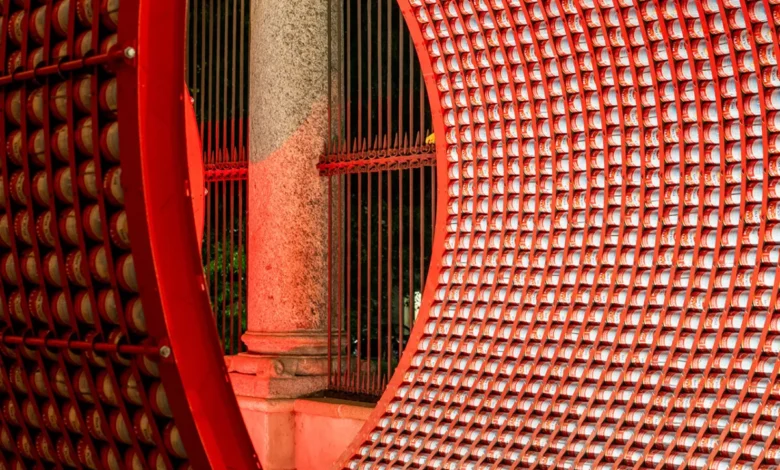
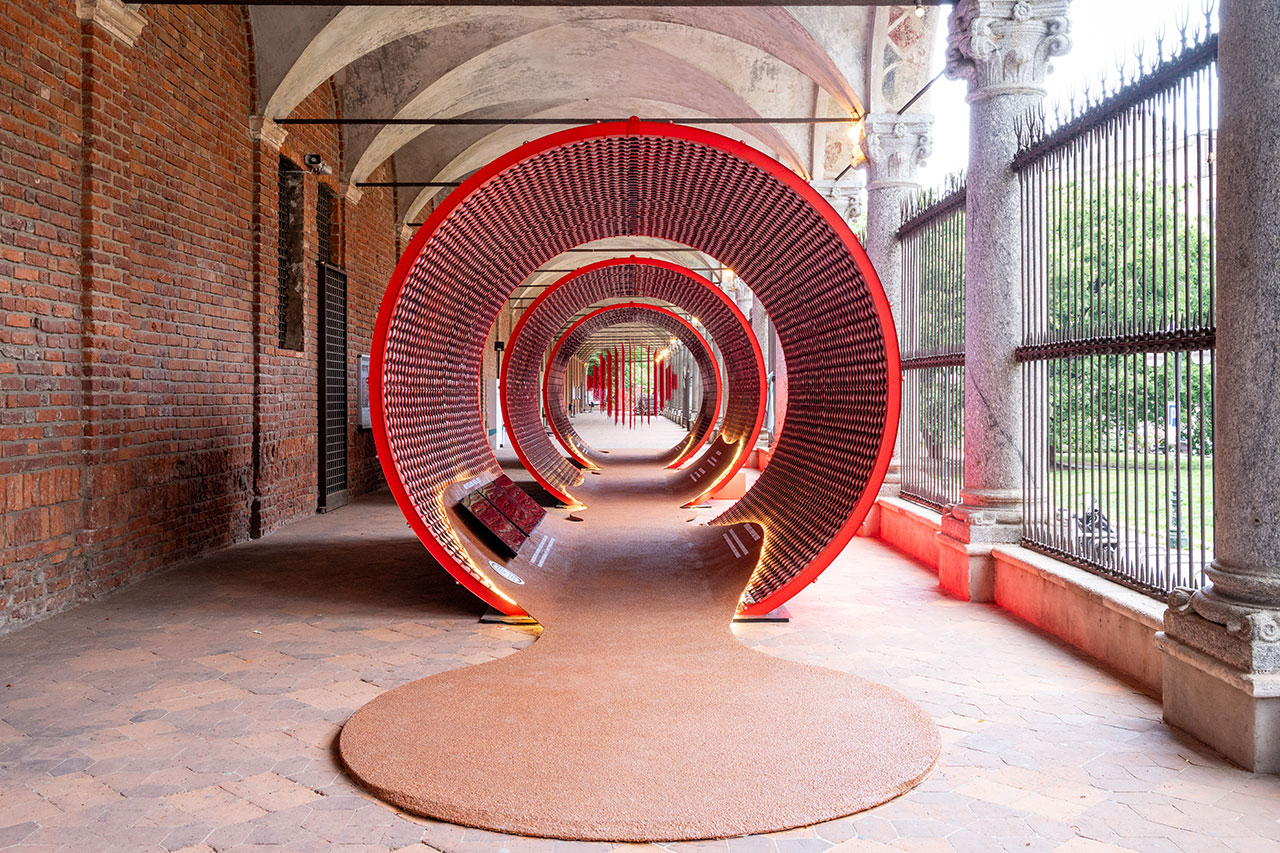
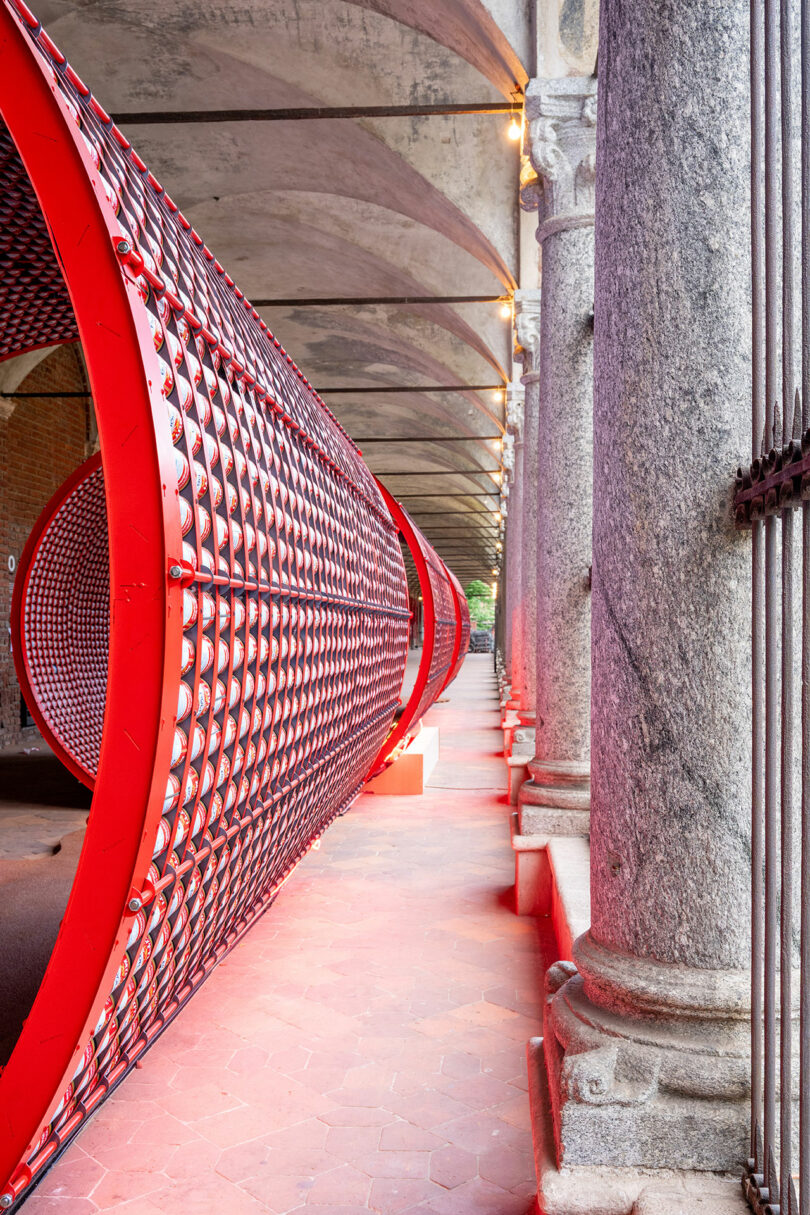
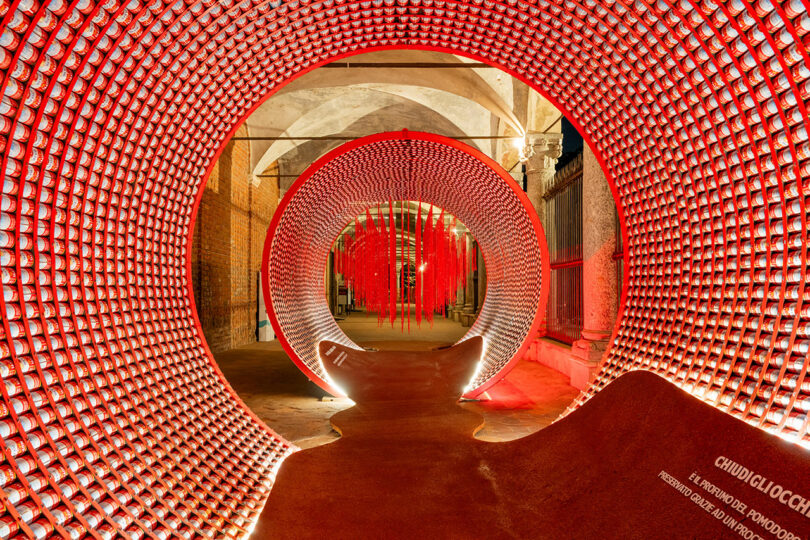
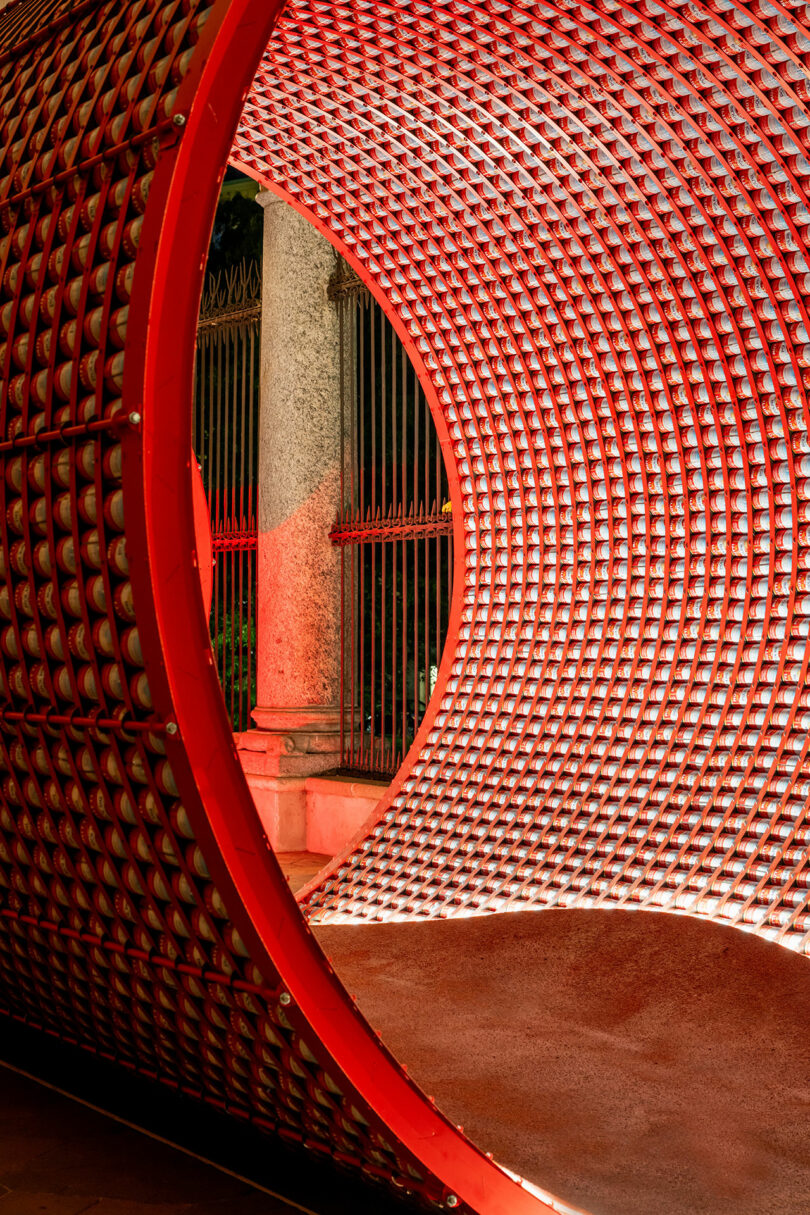
The historic portico of the Università degli Studi di Milano has been transformed into a site of architectural and culinary exploration with the unveiling of House of Polpa, a massive temporary installation created through a collaboration between MIT professor and architect Carlo Ratti and the renowned Italian tomato producer Mutti. As Milan Design Week and the accompanying Fuorisalone events draw to a close, this 25-meter-long installation remains a focal point for critics and visitors alike, challenging traditional notions of permanence in design by utilizing one of the most common pantry staples—the humble tin can—as a primary building block. The structure, comprised of approximately 20,000 cans of Mutti tomato pulp, serves as a physical manifestation of the circular economy, transitioning from a rigid architectural form into a series of community meals.
Architectural Innovation and the Philosophy of the Ephemeral
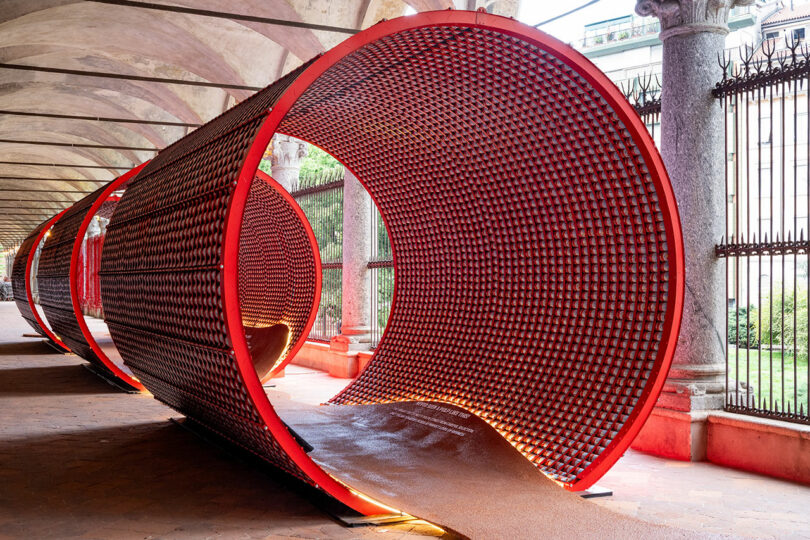
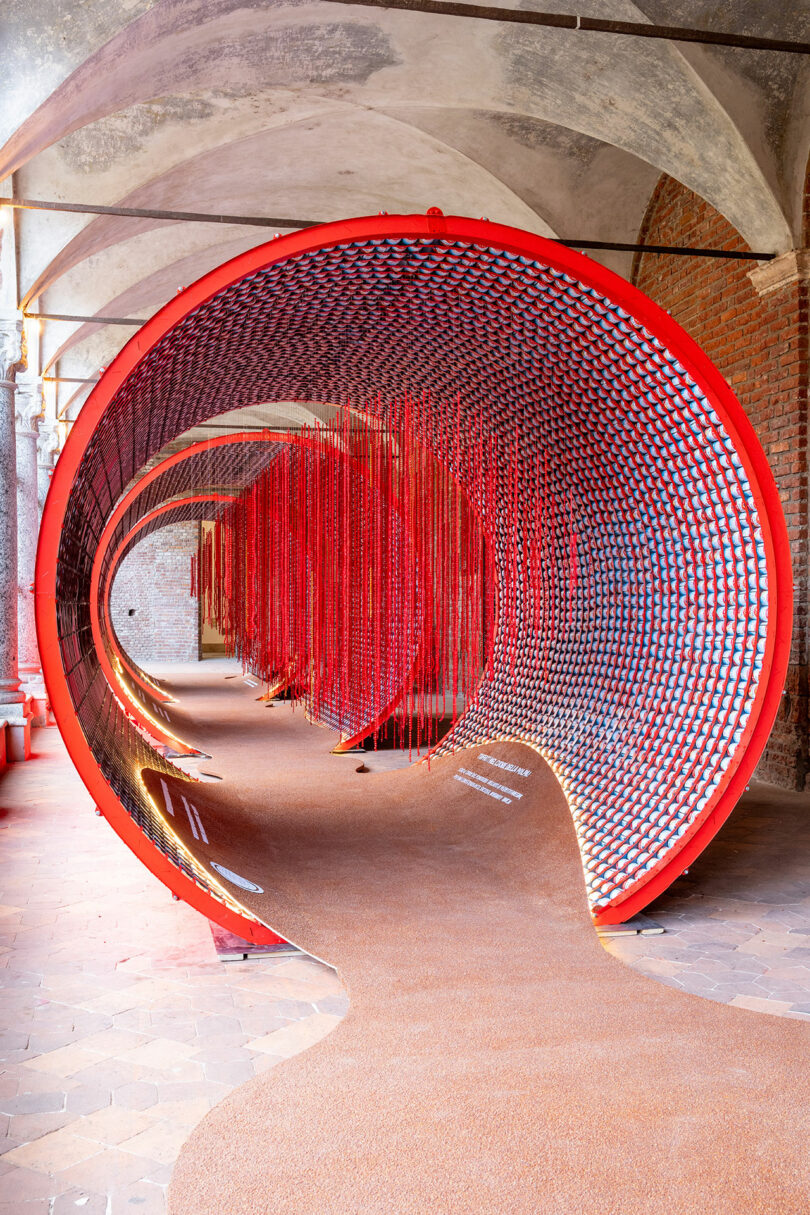
The House of Polpa is not merely a display of consumer goods but a sophisticated engineering feat. Designed by Carlo Ratti Associati (CRA), the installation utilizes a specialized steel substructure that provides the necessary tension and support to stack thousands of aluminum cans into a grand, cylindrical tunnel. This framework was engineered to allow for the gradual removal of individual units without compromising the structural integrity of the remaining volume. This "dissolving" nature is central to Ratti’s design philosophy, which frequently explores how digital and physical systems can interact to create more responsive, less wasteful urban environments.
By using the can as a modular unit, Ratti references the pop-art sensibilities of the 20th century, most notably Andy Warhol’s elevation of the Campbell’s soup can. However, where Warhol focused on the repetition and commercialism of the object, Ratti focuses on its utility and lifecycle. The installation spans a significant portion of the university’s courtyard, creating a vibrant red corridor that contrasts sharply with the classical stone columns and Renaissance-era architecture of the surroundings. The choice of the Università degli Studi di Milano as a venue is significant, as it has long served as the heart of the INTERNI "Cross-Vision" exhibition, a series of installations that explore the intersection of nature, technology, and heritage.
A Multi-Sensory Journey Through the Tomato Supply Chain
While the visual impact of the 20,000 red cans is immediate, the House of Polpa was designed to be a multi-sensory experience. As visitors enter the 25-meter tunnel, they are greeted by a curated environment that references the various stages of the tomato production cycle. The interior features subtle olfactory cues, emitting the scent of fresh earth and ripened tomatoes, intended to transport the urban visitor back to the fields of Parma where Mutti’s produce is grown.
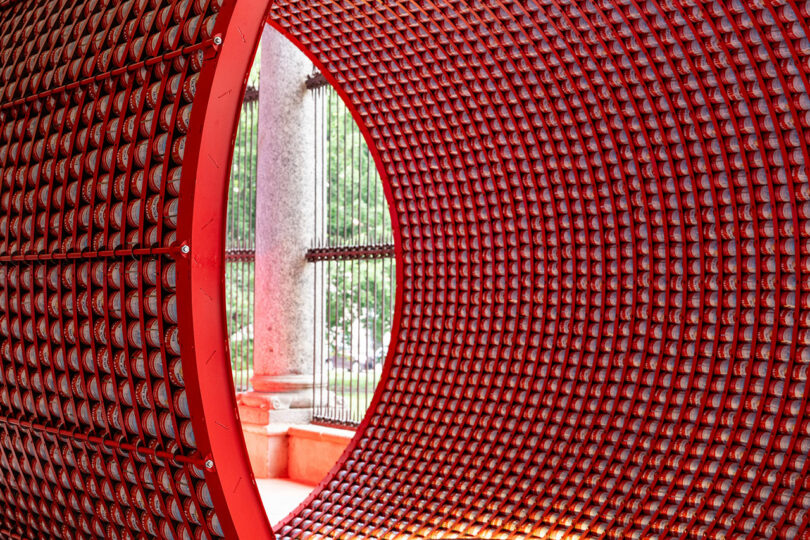
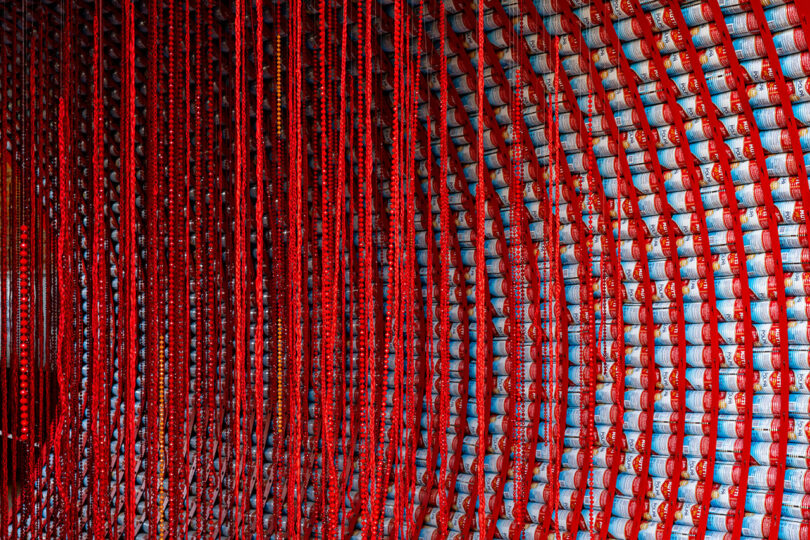
Soundscapes play an equally vital role in the experience. Audio recordings of the harvesting process, the humming of processing machinery, and the sounds of the Italian countryside are layered to create an immersive background. This pedagogical approach aims to reconnect the consumer with the origins of their food, highlighting the industrial and agricultural labor required to produce a single can of pulp. The tactile nature of the installation is further emphasized by the varying textures within the tunnel, including hanging red cords that mimic the verticality of vine growth and the metallic coolness of the aluminum walls.
Material Circularity: From Peels to Flooring
One of the most technically significant aspects of the House of Polpa is the flooring, which was developed in partnership with Mapei, a global leader in chemical products for the building industry. In a direct application of circular design, the resin used for the installation’s floor was formulated using dried tomato peels. These peels are a byproduct of Mutti’s industrial processing; typically considered waste, they were salvaged and processed into a durable, bio-based material.
This collaboration with Mapei underscores a broader trend in the design world: the search for high-performance materials derived from organic waste streams. By integrating the tomato supply chain directly into the building materials, the project demonstrates that circularity is not just a theoretical concept but a practical solution for the construction industry. The floor serves as a functional proof-of-concept, showing how the food and construction sectors can collaborate to reduce environmental footprints.
Chronology of the Installation: From Assembly to Consumption
The lifecycle of the House of Polpa was planned with precision to ensure that the project left no permanent waste. The timeline of the installation can be divided into three distinct phases:
- The Assembly Phase: Over several days leading up to Milan Design Week, the steel substructure was erected under the university portico. The 20,000 cans were then manually slotted into the frame, creating the dense, opaque red walls of the tunnel.
- The Interaction Phase: During the peak of the Fuorisalone, the installation functioned as a public gallery and thoroughfare. It was during this phase that the sensory elements were most active, and thousands of international visitors engaged with the space.
- The Dissolution and Redistribution Phase: In the final days of the event, the "ephemeral" nature of the project was realized. Visitors were invited to participate in the "deconstruction" of the art by taking a can of Mutti Polpa home with them. This act of participation turns the consumer into a collaborator in the project’s dispersal.
Any cans remaining after the conclusion of the event have been earmarked for donation to local food banks and charitable organizations within the Milanese region. This ensures that the energy and resources used to create the installation continue to provide value long after the physical structure has been dismantled.
Contextual Background: Mutti and the Evolution of Food Design
The partnership between Carlo Ratti and Mutti is part of a larger movement where heritage brands seek to align themselves with sustainable innovation. Mutti, founded in 1899 in Parma, has spent the last several decades positioning itself as a leader in sustainable agriculture, implementing programs to reduce water usage and eliminate modern slavery in the tomato harvesting process.
For Mutti, the House of Polpa is a marketing intervention that transcends traditional advertising. By placing their product in the context of high-level architectural discourse, the brand emphasizes the quality and cultural weight of its staple product. Food design, once limited to the plating of dishes in high-end restaurants, has evolved to encompass the entire ecosystem of food—from the genetics of the seed to the logistics of the packaging and the eventual disposal of the container.
Technical Data and Sustainability Metrics
The scale of the project provides several data points that reflect the current state of temporary installations in the design world:
- Total Units: 20,000 cans of 400g Mutti Polpa.
- Structural Length: 25 meters (approx. 82 feet).
- Material Recovery: 100% of the primary building material (the cans) is diverted from landfills through direct consumption or donation.
- Waste Valorization: Utilization of tomato peel waste in Mapei resin reduces the carbon intensity of the flooring compared to traditional synthetic resins.
Architectural critics have noted that the House of Polpa addresses the "waste problem" of global design festivals. Milan Design Week often sees the construction of elaborate pavilions that are discarded after only six days. By using a product that is inherently meant to be consumed, Ratti and Mutti have provided a blueprint for "zero-waste" event architecture.
Broader Implications for Urban Design and the Circular Economy
The House of Polpa arrives at a time when urban planners and architects are increasingly looking toward modular and temporary structures to solve city challenges. The ease with which the installation can be assembled and redistributed suggests future applications for disaster relief, temporary markets, or pop-up community centers where materials need to be repurposed quickly.
Furthermore, the project highlights the potential for "branded environments" to serve a dual purpose: promotion and public utility. As the cans move from the university courtyard to various kitchens across Italy, the installation’s "life" is extended into the private sphere. This transition from a public monument to a private meal is a powerful metaphor for the interconnectedness of global supply chains and local consumption.
In a concluding statement regarding the project’s impact, the design team emphasized that the goal was to make the invisible visible. The tomato can is a product people see every day but rarely "look" at. By magnifying its presence to an architectural scale, the House of Polpa forces a reconsideration of the objects that sustain us. As the final cans are removed and the steel frame is packed away, the installation leaves behind no physical footprint at the Università degli Studi di Milano, fulfilling its promise as a truly ephemeral architectural intervention.