The Emerging Crisis of Algorithmic Sabotage in Luxury Jewelry E-Commerce: Understanding the Intersection of Typosquatting and Negative SEO

The first sign of a sophisticated cyberattack against Opulent Jewelers did not arrive through a breached firewall or a customer service complaint, but rather as a subtle anomaly within the Google Search Console disavow report. For an industry accustomed to traditional threats such as physical theft or credit card fraud, the discovery was jarring: referring domains had surged by several hundred within a single week. These domains were not jewelry-related, nor were they legitimate partners; instead, they followed a coordinated pattern of minor misspellings and aggressive backlink profiles. This incident highlights a burgeoning threat landscape for luxury jewelry e-commerce—a method of algorithmic sabotage that combines typosquatting with negative Search Engine Optimization (SEO) to erode brand visibility and siphon revenue.
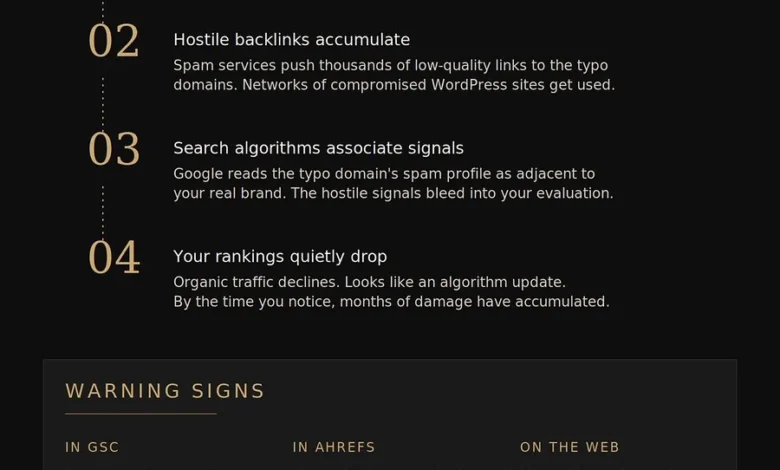
While traditional typosquatting involves registering misspelled domain names to host phishing sites or steal credentials, this new iteration is more patient and technically insidious. The domains often host no content and feature no outbound links. Instead, they serve as "poisoned wells," accumulating thousands of spam-flagged inbound links designed to confuse search engine algorithms. By creating a hostile backlink profile for a domain that closely mimics a legitimate brand, attackers exploit the way search engines understand brand identity, causing the legitimate site’s rankings to slide under the weight of "signal bleed."
The Technical Evolution of Brand Impersonation
To understand the severity of this threat, one must distinguish it from the "classic" fraud models of the early 2000s. Historically, a typosquatter would register a domain like "Gogle.com" to capture accidental traffic or install malware. In the luxury jewelry sector, the goal has shifted from immediate theft to long-term market displacement.
The current strategy relies on the "entity-based" nature of modern search algorithms. Search engines like Google do not merely evaluate a website in isolation; they look at the broader digital ecosystem surrounding a brand name. When an attacker registers a domain that is one character off from a major retailer and floods it with low-quality, "toxic" links from gambling sites, adult content, or compromised WordPress installations, the algorithm may begin to associate those negative signals with the primary brand entity.
As the owner of Opulent Jewelers noted during an investigation into the pattern, the attacker is essentially weaponizing Google’s own quality filters. If a domain nearly identical to a reputable jeweler is flagged for massive link manipulation, the "trust score" of the actual brand can be collateral damage. The result is a decline in organic traffic that looks, on the surface, like a routine algorithm update or a change in consumer behavior, making it exceptionally difficult for non-technical business owners to diagnose.
Chronology of a Coordinated Campaign
The intensification of these attacks in the luxury sector has followed a specific timeline, suggesting an organized effort by actors with significant technical infrastructure.
- Early 2023: Initial reports emerge of "parked" typosquat domains appearing in the backlink profiles of high-end watch and jewelry retailers. These were largely ignored as "background noise" by SEO teams.
- Mid-2024: The pattern shifts. Attackers begin using aged-domain marketplaces to acquire domains with existing history, then layering typosquatting characteristics on top of them. This makes the domains appear more "authoritative" to search engines before the spam injection begins.
- Late 2024: Coordinated infrastructure is identified. Security researchers observe networks of compromised WordPress sites being used to inject commercial anchor text into the typosquat domains. The scale moves from dozens of links to thousands per week.
- Early 2025: High-end retailers report significant SERP (Search Engine Results Page) volatility. Independent jewelers, particularly those specializing in the pre-owned market, see a direct correlation between the appearance of these "poisoned" domains and a drop in rankings for high-value keywords.
This timeline suggests that the attackers have moved beyond experimentation into a phase of industrial-scale manipulation, utilizing automated scripts and link-spam services that openly advertise their ability to manipulate search signals.
Economic Incentives: Why Luxury Jewelry?
The targeting of the luxury jewelry industry is a calculated economic decision. Several factors make this sector an ideal candidate for negative SEO and typosquatting attacks.
First, the Average Order Value (AOV) in luxury jewelry is among the highest in e-commerce. Transactions for items such as "pre-owned Cartier Love bracelets" or "authenticated Van Cleef & Arpels Alhambra necklaces" frequently range from $4,000 to $50,000. In such a high-stakes environment, even a minor 5% drop in organic traffic can translate into hundreds of thousands of dollars in lost monthly revenue.
Second, the keyword landscape is characterized by high competition and low inventory. There are only a handful of positions on the first page of Google for terms with high commercial intent. If an attacker can successfully suppress a competitor by just two or three positions, they can effectively redirect the flow of high-intent buyers to other sites—potentially their own legitimate storefronts or those of clients who have hired them for "black hat" marketing services.
Third, the industry relies heavily on trust and authentication. Established retailers invest heavily in content that proves provenance and expertise. This content-rich environment is a double-edged sword; while it builds SEO authority, it also provides a clear "target" for attackers to mimic and undermine through technical sabotage.
Identifying the Signs of Algorithmic Sabotage
For jewelers and e-commerce managers, detection requires a shift in focus from customer-facing metrics to backend technical signals. Industry experts suggest monitoring two primary areas:
Google Search Console Anomalies:
Retailers should watch for sudden spikes in referring domains that occur without a corresponding marketing campaign. A hallmark of this attack is the appearance of links from regions where the jeweler does not operate, or links using "brand + commercial" anchor text (e.g., "buy [Brand Name] discount") pointing to domains the jeweler does not own.
Backlink Monitoring Tools:
Using platforms like Ahrefs or Semrush, jewelers can identify new referring domains that are classified as "spam" by automated detection. A critical red flag is a domain with a single-letter variation of the brand name that hosts no content but shows a vertical line of growth in its backlink profile. This combination has no legitimate business purpose and is almost certainly a precursor to an SEO attack.
Strategic and Legal Defensive Layers
Defending against this hybrid threat requires a multi-layered approach that combines technical maintenance with legal recourse.
The primary technical defense is the consistent use of the Google Disavow Tool. This allows webmasters to tell Google’s algorithm to ignore specific toxic domains. However, experts warn that this is not a "set and forget" solution. For brands under active attack, disavow files must be updated weekly or even daily to keep pace with the attacker’s link-building velocity.
Beyond technical fixes, the legal framework provides two main avenues for protection: the Uniform Domain-Name Dispute-Resolution Policy (UDRP) and the Anticybersquatting Consumer Protection Act (ACPA).
The UDRP, managed by the World Intellectual Property Organization (WIPO), is a relatively fast process—typically 60 to 75 days—that can result in the transfer or cancellation of a typosquatting domain. It is an essential tool for brands that have established trademark rights. For more severe cases, the ACPA allows US-based companies to sue for statutory damages ranging from $1,000 to $100,000 per domain. While more expensive and time-consuming, the threat of federal litigation can change the cost-benefit analysis for sophisticated attackers.
Broader Implications for the E-Commerce Industry
The emergence of typosquatting-linked negative SEO represents a maturing of cybercrime. It moves the battlefield from the "front end"—where users interact with sites—to the "back end" of the internet’s infrastructure. This trend suggests that search engines will face increasing pressure to evolve their algorithms to distinguish between legitimate brand signals and coordinated sabotage.
For the luxury jewelry industry, the "resource asymmetry" remains the greatest challenge. An attacker can run automated scripts for a few hundred dollars, while a defender must invest in SEO specialists, monitoring tools, and legal counsel. This disparity emphasizes the need for industry-wide awareness.
As the digital landscape becomes increasingly crowded, the definition of brand security must expand. It is no longer enough to secure the website itself; retailers must now protect the very "space" their brand occupies in the search engine’s mind. The case of Opulent Jewelers serves as a bellwether for the industry: in the modern era of e-commerce, the most dangerous threats are often the ones that are never seen by the customer, operating silently in the code and links that define digital authority. The defense, therefore, is not found in better firewalls, but in the diligent, ongoing monitoring of a brand’s algorithmic reputation.
Related posts: