Shinya Kozuka Unveils Evocative Fall 2026 Collection at Milan Debut, Exploring Blurred Realities and Introspection

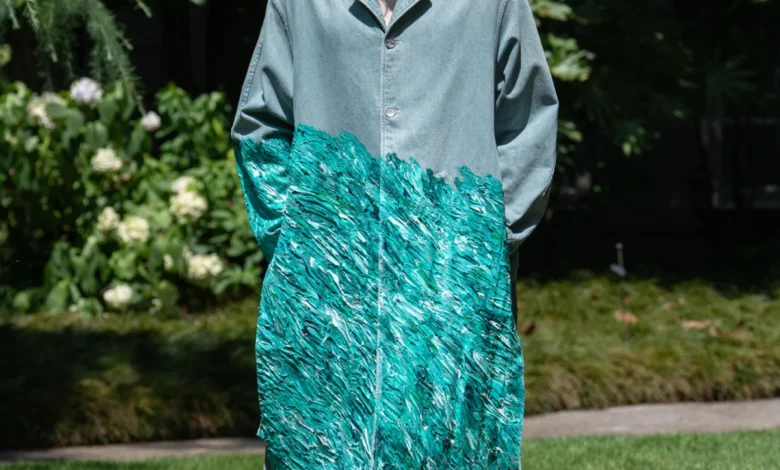
Shinya Kozuka, the acclaimed Japanese designer, made his highly anticipated debut on the Milan men’s fashion calendar, presenting his Fall 2026 collection, which delved into the profound concept of distorted perception and the rediscovery of the familiar. Following a notable appearance as a guest designer at Pitti Uomo in Florence, Kozuka brought a refined evolution of his introspective design philosophy to the global stage, translating the mundane act of a lonely commute into a rich tapestry of blurred visions and intimate narratives. This collection serves as a powerful statement on how altering one’s focus can reveal profound new perspectives, even within the most routine aspects of daily life.
The Genesis of a Vision: From Tokyo Commute to Milan Runway
The inspiration for Kozuka’s Fall 2026 collection originated from an intensely personal and seemingly unremarkable experience: his journey home from his Tokyo atelier. This routine commute, often undertaken without his prescription contact lenses, allowed him to perceive familiar cityscapes through a softened, indistinct lens. This literal blurring of vision became the metaphorical and aesthetic cornerstone of the collection, prompting a reflection on how slight shifts in perspective can illuminate new facets of known environments. This approach is characteristic of Kozuka’s design ethos, which consistently embeds nonlinear storytelling drawn from intimate thoughts and routine circumstances into his seasonal offerings.
Prior to his Milan debut, Kozuka had already set a contemplative tone for Fall 2026 with his show in Florence as Pitti Uomo’s guest designer. That presentation, memorable for its moody atmosphere and inspiration drawn from "lost gloves encounters," offered an initial glimpse into the designer’s autumnal narrative. Pitti Uomo, historically a crucial platform for menswear trends and emerging talent, provided a robust foundation for Kozuka to introduce his conceptual framework to a wider European audience. His transition from this prestigious trade show to the official Milan Fashion Week calendar signifies a significant step in the brand’s global expansion and its increasing influence within the luxury menswear landscape. Milan, as one of the four major fashion capitals, offers unparalleled visibility and commercial opportunities, marking a pivotal moment in Kozuka’s trajectory.
A Deep Dive into Thematic Inspiration: Perception and Memory
The core theme of the Fall 2026 collection – a blurred vision of the world – was articulated with remarkable clarity and sensitivity. Kozuka’s decision to base an entire collection on the simple act of seeing without corrective lenses speaks volumes about his ability to extract profound meaning from everyday phenomena. This concept encourages viewers to question their own perception of reality and to consider how often they overlook the subtle beauty and novelty hidden within their familiar surroundings. It’s a testament to the idea that "newness," a constant demand in the fast-paced fashion industry, can be found not just in novel forms but in a re-evaluation of existing ones.
A key visual reference for this blurring effect was the photography of Uta Barth. Barth, a German-born American artist, is renowned for her minimalist photographs that explore perception, light, and the act of seeing itself. Her work often features deliberately out-of-focus images, subtle shifts in light, and repetitive compositions that challenge the viewer to look beyond the subject matter and focus on the mechanics of vision. Kozuka’s appropriation of Barth’s aesthetic provides an intellectual framework for his watercolor-like landscape prints, where the vibrant, yet indistinct, urban scenes of Tokyo appear to melt into the fabric, mirroring the soft focus of an uncorrected eye. This artistic dialogue elevates the collection beyond mere clothing, positioning it as a wearable exploration of optical philosophy.
Further enriching the collection’s narrative was the subtle integration of Japanese cultural elements. The recurrent motif of sparrows, delicately embroidered onto various pieces, holds a dual significance. On one hand, sparrows are common birds in Japanese culture, often symbolizing humility and community. On the other, their chirping reminded Kozuka of a traditional whistling song from his childhood, infusing the collection with a layer of personal memory and nostalgia. This blend of the universally relatable (blurred vision) with the intimately personal (childhood memories, specific cultural sounds) creates a collection that resonates on multiple emotional and intellectual levels. It reflects a design sensibility deeply rooted in the designer’s heritage while maintaining a universal appeal through its exploration of human experience.
Collection Highlights: Craftsmanship, Texture, and Silhouette
The Fall 2026 collection showcased Kozuka’s mastery of fabric manipulation, innovative silhouettes, and an understated yet impactful use of color. Mint green emerged as a dominant hue, lending a fresh, almost ethereal quality to the garments, reminiscent of the soft, diffused light of early morning or twilight.
-
Fading Landscape Prints: The collection’s signature motif appeared on fluid pajama silhouettes, Bermuda shorts, and overshirts. These watercolor-like prints depicted Kozuka’s Tokyo neighborhood, with details deliberately fading on the left-hand side, often crafted from sheer organza. This technique not only visually represented the blurred vision but also added a dynamic, almost kinetic quality to the garments, as if the wearer were constantly moving through a dreamlike landscape. The overshirts featured a striking detail: a slash at the back center, revealing either the spine or a handsomely crafted panel knit, introducing an element of architectural deconstruction and unexpected sensuality.
-
Diaphanous Layering: Transparency and lightness were key elements. Billowing parkas, rendered in paper-thin nylon, created a sense of effortless volume and movement, while organza overpants layered atop tailored shorts and trousers introduced a sophisticated interplay of textures and opacity. These sheer pieces contributed to the collection’s overall ethereal aesthetic, allowing glimpses of the garments beneath and adding depth to each ensemble. The aforementioned sparrow motif, often embroidered onto these diaphanous layers, appeared almost to float, reinforcing the dreamlike quality.
-
Textural Innovation and Contrast: Kozuka skillfully juxtaposed refined tailoring with experimental fabric treatments. Duster coats with high side slits and work jumpsuits, crafted from sartorial wools, were hand-painted with textured brushstrokes, giving a tactile dimension to the visual blur. This technique blurred the lines between art and fashion, transforming garments into wearable canvases. Furthermore, the collection explored various fabric manipulation techniques, including patchwork, crinkly fabrics, and tie-dye, which, despite their grounded and wearable silhouettes, often employed deceptive fabrics or construction methods. This created a tension between apparent simplicity and underlying complexity, a hallmark of Kozuka’s design approach.
-
Collaborative Headwear: The collection was impeccably styled with exquisite headwear designed by the legendary milliner Stephen Jones. Known for his imaginative and sculptural creations, Jones’s contributions added a final layer of sophistication and artistry, elevating the overall presentation and reinforcing the collection’s conceptual depth. The collaboration underscored Kozuka’s commitment to high-calibre craftsmanship and his ability to work with leading creatives to fully realize his vision.
Kozuka’s Philosophy: Finding Newness in Focus
Reflecting on his creative process, Shinya Kozuka articulated a philosophy that resonates deeply within the contemporary fashion landscape. Backstage after the show, he stated, "Working in fashion it often feels as though we are constantly being asked for something new… Trying to find that newness I’ve often [just] adjusted my focus." This statement serves as a manifesto for his design approach. In an industry often criticized for its relentless pursuit of novelty and its cyclical nature, Kozuka proposes a more sustainable and introspective path to innovation.
His collections consistently challenge the traditional definitions of "new." Instead of striving for radical departures or entirely unprecedented forms, Kozuka demonstrates that true originality can stem from a re-examination of the familiar, a subtle shift in perspective, or an intensified focus on intimate experiences. This approach aligns with a growing movement among designers who seek authenticity and longevity over fleeting trends. By embedding nonlinear storytelling and drawing inspiration from mundane routines, Kozuka creates clothing that is not only aesthetically compelling but also intellectually stimulating and emotionally resonant. His work invites a deeper engagement, encouraging the wearer and observer alike to look beyond the surface and appreciate the nuanced narratives woven into each garment.
Broader Impact and Implications for Menswear
Shinya Kozuka’s Milan debut for Fall 2026 carries significant implications for his brand, for Japanese designers in the global arena, and for the broader direction of menswear.
-
Brand Trajectory: The move to Milan Fashion Week marks a definitive step towards establishing Shinya Kozuka as a prominent international luxury menswear brand. This increased visibility will undoubtedly attract a wider audience of buyers, press, and consumers, fostering commercial growth and solidifying his position as a thoughtful innovator. The consistent critical acclaim for his conceptual yet wearable designs suggests a strong potential for sustained success.
-
Japanese Influence in European Fashion: Kozuka joins a distinguished lineage of Japanese designers who have profoundly influenced European fashion, from the avant-garde deconstruction of Rei Kawakubo and Yohji Yamamoto to the innovative textiles of Issey Miyake. His work, characterized by its quiet introspection, intellectual depth, and subtle fusion of traditional Japanese aesthetics with contemporary design, continues this legacy. He represents a new generation of Japanese talent that brings a unique perspective to the global stage, emphasizing craftsmanship, concept, and a nuanced understanding of human experience.
-
Menswear Trends: The Fall 2026 collection offers compelling insights into evolving menswear trends. The fluid silhouettes, pajama styles, and emphasis on comfort align with the ongoing shift towards more relaxed and less restrictive clothing. The blending of tailored elements with deconstructed details and artistic interventions speaks to a desire for individuality and personal expression within a sophisticated framework. Furthermore, Kozuka’s focus on introspection and the beauty of the everyday resonates with a broader cultural movement towards mindfulness and authenticity, suggesting that menswear is increasingly moving beyond mere superficial aesthetics to embrace deeper meaning. The inclusion of delicate embroidery and sheer fabrics also hints at a continued softening of traditional gender lines in fashion, advocating for a more fluid and inclusive approach to men’s attire.
In conclusion, Shinya Kozuka’s Fall 2026 collection, presented at his inaugural Milan show, was a triumph of conceptual design and refined execution. By transforming the simple act of a blurred commute into a rich narrative, he offered a poignant commentary on perception, memory, and the constant search for newness. His ability to fuse deeply personal inspiration with sophisticated craftsmanship and a keen artistic sensibility positions him as a significant voice in contemporary menswear. The collection not only showcased beautiful clothing but also invited a profound reflection, leaving audiences eager to witness the continued evolution of his unique vision and to experience the world through his ever-adjusting focus.