Strait of Hormuz Negotiations Conclude Without Resolution Amid Rising Tensions and Proposed Transit Fees

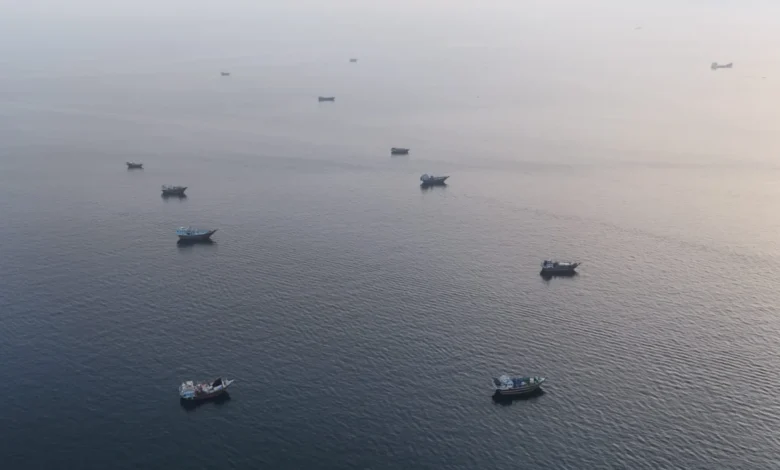
Negotiations between the United States and Iran regarding the future of the critical Strait of Hormuz concluded in Qatar on Wednesday without a clear resolution, leaving the status of the vital global oil conduit uncertain. The two-day talks, mediated separately by Qatari and Pakistani officials, marked a continued effort to de-escalate a four-month conflict that has profoundly impacted maritime security and global supply chains. Despite a 14-point interim framework signed in June aimed at ending hostilities and ensuring safe passage through the strait, recent exchanges of strikes and contentious proposals for transit fees underscore the fragility of the current geopolitical landscape.
The Geopolitical Chokepoint: Understanding the Strait of Hormuz
The Strait of Hormuz is one of the world’s most strategically important maritime chokepoints, a narrow waterway connecting the Persian Gulf to the Arabian Sea and the broader Indian Ocean. Approximately one-fifth of the world’s total oil consumption, and a significant portion of its liquefied natural gas (LNG), transits through this strait daily. Its significance extends beyond energy, as it is also a crucial route for container ships carrying a vast array of goods to and from major economies in the Middle East, Asia, and Europe. The strait, at its narrowest point, is only about 39 kilometers (21 nautical miles) wide, with shipping lanes just 10 kilometers (6.2 miles) in width. This geographical constraint, coupled with the geopolitical complexities of the region, makes any disruption a matter of international concern.
Historically, the Strait of Hormuz has been a flashpoint for regional and international tensions. Control or influence over the strait has been a recurring theme in the foreign policy of surrounding nations and global powers. The United States, a staunch proponent of freedom of navigation, maintains a significant naval presence in the region, primarily through its Fifth Fleet, headquartered in Bahrain, to safeguard international shipping. Iran, which borders the strait to the north, has long asserted its historical and geographical claims over the waterway, often viewing the presence of foreign naval forces as a challenge to its sovereignty.
A Four-Month Conflict and Tentative Truce
The current crisis began in earnest around February 28, following what has been characterized as a "four-month war" between the U.S. and Iran. While not a conventional, declared war, this period has been marked by escalating tensions, including proxy conflicts, cyber skirmishes, and direct naval incidents. The immediate catalyst for the strait’s closure was a series of U.S. and Israeli strikes, prompting the Iranian military to effectively shut down the waterway, threatening any vessel attempting to pass through. This blockade severely impacted global shipping, leading to diversions, delays, and a significant spike in insurance premiums for vessels operating in the region.
A crucial turning point arrived on June 17 with the signing of a 14-point interim framework. This agreement, facilitated by international mediators, aimed to de-escalate the conflict and, critically, to reopen the Strait of Hormuz for safe passage. While the full details of the framework remain largely undisclosed to the public, its primary objectives were clear: to establish a pathway for ending the ongoing hostilities and to restore a semblance of normalcy to maritime operations in the strait. Following its signing, vessel activity in the strait did see a notable increase, indicating a cautious optimism among shipping operators. For instance, ship tracking intelligence provider MarineTraffic recorded 34 verified transits through the strait on Tuesday, following 40 verified crossings the day prior, a significant rebound from the near-total cessation of traffic during the height of the blockade.
Negotiations Hit Impasse in Qatar
The recent two-day talks in Qatar, concluding on Wednesday, represented a direct follow-up to the June framework, aimed at solidifying its provisions and finding a lasting resolution for the strait’s future. However, these negotiations were conducted indirectly, with U.S. and Iranian delegations not meeting face-to-face. Instead, they engaged separately with mediators from Qatar and Pakistan, who shuttled between the two parties. This format, often employed in high-stakes diplomatic endeavors where direct engagement is politically unfeasible, underscores the deep mistrust and complex nature of the U.S.-Iran relationship.
Despite the diplomatic efforts, the talks concluded without any public sign of a breakthrough. A central point of contention remains the exact operational status and future governance of the strait. The lack of a clear resolution signals that the fundamental disagreements that led to the four-month conflict, and which the interim framework only partially addressed, persist. The ongoing fragility was starkly highlighted last weekend by an exchange of strikes between the two countries, which followed an Iranian attack on an Evergreen cargo ship—an incident that demonstrated the volatile security environment despite ongoing diplomatic initiatives.
The Contentious Issue of Transit Fees
A major new point of friction emerging from these discussions is Iran’s insistence on implementing transit fees for ships passing through the Strait of Hormuz. Iran asserts that it holds joint sovereignty over the strait alongside Oman, a U.S. ally, and claims that both countries intend to jointly administer the waterway and collect passage fees once the 60-day term of their current framework expires. This assertion directly challenges the long-standing international principle of freedom of navigation through international straits, as enshrined in the United Nations Convention on the Law of the Sea (UNCLOS), which guarantees transit passage for all ships and aircraft.
On Tuesday, The New York Times reported that Iran and Oman were indeed preparing to move forward with plans to collect payments from ships transiting the Strait of Hormuz, despite strong public objections from the United States. Citing an Iranian official and a regional diplomat, the report indicated that Oman had recently delivered a formal proposal to the U.S. and other Western allies. This proposal outlined a plan for shipping companies to pay "service fees" for using the strait. Omani officials had previously conveyed to European counterparts that the waterway was unlikely to revert to its pre-war status quo, suggesting that fees could potentially be levied under the guise of "de-polluting the strait"—a rationale that raises concerns among maritime nations about setting a precedent for new forms of maritime taxation in international waters.
The U.S. has consistently rejected any notion of fees or restrictions on transit passage through the Strait of Hormuz, viewing such actions as violations of international law and threats to global commerce. The prospect of such fees not only introduces additional costs for shipping companies but also fundamentally challenges the established norms of maritime governance in critical international waterways.
A Fragile Maritime Landscape and Security Concerns
Despite the uptick in vessel activity following the June framework, the security backdrop throughout the Strait of Hormuz remains acutely fragile. MarineTraffic, the ship tracking intelligence provider, emphasized this ongoing instability. The Islamic Revolutionary Guard Corps (IRGC), Iran’s elite military force, has issued stern warnings to ship captains and owners, indicating that passage through non-approved routes could lead to potential attacks. This threat underscores the persistent danger in the waterway and the potential for miscalculation or accidental escalation.
Adding to these concerns, Iranian state television reported on Wednesday that a foreign container ship ran aground while using a route not approved by Iran. While specific details about the vessel or the incident remained scarce, such events serve as stark reminders of the perils of navigating the strait under ambiguous and potentially hostile conditions.
Bloomberg reported Wednesday morning that six freighters, comprising oil, gas, and fuel carriers, as well as container ships, were observed entering the Persian Gulf closely together along a U.S.-policed route near the Omani coast. Another four vessels were seen departing eastward. This pattern suggests that while commercial traffic has resumed, it is doing so under heightened security scrutiny and potentially along specific, internationally recognized or militarily monitored corridors.
Dimitris Ampatzidis, maritime risk and compliance manager at MarineTraffic, provided a nuanced perspective on the situation: "The balanced directional split and continued use of the Omani, Iranian and IMO routes show that the Strait remained operational, but not yet settled into a clearly normalized routing pattern." He further added, "The additional IMO-confirmed attack and the pause to the evacuation operation add pressure to the implementation of any maritime-security commitments, especially around safe passage, route confidence and freedom of navigation." His comments highlight the ongoing uncertainty and the need for robust security assurances that have yet to materialize fully.
Economic Repercussions for Global Shipping
The protracted uncertainty surrounding the Strait of Hormuz has tangible economic consequences, particularly for the global shipping industry. Ocean carriers continue to levy surcharges to mitigate the increased risks and operational costs associated with navigating the volatile region. These surcharges are a direct reflection of the additional expenses incurred due to alternative routings, heightened security measures, and elevated insurance premiums.
Hapag-Lloyd, one of the world’s leading container shipping lines, announced a Middle East emergency surcharge applicable to existing bookings already in transit and affected by the ongoing disruption. For a standard 20-foot dry container, these surcharges can range significantly, from $300 for a box moved between ports within the UAE (e.g., Jebel Ali to another UAE port) to a substantial $6,100 per container for cargo transported from Indian ports like Mundra and Nhava Sheva to Kuwait. This advisory applies to cargo already on water, within the affected region requiring alternative delivery arrangements, or discharged at transshipment hubs in India and Pakistan, as well as regional ports like Khor Fakkan and Salalah. Hapag-Lloyd clarified that these arrangements involve "additional operational costs, including the positioning of additional vessels, increased terminal handling expenses and higher insurance costs for port calls in the region."
Similarly, Maersk, another major global carrier, revised its peak season surcharge for containers traveling from Asia to the Middle East, effective July 1. The charge for 20-foot containers increased to $500, up from the $300 initially implemented on March 15. For 40-foot boxes, the surcharge jumped from $700 to $1,000. These increases demonstrate the sustained and growing financial burden placed on shipping companies and, ultimately, on consumers and businesses relying on global trade.
Broader Implications and Outlook
The unresolved status of the Strait of Hormuz carries profound implications for global energy markets, international shipping, and regional stability. Any long-term imposition of transit fees by Iran and Oman would represent a significant challenge to the principle of freedom of navigation, potentially setting a precedent for other strategic chokepoints worldwide. This could lead to increased costs for global trade, supply chain disruptions, and heightened geopolitical tensions.
The diplomatic impasse in Qatar also casts a shadow over the broader U.S.-Iran relationship. The "four-month war" and the current standoff over the strait are symptoms of deeper, unresolved issues, including Iran’s nuclear program, regional proxy conflicts, and the enduring impact of international sanctions. Oman, traditionally a neutral mediator, finds itself in a delicate balancing act, attempting to facilitate dialogue while also pursuing its own interests in the strait’s future governance.
The international community, particularly nations heavily reliant on the Strait of Hormuz for their energy and trade needs, will be closely watching for further developments. Continued diplomatic efforts, potentially involving other major powers, will be crucial to de-escalate tensions, ensure unimpeded passage through the strait, and prevent further economic and security disruptions in this critical maritime artery. Without a definitive resolution, the Strait of Hormuz will likely remain a volatile and costly flashpoint in global geopolitics.