Moreau Paris, a Storied 19th-Century French Trunkmaker, Enters Crucial Phase of Court-Supervised Sale as Global Investors Vie for Heritage Brand

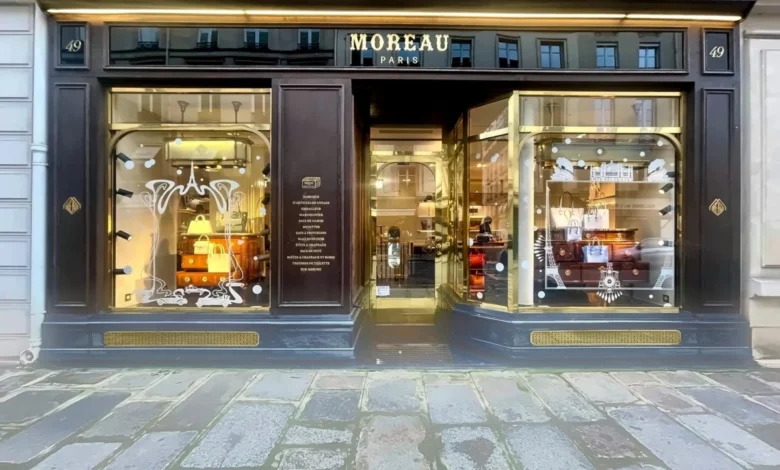
Moreau Paris, a storied 19th-century French trunkmaker born during the same effervescent era as illustrious contemporaries Louis Vuitton, Goyard, and Moynat, is poised for another significant change in ownership, with a court-supervised process currently underway in the French capital to determine its future. This pivotal moment has attracted an intense flurry of interest from a diverse range of strategic and financial investors across continents, all vying for control of the venerable leather goods house and its distinctive assets.
The Current Sale Proceedings: A High-Stakes Auction for Heritage
The competitive bidding process for Moreau Paris is being meticulously managed under the purview of the Paris Commercial Court, with Asteren, the liquidator, being represented by investment advisory Richard Morgan. All crucial brand assets are on the block, including its globally recognized wicker-inspired monogram, a hallmark of the brand since its introduction in 1882. The sale officially commenced in June, with binding offers having been due by July 9. The Paris Commercial Court is expected to reveal the successful bidder shortly after this deadline, marking a new chapter for the brand.
According to Richard Morgan, whose firm is overseeing the sale process, the criteria for selecting the winning bid are multi-faceted, extending beyond mere financial offer. The court rigorously evaluates three primary factors: the proposed offer price, the financial capacity and stability of the bidder, and, critically, the comprehensive development plan outlined for Moreau Paris. This holistic approach underscores the court’s commitment to ensuring the brand’s enduring legacy and its potential for future growth, rather than merely facilitating a quick transaction.
The level of interest in Moreau Paris has been exceptionally robust, reflecting the brand’s unique appeal and the resilience of the luxury market. "We currently have well over 30 serious candidates and are receiving calls every day," Morgan exclusively informed WWD, highlighting the intensity of the competition. "We have received huge interest from strategic and financial investors across Europe, Asia and North America. Interest has come from luxury groups, manufacturers, distributors, private equity and high-net-worth individuals with direct experience in consumer brands." This broad spectrum of potential buyers suggests a widespread recognition of Moreau Paris’s untapped potential and its distinct positioning within the competitive luxury landscape. The sheer volume and diversity of bidders underscore the perceived value of acquiring a brand with such deep historical roots and a clearly defined aesthetic.
A Deep Dive into Moreau Paris’s Storied History and Resurgences
To fully appreciate the significance of this current sale, it is essential to delve into Moreau Paris’s rich and somewhat intricate history, a narrative punctuated by periods of prominence, dormancy, and subsequent revivals. The brand traces its origins not just to the 19th century, but even further back to 1764, when master cabinetmaker Louis Moreau first established his business on the prestigious Rue Saint-Honoré. This lineage positions Moreau Paris as one of France’s oldest luxury houses, predating many of its more widely known contemporaries. The transition from a cabinetmaker to a trunkmaker reflects the evolving demands of aristocratic and burgeoning bourgeois clientele during the Industrial Revolution, who increasingly sought exquisite, durable, and personalized luggage for their extensive travels.
The late 19th century was a golden age for French trunk makers. The rise of rail travel, steamships, and burgeoning international tourism created an unprecedented demand for sophisticated luggage. Brands like Louis Vuitton, Goyard, and Moynat capitalized on this trend, developing innovative designs and distinctive monograms. Moreau Paris carved out its own niche during this "fizzy era," distinguished by its unique wicker-inspired monogram, introduced in 1882. This intricate, almost textural pattern offered a subtle yet recognizable alternative to the more overt branding of its rivals, appealing to a discerning clientele that valued understated elegance and heritage. The brand’s craftsmanship, attention to detail, and commitment to bespoke solutions solidified its reputation among the elite.
However, like many luxury houses that flourished in the Belle Époque, Moreau Paris faced significant challenges in the early 20th century. The tumult of two World Wars, economic depressions, and profound shifts in travel patterns and consumer tastes led to the brand going dormant. This period of inactivity, lasting for decades, saw the once-celebrated name fade from public consciousness, a fate not uncommon for independent luxury houses lacking the financial backing or adaptive strategies of larger conglomerates.

The first significant revival of Moreau Paris occurred in 2010, thanks to the vision and entrepreneurial spirit of Veronika Rovnoff and her brother Fedor Georges Savchenko. Recognizing the immense potential of its dormant heritage, they embarked on the ambitious journey of reintroducing Moreau Paris to the modern luxury market. Their revival efforts focused on meticulously re-establishing the brand’s identity, reinterpreting its iconic monogram, and launching a collection of sophisticated leather goods that resonated with contemporary luxury consumers while respecting its historical DNA. This initial relaunch was a testament to the enduring power of heritage and the appeal of rediscovered exclusivity.
Building on this successful reintroduction, Moreau Paris caught the attention of Onward Luxury Group, a prominent Italian luxury goods company. Onward acquired Moreau in 2016, aiming to accelerate its international expansion and leverage its operational expertise. Under Onward’s stewardship, Moreau Paris saw significant growth, including the opening of a flagship boutique on the highly coveted Rue du Faubourg Saint-Honoré in Paris – a strategic move that cemented its presence in the global luxury capital. Onward also played a crucial role in enhancing brand awareness, particularly in the discerning Japanese market, which has a deep appreciation for quality, craftsmanship, and European heritage.
The brand’s ownership changed hands again in 2020 when a group of retail entrepreneurs, led by a majority investor in Japan, acquired Moreau from Onward. This transition reflected a strategic shift, potentially aiming to capitalize further on the brand’s strong performance in Asia and its unique market positioning. It is under this ownership that the brand encountered the circumstances leading to the current court-supervised sale.
The Impetus for the Court-Supervised Sale: Navigating Challenges
The current court-supervised sale process stems from what has been described as "protracted negotiations with a landlord [that] spiraled into a larger process." While the specific details of the landlord dispute remain undisclosed, such situations in the highly competitive and financially demanding luxury retail landscape can quickly escalate. For a brand, especially one operating in prime locations like Paris, a significant real estate disagreement can impact operational viability, cash flow, and ultimately, lead to broader financial restructuring or, as in this case, a court-supervised process.
In France, a court-supervised sale, often part of a redressement judiciaire (business recovery) or liquidation judiciaire (liquidation) procedure, is designed to either save a company in distress or to ensure an orderly sale of its assets to protect creditors and maximize value. Richard Morgan, representing the liquidator Asteren, emphasized the procedural advantages for prospective buyers: "The court-supervised framework, although a constraint in the short term, makes the deal more attractive for investors. Organized as an asset sale, the court-controlled procedure offers prospective buyers a clear path to acquiring the IP and all relating assets debt free." He further clarified, "The process simplifies the holding structure, with all assets put directly under a new owner, facilitating the strategy going forward." This indicates that the sale is structured to allow a clean slate for the new owner, free from legacy debts or complex corporate structures, thereby mitigating financial risks typically associated with acquiring a distressed asset. This legal clarity and freedom from prior liabilities are significant draws for investors looking for a streamlined acquisition.
Moreau Paris’s Market Position and Global Footprint
Despite the recent challenges leading to the sale, Moreau Paris has demonstrated robust market performance in recent years. According to Morgan, the brand recorded "north of 10 million euros in annual sales amid strong demand for leather goods globally." This figure, while modest compared to luxury giants, represents a significant achievement for an independent heritage brand in a highly saturated market. It underscores the brand’s appeal and the inherent value of its unique identity.
A striking aspect of Moreau Paris’s recent success has been its international reach, with roughly 80 percent of its revenues generated outside of Europe. Japan, in particular, has emerged as a powerhouse market for the brand, with sales growing by an impressive 30 percent between 2022 and 2025. This strong performance in Japan is attributed to the country’s deep appreciation for artisanal craftsmanship, heritage brands, and understated luxury, aligning perfectly with Moreau Paris’s ethos. The brand operates three directly owned stores in Japan, reinforcing its commitment to this vital market.
Beyond Japan, Moreau Paris has strategically expanded its global presence through franchise boutiques in key luxury markets, including Mexico City, Manila in the Philippines, and Houston, Texas, where a new boutique opened as recently as last December. This diversified international footprint highlights the brand’s global appeal and its ability to resonate with diverse luxury consumer segments worldwide. The temporary closure of its Paris boutique, pending the court’s decision, is a short-term operational adjustment within the context of the sale process, with the expectation that a new owner will quickly re-establish its flagship presence in the capital.

Brand Identity: The Wicker Monogram and Artisanal Craftsmanship
Moreau Paris is celebrated for its distinctive brand identity, centered around its wicker-inspired monogram introduced in 1882. This intricate pattern, often rendered in subtle tones on canvas or leather, is a sophisticated alternative to the more overt logomania prevalent in parts of the luxury sector. It speaks to a clientele that values discreet luxury, historical authenticity, and artisanal excellence. The monogram is not merely a design element; it is a direct link to the brand’s trunk-making heritage, evoking the woven patterns of traditional travel cases.
The brand’s product portfolio primarily focuses on exquisite leather goods, including its popular top-handle Sophie model and a range of monogram canvas or leather tote bags. These pieces are renowned for their quality and craftsmanship, a testament to Moreau Paris’s commitment to luxury standards. The manufacturing of these goods takes place in Italy, a country synonymous with unparalleled expertise in leather craftsmanship and production. This strategic choice ensures that Moreau Paris products maintain the highest levels of quality, material integrity, and finishing, which are paramount for discerning luxury consumers.
Implications and Future Outlook for Moreau Paris
Richard Morgan aptly characterized the sale as a "rare opportunity to acquire an established Paris luxury house with genuine heritage, an international presence and a distinctive monogram identity." Indeed, such opportunities are infrequent in the tightly controlled world of luxury, where most heritage brands are either long-established within major conglomerates or fiercely independent family-owned enterprises. The debt-free nature of the asset sale, coupled with the comprehensive scope of assets on offer—including trademarks, intellectual property, the entire distribution network, digital assets, inventories, collections, and the crucial Japanese subsidiary—makes this a particularly attractive proposition.
The diverse pool of potential buyers each brings a different strategic vision to the table. A large luxury group might integrate Moreau Paris into an existing portfolio, leveraging economies of scale in manufacturing, marketing, and distribution. Such an acquisition could provide Moreau Paris with significant capital for expansion, access to global retail networks, and enhanced marketing muscle. A private equity firm, on the other hand, might focus on optimizing operations, expanding product lines, and aggressively growing the brand’s international footprint with an eye towards a profitable exit in the medium term. High-net-worth individuals with direct experience in consumer brands could offer a more hands-on, long-term vision, driven by a passion for preserving and evolving the brand’s unique heritage.
Regardless of the eventual victor, the new ownership will face both exciting opportunities and significant challenges. The immediate priority will be to re-establish a strong presence in Paris, the brand’s spiritual home, and to capitalize on the existing momentum in key markets like Japan. The new owner will need to carefully balance the preservation of Moreau Paris’s rich heritage with the demands of modern luxury, including digital engagement, sustainability, and evolving consumer preferences.
The sale of Moreau Paris also offers a broader insight into the dynamics of the global luxury market. It underscores the enduring value of authentic heritage and distinctive brand identity in an era of increasing consolidation. While independent brands face immense pressure from luxury conglomerates, those with a compelling story and unique aesthetic continue to command significant interest from investors. The court-supervised framework, while indicative of past financial complexities, has paradoxically created a clear and attractive pathway for new investment, ensuring that Moreau Paris, a true gem of French luxury, is poised for its next chapter of evolution and prominence on the global stage. The decision by the Paris Commercial Court will not only define the future of Moreau Paris but will also be closely watched by the luxury industry as an indicator of investor confidence in heritage brands navigating contemporary market challenges.