North American Trade at a Crossroads: USMCA’s Future Hinges on Contentious Review Amidst Shifting Alliances and Economic Pressures

With just about six weeks remaining until the crucial July 1 joint review of the United States-Mexico-Canada Agreement (USMCA), trade officials and heads of state across North America are engaged in high-stakes diplomatic efforts, striving to navigate complex bilateral relationships and secure the future of the trilateral trade pact. The upcoming review, a mandated five-year assessment embedded within the agreement, serves as a critical juncture for an accord underpinning over $1.5 trillion in annual trade and supporting millions of jobs across the continent. Divergent approaches and underlying tensions between the partners, particularly between the United States and Canada, underscore the fragility of the current framework and the intense pressures shaping its potential renewal.
The Genesis of USMCA: Modernizing a Trilateral Pillar
The USMCA, which officially came into effect on July 1, 2020, replaced the nearly three-decade-old North American Free Trade Agreement (NAFTA). Initiated under the Trump administration, the renegotiation was driven by a stated desire to modernize NAFTA, address perceived imbalances, and strengthen provisions related to labor, environment, digital trade, intellectual property, and, crucially, rules of origin, particularly for the automotive sector. The agreement’s core objective was to ensure North American competitiveness in a rapidly evolving global economy, foster fair competition, and create more high-paying jobs for workers in the region. A key feature of the USMCA is its sunset clause, which mandates a joint review by the three countries every six years, with a potential extension for another 16 years, or a termination if an agreement cannot be reached. The initial review, therefore, represents a pivotal moment for its continued viability.
U.S. and Mexico: Forging a Path of Cooperation
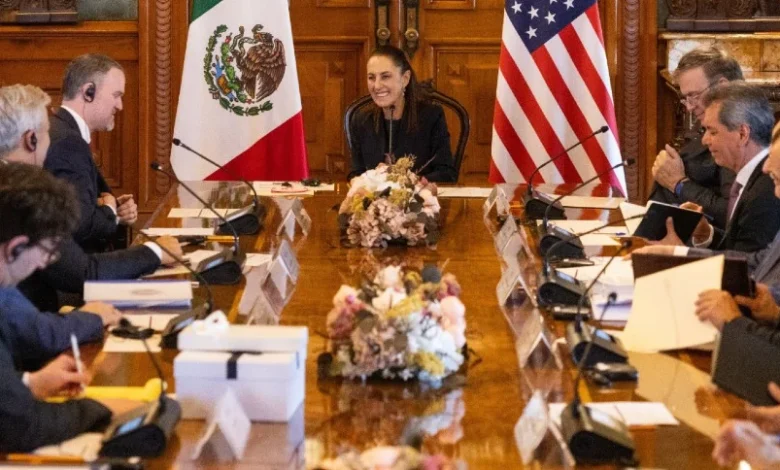
In the lead-up to the July 1 review, diplomatic engagements between the United States and Mexico have demonstrated a strategic alignment, positioning Mexico favorably in the ongoing discussions. On Monday, U.S. Trade Representative (USTR) Ambassador Jamieson Greer met with Mexican President Claudia Sheinbaum in Mexico City. The discussions focused on the state of trade and economic relations, with Greer commending Sheinbaum’s administration for its commitment to expanding bilateral cooperation. This sentiment was echoed in subsequent meetings involving Mexican Secretary of Economy Marcelo Ebrard.
Greer and Ebrard directed their respective teams to continue technical discussions throughout the week, zeroing in on critical areas such as economic security and complementary trade actions. Key among these discussions are strengthening rules of origin for vital industrial goods and fostering collaboration on the trade of critical minerals—a rapidly growing sector crucial for advanced manufacturing, electric vehicles, and renewable energy technologies. The U.S. has a strategic interest in diversifying its supply chains for these minerals away from geopolitical rivals, making Mexico a key potential partner.
Looking ahead, Greer and Ebrard have committed to their first official bilateral negotiating round on May 25, a critical precursor to the broader trilateral review. However, despite the apparent warmth in relations, the U.S. has signaled its firm stance on certain issues. According to a Reuters report, Ambassador Greer informed representatives of Mexico’s steel and auto industries that any renegotiation of the trade pact would likely not include a drawdown in existing U.S. tariffs on their sectors. This suggests a U.S. commitment to maintaining protective measures, even while seeking broader cooperation.
Mexico’s proactive measures in recent months have undoubtedly strengthened its negotiating hand. In December, President Sheinbaum announced the approval of tariffs, some as high as 50 percent, on hundreds of China-originating goods, including steel, autos, textiles, apparel, and footwear. This move directly addresses long-standing U.S. concerns about unfair trade practices and the circumvention of U.S. tariffs through third countries. By aligning its trade enforcement with U.S. objectives, Mexico signals its commitment to fair competition within North America. Furthermore, on January 1, Mexico implemented significant changes to its Customs Law, or Ley Aduanera, designed to augment customs enforcement and impose harsher penalties for violators. These reforms aim to improve border security and combat illicit trade, further demonstrating Mexico’s efforts to be a reliable and compliant trade partner.
This strategic pivot by Mexico aligns well with the broader U.S. policy of "nearshoring" or "friendshoring," which seeks to relocate supply chains from distant, potentially unstable regions to politically aligned neighboring countries. Mexico, already a top U.S. trading partner (having surpassed China in 2023), stands to benefit significantly from this trend, attracting new investments in manufacturing and bolstering its position as an integral part of the North American production base.
U.S. and Canada: A Strained Relationship and Defensive Posture
In stark contrast to the cooperative spirit observed between the U.S. and Mexico, trade relations between the U.S. and Canada remain notably tenuous, characterized by what officials have described as "icy" conversations. The stakes are particularly high for Canada, whose economy is deeply intertwined with that of its southern neighbor, with bilateral trade exceeding $700 billion annually.
Acknowledging the gravity of the situation, Canadian Prime Minister Mark Carney this week announced the formation of a Canada-U.S. advisory committee. Chaired by Dominic LeBlanc, the federal minister for Canada-U.S. trade relations, the committee comprises two dozen influential figures, including former lawmakers, prominent business leaders, and union representatives well-versed in trade, investment, and labor issues. Notable members include Conservative Party leader Erin O’Toole, former Liberal cabinet minister Ralph Goodale, former Quebec premier Jean Charest, CN Rail CEO Tracy Robinson, TC Energy CEO François Poirier, Automotive Parts Manufacturers’ Association president Flavio Volpe, Unifor union president Lana Payne, and Canadian Chamber of Commerce CEO Candace Laing. This broad representation underscores the national importance Canada places on preparing for the USMCA review and navigating its complex relationship with the U.S. The committee’s mandate is to provide strategic guidance during the ramp-up to negotiations, aiming to "preserve that unique Canadian advantage and to build on it," as stated by Carney’s office.
Prime Minister Carney has not shied away from publicly voicing his concerns regarding the state of U.S.-Canada relations and the broader global trade environment. In a recent televised address to Canadians, he delivered a sobering assessment: "Here’s the current situation. The world is more dangerous and divided. The U.S. has fundamentally changed its approach to trade, raising its tariffs to levels last seen during the Great Depression. Many of our former strengths, based on our close ties to America, have become our weaknesses, weaknesses that we must correct."
Carney specifically highlighted the threat posed by U.S. tariffs to some of Canada’s most robust industries, including steel, autos, and lumber. These sectors are vital contributors to the Canadian economy, supporting hundreds of thousands of jobs. The U.S. Section 232 tariffs on steel and aluminum, first imposed in 2018 and reinstated in various forms, have been a persistent point of contention. The specter of further tariffs or punitive trade measures casts a pall of uncertainty over Canadian businesses, discouraging investment and hindering economic growth. "Businesses are holding back investments restrained by the pall of uncertainty that’s hanging over all of us. The U.S. has changed, and we must respond," Carney emphasized.
Despite the difficult rhetoric and the perception of a U.S. administration that views USMCA as "irrelevant" or believes Canada "needs" the pact more, Prime Minister Carney has expressed a desire to see the agreement continue as a trilateral framework. However, in the face of what he perceives as cool treatment and increasing protectionism from Canada’s largest consumer market and trading partner, Carney is also actively promoting a strategy of economic diversification and national self-reliance. His "Canada Strong" plan advocates for building and buying domestic, attracting new investment to bolster Canadian production, and forging stronger trade relationships with other global partners. He specifically mentioned pursuing partnerships with Mercosur nations (a South American trade bloc including Brazil and Argentina) and China. This strategy, he explained, is about "taking back control of our security, our borders and our future" by reducing reliance on a single, increasingly unpredictable trading partner and expanding access to new markets.
Key Issues and Broader Implications for North America
The July 1 review is not merely a formality; it presents an opportunity to address several critical areas that have evolved since the USMCA’s inception.
- Rules of Origin: A cornerstone of the agreement, rules of origin dictate the percentage of North American content required for goods to qualify for tariff-free trade. For the automotive sector, this stands at 75 percent, a significant increase from NAFTA’s 62.5 percent. Enforcement and potential adjustments to these rules, especially for emerging industries or those facing global supply chain disruptions, will be central to discussions.
- Critical Minerals: The strategic importance of critical minerals for advanced technologies and national security cannot be overstated. Collaboration on securing and processing these resources within North America is a shared goal, aiming to reduce dependence on non-allied sources.
- Labor and Environmental Standards: The USMCA introduced robust labor and environmental provisions, including rapid response mechanisms for alleged violations. The effectiveness and enforcement of these clauses will likely be reviewed, reflecting ongoing commitments to fair labor practices and sustainable development.
- Digital Trade: As the digital economy continues to expand, provisions governing cross-border data flows, data localization, and consumer protection are crucial for modernizing trade.
- Tariff Landscape: The ongoing U.S. tariffs on steel and aluminum under Section 232 remain a contentious point, particularly for Canada. The U.S. stance against tariff drawdowns for Mexican industries also indicates a broader strategy of maintaining leverage through existing trade barriers.
The divergent paths of U.S.-Mexico and U.S.-Canada relations highlight a shifting geopolitical and economic landscape within North America. The push for regionalization and resilient supply chains, accelerated by the COVID-19 pandemic and geopolitical tensions, has elevated the importance of continental trade agreements. However, the internal dynamics and bilateral frictions risk fragmenting the integrated North American economy.
For industries like automotive manufacturing, which has deeply integrated supply chains across all three countries, uncertainty surrounding the USMCA review poses significant challenges. Investment decisions, production planning, and competitive strategies are all heavily influenced by the stability and predictability of the trade framework.
Looking forward, the political climate, particularly in the U.S. with an upcoming presidential election, will cast a long shadow over the negotiations. Former President Trump’s past rhetoric regarding trade agreements and his administration’s willingness to impose tariffs suggest that a potential return could bring renewed pressure on the USMCA. Mexico’s new administration, while currently aligned with U.S. objectives, will also have its own domestic priorities. Canada’s efforts to diversify its trade relationships reflect a strategic hedge against potential future protectionism, potentially altering the long-term economic geography of the continent.
The July 1 review of the USMCA represents a critical moment for North American economic stability and cooperation. The ability of the three partners to navigate their bilateral complexities, address outstanding issues, and recommit to a shared vision for continental trade will determine whether the agreement continues to serve as a pillar of prosperity or if North America’s integrated economy faces a period of fragmentation and uncertainty.