The Stealth Attack on Luxury Jewelry E-commerce: How Typosquatting and Negative SEO are Eroding Brand Authority and Search Rankings

In the high-stakes world of luxury e-commerce, the most dangerous threats are often the ones that leave no immediate fingerprints. For years, digital security in the jewelry sector focused primarily on preventing credit card fraud and mitigating phishing attempts aimed at stealing customer credentials. However, a more patient and sophisticated form of digital sabotage has emerged, targeting the very foundation of a brand’s online presence: its search engine visibility. This new threat landscape combines the traditional practice of typosquatting with the aggressive tactics of negative Search Engine Optimization (SEO), creating a coordinated effort to dismantle the organic traffic of established retailers.
The alarm was first raised by Opulent Jewelers, a prominent player in the pre-owned luxury jewelry market, after discovering a massive surge in referring domains that bore no relation to the jewelry industry. Upon closer technical inspection, these domains were identified as "typosquats"—minor misspellings of the legitimate brand name—linked to thousands of spam-flagged sources. Unlike traditional typosquatting, which typically involves a fake storefront designed to harvest data, these domains host no content at all. Instead, they serve as "poison pills" in the eyes of search engine algorithms, designed to bleed toxic associations into the real brand’s digital profile.
The Mechanics of the "Poison Pill" Attack
To understand the severity of this trend, one must first distinguish between traditional cybercrime and algorithmic manipulation. In a standard phishing attack, a criminal registers a domain like "opulentjewelerrs.com" (with an extra ‘r’) and builds a site that mimics the original to trick customers. The goal is immediate financial gain through identity or credit card theft.
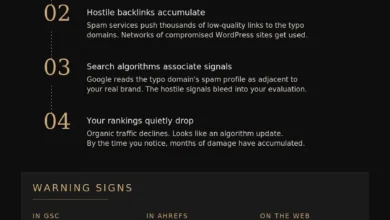
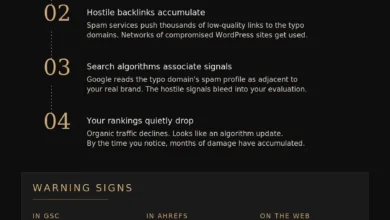
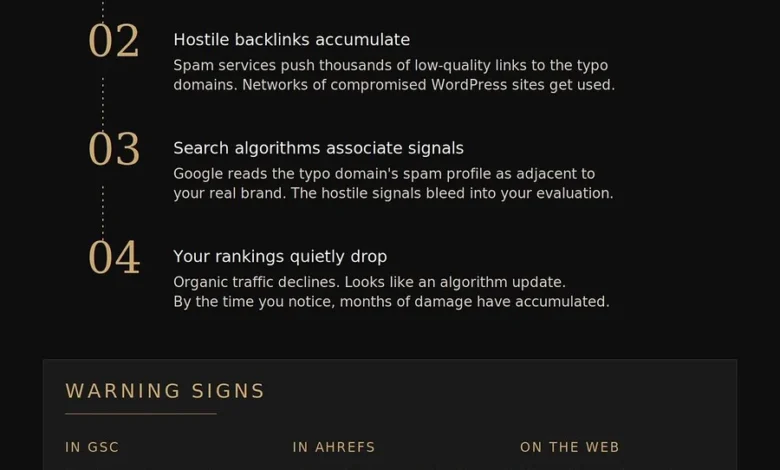
The new pattern observed targeting the luxury jewelry sector is far more insidious. These attackers register misspelled domains but leave them "parked" or empty. They then utilize automated "link-spam" services to point thousands of low-quality, toxic backlinks toward these misspelled domains. These links often originate from compromised WordPress sites, link farms, or adult content networks.
The strategy exploits how modern search engines, particularly Google, understand brand identity and entity relationships. Google’s algorithms do not view a website in total isolation; they evaluate the "signal landscape" surrounding a brand. If a domain that is nearly identical to a reputable brand name is suddenly associated with a massive volume of spam, the algorithm may struggle to differentiate between the two entities. Over time, the "negative SEO" signal from the typosquat domain begins to affect the legitimate brand, leading to a decline in search rankings and a loss of visibility for critical, high-revenue keywords.
Chronology of an Escalating Threat
The escalation of these coordinated attacks can be traced through a series of tactical shifts observed over the past eighteen months.
Phase 1: The Quiet Buildup (Mid-2023 to early 2024)
Initially, many jewelers noticed small, inexplicable spikes in "spammy" backlinks. Most dismissed these as routine internet noise or the byproduct of automated scrapers. During this period, attackers were likely testing the sensitivity of search algorithms to brand-adjacent typosquats.
Phase 2: Infrastructure Expansion (Mid-2024)
The attacks became more structured. Evidence emerged of attackers utilizing "aged-domain marketplaces." By purchasing domains that already had some historical data and then repurposing them as typosquats for luxury brands, attackers could bypass the "sandbox" period that search engines often apply to brand-new websites.
Phase 3: Intense Coordination (Late 2024)
By the fourth quarter of 2024, the pattern intensified. Retailers began reporting hundreds of new referring domains appearing in their Search Console reports within a single week. These domains were not random; they were part of a cluster of misspellings (extra letters, swapped characters, or missing vowels) all receiving identical bursts of spam links. This indicated the use of professional-grade SEO manipulation tools and coordinated botnets.
Why Luxury Jewelry is the Primary Target
The targeting of the luxury jewelry sector is a calculated economic decision based on three primary factors: high Average Order Value (AOV), specific keyword competition, and the reliance on digital trust.
Data from the luxury resale market indicates that the AOV for items like "pre-owned Cartier Love bracelets" or "authenticated Van Cleef & Arpels Alhambra necklaces" typically ranges from $4,000 to $15,000. In such a high-margin environment, a minor fluctuation in search rankings has massive financial consequences. A drop from the first position to the third position on a Search Engine Results Page (SERP) can result in a 20% to 30% reduction in click-through rates. For a retailer moving multi-million dollar inventories, even a 5% loss in organic traffic can represent hundreds of thousands of dollars in lost monthly revenue.
Furthermore, the "authentication angle" makes these brands vulnerable. Legitimate retailers invest heavily in creating content that proves the provenance and authenticity of their pieces. This content is highly valuable for SEO, as it naturally targets long-tail keywords. Attackers seek to undermine this authority by associating the brand’s name with "low-trust" signals, effectively neutralizing the competitive advantage that years of content creation had provided.
Identifying the Warning Signs: A Technical Checklist
For jewelry e-commerce operators, the symptoms of a negative SEO attack often mimic the effects of a general algorithm update. However, specific indicators can help differentiate between a natural ranking shift and a targeted attack.
Search Console Indicators:
- Disavow Spikes: A sudden, unexplained jump in the number of referring domains that require disavowing.
- Anchor Text Mismatches: New inbound links using brand names combined with unrelated commercial terms (e.g., "[Brand Name] + cheap pharmacy" or "[Brand Name] + gambling").
- Geographic Surges: A massive influx of links from countries where the retailer does not conduct business or have a customer base.
Monitoring Tool Indicators (Ahrefs, Semrush):
- Rapid Backlink Growth on Empty Domains: Misspelled versions of the brand domain showing aggressive link growth despite having zero content or outbound links.
- Randomized URL Paths: Referring URLs that consist of randomized strings or hash codes, suggesting they were generated by a script rather than human-created content.
- Marketplace Listings: Finding misspelled versions of the brand name listed for sale on domain marketplaces, often advertised for their "SEO potential" or "existing backlink profile."
Official Responses and Legal Recourse
The jewelry industry has begun to respond to this threat through both technical and legal channels. The owner of Opulent Jewelers emphasizes that awareness is the first line of defense, noting that many jewelers are "bleeding traffic" without realizing they are under a coordinated attack.
From a regulatory standpoint, two primary legal frameworks exist to combat this behavior:
- UDRP (Uniform Domain-Name Dispute-Resolution Policy): Administered by the World Intellectual Property Organization (WIPO), this process allows trademark holders to reclaim domains registered in "bad faith." While effective, the process can take 60 to 75 days and requires a filing fee of approximately $1,500 per case, plus legal fees. For an attacker who can generate dozens of typosquats in minutes, the cost-to-benefit ratio for the victim can be daunting.
- ACPA (Anticybersquatting Consumer Protection Act): A United States federal law that provides a more aggressive remedy. Under 15 U.S.C. § 1125(d), a brand owner can sue for statutory damages ranging from $1,000 to $100,000 per domain. While more expensive and time-consuming than UDRP, the threat of six-figure damages serves as a stronger deterrent against domestic attackers.
However, the legal route requires a federally registered trademark. Many smaller jewelers operate under common-law rights, which are sufficient for UDRP but make ACPA claims significantly harder to litigate. Industry experts are increasingly advising boutique jewelers to formalize their trademark registrations as a foundational element of their cybersecurity strategy.
Broader Impact and the Future of SEO Security
The rise of typosquatting-linked negative SEO represents a fundamental shift in the "arms race" between search engines and bad actors. For decades, SEO was viewed as a "winner-takes-all" game of building authority. Now, it has become a game of defending authority against coordinated erosion.
The broader impact on the jewelry industry is a widening gap between large-scale retailers with dedicated SEO and legal teams and independent boutiques that lack the resources to monitor these sophisticated attacks. This "resource asymmetry" allows attackers to thrive, as they can target dozens of smaller victims with minimal risk of retaliation.
The long-term solution lies in the evolution of search engine algorithms. Google and Bing must move toward a more robust "entity-based" understanding of brands that can better distinguish between a legitimate site and a hostile typosquat mimic. Until that happens, the burden of defense remains with the retailer.
Documentation has emerged as the most critical defensive asset. Retailers are encouraged to maintain rigorous records of their backlink profiles, WHOIS data for suspicious domains, and timeline logs of ranking fluctuations. As one industry veteran noted, "You have to keep your SEO records with the same discipline you keep your tax records. You never know when you’ll need to prove to Google or a court that your brand identity is being systematically poisoned."
The jewelry industry, built on the concepts of permanence, value, and trust, now finds its digital future dependent on its ability to navigate an environment where those very qualities are being weaponized by anonymous competitors and automated scripts. Awareness, vigilance, and a proactive legal strategy are no longer optional; they are essential components of modern luxury retail.