From Dining Room to Digital Display: A Culinary Brand’s Innovative Product Showcase

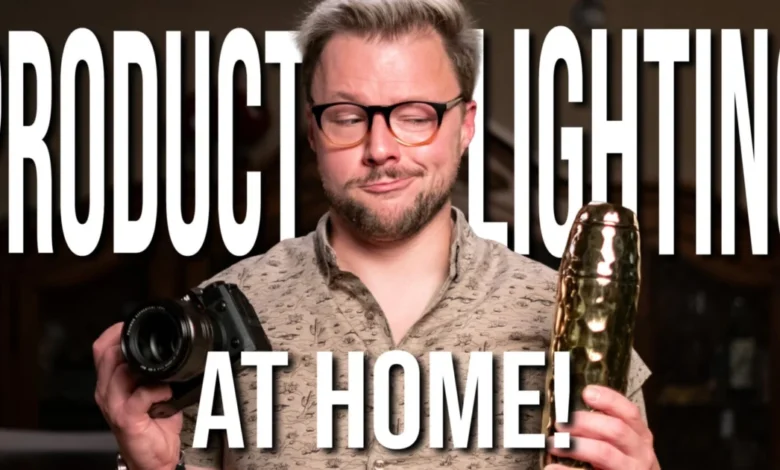
Recently, a prominent culinary brand, seeking innovative ways to introduce an unreleased cocktail shaker to the market, approached a creative professional for product feedback. Instead of the standard survey, the professional opted for a more dynamic and visually engaging approach, producing a comprehensive promotional product video from the confines of their home dining room. This initiative highlights a growing trend in product marketing: leveraging accessible technology and creative problem-solving to achieve professional-grade results without the need for extensive studio resources. The project, undertaken with a tight personal schedule as a parent of a young child, underscores the adaptability and ingenuity possible in modern content creation, demonstrating that compelling product showcases can be achieved with a thoughtful combination of equipment and strategic execution.
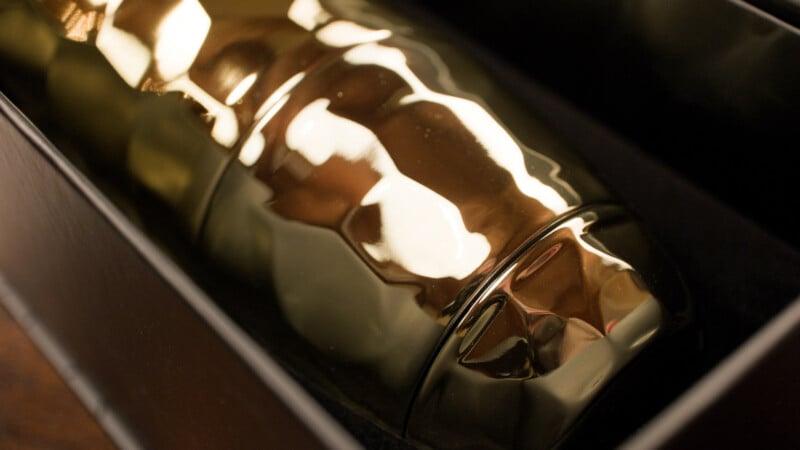
The core challenge presented by the unreleased cocktail shaker was its inherently reflective, multi-faceted gold design. This aesthetic appeal, while desirable for the product itself, posed a significant hurdle for photography and videography, demanding precise control over lighting to prevent harsh glare and specular highlights that could obscure the product’s details. The professional’s decision to undertake this project on a personal timeline, necessitated by family commitments, meant that traditional shooting schedules were not feasible. Consequently, a strategic approach to lighting and environmental control became paramount.
Mastering the Environment: Strategic Lighting for Reflective Surfaces
The initial phase of the project focused on meticulously controlling the shooting environment, particularly the lighting. The goal was to create a controlled atmosphere that would allow for the deliberate shaping of light, thereby accentuating the shaker’s design without overwhelming it with uncontrolled reflections. The decision to shoot at night was considered, as it would naturally minimize ambient daylight. However, due to personal time constraints, an alternative solution was implemented: transforming the dining room into a controlled lighting studio.
This involved a two-pronged approach to light management. The primary window in the room was completely blacked out, while the curtains on a secondary window were drawn. This achieved a near-total blackout, effectively eliminating unpredictable external light sources. While a perfect blackout wasn’t achieved, the generated ambient light was deemed insignificant as the studio lighting setup was powerful enough to overpower any residual light. This meticulous environmental control allowed for precise manipulation of color temperature, a crucial element in product videography. The professional opted to balance the color temperature around 2,700 to 2,900 Kelvin, a range that complements the warm tones of the dining room environment, creating a cohesive and inviting visual aesthetic.
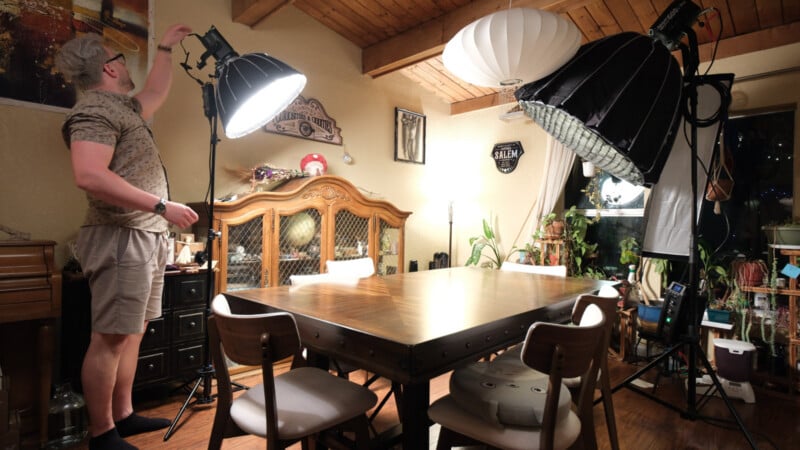
The lighting setup itself was a testament to strategic equipment utilization. A primary key light, an Aputure 600 Bicolor LED, was fitted with a medium dome softbox and directed towards the cocktail preparation area. To further refine the light’s quality and prevent unwanted spill, a grid was attached to the softbox. This directed the light more narrowly, ensuring it illuminated the intended subject without excessively lighting the surrounding background.
To add depth and dimension to the product, two edge lights were employed. A Nanlite 150, equipped with a small circular dome softbox, was positioned on one side to create separation between the shaker and the background. On the opposite side, another Nanlite 150, fitted with a narrow Godox softbox, served as a secondary edge light. The choice of a narrow softbox for this unit was strategic, ideal for precisely illuminating specific areas in a confined space. Both edge lights also featured grids, further enhancing light control and preventing light from bleeding into unintended areas of the frame. This layered lighting approach was designed to sculpt the reflective surfaces of the shaker, highlighting its design features and creating a polished, professional look.
The Art of Motion: Dynamic Camera Techniques for Product Visualization
Beyond static product shots, the project embraced the power of movement to enhance visual storytelling. While tripods are essential for stability, product videography thrives on dynamic camera techniques that draw the viewer into the product’s experience. The professional employed a variety of motion rigs to achieve this, demonstrating how readily available equipment can be adapted for sophisticated cinematic effects.
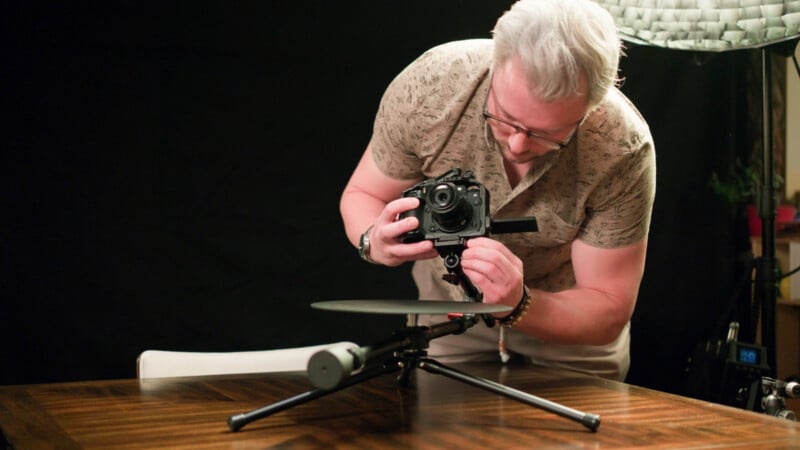
A motorized 30-inch slider was a key component, enabling smooth, controlled push-in shots that guide the viewer’s eye towards the product’s details. However, for cylindrical products like the cocktail shaker and accompanying glassware, a more immersive approach was desired. To capture the interplay of light and reflection as the product rotated, a small turntable was incorporated. This device allowed the camera to remain stationary while the product spun, creating a sense of effortless motion and revealing the shaker from all angles. This technique is particularly effective for showcasing metallic or highly polished surfaces, as it allows for the dynamic capture of light as it plays across the product’s form.
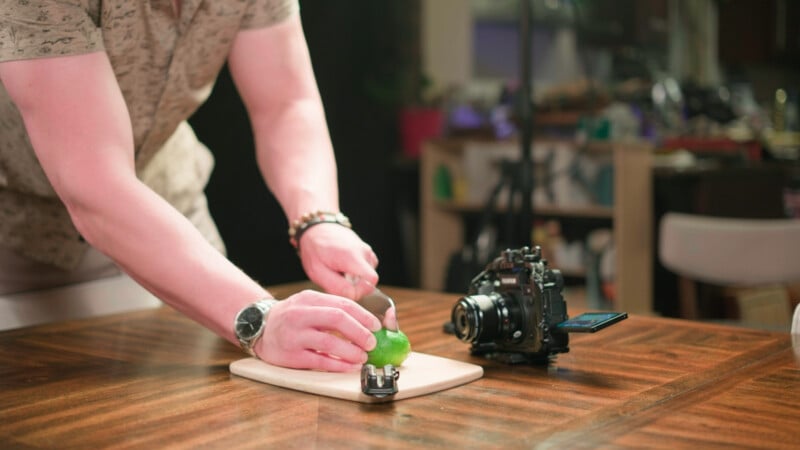
Tripod shots remained crucial for capturing fine details. This included macro shots of ingredients being prepared, such as lemons being squeezed into a cocktail, and close-ups of citrus fruits being sliced. The focus here was on achieving precise manual focus and orchestrating the action within that sharp plane of focus. This meticulous attention to detail contributes to the overall narrative, conveying the craft and quality associated with the product.
Overhead shots were also integrated to provide a different perspective. These were achieved by positioning the tripod directly above the shooting area, with the camera pointing downwards. Again, manual focus was essential for maintaining sharpness on the product. This variety of camera angles and movements ensures a comprehensive and engaging visual presentation of the product.
With the static shots completed, the turntable was put to full use. The shaker was placed on the turntable, focus was meticulously set, and multiple takes were captured with various rotational speeds and camera movements. To add a layer of post-production flexibility and visual dynamism, many of these shots were recorded at 120 frames per second. This high frame rate allows for smooth slow-motion effects, adding a cinematic quality to the final edit.
A particularly ingenious technique was employed with the slider for a shot involving the product’s packaging. Instead of moving the camera to track a hypothetical object, the packaging itself was placed on the slider. The camera remained stationary, creating the illusion that a sharp object was gliding across the packaging, when in reality, the packaging was in motion. This creative reversal of movement demonstrates a sophisticated understanding of visual perception and camera techniques, resulting in a compelling on-screen effect.
The Broader Implications: Democratizing Product Videography
The successful execution of this project carries significant implications for the landscape of product marketing and content creation. The professional’s assertion that a dedicated studio is not a prerequisite for high-quality product videography challenges traditional notions and empowers a wider range of individuals and businesses. By emphasizing the control of light, the strategic incorporation of motion, and the creative use of existing equipment, the project offers a blueprint for producing professional-looking video content on a budget.
This approach is particularly relevant in an era where brands are increasingly seeking authentic and relatable content. The ability to create compelling visuals from accessible locations and with readily available gear democratizes the production process, allowing smaller businesses, independent creators, and even in-house marketing teams to produce high-impact promotional materials. The project also underscores the importance of adaptability and resourcefulness. The professional’s ability to overcome limitations of space and time by employing clever technical solutions is a testament to the innovative spirit that drives effective content creation.
Furthermore, the project highlights the value of a deep understanding of fundamental photographic and videographic principles. While advanced equipment can be beneficial, it is the mastery of lighting, composition, and camera movement that truly elevates a production. The professional’s deliberate choices in Kelvin balance, light shaping with grids and softboxes, and the creative use of motion rigs exemplify this principle.
The success of this initiative, culminating in a visually impressive product video, serves as a powerful case study. It demonstrates that with ingenuity, technical knowledge, and a commitment to creative problem-solving, compelling product showcases can be achieved anywhere. This paradigm shift has the potential to level the playing field, enabling a broader spectrum of creators to produce content that resonates with audiences and effectively communicates product value. The underlying message is one of empowerment: encouraging creators to push boundaries, experiment with their existing resources, and ultimately, to keep creating and challenging themselves in the pursuit of impactful visual storytelling.