Ibraaz: A New London Hub Fosters Dialogue and Artistic Expression in Challenging Times

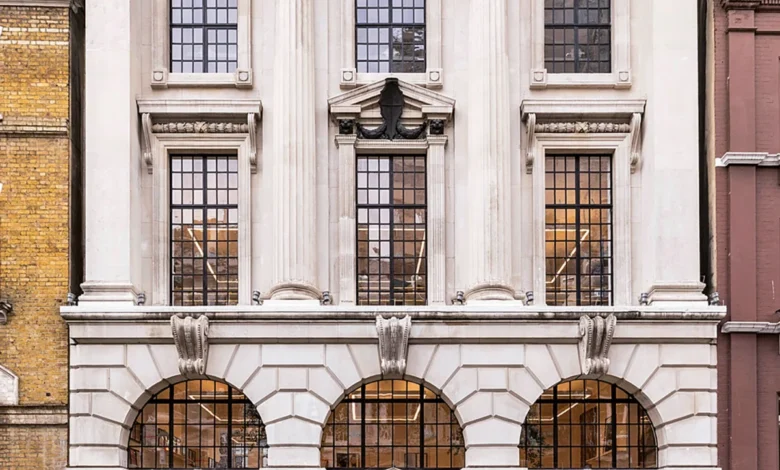
The opening of Ibraaz’s London centre signifies more than just the establishment of a new cultural venue; it represents a deliberate commitment to fostering dialogue, critical engagement, and a vibrant artistic community in an era marked by significant global challenges. This initiative, rooted in the foundational principles of Ibraaz as an online platform born from the Arab Spring, has now materialized into a physical space designed to be a locus for conversation, reflection, and creative exchange. Hammad Nasar, a key figure in this endeavor, articulates a vision that actively eschews passive admiration in favor of dynamic interaction. “Our ambition is not a traditional ambition for people to come and quietly admire things in a hush and then walk out,” Nasar stated. “We want noise. We want conversations.” This philosophy permeates every aspect of the Ibraaz centre, from its thoughtfully designed spaces to its programming that actively seeks to connect people through shared experiences of art, food, literature, and intellectual discourse.
Genesis and Evolution: From Online Platform to Physical Hub
Ibraaz’s journey began in 2011, emerging as a crucial online publication during the transformative period of the Arab Spring. Nasar explained its initial purpose: "to create a platform where people could gather online." This initial impulse to facilitate connection and exchange has remained a guiding principle, evolving now into a tangible "discursive place of gathering" in London, which officially opened its doors in October. The establishment of this physical centre is a direct response to the contemporary socio-political climate. Nasar highlighted the pressing need for such spaces, particularly in light of the "ongoing genocidal violence in Gaza, now extending elsewhere, and as we see the spaces for gathering reducing, the spaces for free expression really under assault." He described the centre as designed "to act as a vehicle or vessel to hold people," providing a sanctuary and a platform for expression when such avenues are increasingly under threat.
Architectural Spaces for Engagement and Contemplation
The Ibraaz centre is meticulously designed to accommodate a diverse range of activities and experiences. On the third floor, the Musalla, translating to "spiritual practice room," offers a contemplative space. During a recent visit, it housed Joe Namy’s Cosmic Breath, an installation featuring recordings of the adhan, the Islamic call to prayer, from various global locations. Louise Oram, Head of Communications and Partnerships at Ibraaz, elaborated on the Musalla’s multi-faceted purpose, explaining that it serves not only for listening and reflection but also as a dedicated space for prayer or respite from the urban environment.
Descending to the basement, visitors find the Minassa, defined as "a platform, podium, dais, or stage." This dynamic space is allocated for cinematic presentations, performances, and regular discussions, talks, and debates, underscoring the centre’s commitment to robust intellectual and artistic programming.
Fostering Community Through Culture and Cuisine
Beyond these dedicated spaces, the spirit of conversation extends throughout the Ibraaz centre. Meeting rooms are available for smaller gatherings, while the Oula cafe, managed by French-Tunisian chef Boutheina Ben Salem, provides a welcoming environment for informal interactions. The cafe, situated on the ground floor opposite the Maktaba, or bookshop, further enhances the centre’s role as a cultural nexus. The Maktaba is operated by Burley Fisher Books and curated by the Palestine Festival of Literature, adding another layer of thematic depth and connection to the space. During the visit, Ahmad Al-Bazz’s photobook The Erasure of Palestine was prominently displayed in the shop window, a testament to the centre’s commitment to showcasing work that engages with critical socio-political issues. Nasar himself encouraged engagement with Al-Bazz’s work, mentioning a recent event where the artist discussed his book within the bookshop, demonstrating the direct link between the displayed art and live programming.
The Power of Photography in Witnessing and Resistance
Photography plays a pivotal role in Ibraaz’s mission, recognized for its multifaceted importance. Nasar articulated three key reasons for this emphasis. Firstly, photography and lens-based imaging are considered integral components of contemporary art. Secondly, the medium’s inherent ability to document and provide evidence is highly valued by individuals and communities whose realities are often marginalized or suppressed. This is particularly pertinent in contexts where historical narratives are contested or erased. Thirdly, photography is viewed as a democratic medium, empowering a wide range of individuals by placing the means of production and circulation within their reach. "It’s the tool within the armament that virtually every single human being has in their pocket," Nasar remarked, alluding to the ubiquity of smartphone cameras.
He further elaborated on photography’s capacity to "bear witness," irrespective of the technology used, be it a cell phone or a professional camera. The photobook The Erasure of Palestine serves as a powerful example of this, as Nasar explained: "It looks at remnants of Palestinian villages in occupied territories which are now being called Israel; it is actually a visual mapping." This underscores photography’s role in reclaiming and asserting narratives through visual evidence and historical documentation.
A Programmatic Vision: Beyond Passive Observation
Nasar’s assertion that "Our ambition is not a traditional ambition for people to come and quietly admire things in a hush and then walk out. We want noise. We want conversations" encapsulates the dynamic and inclusive ethos of Ibraaz. The centre’s programming is designed to be inclusive and participatory, actively seeking to generate dialogue and connection. "These gatherings, around food, books, the soul, or with song, with art, that’s the overall sense of the programme. That’s what we’re interested in doing," Nasar emphasized. This broad scope reflects a holistic approach to cultural engagement, recognizing that art, literature, food, and spirituality are interconnected facets of human experience that can serve as catalysts for meaningful exchange.
The artworks displayed at Ibraaz often originate from the Kamel Lazaar Foundation, yet Ibraaz itself is not positioned as a collecting institution. Instead, its focus remains firmly on facilitating discourse and fostering connections through its exhibitions and programming. This approach prioritizes the active engagement with art and ideas over passive acquisition, aligning with its core mission of creating a vibrant hub for critical thought and cultural exchange.
Broader Implications and Future Trajectory
The establishment of Ibraaz in London arrives at a critical juncture, where geopolitical tensions and the erosion of spaces for free expression are increasingly prevalent. The centre’s commitment to providing a physical venue for dialogue and artistic engagement holds significant implications. It offers a much-needed platform for artists, writers, and thinkers from diverse backgrounds, particularly those whose voices are often silenced or overlooked. By emphasizing photography as a tool of witness and resistance, Ibraaz actively contributes to countering dominant narratives and ensuring that marginalized perspectives are heard and seen.
The centre’s approach, which blends artistic display with participatory programming, creates a dynamic environment that encourages active involvement rather than passive consumption. This model has the potential to inspire similar initiatives globally, demonstrating the power of dedicated cultural spaces to foster resilience, solidarity, and critical consciousness in challenging times. As Ibraaz continues to develop its programming and expand its reach, its role as a vital hub for dialogue and artistic expression is poised to become increasingly significant in the cultural landscape. The focus on "noise" and "conversations" is not merely an aesthetic choice but a strategic imperative, signaling a commitment to challenging norms and fostering genuine, impactful engagement with the pressing issues of our time.