Arne Arens on How Unspun’s 3D Weaving Technology is Reshaping the Future of Apparel Manufacturing


The global apparel industry, long characterized by extended lead times, significant material waste, and complex, often fragile supply chains, is on the cusp of a profound transformation. At the forefront of this shift is unspun, a deep-tech company leveraging advanced 3D weaving technology to usher in an era of localized, on-demand manufacturing. Spearheading this ambitious endeavor is Arne Arens, former Global Brand President at The North Face and CEO of Boardriders, whose recent transition to CEO of unspun marks a pivotal moment in the industry’s quest for greater efficiency, sustainability, and resilience.
The Imperative for Change in Global Apparel Manufacturing

The traditional apparel production model has remained largely unchanged for decades. It typically involves designing flat patterns, cutting them from vast rolls of fabric, and then assembling these pieces through labor-intensive sewing processes, often in low-wage countries thousands of miles from end markets. This system, while optimizing for unit cost, inherently generates substantial waste. Industry reports estimate that fashion production contributes to approximately 92 million tons of textile waste annually, a significant portion of which stems from overproduction and cutting room scraps. Moreover, the reliance on distant manufacturing hubs necessitates lead times of 9 to 12 months, leading to considerable forecasting inaccuracies, inventory gluts, and heavy discounting – a cycle that erodes profitability and exacerbates environmental impact.
Recent years have amplified these systemic vulnerabilities. Geopolitical tensions, trade tariffs, and the disruptive force of a global pandemic have underscored the precariousness of geographically extended supply chains. Brands and manufacturers alike are now under immense pressure to localize production, reduce their carbon footprint, and respond more agilely to rapidly shifting consumer demands. This confluence of economic, environmental, and geopolitical factors has created an urgent mandate for state-level investment in domestic manufacturing infrastructure and a desperate search for technological solutions that can enable a fundamental pivot.
Unspun’s Revolutionary 3D Weaving Technology: The Vega Platform

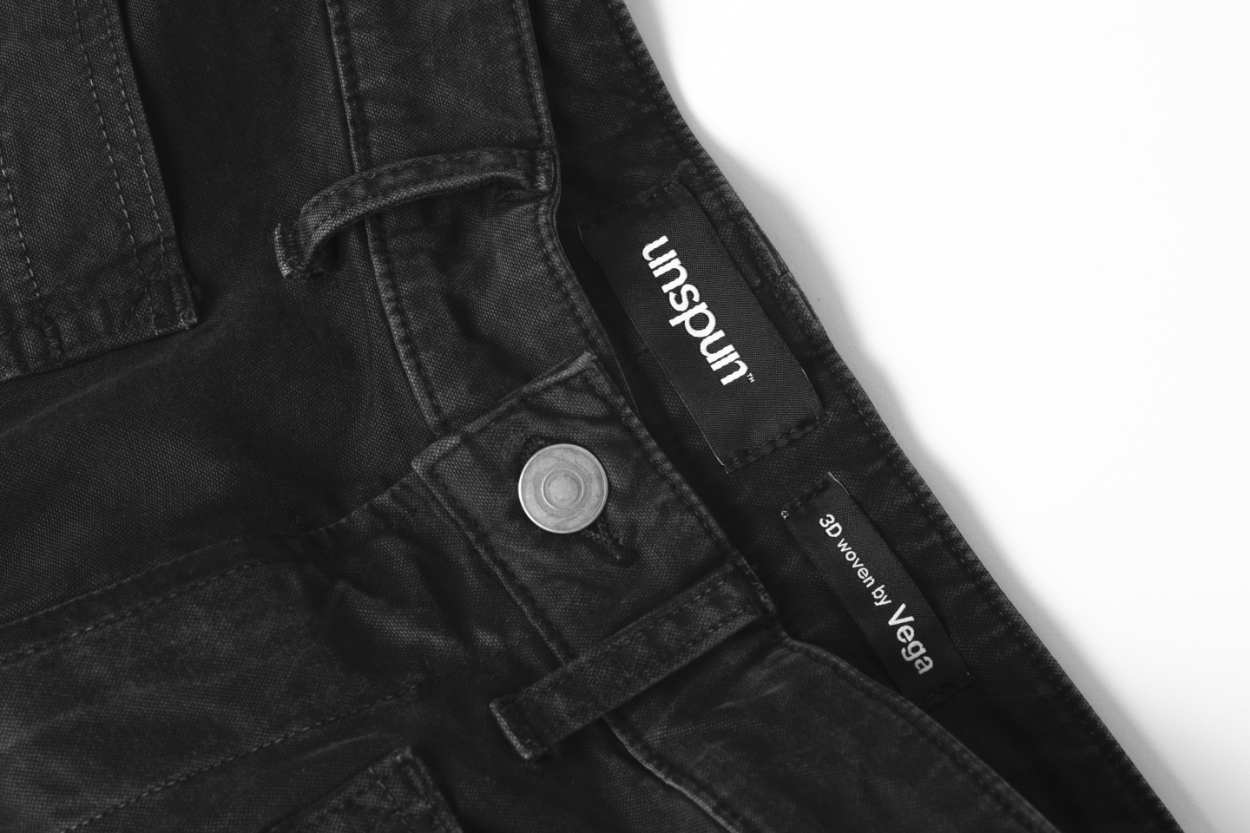
At the heart of unspun’s disruptive potential is its proprietary 3D weaving machine, named Vega. Unlike conventional looms that produce flat fabric, Vega directly weaves yarns into a seamless, three-dimensional garment component, specifically trouser legs in its initial application. This innovative process involves thousands of individual yarns being interlaced in a circular motion, creating a continuous tube that can vary in geometry and diameter as it weaves. This means no fabric cutting is required, drastically reducing material waste and eliminating the need for extensive sewing, which accounts for a significant portion of labor costs and lead times in traditional manufacturing.
Arne Arens articulates the core distinction: "Traditional weaving makes a flat fabric… you take that flat fabric, cut shapes out of it, sew them together and create a final product. All the things that are challenging about apparel manufacturing live in the multitude of steps you have to go through: the waste on the cutting floor, the labour in the sewing, and the lead time." In contrast, unspun’s Vega machine transforms yarn into a finished, seamless trouser leg in approximately eight minutes. This speed and efficiency are critical differentiators, especially when compared to 3D knitting, another advanced manufacturing technique that, while producing seamless garments, has historically been slower and confined to higher price points, limiting its scalability. The ability to produce woven garments seamlessly, at speed, and at a competitive cost is what positions unspun’s technology to revolutionize a market segment that accounts for roughly half of all apparel production.
Strategic Leadership: Arne Arens’s Visionary Shift

Arne Arens’s journey to unspun is as compelling as the technology itself. His extensive career at the pinnacle of global brands like The North Face (Global Brand President, 2017-2021) and Boardriders (CEO), which encompasses iconic brands such as Quiksilver, Billabong, Roxy, and DC Shoes, provided him with an unparalleled understanding of the apparel industry’s deep-seated challenges. Having navigated the complexities of global supply chains, inventory management, and market forecasting for two decades, Arens witnessed firsthand the inefficiencies and waste inherent in the legacy system.
His move into the deep-tech realm as CEO of unspun earlier this year is a testament to his belief in the transformative power of this innovation. "Having seen the challenges of the old way of doing things, being part of something that revolutionises it and addresses so much of the financial waste, the large carbon footprint and the environmental waste that the legacy system creates was just really exciting to me," Arens states. His day-to-day role reflects this hands-on commitment, divided equally between engaging with commercial partners (brands and manufacturers), capital fundraising (a perpetual necessity for deep-tech industrialization), and internal operations, including engineering reviews and culture building. This tangible connection to the product, from yarn to finished garment in a micro-factory setting, stands in stark contrast to his previous roles, where products were often manufactured continents away.
Unspun’s Evolution: From Direct-to-Consumer Experiment to Technology Powerhouse

Unspun’s trajectory began not as a technology vendor, but as a consumer-facing brand producing custom-fit jeans. This initial phase, which saw figures like CTO Kevin Martin and CPO Beth Esponnette at its helm, served a dual purpose: to validate the underlying technology and to prove the commercial viability of an on-demand production model. The core conviction from those early days remains intact: "You should make a garment only after you know someone actually wants it — not nine to twelve months out." This ethos directly confronts the industry’s pervasive overproduction problem.
The strategic pivot from a direct-to-consumer brand to a technology company selling its machines to manufacturers marks a significant scaling ambition. The consumer-facing brand effectively served as a rigorous testbed, allowing unspun to refine its Vega platform and demonstrate its capabilities before offering it to the broader industry. This shift is crucial for wider adoption, as it allows existing manufacturers to integrate unspun’s technology into their operations, and brands to leverage it through their established supplier relationships. The transition has garnered significant attention, with letters of support from major retailers like REI Co-op and Walmart, signaling widespread industry recognition of unspun’s potential.
The Economic Imperative: Unlocking New Profitability and Efficiency

The financial benefits of unspun’s model extend across the entire value chain, promising significant improvements for both brands and manufacturers.
For brands, the primary gain comes from drastically reduced lead times. By shortening production cycles from 9-12 months to just 1-2 months, forecasting accuracy improves dramatically. This directly addresses the pervasive issue of inventory overhang and subsequent discounting. On average, apparel retailers discount approximately 40% of their units seasonally. Arens points to industry leaders like Zara, which, with its agile, close-to-market supply chain for a portion of its production, discounts around 15% of its inventory. If brands can reduce their discounting rates from 40% to 15% by minimizing mismatches between supply and demand, this alone translates to a 400-500 basis point improvement in gross margin. Additional savings from reduced tariffs and transportation costs (due to localized production) further enhance profitability. This represents a fundamental shift in how brands can approach their business, enabling them to capitalize on shorter-term trends and optimize their inventory strategies.
Manufacturers also stand to gain substantially. The automation inherent in 3D weaving collapses six or seven traditional production steps into a single process, leading to significant material cost reductions of 50-60%. By eliminating fabric cutting and extensive sewing, manufacturers can double their operating margins over a four to five-year period compared to the legacy supply chain. This compelling financial proposition is critical for driving the adoption of unspun’s technology.

Beyond the immediate financial returns, the environmental benefits are equally substantial. By eliminating overproduction, reducing transport distances, and minimizing material waste, unspun’s model is projected to cut the carbon footprint of apparel production by approximately half, according to internal studies. This aligns with growing consumer demand for sustainable practices and regulatory pressures on brands to decarbonize their operations.
Geopolitical Tailwinds and the Reshoring Movement
The appeal of unspun’s localized production model is significantly bolstered by current geopolitical and economic realities. The "Made in America" and "Made in Europe" movements have gained unprecedented momentum as countries seek to bolster domestic industries, create jobs, and secure more resilient supply chains against global disruptions. Tariffs, such as those imposed by the US, add another layer of financial incentive for reshoring, making offshore production less economically attractive.

However, Arens emphasizes that unspun’s business model is fundamentally sound, irrespective of tariff fluctuations. "Our idea lives independently of that," he states. While current conditions provide a "giant tailwind," the core value proposition — lead-time reduction and its associated efficiencies — remains compelling even if tariffs were to disappear. The ability to produce locally and on demand offers inherent advantages that transcend specific trade policies.
The portability of the unspun model is a key strategic consideration. While the US is a primary target market due to its large consumer base and strong reshoring initiatives, Europe presents an equally viable, and potentially easier, market. Wage rates in European apparel production hubs like Turkey and Portugal are already lower than in the US, making the economic case for unspun’s automated system even stronger. The company is actively pursuing opportunities in both regions, aiming to establish manufacturing hubs that serve local markets.
Navigating the "Chicken-and-Egg" Problem

The challenge of transitioning from a legacy system to an innovative one often boils down to a "chicken-and-egg" dilemma: brands hesitate to commit to new domestic manufacturing infrastructure that doesn’t yet exist at scale, while manufacturers are reluctant to invest in that infrastructure without reliable, predictable demand from brands. Unspun is addressing this by fostering a "triangle" of collaboration between itself, brands, and manufacturers.
The company is in advanced discussions with major players globally. Arvind, a vertically integrated apparel manufacturer in India that supplies global brands like Gap, Levi’s, and PVH, is exploring unspun’s technology, with an initial focus on deployment in India and potential future expansion into the US. On the brand side, Japanese retailer Muji is in the final stages of advanced sample development. In the US, unspun is working closely with Walmart and other brands like REI Co-op, leveraging their letters of support to build the first domestic manufacturing hubs. A significant step in this direction is the announced intent to build a facility in New Mexico, supported by state government incentives aimed at bringing advanced manufacturing jobs back to the region.
To further de-risk adoption, unspun is also running pilot programs from its micro-factory in Emeryville, California. These smaller-scale production runs with brands such as Filson, Patagonia, J.Crew, and Banana Republic allow partners to experience the technology, assess product quality, and gauge consumer uptake without requiring massive initial commitments. This multi-pronged approach is designed to build momentum and demonstrate tangible results, gradually overcoming the adoption hurdles.
The Future Workforce: Skilled Industrial Roles
The introduction of highly automated 3D weaving technology raises questions about its impact on employment. Arens is clear that unspun’s model is not about eliminating jobs, but transforming them. The jobs being created in regions like the US and Europe are "net new" to the domestic garment industry, as many traditional apparel manufacturing roles migrated overseas decades ago.
Crucially, these new roles are not low-wage, entry-level positions. They encompass skilled industrial jobs such as textile technicians, maintenance personnel, and quality engineers, commanding industrial wages. Furthermore, skills often considered at risk of automation, like pattern-making and 3D expertise, become even more critical in unspun’s ecosystem. Every garment produced by Vega must be fully engineered digitally, transforming pattern knowledge into machine instructions. "Pattern knowledge doesn’t disappear in our world," Arens explains. "It becomes more important, and it moves into the product file — and it becomes more valuable, because the file effectively is the machine instruction." This shift revalues specialized skills and integrates them directly into the advanced manufacturing process.

A Decade Towards On-Demand, Custom Manufacturing
Looking a decade ahead, Arne Arens envisions a fundamental shift in apparel production. The single most impactful change will be the eradication of overproduction, driven by a move towards on-demand, custom-made models. By integrating unspun’s current capabilities with its original premise of personal fit, the industry can transition from a mass-manufacturing paradigm to one where garments are produced only when desired, tailored to individual specifications, and manufactured locally.
While the notion of a 3D printer in every home, a vision once touted for manufacturing, may not fully materialize for apparel, the future likely involves a highly distributed manufacturing network. This could mean multiple regional hubs across continents – perhaps one on each coast of the US, one in the middle, or even more localized facilities. Unspun’s technology serves as a key facilitator for this distributed, on-demand, and custom manufacturing model. This transformation promises not only economic benefits and supply chain resilience but also a dramatically reduced environmental footprint, marking a new era for how clothes are made and consumed globally.

The journey to industrial-scale adoption is complex, fraught with the challenges inherent in disrupting a deeply entrenched global industry. However, with compelling technology, a strong economic value proposition, and leadership from seasoned industry veterans like Arne Arens, unspun is poised to be a significant catalyst in realizing a more efficient, sustainable, and responsive future for apparel manufacturing.