Air Jordan 1 Retro High OG ‘Royal’ Set for 2026 Reissue, Prompting Market Saturation Debate

Nike, Inc.’s perennially successful retro business often navigates a delicate balance: satisfying fervent consumer demand for beloved classics while avoiding market saturation through excessive reissues. The upcoming 2026 release of the Air Jordan 1 Retro High OG "Royal" is poised to test this equilibrium, marking its return for the first time in nearly a decade in its traditional leather form. However, this reissue arrives amidst a backdrop of recent "Royal" variations and fluctuating market performance, raising questions about Jordan Brand’s strategic timing and potential consumer fatigue.
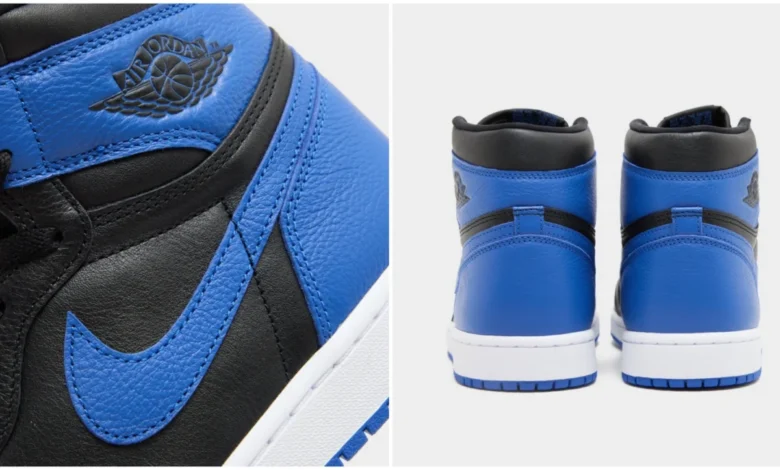
The "Royal" colorway, a foundational pillar in the Air Jordan 1 lineage, is set to reappear featuring its iconic two-tone, black-and-royal blue color blocking and signature leather construction. Official e-commerce images, notably from JD Sports, have provided detailed glimpses of the forthcoming release. Enthusiasts had initially speculated that this iteration might adopt Jordan Brand’s meticulously engineered 1985-inspired Air Jordan 1 ’85 build, a shape revered for its closer adherence to the original 1985 silhouette, often featuring premium materials and a slightly different collar height and toe box shape. However, subsequent confirmations indicate that the 2026 "Royal" will instead utilize the more standard Retro OG shape and construction, a detail that carries weight among purists who meticulously track the nuances of Jordan 1 releases. The scheduled release date is October 10, 2026, with a retail price of $185, available through Nike’s SNKRS app and select Jordan Brand retailers. The specific style code for this Black/Royal-White colorway is IQ5495-005.
The Enduring Legacy of the Air Jordan 1 and the "Royal" Colorway

To understand the significance of any Air Jordan 1 release, one must appreciate its monumental impact on sneaker culture and sports history. Introduced in 1985, the Air Jordan 1 was Michael Jordan’s first signature shoe with Nike. Designed by Peter Moore, it broke conventions with its bold colors and high-top silhouette, quickly becoming synonymous with Jordan’s electrifying rookie season. Beyond its on-court performance, the Air Jordan 1 transcended basketball, becoming a cultural icon adopted by skaters, artists, and fashion enthusiasts, laying the groundwork for the modern sneaker industry.
Within this pantheon, the "Royal" colorway holds a particularly esteemed position. It was one of the original four colorways released in 1985, alongside the "Chicago," "Bred," and "Black Toe." While Michael Jordan famously never wore the "Royal" in an NBA game (unlike the "Bred" or "Chicago"), it gained legendary status through promotional imagery and its striking aesthetic. Its deep royal blue contrasted with crisp black leather panels created a sophisticated yet rebellious look that captured the essence of the era. For many collectors, the "Royal" represents a piece of sneaker history, a pure expression of the Air Jordan 1’s timeless design. The term "OG" (Original Gangster) in its designation signifies a commitment to reproducing the original color scheme and, ideally, the material composition, even if the exact 1985 shape isn’t always replicated.
A Chronology of "Royal" Reissues: Testing Market Appetite

The 2026 reissue is not an isolated event but rather the latest chapter in a long history of Jordan Brand bringing back this cherished colorway. Each reissue serves as a barometer for market demand, brand strategy, and the evolving tastes of sneaker consumers.
- 1985 Original Release: The genesis of the legend, a rare and highly coveted piece of sneaker history.
- 2001 Retro: One of the earliest retro releases, establishing the precedent for bringing back classic colorways. These early retros were often produced in more limited quantities compared to later releases, contributing to their immediate resale value.
- 2013 Retro: A highly anticipated release that saw significant demand, cementing the "Royal" as a consistent fan favorite. This release commanded strong resale prices, often well above its retail price, underscoring its cultural cachet.
- 2017 Retro: This was the most recent traditional leather reissue of the "Royal" Air Jordan 1. Retailing for approximately $160, it was met with considerable excitement. While initially selling out quickly, its long-term resale performance on platforms like StockX has seen prices frequently hover under the $200 mark. This relatively modest premium over its original retail price, several years after its release, is an important data point for market analysts. It suggested that while demand was healthy, the immense hype seen with some other Jordan 1 colorways or earlier "Royal" retros was perhaps beginning to temper.
- 2023 "Reimagined" Release: This particular release introduces a crucial element to the current discussion. Just three years prior to the upcoming 2026 version, Jordan Brand released a "Reimagined" iteration of the "Royal" colorway. This series, designed to reinterpret classic colorways with novel materials or storytelling elements, saw the "Royal" updated with a suede-based construction rather than the traditional leather. While the "Reimagined" series aims to offer a fresh take on beloved models, the material departure proved polarizing for many purists who prioritize original specifications. This 2023 "Reimagined" Royal, which retailed for $180, faced significant challenges in the market. It was notably seen heavily discounted at Nike outlets, a clear indicator of lower-than-expected demand. Even presently, this suede-based iteration can be acquired from prominent resale sites for less than $100, significantly below its retail price and a stark contrast to the performance of previous leather "Royal" releases.
Market Dynamics and the Risk of Over-Saturation
The decision to re-release the traditional leather Air Jordan 1 Retro High OG "Royal" in 2026, just three years after a "Reimagined" version struggled, and less than a decade after a traditional leather one performed moderately on the resale market, presents a fascinating case study in brand management and market strategy.

One of the primary challenges for Nike’s lucrative retro business is navigating the fine line between satisfying consistent demand for classic silhouettes and diluting their perceived value through excessive reissues. The 2023 "Reimagined" Royal serves as a cautionary tale. Its polarizing material change from leather to suede undoubtedly contributed to its lukewarm reception. Sneaker enthusiasts often exhibit strong preferences for original materials and construction, viewing deviations as less authentic. The fact that a classic colorway, even in a modified form, ended up in outlet stores and on resale platforms for significantly under retail signals a clear disconnect between Jordan Brand’s production volume and actual consumer appetite for that specific variation.
Looking at the 2017 traditional leather "Royal," its resale value, often just slightly above its $160 retail price, also suggests a market that is not experiencing extreme scarcity or hyper-demand for the colorway in recent times. While a modest premium is healthy, it doesn’t indicate the "grail" status that some other Air Jordan 1 colorways (like the "Chicago" or certain collaborations) continue to command years after their release.
This abundance of supply across both the primary and secondary markets, coupled with relatively lower-than-usual resale values for recent "Royal" iterations, makes Jordan Brand’s timing for the 2026 reissue particularly intriguing for industry observers.

Analysis of Implications and Strategic Considerations
Jordan Brand’s rationale for this 2026 release could stem from several strategic considerations, though without official statements, these remain areas of informed speculation.
- Catering to Purists: The 2023 "Reimagined" release, despite its iconic colorway, alienated a segment of the collector base due to the suede material. The 2026 release of a traditional leather "OG" version could be seen as an attempt to appease these purists and offer the classic rendition that many prefer. The choice of the standard Retro OG shape over the ’85 build might be a production efficiency decision, or an attempt to differentiate it from truly limited, premium ’85 releases.
- Addressing Accessibility: Jordan Brand has, in recent years, expressed a desire to make classic sneakers more accessible to a broader audience, moving away from the extreme scarcity model that fuels the most aggressive resale markets. By increasing the supply of popular colorways, they aim to put sneakers on the feet of genuine fans rather than exclusively in the hands of resellers. However, this strategy carries the inherent risk of devaluing the product in the eyes of some consumers who equate scarcity with desirability.
- Sales Targets and Brand Performance: Nike and Jordan Brand operate within a competitive global market and have specific sales targets. Retro releases, especially of universally recognized models like the Air Jordan 1, are reliable revenue drivers. The decision to re-release the "Royal" might be part of a broader plan to meet financial objectives, leveraging the inherent appeal of the colorway despite recent market performance.
- Market Correction and Demand Management: It’s possible Jordan Brand views the lower resale values of previous "Royal" iterations not as a problem, but as a sign of a healthier, more normalized market. In a market where some sneakers resell for many multiples of their retail price, a more accessible classic could be seen as a way to stabilize the overall market perception and encourage direct-to-retail purchases.
Reactions from Related Parties (Inferred)

- Sneaker Enthusiasts and Collectors: For "serious fans" of the Air Jordan 1 "Royal," the opportunity to acquire a traditional leather version will likely be welcomed. Those who missed out on the 2017 release or disliked the 2023 suede version will appreciate the chance to add this classic to their collection. However, some long-time collectors, especially those who paid a premium for earlier retros, might feel a degree of frustration if the frequent reissues lead to a significant drop in value for their existing pairs. The choice of the standard Retro OG build over the ’85 build might also disappoint those hoping for the most accurate modern reproduction.
- Resellers: The secondary market will closely watch the stock levels and initial sell-through rates. Given the recent history of the "Royal," many resellers might approach this release with caution. The potential for heavy discounting, as seen with the 2023 version, could deter those looking for quick, high-margin flips. This could lead to more modest profits or a "hold-and-see" strategy for those who do secure pairs.
- Retailers (like JD Sports): Retail partners will likely anticipate strong initial demand due to the "Royal" colorway’s iconic status. However, they will also be keenly aware of the performance of previous iterations. Effective inventory management and strategic promotional efforts will be crucial to avoid a repeat of the discounting seen in 2023.
Broader Impact on the Sneaker Landscape
The trajectory of the 2026 Air Jordan 1 Retro High OG "Royal" will offer valuable insights into the evolving dynamics of the sneaker market. If this release performs strongly, it could signal that consumer appetite for classic, traditional leather reissues remains robust, especially when differentiated from experimental "Reimagined" versions. Conversely, if it struggles to move units at retail or quickly falls below retail on the secondary market, it could indicate that even the most iconic colorways have a saturation point, regardless of their classic construction.
This situation also highlights Nike and Jordan Brand’s ongoing challenge in managing their vast archive of beloved designs. The strategy of reissuing popular models is undeniably profitable, but it requires a nuanced understanding of consumer psychology, market trends, and the delicate balance between exclusivity and accessibility. The "Royal" Air Jordan 1, a true cornerstone of sneaker history, now finds itself at the center of this complex debate, with its 2026 return serving as a pivotal moment for both the brand and the broader sneaker community. The ultimate success of this reissue will not only determine its place in the annals of sneaker history but also potentially influence future retro strategies for one of the world’s most influential footwear brands.