Pioneering the Future: Fashion Revolution Week 2026 Panel Unpacks Bio-Based Materials and the Evolution of Vegan Fashion

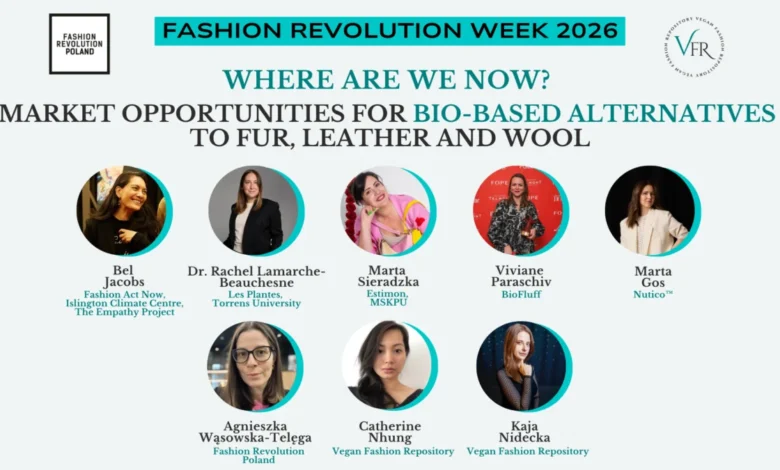
During the impactful Fashion Revolution Week 2026, a groundbreaking collaborative panel, co-hosted by Fashion Revolution Poland and the Vegan Fashion Repository, convened to meticulously explore the burgeoning landscape of bio-based alternative materials within the fashion industry. This pivotal discussion aimed to dissect both the immense opportunities and the inherent challenges that are actively shaping the future of sustainable fashion, while simultaneously striving to dismantle and move beyond outdated perceptions surrounding vegan fashion. The event underscored a collective commitment to fostering innovation, empathy, and sustainability across the entire industry value chain.
The distinguished panel brought together a diverse consortium of key stakeholders, including visionary material innovators, established and emerging brands, forward-thinking designers, and influential advocates. The discourse spanned a comprehensive range of perspectives, from those actively engaged in developing next-generation materials, through those integrating these innovations into practical applications, to those championing ethical practices and environmental stewardship throughout the fashion ecosystem. A central objective of the discussion was to unpack the multifaceted drivers of change, identifying forces ranging from profound technological advancements and scientific breakthroughs to the increasingly influential shift in consumer values and ethical considerations. This holistic approach ensured that both the supply-side innovations and the demand-side transformations were thoroughly examined, providing a 360-degree view of the industry’s evolution. The full panel discussion remains accessible for public viewing online, serving as a valuable resource for industry professionals, academics, and conscious consumers alike.
Fashion Revolution Week: A Decade of Advocacy and Transformation
Fashion Revolution Week, an annual global campaign, emerged from the ashes of the tragic Rana Plaza factory collapse in Bangladesh in 2013, an event that claimed over 1,100 lives and exposed the horrific human cost embedded within the fast fashion industry. Founded by Carry Somers and Orsola de Castro, the movement’s core mission is to advocate for greater transparency, accountability, and ethics in the fashion supply chain. Its iconic "Who Made My Clothes?" campaign has empowered millions of consumers to question brands about their production practices, thereby fostering a greater sense of responsibility among manufacturers and retailers.
By 2026, Fashion Revolution Week had evolved significantly, expanding its focus from initial transparency demands to encompass a broader spectrum of sustainability challenges, including material innovation, circularity, and ethical labor practices. The collaborative panel on bio-based materials perfectly exemplifies this evolution, positioning material science at the forefront of the movement’s agenda. Fashion Revolution Poland, as a national chapter, plays a crucial role in localizing these global objectives, engaging with regional stakeholders, and driving specific initiatives tailored to the Polish and broader European contexts. Their partnership with the Vegan Fashion Repository highlights a synergistic approach to address both environmental impact and animal welfare concerns within the industry, signaling a holistic vision for fashion’s future.
The Rise of Bio-Based Alternatives: A Chronology of Innovation
The journey towards bio-based alternative materials in fashion is not a recent phenomenon but rather a culmination of decades of research and development, accelerated by growing environmental consciousness and technological prowess. While traditional materials like cotton, wool, silk, and leather have dominated the industry for centuries, their environmental footprints, ranging from water consumption and pesticide use to greenhouse gas emissions and animal welfare concerns, have become increasingly scrutinized.
The late 20th and early 21st centuries saw initial forays into more sustainable options, often focusing on organic cotton or recycled synthetics. However, the true paradigm shift towards bio-based alternatives began gaining significant momentum in the 2010s. Early innovations included materials like Piñatex, derived from pineapple leaf fibers, which offered a viable, scalable alternative to leather. This was followed by a surge in mycelium-based "mushroom leather" innovations, such as Mylo by Bolt Threads and Reishi by MycoWorks, which began to attract considerable investment and partnerships with luxury brands.
By the mid-2020s, the landscape had diversified dramatically. Researchers and startups were exploring a myriad of natural sources:
- Algae-based fabrics: Offering sustainable dyes and textiles with minimal water input.
- Citrus and fruit waste fibers: Transforming agricultural byproducts into luxurious silks and leathers.
- Bacterial cellulose: Cultivated in labs, presenting a highly customizable and renewable material.
- Lab-grown animal fibers: Emerging as a potential cruelty-free alternative to wool and silk, eliminating the need for traditional animal farming.
This chronological progression demonstrates a clear trajectory: from initial conceptualization and small-scale prototypes to sophisticated, industrially scalable solutions. Each advancement represents a step away from reliance on finite resources and environmentally intensive processes, towards a regenerative and circular fashion economy.
Market Dynamics and Supporting Data: A Growing Green Economy
The global market for sustainable fashion, particularly within the segment of alternative materials, has experienced exponential growth over the past decade, a trend projected to continue robustly into the latter half of the 2020s. According to various industry reports, the market for bio-based textiles alone is anticipated to reach several billion dollars by 2030, driven by both consumer demand and corporate sustainability mandates. For instance, a 2024 report by Grand View Research estimated the global sustainable fashion market size to be valued at approximately $8.5 billion in 2023, with a projected compound annual growth rate (CAGR) of over 10% from 2024 to 2030, indicating a clear shift in industry priorities.
Consumer sentiment plays a critical role in this expansion. Surveys consistently reveal that a significant percentage of consumers, particularly Gen Z and Millennials, are willing to pay a premium for products that are ethically sourced and environmentally friendly. A 2025 consumer insights study by Deloitte found that nearly 60% of consumers globally prioritize sustainability when making purchasing decisions, with a growing segment actively seeking out vegan and cruelty-free options. This demographic shift is not merely a preference but a fundamental re-evaluation of consumption patterns, pushing brands to innovate or risk losing market share.
Investment in bio-material innovation has also surged. Venture capital firms and established corporations are pouring hundreds of millions into startups specializing in sustainable textiles, recognizing the immense potential for disruption and long-term profitability. Major fashion houses, from luxury conglomerates to high-street retailers, have announced ambitious targets for reducing their environmental footprint, often including commitments to transition away from traditional animal-derived materials and fossil fuel-based synthetics. This financial backing and corporate adoption are crucial for scaling nascent technologies and bringing them to mainstream markets.
Addressing the "Outdated Perceptions" of Vegan Fashion
For many years, the term "vegan fashion" conjured images of niche, often perceived as less luxurious, durable, or aesthetically pleasing alternatives. Early vegan leather options, predominantly made from PVC or PU, often lacked the breathability, hand-feel, and longevity of animal leather, contributing to this perception. Moreover, these synthetic alternatives frequently carried their own environmental baggage, being derived from fossil fuels and slow to biodegrade.
However, the rapid advancements in bio-based materials have fundamentally reshaped this narrative. The new generation of vegan alternatives is engineered to not only mimic the desirable qualities of traditional materials but often surpass them in terms of performance, versatility, and sustainability profile. Mycelium-based leathers, for example, can be grown to specific dimensions and textures, reducing waste and offering unique aesthetic possibilities. Pineapple and apple leathers provide rich, supple textures suitable for high-end accessories. Algae-based fabrics are being developed with inherent anti-microbial properties and vibrant, natural coloration.
The panel discussion explicitly aimed to highlight how these innovations are dismantling the outdated notion that vegan fashion inherently compromises on quality or style. Brands are increasingly showcasing bio-based materials in their premium collections, demonstrating that ethical and sustainable choices can coexist with luxury and high performance. This shift is not just about material substitution but about a redefinition of luxury itself – one that values innovation, environmental stewardship, and compassion alongside craftsmanship and design.
Voices from the Forefront: Insights from Innovators and Brands
While specific speakers were not named in the initial announcement, the nature of the panel implies key insights from the types of participants present. Material innovators, for instance, would likely have emphasized the scientific breakthroughs enabling these new materials, discussing the challenges of scaling production from lab to industrial quantities, ensuring consistent quality, and navigating complex intellectual property landscapes. They would underscore the need for continued investment in R&D to unlock the full potential of biotechnological solutions for textiles.
Brands, on the other hand, would articulate the strategic imperative of integrating bio-based materials into their collections. Their insights would likely touch upon consumer demand as a primary driver, the complexities of supply chain integration, the financial investments required for adoption, and the marketing strategies employed to educate consumers about the benefits of these new materials. They would also address the ongoing challenge of cost-effectiveness, as many novel bio-materials currently carry a higher price point than their traditional counterparts, making accessibility a key factor in broader adoption.
Designers would undoubtedly have shared their creative experiences, discussing how these new materials inspire fresh aesthetics, offer novel functionalities, and push the boundaries of textile design. They might highlight the unique tactile qualities, draping properties, and customizability of bio-based alternatives, fostering a new era of innovation in garment and accessory creation. Advocates, representing ethical and environmental organizations, would reinforce the urgency of this transition, emphasizing the significant positive impact on animal welfare, biodiversity, and climate change mitigation. They would likely call for stronger regulatory frameworks, increased transparency from brands, and continued consumer engagement to accelerate the shift towards a truly sustainable and ethical fashion industry.
Navigating Challenges and Seizing Opportunities
Despite the palpable excitement surrounding bio-based materials, the panel would also have addressed the significant challenges that must be overcome for widespread adoption. Scalability remains a critical hurdle; many innovative materials are still produced at relatively low volumes, making it difficult to meet the demands of a global industry. Cost-efficiency is another major factor, as the initial investment in research, development, and specialized manufacturing processes can make bio-based alternatives more expensive than traditional options.
Regulatory landscapes also pose complexities. The lack of standardized definitions and certifications for "bio-based" or "sustainable" materials can lead to confusion and potential greenwashing, undermining consumer trust. Furthermore, ensuring that the entire lifecycle of a bio-based material – from feedstock sourcing to end-of-life disposal – is truly sustainable requires rigorous assessment to avoid unintended environmental consequences, such as competition with food crops for land use, or the use of harmful chemicals in processing.
However, the opportunities presented by these materials are transformative. They offer a pathway to drastically reduce the fashion industry’s environmental footprint, mitigating climate change through lower carbon emissions, conserving water, reducing chemical pollution, and minimizing waste. They also present significant economic opportunities, fostering new industries, creating green jobs, and positioning innovative companies at the forefront of a burgeoning market. Moreover, they align with evolving ethical consumer demands, strengthening brand reputation and fostering a deeper connection with a conscientious customer base. The ability to create materials with tailored properties – for example, self-repairing fabrics or those with inherent thermal regulation – opens up entirely new design and functional possibilities, pushing the boundaries of what fashion can achieve.
Broader Implications: Environmental, Economic, and Social Impact
The shift towards bio-based alternative materials in fashion carries profound implications across environmental, economic, and social dimensions. Environmentally, a successful transition could dramatically reduce the industry’s reliance on fossil fuels, decrease water consumption, minimize pesticide use in traditional fiber cultivation, and alleviate the pressure on animal agriculture. By utilizing agricultural waste streams or cultivating materials in controlled environments, bio-based alternatives can contribute significantly to a circular economy model, where resources are regenerated rather than depleted.
Economically, this revolution is fostering an entirely new segment within the global economy. It is driving innovation in biotechnology, material science, and sustainable manufacturing, attracting substantial investment, and creating highly skilled jobs in research, development, and production. This can lead to economic diversification in regions that traditionally rely on less sustainable industries. The disruption of established markets for conventional materials will also spur innovation among traditional producers, encouraging them to adopt more sustainable practices.
Socially, the implications are equally significant. By offering cruelty-free alternatives, bio-based materials address critical animal welfare concerns, aligning with a growing ethical consumer base. Furthermore, the focus on sustainable and ethical supply chains inherent in the bio-based movement often extends to ensuring fair labor practices and safe working conditions, echoing the foundational principles of Fashion Revolution Week. This holistic approach contributes to a more just and equitable global fashion industry, where the well-being of people, animals, and the planet are prioritized.
The Road Ahead: Sustaining Momentum
The Fashion Revolution Week 2026 panel on bio-based materials served as a powerful testament to the industry’s accelerating journey towards a more sustainable and ethical future. The insights shared by material innovators, brands, designers, and advocates underscored the critical need for continued collaboration across the entire value chain. Sustaining this momentum will require ongoing investment in research and development to enhance material performance and reduce costs, robust policy frameworks that support sustainable innovation and combat greenwashing, and persistent consumer education to drive demand for these transformative alternatives. The path forward involves a collective commitment to moving beyond conventional thinking, embracing radical innovation, and recognizing that the future of fashion is inextricably linked to the health of our planet and the welfare of all its inhabitants. The full discussion remains an invaluable resource for anyone committed to understanding and participating in this crucial evolution.
Watch the complete panel discussion online: https://www.youtube.com/live/qRWG6O2FRiI?si=SLFTJxg3qbo4EndB&t=20
About the Hosts:
Fashion Revolution Poland is the local chapter of the global Fashion Revolution movement, dedicated to raising awareness about the social and environmental impacts of fashion and campaigning for a fairer, safer, and more transparent industry in Poland and beyond.
Vegan Fashion Repository is an organization committed to promoting and cataloging innovative, cruelty-free, and sustainable materials and practices within the fashion industry, serving as a resource for brands, designers, and consumers seeking ethical alternatives.