The Role of Urban Design in Women’s Safety: Lessons from Four Public Spaces

Public space is often intended to be perceived as universal, but access is unevenly experienced. For many women, moving through the city involves a continuous, often subconscious assessment of exposure, visibility, proximity to others, lighting, transport access, and escape routes. These calculations are shaped by spatial conditions as much as social ones, yet the traditional planning paradigm has long prioritized male-centric patterns of mobility and usage. As urban centers continue to expand, the intersection of gender and urban design has emerged as a critical frontier for architects, policymakers, and civil society. Safety is a fundamental prerequisite for the democratic use of public space, yet it remains a function of urban form, maintenance, governance, and the strategic distribution of public investment.

The Divergence of Security and Safety
For architects and urban planners, there is a vital, often overlooked distinction between designing for "security" and designing for "safety." Security strategies frequently rely on defensive architecture: the implementation of surveillance cameras, increased policing, gated enclosures, and high-intensity artificial lighting that often creates harsh, blinding contrasts. These measures treat public space as a site of potential threat to be managed and controlled.
In contrast, designing for safety—specifically gender-sensitive safety—focuses on the quality of the urban environment and the human experience. It prioritizes legibility, which allows a user to understand their surroundings and identify exit routes; natural surveillance, or "eyes on the street," which encourages diverse usage throughout the day; and maintenance, which signals that a space is cared for and monitored by the community. When a space is designed to be inclusive, it naturally becomes safer for all users, regardless of gender.

A Chronology of Gender-Responsive Urban Planning
The movement to address the gendered nature of urban environments gained significant momentum in the early 21st century. While urban feminism has roots in the 1970s, it was not until the mid-2010s that global institutions began formalizing these concepts into actionable urban policies.
- 2014: UN Women launched the "Safe Cities and Safe Public Spaces" global flagship initiative, providing a framework for local governments to address sexual harassment and other forms of violence against women in public settings.
- 2017: Several major metropolitan areas, including Vienna and Barcelona, began implementing gender-mainstreaming protocols in their urban development projects, acknowledging that men and women use public transport and parks in fundamentally different ways.
- 2020-2022: Post-pandemic urbanism shifted the focus toward "the 15-minute city," a concept that, while not explicitly gendered, inherently benefits women by shortening commute times and placing essential services within walkable distances.
- 2026: The current landscape sees a shift from pilot programs to standardized urban design requirements, where architects are increasingly required to perform "safety audits" that involve community participation from local women’s groups.
Supporting Data and The Reality of Exclusion
Data indicates that the physical environment is a significant factor in how women interact with their cities. According to global surveys conducted by the International Union of Architects (UIA) and various gender-equity task forces, over 70% of women in major urban centers report having changed their routes, avoided public transportation at night, or altered their clothing to avoid unwanted attention in public spaces.

The spatial correlation is clear: neighborhoods with high rates of "broken windows"—litter, broken streetlights, overgrown vegetation, and abandoned lots—report significantly lower levels of perceived safety among women. A 2024 study of sidewalk conditions in São Paulo demonstrated that the mere presence of wide, well-lit, and paved sidewalks reduced reports of harassment by 22% in sampled corridors. This suggests that the built environment does not necessarily cause gender-based violence, but it can significantly intensify vulnerability and normalize the exclusion of women from the public sphere.
Analyzing Case Studies: Four Approaches to Spatial Justice
To understand how design can mitigate these risks, architects have begun to experiment with specific interventions. Four distinct typologies of public space demonstrate the efficacy of these design strategies:

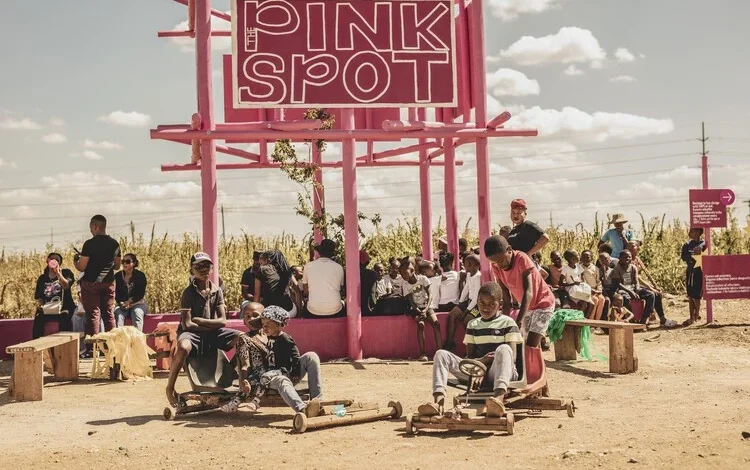
- Social Infrastructure (House of the Pink Spot): By creating hubs that provide services to the community, architects can ensure that spaces remain populated. High-traffic areas are inherently safer because they provide natural surveillance.
- Adaptive Connectivity (Charaani Public Stairs): Often, women’s safety is compromised by "non-places"—transitional areas like underpasses, stairways, or alleyways that are poorly lit and disconnected from the main urban fabric. Projects that treat these connectors as destination-worthy urban interventions—adding color, lighting, and seating—effectively reclaim these spaces for public use.
- Industrial Repurposing (Infra-Space): The transformation of neglected industrial pockets under bridges or highways into public parks proves that "dead space" can be activated. By integrating lighting and transparent barriers, these formerly intimidating zones become part of the city’s active social life.
- Cultural and Recreational Integration (Suba Nuestro Jardin Cultural): Recreational spaces that are designed with clear sightlines and multiple access points allow women to navigate through them without the fear of being trapped in isolated corners.
Policy Implications and the Role of Governance
The transition from theoretical research to physical implementation requires a shift in how municipalities distribute public investment. Traditional budgeting often prioritizes large-scale infrastructure projects—such as highways or central business districts—that favor commuters. Gender-sensitive urban planning, however, emphasizes the "micro-urbanism" of the neighborhood.
Local governments that have successfully integrated gender-sensitive design into their master plans often utilize a "participatory planning" model. This involves conducting walking audits with local women, mapping "no-go" zones, and identifying where lighting, signage, or pedestrian infrastructure is lacking. This bottom-up approach ensures that the design interventions are grounded in the actual, lived experience of the population rather than theoretical assumptions.

The Broader Impact on Urban Equity
The implications of these design strategies extend far beyond the immediate goal of reducing harassment. When a city is designed to be safe for women, it becomes inherently more accessible for children, the elderly, and people with disabilities. The "care-centric" city model posits that if we design for the most vulnerable members of society, we effectively design a more robust and accessible city for everyone.
Furthermore, the economic impact is non-negligible. A study by the World Bank suggests that increasing women’s mobility and access to public space directly correlates with higher rates of employment and increased participation in the local economy. When women feel safe to travel at night or walk through diverse neighborhoods, they are more likely to utilize public transport, access educational facilities, and patronize local businesses, thereby stimulating economic activity.

Moving Toward a Future of Inclusive Urbanism
As we look toward the latter half of the decade, the integration of technology and urban design offers new avenues for improvement. Real-time data mapping, mobile applications that allow for the reporting of poorly lit areas, and smart-lighting systems that brighten as a pedestrian approaches are all contributing to a more responsive urban environment.
However, technology is merely a supplement to the fundamental principles of good design. The responsibility lies with the architects, urban planners, and civil engineers to prioritize human-scale elements—transparency, connectivity, and active use—over defensive, exclusion-based design. The goal is to move away from a city that functions as a series of obstacles to be navigated and toward a city that serves as a welcoming, accessible, and safe environment for all citizens.

Ultimately, the redesign of the urban landscape to prioritize women’s safety is a test of a city’s commitment to equality. By recognizing that the way we move through, inhabit, and claim public space is fundamentally gendered, we can begin to dismantle the spatial barriers that have historically limited women’s freedom. The lessons from these four public spaces serve as a blueprint for a future where the city is not just a place of transit, but a place of belonging. As research continues to evolve and as more cities adopt gender-sensitive urban policies, the global architectural community must remain vigilant in ensuring that the built environment is not merely a reflection of the status quo, but a catalyst for social progress.