Brooks Brothers Reimagined: The Strategy Behind the Iconic Brand’s Billion-Dollar Ambition

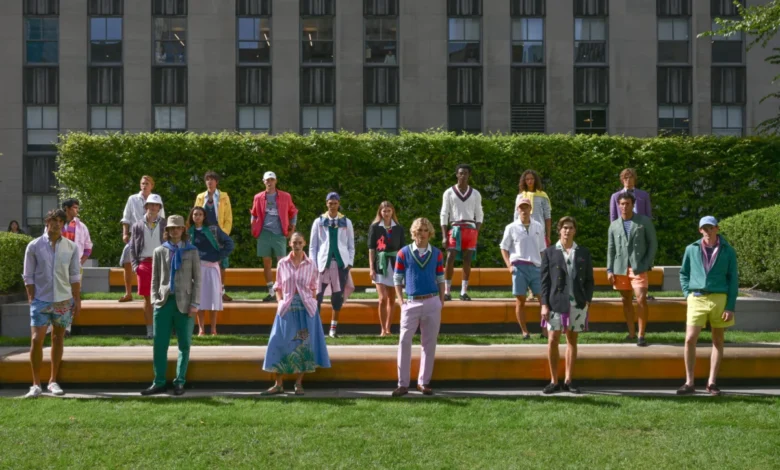
The landscape of American heritage retail is undergoing a high-stakes metamorphosis, nowhere more visible than at the top of Manhattan’s Radio City Music Hall. Last week, amidst the sweltering heat of a New York summer, Brooks Brothers transformed the secluded Radio Park into a runway, marking the brand’s first official New York Fashion Week (NYFW) presentation in years. For a company that has defined the "preppy" aesthetic for over two centuries, this event served as more than just a seasonal display; it was a definitive statement of intent from the brand’s current leadership team, Creative Director Michael Bastian and CEO Ken Ohashi. Under the stewardship of Authentic Brands Group (ABG), the retailer is aggressively pivoting to capture a new generation of consumers while striving to solidify its standing as a billion-dollar global powerhouse.
A Chronology of Turnaround: From Bankruptcy to Runway
The trajectory of Brooks Brothers over the last four years is a study in crisis management and brand repositioning. In July 2020, the company, burdened by shifting consumer habits and the economic fallout of the COVID-19 pandemic, filed for Chapter 11 bankruptcy protection. The brand, which had outfitted nearly every American president since the early 19th century, faced an existential threat.
The acquisition by Authentic Brands Group and Sparc Group marked the beginning of a rigorous revitalization phase. When Ken Ohashi assumed the role of CEO, the immediate outlook was grim, with sales down 70% in his first week. However, the subsequent years have been characterized by a methodical, data-driven approach to recovery. By 2022, the company began diversifying its revenue streams, most notably by entering the corporate uniform sector. By securing a contract to supply uniforms for over 66,000 United Airlines employees, the brand established a stable, long-term revenue base that shielded it from the volatility of direct-to-consumer retail. This move was followed by a strategic, limited-distribution partnership with Macy’s, which allowed Brooks Brothers to reach a wider audience without diluting the prestige associated with its flagship locations.
The Financial Landscape and the Billion-Dollar Goal
While the company maintains a degree of confidentiality regarding granular financial disclosures, the leadership has been transparent about its top-line objectives. Michael Bastian, who joined the brand with a clear mandate to modernize its design language, confirmed that annual revenue is currently hovering near the $1 billion threshold. This performance is underpinned by six consecutive years of positive comparable sales growth, a metric that has remained resilient even as inflationary pressures have altered consumer spending habits.
The "billion-dollar brand" ambition is not merely a revenue target; it is a signal of market relevance. To achieve this, the company has focused on "top-of-funnel" marketing—investments designed to build awareness among demographics that have historically overlooked the brand. The NYFW show is the centerpiece of this strategy. By placing the collection in the high-visibility context of the global fashion calendar, Brooks Brothers is attempting to bridge the awareness gap among consumers under the age of 40.
Modernizing the Preppy Aesthetic
Creative Director Michael Bastian’s role has been to reconcile the brand’s storied history with the requirements of a modern wardrobe. Upon his arrival, Bastian identified a curious disconnect: the very items for which Brooks Brothers is globally famous—the Oxford cloth button-down shirt and the iconic rep tie—were not being adequately prioritized in the brand’s current assortment.
The latest collection reflects a synthesis of "classic prep" and contemporary sensibilities. By incorporating inspiration from diverse locales such as the American Southwest and the French Riviera, Bastian is expanding the brand’s narrative beyond the boardroom. Collaborations with streetwear-adjacent labels like Needles and New Era represent a deliberate attempt to inject cultural currency into the brand’s identity. These partnerships, combined with campaigns featuring younger influencers like TyLynn Nguyen and comedian Alex Edelman, are designed to dismantle the perception that Brooks Brothers is an artifact of the past.
Retail Footprint and Physical Expansion
Despite the industry-wide trend toward digital-first commerce, the leadership at Brooks Brothers maintains that physical retail remains a critical pillar of its growth strategy. Currently operating approximately 140 stores, the company has maintained a steady pace of expansion, including the opening of a new New York flagship last year. The goal is to open roughly 10 stores annually, focusing on locations that serve as "brand embassies" where the consumer can interact with the full breadth of the product range.
This physical footprint is essential for maintaining the brand’s premium positioning. By managing the number of doors and ensuring that the in-store experience matches the elevated marketing narrative, the brand has successfully avoided the "deterioration" of its core, high-net-worth customer base, even while attracting new, younger shoppers.
Parallel Journeys: The Tommy Hilfiger Perspective
The evolution of Brooks Brothers finds an interesting parallel in the career of Tommy Hilfiger, another titan of American preppy fashion. During a recent exhibition at the Plaza Hotel, Hilfiger reflected on his own brand’s 40-year journey, which shares striking similarities with the current trajectory of Brooks Brothers.
"Back then it was a menswear brand, designed in America and made for department stores," Hilfiger noted during an interview in his Manhattan showroom. "But we started expanding into women’s, children’s, fragrance, footwear, every adjacent product you could imagine."
For Hilfiger, the key to longevity has been a delicate balance between catering to long-term, loyal customers—those who value the brand’s consistency in quality and pricing—and aggressively courting Gen Z. Hilfiger’s recent strategy emphasizes the intersection of sports and fashion, citing partnerships with elite athletes like Travis Kelce and involvement with Formula 1 as essential for maintaining cultural relevance. Like Brooks Brothers, Hilfiger has embraced the "see-now, buy-now" model, ensuring that the collections shown on the runway are immediately accessible to the audience.
Market Implications and Future Outlook
The simultaneous efforts of these two iconic brands suggest a broader industry trend: the "American Heritage" segment is undergoing a professionalization of its creative and financial strategies. The era of relying solely on institutional prestige is over. In its place, companies are adopting a hybrid model that blends high-level marketing events, celebrity-driven social media campaigns, and utilitarian B2B business units.
The challenges for Brooks Brothers moving forward remain significant. The competitive landscape for "quiet luxury" and "preppy staples" has become increasingly crowded, with both heritage competitors and direct-to-consumer startups vying for the same demographic. Furthermore, the brand must ensure that its expansion into wholesale channels, such as Macy’s, does not erode the pricing power required to maintain its premium status.
However, the early indicators—sustained growth, successful brand activations, and a stabilized retail footprint—suggest that the turnaround is far more than a temporary reprieve. As Michael Bastian stated, the "ball is rolling." The challenge for the next phase of the company’s evolution will be to maintain this momentum without sacrificing the historical integrity that serves as the foundation of the brand’s identity. If the current trajectory holds, Brooks Brothers is well-positioned to cement its status as a perennial billion-dollar entity, successfully navigating the transition from a legacy retailer to a modern global lifestyle brand.
Summary of Strategic Pillars
- Operational Stability: Leveraging the corporate uniform business to provide consistent, non-discretionary revenue.
- Creative Refresh: Reprioritizing iconic items while utilizing collaborations to reach younger demographics.
- Marketing Investment: Using the New York Fashion Week stage to generate top-of-funnel awareness.
- Controlled Accessibility: Strategic, limited wholesale partnerships that maintain brand prestige.
- Physical Retail: Continued investment in flagship and regional locations to bolster brand presence.
As the industry continues to monitor the impact of these initiatives, the success of Brooks Brothers will likely serve as a benchmark for other heritage brands attempting to navigate the complexities of the modern retail ecosystem. The path to a billion dollars is paved with such risks, but the evidence suggests that for the iconic shirt-maker, the investment is beginning to pay dividends.