The Quencher once made up 80% of Stanley 1913’s business. Now, the brand is building its next act

The Farm Rio Milestone and Strategic Intent
The recent collaboration with Brazilian fashion house Farm Rio serves as a litmus test for this new strategy. Launching on August 18, the collection—which features vibrant, tropical prints across Quenchers, bottles, and soft coolers—was originally projected to maintain inventory levels for approximately four weeks. Instead, the market reacted with unanticipated velocity. Within just seven days, the collection reached nearly 50% global sell-through, with specific items like the "Tropical Woods" print nearing total depletion.
While such figures are typically cause for celebration in the retail sector, for Stanley leadership, the data represents more than just a successful inventory turnover. Kate Ridley, Chief Brand Officer at PMI WW Brands, emphasized that the true value of the Farm Rio partnership lies in the post-purchase behavior of the consumers it attracts. Unlike previous celebrity-led collaborations, such as those with singer Olivia Rodrigo or musical artist Post Malone, which were designed to trigger rapid, ephemeral demand, the Farm Rio partnership was structured to foster deeper brand affinity. By targeting communities already aligned with the aesthetic of color, design, and self-expression, Stanley is attempting to broaden its appeal beyond the "Quencher craze" that defined its recent explosive growth.
A Shifting Product Mix
The Stanley Quencher, which once dominated the company’s global product mix by accounting for over 80% of sales, is undergoing a managed dilution. As of the latest fiscal reporting, the Quencher’s share of the portfolio has receded to between 40% and 50%. This decline is not a sign of flagging interest in the signature tumbler, but rather the result of a deliberate corporate mandate to diversify.
Stanley is currently pushing into several adjacent categories, including fitness equipment, lunch bags, backpacks, and specialized café products. This diversification is critical for a company that has reached a level of market saturation where relying on a single silhouette poses long-term business risks. By leveraging collaborations to introduce consumers to these newer categories, Stanley is building a "lifestyle ecosystem" rather than a single-product brand.
Chronology of the Farm Rio Launch
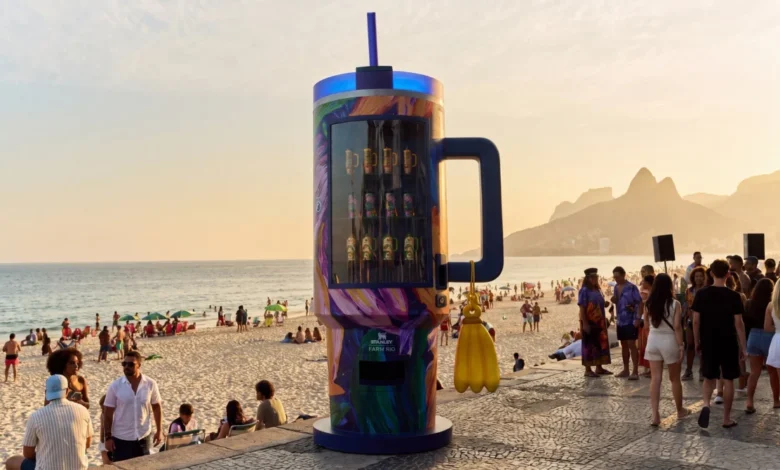
The success of the Farm Rio launch was the result of a coordinated global marketing effort. The buildup began weeks in advance, generating 12,500 "Notify Me" registrations in Latin America alone. The launch phase was marked by high-engagement physical activations, including pop-up events in New York City—where stock vanished within hours—and a high-profile, beachside installation in Rio de Janeiro featuring a Quencher-shaped vending machine.
The performance metrics were consistent across major territories:
- August 18: Global launch of the Farm Rio x Stanley collection.
- August 25 (Week 1): Nearly 50% of global inventory sold; six of the top 10 best-selling items were collaboration pieces.
- Regional Performance: North America, Canada, EMEA, Brazil, and Argentina all reported sell-through rates exceeding 50%.
- The "Tropical Woods" Effect: The specific print reached 100% sell-through in less than seven days, demonstrating the power of limited-edition aesthetic curation.
Lessons from Previous Partnerships
To understand the efficacy of this strategy, the company frequently looks back at the data generated by the Post Malone collaboration. Initially intended as a creative venture, the partnership provided actionable intelligence regarding the demographics of Stanley’s customer base. The collaboration saw an influx of male consumers and a surprising surge in demand from the Asia-Pacific and European markets—regions where Stanley previously had a lower footprint.
More importantly, the company tracked these new customers over the subsequent six months. The data revealed a notable "uplift" in interest toward Stanley’s café-related products among that specific cohort. This insight confirmed to the company that celebrity and fashion partnerships serve as an effective "entry point" into the brand, provided that the company follows up with a robust, diversified product roadmap.
The Evolution of Promotional Strategy
As Stanley matures, it is also re-evaluating its stance on discounts. Historically, the brand has avoided deep discounting, maintaining a premium market position. However, leadership is beginning to view promotions not as a threat to brand equity, but as a tactical tool for customer acquisition.
"I don’t think there’s an inverse relationship between being a premium brand and discounting," Ridley noted. "There are times throughout the year that consumers just expect it."
This represents a significant shift for the 113-year-old company. The goal is to use targeted promotions—often in coordination with wholesale partners like Amazon—to attract shoppers who might be price-sensitive regarding the $50-plus price point of a standard Quencher. By grouping these promotional shoppers into cohorts, Stanley aims to measure whether these individuals eventually graduate to full-price, premium items.
However, this strategy comes with its own set of tensions. Testing has indicated that demand often loses momentum shortly after the first few days of a promotion. This creates a conflict between the desire to extend sale periods to maximize revenue and the need to maintain the "urgency" that is essential to the Stanley brand experience. Balancing these two needs remains a "discovery phase" for the company.
Broader Context and Market Implications
The partnership with Farm Rio occurs against a backdrop of corporate restructuring for the Brazilian brand. Its parent company, Azzas 2154, recently announced plans to dissolve following internal shareholder disputes. While Farm Rio is expected to transition into an independently managed entity, the stability of such partners is a variable that large-scale collaborators like Stanley must account for in their long-term growth planning.
Despite these external uncertainties, Stanley’s growth momentum remains strong, particularly as it expands its distribution channels outside of North America. Ben James, General Manager for EMEA, has noted that the brand is continuing to find "new channels of distribution," suggesting that the global appetite for the Stanley brand remains robust even as the company moves past its initial, viral-growth phase.
Future Outlook: The Holiday Campaign
Looking ahead, Stanley is preparing to leverage its expanded product assortment for the upcoming holiday season. A major campaign is scheduled for late October, which will serve as the next major data-collection event for the brand. The company intends to test the appetite for its non-Quencher items, such as coolers and backpacks, using the momentum gained from the Farm Rio launch.
The overarching strategy is clear: Stanley is moving from a company defined by a single, viral item to a comprehensive lifestyle brand. By using high-visibility collaborations to draw in new customers, and then utilizing data analytics to track their journey toward secondary products, the brand is attempting to secure its place in the market for the next century. Whether this strategy can sustain the same intensity as the viral Quencher phenomenon remains the defining question for the company as it enters this new chapter of its history.