The Rise of Anti-Blush: How a Viral TikTok Term Sparked a Makeup Phenomenon and Ignited Creator Credit Debates

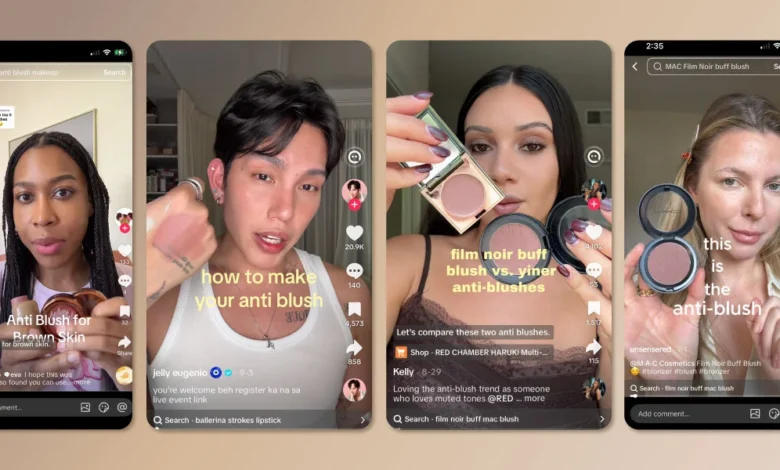
The digital beauty landscape is no stranger to hyper-specific micro-trends, but few have moved from a single creator’s passing thought to a global industry phenomenon quite as rapidly as the "anti-blush" movement. What began in July as a spontaneous vocabulary choice by Los Angeles-based actor and content creator Kim Senser has since evolved into a viral sensation. The term, used to describe the appeal of muted, neutral, and rosy-brown shades over heavily saturated pinks and reds, has upended digital beauty discourse, driven massive retail sell-outs, and reignited long-standing industry debates regarding digital intellectual property, influencer compensation, and the ethics of corporate trend adoption.
The Genesis of a Viral Catchphrase
The movement traces its roots to a video Senser recorded reviewing MAC’s Film Noir Buff blush. While evaluating the rosy-brown cosmetic, Senser struggled to find a descriptor that would capture the unique qualities of a shade that defied traditional flush aesthetics.
"I was saying at first, ‘This is the most interesting blush I’ve ever used.’ And I thought, ‘I don’t know, would that stop someone in a video?’" Senser recalled. Seeking a sharper hook, she landed on a term that ran counter to prevailing industry norms: "This is the anti-blush."
The psychological hook proved remarkably effective. Upon going live on TikTok in July, the clip amassed over two million views, subsequently pulling in another million on Instagram. Within two months, the nomenclature transcended Senser’s existing audience of roughly 30,000 followers, entering the lexicon of mega-influencers such as Aditya Madiraju and Melissa Murdick, while prompting localized adaptations for diverse complexions, including deeper skin tones and olive undertones. International style publications, ranging from Vogue Adria to Harper’s Bazaar Singapore, quickly followed suit with trend breakdowns and tutorials. Concurrently, MAC’s Film Noir Buff experienced widespread stock depletion across major prestige stockists, including Ulta and Sephora.
Market Context: The Backlash Against Maximum Saturation
The rapid acceleration of the anti-blush movement did not happen in a vacuum; rather, it serves as a direct counter-reaction to years of maximalist blush trends. Over the preceding several years, cosmetics brands such as Rhode and Rare Beauty capitalized on a sustained boom in cheek color, treating blush as the primary engine of modern makeup routines.
According to retail analytics firm Circana, U.S. prestige beauty sales for blushes and bronzers posted robust double-digit gains during the first half of the year, significantly outpacing the broader prestige makeup market, which grew by a modest 3%. The appeal of traditional blush has long rested on its ability to impart a youthful, vibrant flush.
"Blush just makes you look full and fresh, and it never looks like too much, or it doesn’t look muddy," explained celebrity makeup artist Katie Jane Hughes, founder of KJH Brand. "Blush is an easy one to really create that glowy look."
However, the omnipresence of bright, heavily flushed cheeks ultimately yielded consumer fatigue, often colloquially referred to in beauty communities as "blush blindness." This saturation paved the way for a more desaturated, understated aesthetic. Trend forecasting data compiled by Spate in September indicated that consumer interest in beige and neutral blushes across search engines and social platforms surged by 274.9% year-over-year.
Professional makeup artists note that the aesthetic itself is hardly new, having long been utilized backstage and on editorial shoots to create sophisticated, lived-in dimensions.
"I think the anti-blush thing is coming from a place of, like, the Gabbriettes and these girls with this super, kind of, ’90s, slightly beautifully tired, little bit grungy, less kind of coverage under their eyes," Hughes observed. "I think that it is just a trend with a new nickname. I think that’s what most of the trends are, right?"
Corporate Adoption and the Creator Credit Debate
While the visual style may have historical roots in ’90s grunge and editorial minimalism, the coining of the "anti-blush" moniker became a central point of contention on social media. As the term broke containment and entered mainstream retail marketing—with MAC officially adopting the hashtag and phrasing in an August Instagram post—online commentators were quick to note the disconnect between corporate utilization and individual attribution.
Numerous users flooded MAC’s comment sections, tagging Senser and demanding that the legacy beauty brand acknowledge her role in originating the phrase. Simultaneously, critics raised questions regarding the brand’s initial failure to showcase the viral product adequately across deeper skin tones.
Senser noted that while she appreciated the grassroots support from her peers, she received no direct communication from MAC, despite having shared her original video with the company via direct message. In September, she addressed the situation through a lighthearted follow-up video, drawing parallels to instances where emerging creators received corporate rewards for viral content—such as when wellness brand Lemme treated content creator Christina Kirkman to a trip to Coachella after her video promoting sleep gummies went viral.
"Anyone in the world can use ‘anti-blush.’ I more so wanted to let the main company know, like, ‘Hey, if you didn’t see my original video, I am the one that started this,’" Senser said. "I think a lot of people did buy it from this huge trend out there, and if they did want to say hi or give me any credit or anything like that, I’d be open to it. But alas, that I don’t think is going to happen."
Brand Perspectives and the Mechanics of Modern Marketing
When approached for comment regarding the phenomenon, MAC maintained that the viral moment aligned organically with shifting consumer desires toward structural, dimensional makeup applications. The brand revealed that its Skinfinish Colourstruck Blush in Film Noir Buff "overperformed launch plans by 4x."
"This is exactly how beauty should move: creatively, collectively and without rules. Consumers come to MAC when they want permission to play — to try on a trend, make it their own and find products that flex with their mood, style and self-expression," a MAC spokesperson stated via email. "With a blush portfolio that spans bright, bold shades alongside softer, neutral-toned options, MAC continues to be a destination for artistry and experimentation — and we’ve seen that in action from the blush trio that surged around our Painted By Esther x Olandria MACzine cover to Kim Senser’s anti-blush movement."
The friction between viral creators and legacy brands highlights a recurring structural challenge in the modern digital economy. Senser’s experience is far from isolated. Earlier in the year, Patrick Ta’s "Transition Blush" launch drew similar consumer backlash over credited techniques popularized by independent makeup artist Ngozi Esther Edeme, known professionally as Painted By Esther.
For emerging creators lacking the representation required to negotiate lucrative commercial partnerships, organic endorsements—often referred to informally within influencer circles as "flirting" with brands—represent a high-risk, low-certainty gamble for visibility. While some brands occasionally convert organic viral moments into formal commercial arrangements—such as Vaseline flying creators Jen Chae and Lauren Luke to Thailand and granting them a share of sales for a resurrected 2008 beauty hack—such outcomes are the exception rather than the rule.
Broader Implications for Social Media Trend Cycles
As platform algorithms increasingly favor micro-creators and rapid-fire content distribution, brands no longer rely exclusively on top-tier talent managed by traditional agencies to drive product velocity. This dynamic leaves originators of viral terminology in a precarious position regarding intellectual property and financial compensation.
Reflecting on the episode, Senser acknowledged the pragmatic reality of digital content creation. "It’s definitely a learning experience," she said. "Once again, [MAC] doesn’t owe me anything. It’s not like I trademarked anything. People in the comments were like, ‘I would sue.’ I’m like, ‘I never thought about any of that.’"
Meanwhile, the rapid proliferation of the trend has sparked consumer fatigue among broader beauty communities on platforms like Reddit, where users frequently voice exhaustion over the relentless cycle of micro-trends. Industry veterans like Hughes point out that the anti-blush look does not strictly necessitate purchasing new inventory, noting that consumers can easily replicate the aesthetic using existing components in their personal collections, such as blending standard bronzers with neutral lipsticks.
As for Senser, her relationship with the specific product that started it all has fundamentally shifted. Though she remains a proponent of the neutral aesthetic, reaching for the Film Noir Buff blush is no longer a neutral experience.
"I think I feel a little some type of way whenever I see the color in my bag. I look at it like a lover that treated me bad," she said with a laugh. "Currently, my mission is to find a good dupe and just continue getting back into my normal posting."
Related posts: