Yue Yuen Industrial Warns of 55 Percent Profit Slump Amid Macroeconomic Headwinds and Shifting Global Trade Policies

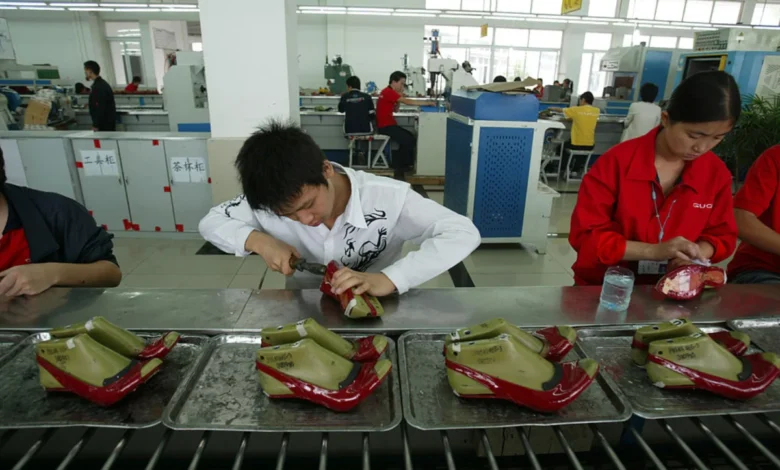
Major global footwear manufacturing giant Yue Yuen Industrial (Holdings) Ltd. has issued a stark profit warning for the first nine months of fiscal 2026, dealing a blow to investor sentiment across the international supply chain. In an official filing released on Monday, the Taiwanese shoe manufacturing conglomerate disclosed that it anticipates a dramatic bottom-line contraction ranging between 50 percent and 55 percent for the period ending September 30, 2026. This stark downturn represents a significant drop compared to the robust $287.7 million net profit recorded during the corresponding nine-month period in fiscal 2025.
The preliminary review of the group’s unaudited consolidated financial statements highlights a compounding series of pressures across its core manufacturing division. Executives and industry analysts alike point to a volatile cocktail of weakened end-market demand, escalating production costs, shifting geopolitical alliances, and the lingering economic fallout of aggressive global tariff policies enacted by the United States government. While the company has noted minor green shoots—such as a localized recovery in footwear shipment volumes observed during September 2026—these positive movements proved far too late and too modest to offset the severe operational headwinds accumulated throughout the first half of the year.
The anatomy of Yue Yuen’s profit decline reveals deep structural vulnerabilities within the global manufacturing sector. As a primary manufacturing partner for some of the world’s most recognizable athletic, casual, and outdoor footwear brands—including industry titans such as Nike, Adidas, New Balance, Crocs, Salomon, and Timberland—Yue Yuen’s financial health serves as a bellwether for the broader footwear and apparel economy. The latest financial disclosures underscore just how rapidly macroeconomic friction can translate into reduced profitability for high-volume contract manufacturers.
Macroeconomic Headwinds and Manufacturing Pressures
According to Yue Yuen’s management, the primary driver behind the steep profit erosion is a sharp contraction in sales scale resulting from sluggish consumer demand. As macroeconomic uncertainty continues to weigh on retail spending across North America and Europe, global brand customers have adopted a defensive and highly conservative posture regarding inventory management and product procurement.
Rather than committing to long-term, high-volume production schedules well in advance, major footwear brands have increasingly pivoted toward short lead-time orders. This shift in purchasing behavior has introduced unprecedented volatility into Yue Yuen’s manufacturing pipeline. The company reported that managing frequent, smaller-batch orders has severely strained operational efficiency, making optimal factory utilization exceptionally difficult to maintain. Consequently, these operational inefficiencies directly eroded the gross profit margins of the group’s manufacturing segment.
Compounding the volume and efficiency challenges are rising input costs across the company’s primary production hubs in Asia. Yue Yuen highlighted persistent upward pressure on labor costs, driven by escalating baseline wages and operational overheads within its key manufacturing centers. Furthermore, the company experienced disruptions caused by overlapping statutory and regional long holidays across its primary manufacturing bases. These scheduling bottlenecks severely complicated production flow and resource allocation, driving up per-unit manufacturing costs at a time when top-line revenue was already contracting. Specifically, the group’s manufacturing business revenue slumped by 3.8 percent during the nine-month window compared to the previous year.
The Geopolitical and Tariff Chronology: A Turbulent Two-Year Landscape
To fully understand the gravity of Yue Yuen’s current financial standing, it is necessary to examine the turbulent geopolitical and trade landscape that has unfolded over the past 24 months. The roots of the modern manufacturing crisis trace back to April 2025, when U.S. President Donald Trump implemented a sweeping reciprocal tariff policy. This aggressive trade maneuver introduced steep, punitive duty rates across various global geographies, with Chinese and Vietnamese imports bearing the brunt of the fiscal impact.
The sudden imposition of these tariffs triggered widespread panic throughout the international footwear supply chain. Fearing exorbitant import duties and long-term cost inflation, numerous footwear brands began aggressively rethinking their sourcing strategies. A massive exodus of production capacity away from China and into alternative manufacturing hubs commenced, causing severe logistical disruptions and a sharp, immediate reduction in shipment volumes for established Chinese manufacturers like Yue Yuen.
The timeline of trade policy developments over the subsequent months illustrates the extreme volatility that manufacturers have had to navigate:
- April 2025: President Trump’s reciprocal tariff policy takes effect, triggering immediate tariff spikes on Chinese and Vietnamese goods and instigating widespread industry fear.
- Late 2025: Pressured by mounting industry lobbying and supply chain instability, the U.S. government grants a one-year tariff break starting in October 2025, temporarily shielding certain Chinese shoe imports from the harshest tiers of the reciprocal tariff framework.
- February 2026: In a landmark legal development, the U.S. Supreme Court rules that the majority of the emergency tariff measures enacted under the previous executive actions are unconstitutional and illegal, throwing federal trade policy into a temporary state of transition.
- September 2026: Washington and Beijing successfully negotiate a bilateral trade truce designed to stabilize cross-border commerce. This agreement sets a temporary tariff rate of approximately 30 percent on most Chinese imports—a significant de-escalation from the historic highs of 145 percent recorded during the peak of the trade tensions in 2025. This truce remains scheduled to run through November 10, 2026.
- October 2026: Yue Yuen reports a modest rebound in footwear shipments for the month of September, offering the first tangible sign of stabilization following the implementation of the U.S.-China trade truce. However, the recovery arrives too late to salvage the company’s year-to-date financial metrics.
Industry Implications and the Strategic Outlook for Contract Manufacturers
The profit warning issued by Yue Yuen Industrial serves as a stark reminder of the fragile operational environment facing contract manufacturers in the post-pandemic era. While the de-escalation of U.S.-China tariff rates from 145 percent down to roughly 30 percent provides a more predictable baseline for future trade, the structural damage inflicted over the past year and a half cannot be undone overnight.
Financial analysts point out that contract manufacturers operate on notoriously tight margins, where profitability is heavily dependent on high-volume predictability and seamless plant utilization. When geopolitical uncertainty forces brand clients to hesitate, cancel, or fragment their purchase orders into short lead-time requests, the entire manufacturing ecosystem suffers. The inability to forecast factory floor requirements efficiently leads to idle capacity, bloated overhead, and compressed margins—the exact trinity of problems cited in Yue Yuen’s profit warning.
Furthermore, the structural shift in supply chain geography—accelerated by tariff fears—has forced legacy manufacturers to invest heavily in diversifying their operational footprints. Establishing and scaling up alternative production facilities outside of traditional strongholds requires massive capital expenditure. While companies like Yue Yuen possess the balance sheet strength to absorb short-term shocks and geographic repositioning, the transition costs weigh heavily on near-term financial results.
Looking ahead, management at Yue Yuen Industrial will need to focus intensely on operational agility, cost containment, and closer collaborative planning with major brand partners. The gradual stabilization of U.S.-China trade relations through the current bilateral truce provides a much-needed window of breathing room. However, sustained recovery will ultimately depend on broader macroeconomic conditions, specifically the revitalization of consumer confidence and retail demand in Western markets. Until retail sell-through rates accelerate and inventory levels normalize across major footwear brands, contract manufacturers must brace themselves for a new normal defined by heightened volatility, shorter order cycles, and permanently elevated operational costs.