Sainsbury’s joins the Retail Trust’s Let’s Respect Retail campaign to combat abuse and violence against shop workers

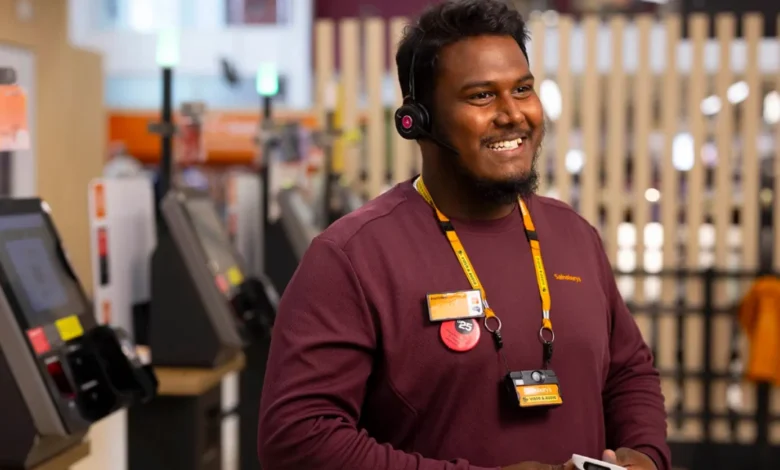
In a significant move to safeguard the wellbeing of its frontline staff, Sainsbury’s has become the largest retailer to join the Retail Trust’s “Let’s Respect Retail” campaign. This strategic partnership signals a unified industry front against the rising tide of hostility, abuse, and physical threats faced by retail employees across the United Kingdom. As the festive season approaches—a period typically marked by high footfall and increased operational pressure—the supermarket giant is set to implement a nationwide awareness initiative starting next month, urging customers to interact with staff with the courtesy and dignity that professional service demands.
The Growing Crisis of Retail Hostility
The retail sector has experienced a concerning escalation in antisocial behavior over the past several years. While shoplifting often dominates the headlines, the human cost is frequently measured in the psychological trauma inflicted upon staff members. Retail workers are increasingly finding themselves on the front lines of public frustration, facing everything from verbal abuse and intimidation to outright physical violence.
Recent data from the Retail Trust, in collaboration with partners such as the trade union Usdaw, the Association of Convenience Stores (ACS), and the National Business Crime Centre, reveals a grim reality for the retail workforce. According to industry surveys, more than 75% of shop workers reported experiencing some form of abuse over the past year. This statistic is not merely a figure; it represents a systemic failure to provide a safe working environment for millions of employees who keep the nation’s supply chains and physical stores functioning.
The abuse manifests in various forms: aggressive language during transaction disputes, intimidation during alcohol or age-restricted product sales, and physical altercations when staff attempt to intervene in shoplifting incidents. For many, these encounters are no longer "one-off" events but a regular, distressing feature of their working day.
A Chronology of Industry Action
The decision by Sainsbury’s to join the campaign follows a long-standing period of advocacy by unions and retail bodies. The timeline of this movement can be traced back through several critical milestones:
- 2020–2021 (The Pandemic Surge): During the Covid-19 lockdowns, retail workers were classified as essential, yet they faced unprecedented levels of abuse related to mask-wearing mandates and social distancing policies. This period served as a catalyst for a national conversation regarding the protection of shop staff.
- 2022 (Legislative Shifts): Following intense lobbying by the Retail Trust and Usdaw, the government saw increased pressure to recognize the vulnerability of retail workers. Several trade bodies began formalizing protocols to improve store security and incident reporting.
- 2023–2024 (The Rise of Organized Crime): Recent years have seen a surge in organized retail crime, which has compounded the issue. As security teams have become more proactive, the risk of escalation in violence has increased, prompting a shift from passive security measures to proactive staff support and public-facing campaigns.
- Late 2024 (Sainsbury’s Integration): By joining the "Let’s Respect Retail" campaign, Sainsbury’s marks a pivotal moment in the initiative’s history. Given its status as one of the UK’s "Big Four" supermarkets, its participation grants the campaign unprecedented reach, potentially impacting millions of daily shopping interactions.
Official Perspectives and Corporate Responsibility
Tracey Clements, the chief retail, logistics, and supply chain officer at Sainsbury’s, underscored the gravity of the situation in her recent statement. "No colleague should come to work worrying about abuse, threats, or violence, which can have a serious and lasting impact on their wellbeing," she noted.
Sainsbury’s is not relying solely on public awareness campaigns. The company has confirmed it is investing heavily in a multi-layered security infrastructure across its sites. This includes updated surveillance technology, enhanced training for staff in de-escalation techniques, and stronger coordination with local law enforcement agencies. However, as Clements rightly pointed out, "no retailer can tackle this alone." The partnership with the Retail Trust is intended to shift the cultural conversation, emphasizing that the store environment is a workplace, not a public space where standard societal norms of conduct can be abandoned.

Chris Brook-Carter, the chief executive of the Retail Trust, echoed this sentiment, highlighting the urgency of the intervention. "Some of the UK’s biggest retail and leisure businesses have been getting behind Let’s Respect Retail, showing the industry’s determination to end the unacceptable abuse and violence plaguing our shops and shopping centres," Brook-Carter stated. He emphasized that the simplicity of the request—a greeting or a polite thank you—is the baseline expectation for any human interaction, yet it is a courtesy often withheld from those working in high-pressure retail environments.
In-Store Strategies and Consumer Awareness
To translate the campaign into tangible results, Sainsbury’s will roll out a series of touchpoints across its digital and physical platforms. In the weeks leading up to Christmas, customers can expect to see messaging displayed in-store, on digital receipt headers, and across online shopping channels. These reminders are designed to serve as a "nudge," encouraging a moment of reflection before a customer engages with a staff member.
The campaign is not intended to be punitive but rather educational. By framing the retail experience as a collaborative social interaction, the Retail Trust and Sainsbury’s hope to humanize the staff behind the checkouts and service desks. By making the expectation of respect visible, the retailers aim to empower staff to feel supported by their corporate leadership, thereby reducing the "normalization" of abuse that has plagued the sector for too long.
Broader Economic and Societal Implications
The implications of this campaign extend far beyond the checkout counter. The retail sector remains one of the largest employers in the UK, and the mental health burden of workplace abuse has significant consequences for both the economy and the social fabric of local communities.
- Staff Retention and Recruitment: High levels of abuse contribute to increased staff turnover, burnout, and absenteeism. By fostering a safer environment, Sainsbury’s and its peers hope to improve morale, which in turn leads to better service standards and higher employee retention rates.
- Operational Costs: Security measures, the cost of replacing staff who leave due to abuse, and the legal implications of workplace violence represent a significant financial drain on retail businesses. Improving safety is, therefore, a fiscal imperative as much as an ethical one.
- Community Standards: Retailers serve as the anchors of most high streets. When those spaces become hotspots for antisocial behavior, it degrades the quality of life for the surrounding community. By asserting a zero-tolerance policy for abuse, major retailers are effectively reclaiming the public square for all users.
Analysis: The Path Forward
The success of the "Let’s Respect Retail" campaign will ultimately be determined by the consistency of its application. While signage and marketing are essential for awareness, they must be backed by rigorous enforcement. Retail staff need to know that if they report an incident of abuse, their employer will stand behind them, provide the necessary legal support, and take action against perpetrators, including the potential for banning repeat offenders.
Furthermore, the collaboration between the Retail Trust, Usdaw, and major retailers represents a necessary shift in how the industry handles collective challenges. By sharing data on crime trends and coordinating response strategies, retailers are creating a more hostile environment for those who perpetrate violence.
As the retail industry navigates a complex economic landscape defined by inflation, supply chain volatility, and shifting consumer habits, the human element remains the most vital asset. Sainsbury’s leadership in this campaign serves as a blueprint for other sectors—including hospitality and leisure—that are also grappling with the rising tide of customer aggression. The message is clear: the shopping experience is a shared responsibility, and the basic dignity of the worker is non-negotiable. Whether this campaign succeeds in turning the tide remains to be seen, but the concerted effort of the industry’s largest players is a significant step toward reclaiming the respect that all retail workers are entitled to in the course of their duties.