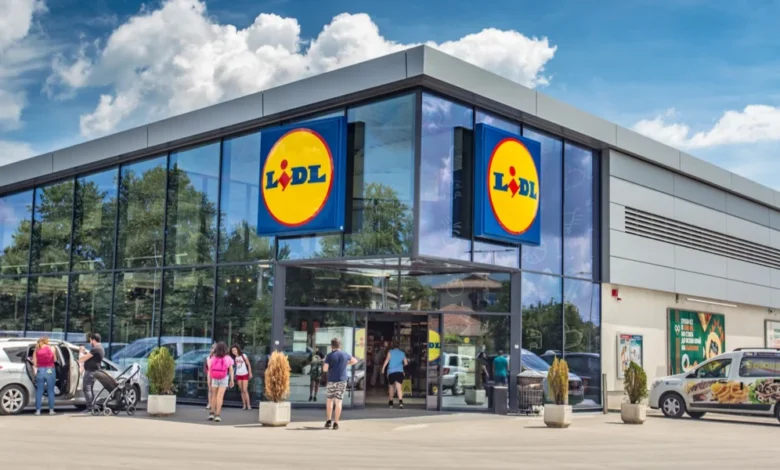
The rapid ascent of German discounters in the United Kingdom has fundamentally reshaped the competitive landscape of the British grocery sector. Over the past decade, Lidl and Aldi have transitioned from niche, low-cost alternatives to primary destinations for millions of households, challenging the market dominance of legacy supermarkets. As of the latest fiscal reporting, Lidl Great Britain announced a significant 10.8% increase in annual sales, reaching £13 billion. This growth is underpinned by an aggressive capital expenditure strategy, with the company confirming plans to expand its footprint by opening more than 50 new stores nationwide.
However, the retail environment is currently standing on the precipice of a technological shift: the era of "agentic commerce." As Artificial Intelligence (AI) models evolve from passive search tools into autonomous agents capable of executing complex tasks, the traditional retail model—based on physical store visits and manual product selection—faces a period of unprecedented disruption. For a physical-first retailer like Lidl, which has historically eschewed online grocery delivery in the UK in favor of high-density store operations, the integration of AI into consumer shopping habits represents both a strategic threat and a catalyst for innovation.
The Growth Trajectory: From Underdog to Market Disruptor
Lidl’s success in the UK has been built on a "stripped-back" operational model that prioritizes efficiency and value. By limiting product range compared to traditional "Big Four" supermarkets, Lidl achieves higher inventory turnover and lower overhead costs. This model has proven remarkably resilient during periods of high inflation and cost-of-living pressures, as consumers pivot toward value-based shopping.
The chronology of Lidl’s UK growth reflects a calculated approach to market penetration:
- 2010–2015: The "discovery phase," where Lidl established a presence in secondary towns and solidified its reputation for competitive pricing.
- 2016–2020: The "expansion phase," marked by the refurbishment of existing stores and the introduction of the Lidl Plus loyalty app, signaling a move toward digital engagement.
- 2021–Present: The "dominance phase," characterized by record-breaking revenue figures and the tactical use of high-margin seasonal non-food items, such as the famous "middle aisle" inventory, to drive foot traffic.
The 23% increase in active users on the Lidl Plus app demonstrates that the company is successfully migrating its customer base from purely transactional visits to a semi-digital relationship. Nevertheless, the rise of AI agents—systems that can autonomously scan price points, cross-reference inventory, and optimize shopping lists—poses a challenge to the "destination" status of any physical retailer.
The Rise of Agentic Commerce and the Automation of the Weekly Shop
Agentic commerce refers to the transition where AI assistants manage consumer decisions. Research from Rithum indicates that 36% of shoppers have already utilized AI to assist in grocery procurement. While current usage is largely advisory, industry analysts project a shift toward delegation, where AI agents will be granted permission to execute purchases based on pre-set parameters, such as price, dietary requirements, and availability.
For a retailer like Lidl, which does not currently operate an e-commerce grocery storefront in the UK, the threat is twofold. First, if an AI agent is tasked with finding the "best value" across all available retailers, the physical-first nature of Lidl may place it at a disadvantage if the agent prioritizes delivery-ready platforms. Second, if price becomes the only variable the AI optimizes for, the unique "magic" of the in-store experience—the discovery of new products, seasonal deals, and quality produce—could be lost.
Dennis Claus, vice president of strategy at the consultancy APPLY, notes that retailers are at risk of becoming mere "repositories of products and prices" if they fail to offer a value proposition that extends beyond the commodity level. If a retailer becomes invisible to the agent, it loses its ability to influence the consumer’s purchase journey.
Competitive Dynamics and the Future of Loyalty
To maintain market share, Lidl must pivot its strategy from generic discounting to a model of "contextual personalization." The current standard of loyalty programs, which rely on point collection and reactive discounting, is increasingly vulnerable to optimization by AI agents. An AI can effectively "game" these systems to ensure the consumer always receives the maximum possible discount, rendering the traditional loyalty incentive obsolete.
"Making experiences personal, rather than personalized, is the new imperative," explains industry analyst Sarah Jenkins. "Sending a generic birthday discount code is a transactional gesture. A truly personal experience leverages contextual data—such as a customer’s fitness journey, local weather patterns, or historical purchasing behavior—to suggest a genuinely useful product or service at the right moment."
Lidl’s recent introduction of an AI-powered recipe builder within its app is a prime example of this transition. By providing a service that simplifies the meal-planning process, the retailer moves from being a warehouse of goods to an active participant in the consumer’s daily life. This creates a "sticky" experience that encourages users to return to the app, effectively circumventing the need for an external agent to make the shopping decision for them.
Implications for Physical Retail Strategy
The broader impact of this technological shift suggests that retailers must choose between two divergent paths:
- Integration with Agentic Networks: Retailers may opt to build infrastructure that allows AI agents to "shop" their stores seamlessly. This would require robust APIs and real-time inventory visibility, potentially forcing retailers like Lidl to reconsider their stance on e-commerce.
- The "Magic" Experience Strategy: Retailers may focus on reinforcing the sensory and experiential aspects of physical shopping that AI cannot replicate. This involves creating in-store events, exclusive partnerships, and community-focused services that make the physical store a destination that cannot be satisfied by an autonomous delivery agent.
Lidl’s strategy in the Netherlands serves as a potential blueprint. By leveraging the quality of its fresh produce as a "hook" for consumers, the retailer attracts foot traffic that converts into larger baskets. This strategy focuses on the sensory quality of the goods—something that an AI agent, which is primarily driven by data points and price, may overlook.
Official Stance and Market Outlook
While Lidl has not issued a formal statement on its long-term AI architecture, its recent investments in digital infrastructure suggest a proactive approach. The company’s focus on the Lidl Plus app as a primary touchpoint indicates an acknowledgment that the future of retail is hybrid.
Market experts suggest that the successful retailers of the 2030s will be those who master "invisible technology." The goal is to make the shopping experience feel like a seamless, magical process where the consumer’s needs are met without them having to navigate complex digital menus or wait for promotional emails.
As the retail sector moves forward, the competition will no longer be solely about who has the lowest price. It will be about who can best utilize the vast amounts of consumer data to create meaningful, timely, and convenient experiences. For a company like Lidl, which has successfully disrupted the market through operational efficiency, the challenge of the next decade will be to apply that same level of rigor to the digital and agentic transformation of the grocery sector. The firms that thrive will be those that view AI not as a replacement for the store experience, but as an essential tool to make that experience indispensable.