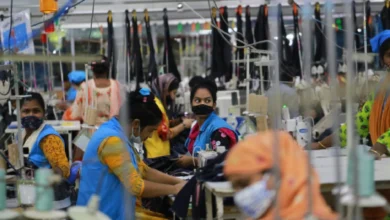
PVH Corp Announces Global Restructuring Plan to Reduce Workforce by 4% and Streamline Operations

In a decisive move to modernize its corporate structure, accelerate its multi-year strategic growth plan, and navigate a challenging macroeconomic landscape, apparel giant PVH Corp has announced a comprehensive global restructuring initiative. The sweeping program will reduce the company’s total global workforce by approximately 4%, targeting redundant management layers and non-consumer-facing positions to create
a leaner, more agile operating model.
The restructuring underscores the profound transformations currently sweeping through the global retail and fashion sectors. As companies grapple with shifting consumer behaviors, persistent inflationary pressures, and the rising costs of digital transformation, major industry leaders are increasingly forced to re-evaluate their corporate overhead. For PVH—home to iconic global lifestyle brands such as Calvin Klein and Tommy Hilfiger—this strategic pivot is designed to eliminate operational silos, speed up decision-making processes, and forge a tighter connection between corporate teams, end consumers, and major wholesale partners.
Decoding the Workforce Reductions: Scope and Timeline
Under the newly unveiled enterprise-wide program, the headcount reduction will primarily impact non-consumer-facing roles across the organization. Specifically, the cuts represent approximately 12% of PVH’s total office-based workforce globally. By stripping away middle management and eliminating duplicative administrative functions, executive leadership aims to foster a more entrepreneurial and responsive corporate culture.
Implementation of the restructuring strategy is already underway in select regions, with the remaining actions scheduled to be systematically executed and completed by the end of the first quarter of fiscal 2027. The phased approach is intended to minimize operational disruption while ensuring that customer-facing initiatives, product development, and retail execution remain uninterrupted.
However, the human cost of the restructuring is a significant focal point. While corporate leadership has emphasized that the program is vital for long-term health and competitiveness, employees in corporate and regional offices face a period of heightened uncertainty. PVH has indicated that it is currently assessing the total pre-tax restructuring costs associated with the program—including severance packages, employee transition assistance, and related legal expenses—which will be formally excluded from the company’s non-GAAP financial metrics. Furthermore, the company noted that actual expenses and final headcount impacts may vary depending on regional labor consultations, local statutory legal requirements, and ongoing operational reviews.
Financial Objectives: Cost Savings and Strategic Reinvestment
The restructuring plan is underpinned by rigorous financial targets designed to bolster profitability and free up capital for high-impact growth vectors. PVH expects the initiative to yield at least $100 million in pre-tax cost savings during fiscal 2027, driven by a combination of personnel reductions and non-personnel operational efficiencies.
Looking further ahead, the company has established a target of at least $150 million in annual net pre-tax cost savings from fiscal 2028 onward. Notably, PVH anticipates that the structural changes will have a negligible impact on its financial results for fiscal 2026, allowing the organization to transition smoothly into the savings phase without immediate adverse shocks to its near-term reporting.
Rather than relying solely on cost-cutting as a defensive measure, PVH plans to channel a substantial portion of the realized efficiencies back into strategic growth initiatives. The company intends to direct resources toward areas expected to yield the highest return on investment for its flagship brands, Calvin Klein and Tommy Hilfiger. These reinvestment areas include product innovation, advanced consumer insights analytics, digital commerce capabilities, supply chain optimization, and enterprise technology infrastructure. By balancing disciplined cost containment with targeted investments, PVH hopes to fortify its competitive moat against emerging digital-first competitors and fast fashion giants.
Background and Context: Financial Pressures and Market Realities
The announcement of the global restructuring initiative does not occur in a vacuum; it follows a period of notable financial volatility and earnings pressure for the apparel conglomerate. The decision comes on the heels of PVH’s second-quarter financial report, which revealed a net loss of $103 million—a stark reversal from the $224 million profit recorded during the same period in the previous fiscal year.
The disappointing quarterly performance was driven by a contraction in top-line revenue, which slipped from $2.2 billion to $2.1 billion year-over-year. Compounding the revenue dip were significant impairment charges totaling $436 million, primarily related to goodwill and intangible assets. These financial headwinds reflect broader softening in consumer demand across key international markets, persistent cost-of-living pressures affecting discretionary spending, and cautious inventory management by wholesale partners.
Despite these headwinds, PVH leadership has consistently maintained that the underlying fundamentals of its core brands remain exceptionally strong. In recent quarters, the company has made measurable headway in refining its brand positioning, expanding its direct-to-consumer e-commerce channels, and modernizing its global supply chain network. The restructuring initiative is thus framed as the logical next step in this evolution—a mechanism to lock in these foundational gains while aggressively pruning corporate bloat that accumulated during previous expansionary cycles.
Industry Implications and Broader Retail Trends
PVH’s restructuring mirrors a wider industry trend across the global retail and apparel sectors. In recent years, legacy fashion houses and multi-brand conglomerates have faced mounting pressure from activist investors and shifting market dynamics to streamline operations. The post-pandemic retail environment has been characterized by unpredictable demand swings, rising logistics and labor costs, and the absolute necessity of heavy capital expenditure in digital infrastructure, artificial intelligence, and omnichannel integration.
Analysts observing the apparel sector note that traditional corporate structures—often burdened by excessive bureaucratic layers and regional fragmentation—are increasingly incompatible with the speed required in modern retail. By bringing teams closer to consumers and wholesale partners, PVH is attempting to solve a chronic industry challenge: how to maintain global scale while retaining local relevance and agility.
The focus on Calvin Klein and Tommy Hilfiger is particularly telling. As PVH’s crown jewels, these two brands generate the lion’s share of the corporation’s revenue and global cultural footprint. Ensuring that capital and talent are concentrated directly on fueling their growth, rather than being diluted across secondary operations or redundant administrative overhead, is seen as essential for capturing market share in the premium lifestyle segment.
Looking Ahead: Implementation and Long-Term Outlook
As PVH moves forward with its restructuring program through the remainder of fiscal 2026 and into early 2027, stakeholders, investors, and industry analysts will be closely monitoring the execution of the plan. Key metrics of success will include the realization of the projected $100 million in 2027 cost savings, the successful integration of streamlined digital and supply chain operations, and the stabilization of profit margins across both the Calvin Klein and Tommy Hilfiger portfolios.
For the broader fashion industry, PVH’s pivot serves as a bellwether. It highlights a pragmatic corporate philosophy where strategic retrenchment and workforce optimization are no longer viewed merely as emergency measures during a downturn, but as continuous operational disciplines required to thrive in a hyper-competitive, digitally driven global marketplace. As the final phase of the restructuring concludes by the end of fiscal 2027, the true test for PVH will lie in its ability to translate a leaner operating model into sustainable, long-term shareholder value and renewed brand momentum.