Bloomingdale’s defies retail gravity as luxury landscape undergoes seismic shift

In a retail climate defined by volatility and the contraction of legacy department stores, Bloomingdale’s has emerged as a distinct outlier, reporting its strongest second-quarter performance in the company’s history. According to the latest earnings report from parent company Macy’s Inc., released this past Thursday, the Bloomingdale’s nameplate recorded an 11.3% increase in comparable sales. This achievement marks eight consecutive quarters of growth for the brand, a streak that stands in stark contrast to the broader, more stagnant performance of its parent firm, which saw comparable sales rise by a modest 1.1% across the Macy’s nameplate.
The sustained momentum at Bloomingdale’s has caught the attention of market analysts, who point to a strategic departure from the rigid "luxury-only" model that has plagued competitors. By balancing an inventory that bridges the gap between premium contemporary fashion and ultra-luxury goods—such as Chanel fine jewelry and prestige watches—the department store has effectively insulated itself from the current malaise affecting the high-end sector.
A Strategic Pivot in an Uneven Market
The retail industry is currently grappling with a significant bifurcation. While top-tier luxury consumers remain cautious due to global economic uncertainty, the premium and bridge-luxury segments have shown greater resilience. Bloomingdale’s success is fundamentally rooted in its ability to cater to both demographics simultaneously.
"One primary benefit is the fact that Bloomingdale’s continues to fish from both the luxury and premium pools," explains Neil Saunders, managing director of GlobalData Retail. "This dual-exposure strategy means the retailer is not fully exposed to the slowdown in specific, high-end corners of the luxury market. When the aspirational shopper pulls back, the core luxury shopper remains; when the luxury shopper becomes price-sensitive, the contemporary assortment is waiting."
This "omni-price-point" strategy was bolstered throughout the quarter by the introduction of high-demand labels, including Ulla Johnson, Proenza Schouler, and Dries Van Noten. Simultaneously, the retailer expanded its distribution of high-margin categories such as Christian Louboutin footwear and Prada accessories, ensuring that store traffic remained consistent across both ready-to-wear and hard luxury categories.
The Landscape of Competition and Consolidation
The retail landscape has been reshaped by the instability of historic rivals. The most notable disruption involves Saks Global, the entity formed in the wake of the bankruptcy of Saks Fifth Avenue’s former parent company. Following a debt-heavy acquisition of Neiman Marcus in 2023—a deal valued at $2.7 billion—the organization struggled under the weight of $5 billion in combined financial and property-level debt.
The subsequent Chapter 11 filing earlier this year served as a wake-up call for the luxury sector. Major fashion houses, including Kering and Chanel, reportedly acted as unsecured creditors, at times withholding merchandise or demanding upfront payments as the company’s liquidity evaporated. While the entity emerged in June as Exemplar Luxury Group, it did so having shed more than half of its physical store footprint, downsizing from over 100 locations to 49.
While this consolidation has undoubtedly directed displaced luxury shoppers toward Bloomingdale’s, experts caution against attributing the brand’s success solely to the misfortunes of others. "It is certainly true that the disruption at Saks and elsewhere has provided some benefit to Bloomingdale’s," Saunders noted. "But that is nowhere near sufficient to produce the stellar numbers we are seeing. Much of that success comes down to a coherent, customer-focused strategy that emphasizes the physical experience."
The "Very Important Client" and the Power of Curation
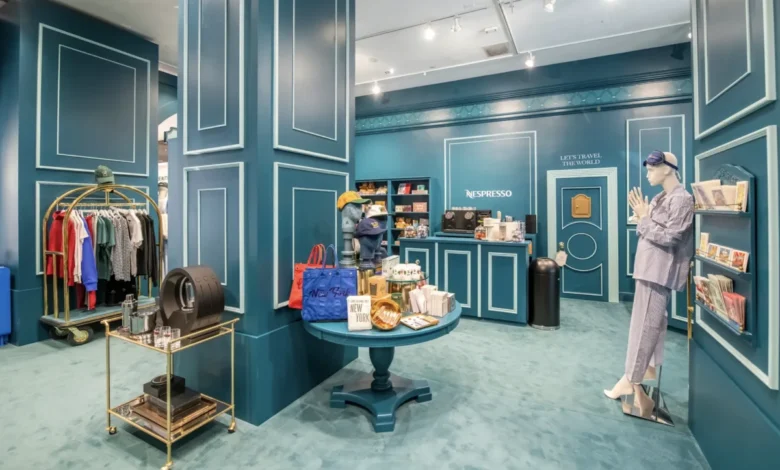
Central to this strategy is a renewed focus on the store as an experiential hub. During the second quarter, Bloomingdale’s hosted hundreds of localized events, a move designed to cultivate loyalty in an era where digital-only shopping has become the default. Macy’s Inc. chairman and CEO Tony Spring has characterized the brand’s roadmap as a commitment to "discovery, newness, and experiences."
This includes the expansion of the "very important client" (VIC) program, which provides personalized service and exclusive access to high-spending individuals. Suzy Davidkhanian, vice president of content at eMarketer and a former analyst for Macy’s, believes this human-centric approach is a critical differentiator. "Breadth, when paired with curation, translates into fashion authority," she said. "More associates, events, and activations drive discovery, and strong merchandising turns that discovery into larger transaction values as customers build head-to-toe outfits."
Financial Underpinnings and Future Reinvestment
The quarterly report was also bolstered by a non-recurring $98 million tariff refund, stemming from a government ruling that previously collected import duties were unlawful. This refund contributed approximately $0.23 to the company’s adjusted earnings per share of $0.63. Even without this windfall, the company would have outperformed analyst expectations with earnings of roughly $0.40 per share.
Macy’s leadership has indicated that the bulk of these funds will be earmarked for aggressive reinvestment, specifically targeting marketing initiatives, store-level improvements, and tactical price adjustments. As the dust settles on the luxury retail sector, the upcoming quarters will serve as a stress test for Bloomingdale’s. With Saks and Neiman Marcus now stabilizing under their new structure, the retailer must continue to provide a compelling reason for consumers to remain loyal to its physical and digital storefronts.
The Evolution of Creator Commerce
Beyond the department store floor, the broader fashion ecosystem is witnessing a transition in how digital creators drive revenue. As brands move away from traditional top-of-funnel marketing, the tools provided to influencers are becoming increasingly sophisticated.
Coreli, a creator-commerce platform founded by Thomas Berolzheimer and Chloé Watts, is currently setting a new standard for this shift. The platform recently launched an integration allowing creators to bridge their LTK (LikeToKnow.it) and ShopMy content into a single, cohesive storefront. This tool addresses the "utility-first" nature of many link-in-bio services, replacing them with a design-led interface that prioritizes aesthetics.
The significance for luxury brands is clear: top-tier creators are no longer merely marketing partners or distribution channels. They are evolving into independent commerce businesses. With over 700 creators now using the Coreli platform—each averaging 100,000 followers—the influence of these storefronts has become a measurable pillar of retail strategy. In the last six months alone, the platform has facilitated 2.5 million sessions, driving 700,000 outbound clicks to brand websites.
Macro-Trends and Industry Outlook
The industry is also grappling with the fallout of the Shein IPO, which debuted at a valuation of $25 billion—a staggering decline from its $100 billion peak in 2022. The plummeting valuation underscores a broader trend: investors are becoming increasingly skeptical of models reliant on the "de minimis" tariff exemption and rapid-cycle production, which have faced intense scrutiny regarding sustainability and labor practices.
As reported on the Glossy Fashion Podcast, the decline of Shein’s market valuation reflects the changing sentiment of Gen Z consumers, who are increasingly favoring quality and transparency over bottom-barrel pricing. For retailers like Bloomingdale’s, this macro-shift provides a potential tailwind; as consumers move away from "ultra-fast" fashion, the value proposition of a well-curated, brand-name department store becomes significantly more attractive.
In summary, the next phase for the luxury retail market will be defined by the ability to balance digital agility with the traditional power of brick-and-mortar experiences. Whether it is the expansion of creator-led commerce or the strategic curation of luxury goods in a department store setting, the companies that succeed will be those that view the current retail volatility not as a hurdle, but as a space for market consolidation and brand evolution. For Bloomingdale’s, the next few quarters will determine if its current growth streak is a temporary triumph of timing or the beginning of a sustained dominance in the American luxury retail space.