Bridging the Trust Gap: CLO Virtual Fashion and the Future of AI-Driven Apparel Production

The fashion industry currently faces a profound paradox: while the capability and reliability of artificial intelligence have reached unprecedented heights, a significant "trust gap" persists among end-users. As designers and manufacturers grapple with the integration of generative AI into professional workflows, the challenge lies not in the sophistication of the algorithms, but in the perceived unpredictability of their outputs. CLO Virtual Fashion, a veteran in the digital garment simulation space, is positioning itself at the center of this transformation, arguing that the key to AI adoption lies in grounding these advanced tools in manufacturable, proprietary data rather than relying on the "prompt and pray" approach that has defined early-stage generative AI.
The context for this shift is provided by The Interline’s AI Report 2026, which features a comprehensive 17-part series investigating how established fashion technology companies are incorporating AI into their platforms. Unlike the speculative startups that dominated the AI discourse in 2023 and 2024, firms like CLO are leveraging two decades of industry-specific data to solve the "last mile" problem of digital fashion: the transition from a beautiful visual rendering to a production-ready asset.

From Visual Representation to Industrial Truth
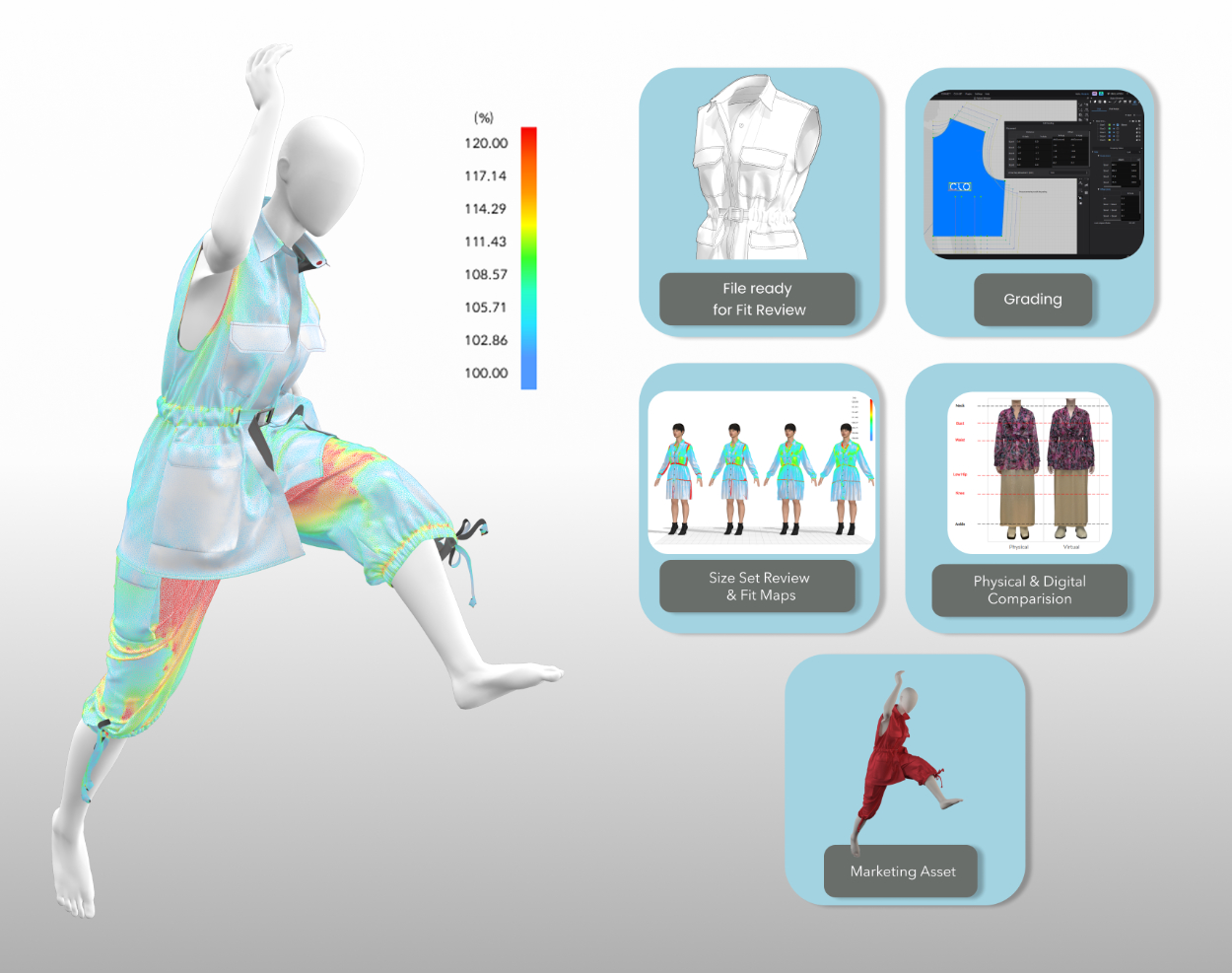
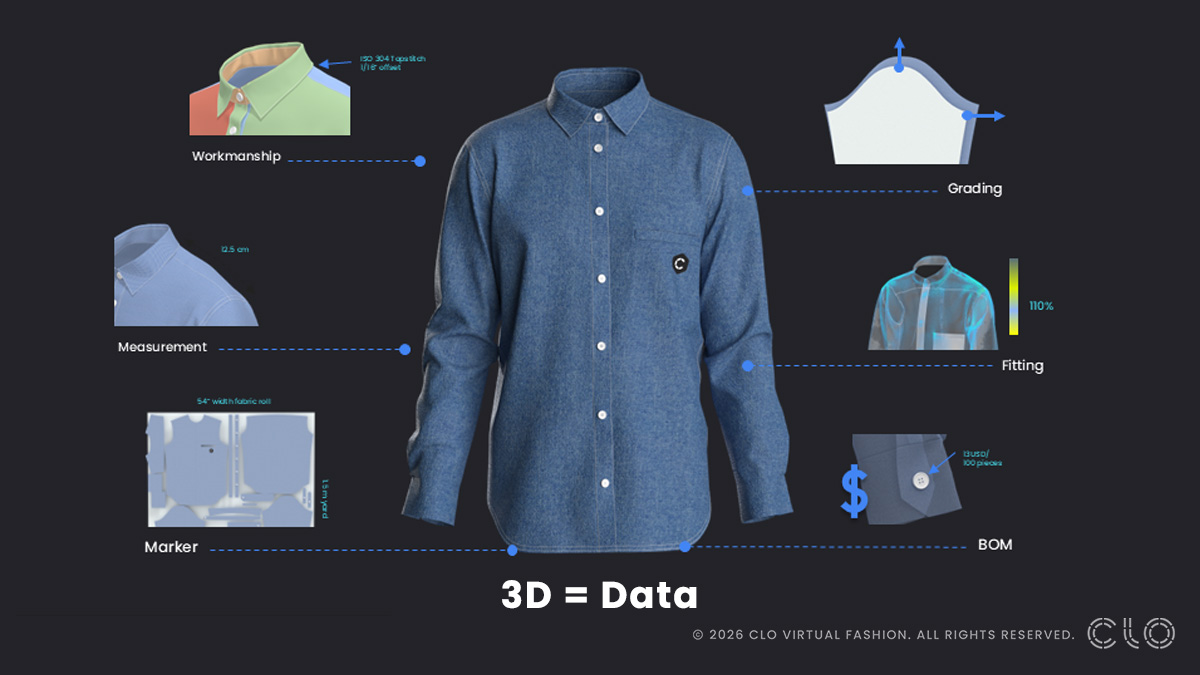
For nearly twenty years, CLO Virtual Fashion has operated at the intersection of apparel design and software engineering. Their core products, including their 3D design software and the CLO-SET cloud collaboration platform, were developed to provide a "recipe" for garments rather than a mere "menu" or visual mockup. This distinction is critical to understanding the current state of industry digitization. While general-purpose image generators can depict a garment’s aesthetic, they lack the structural logic—the seam allowances, fabric physics, and trim specifications—required for industrial manufacturing.
Industry data suggests that the "digital twin" of a garment remains the gold standard for sustainable and efficient production. However, as of 2026, the industry is still working toward a total, seamless digital thread. CLO’s strategy involves replacing the unpredictable, text-driven prompting methods common in contemporary AI with 3D-centric workflows. By using the 3D environment as the "central axis" of control, designers can generate high-quality outputs that are anchored in their own libraries of patterns, fabrics, and hardware. This ensures that what is generated is not just a digital image, but an asset that can be realistically produced by a factory floor.
Chronology of Digital Adoption in Fashion
The trajectory of digital fashion technology has moved through distinct phases over the last decade:
- 2015–2018: Initial adoption of 3D design for prototyping, primarily to reduce physical sampling costs.
- 2019–2022: The expansion of cloud-based collaboration platforms like CLO-SET, allowing for global cross-functional teamwork.
- 2023–2024: The "Generative AI Explosion," characterized by a surge in high-speed, text-to-image ideation tools.
- 2025–2026: The current "Integration Era," focusing on structural data integrity, the development of AI agents, and the move toward "Systems of Action."
This timeline illustrates a shift from simple visualization to complex, data-linked automation. The industry is currently moving away from isolated tools toward interconnected ecosystems where the "output" of one phase becomes the "input" for the next.
Addressing the Downstream Bottleneck
A critical observation in current market analysis is the widening of the product funnel. It is now easier than ever to ideate and visualize concepts. However, this has created a downstream bottleneck where the manual work of creating technical packages (tech packs) and bills of materials (BOMs) struggles to keep pace with the speed of front-end design.
CLO is tackling this by moving away from manual data entry. By automating BOM generation—specifically by identifying patterns and trims from a user’s pre-existing, trusted asset library—the company aims to eliminate the friction that currently prevents the rapid scaling of AI. If a system can automatically map a visual design to a list of physical components, the time required for a product to move from a concept to a factory floor is reduced from weeks to days.

This is supported by recent industry benchmarks indicating that companies that have integrated their design and manufacturing data into a single source of truth report a 30% to 40% reduction in sample-making lead times.
The Rise of AI Agents and Systems of Action
The next frontier for the industry is the deployment of AI agents. Unlike simple chatbots, these agents are designed to execute strategic objectives, such as "secure a 30% margin for this season." To achieve this, the technology requires a highly interconnected data estate.
Industry analysts emphasize that for an AI agent to suggest viable manufacturing scenarios, it must have access to both master data (physical product specifications) and operational data (planning, capacity, and cost sheets). CLO’s approach involves building a "System of Action" (SOA) where the data is not a secondary, manual requirement but a byproduct of the work itself. When a designer works within the CLO-SET environment, the platform automatically structures the data, creating a clean foundation that AI agents can then query and manipulate.
The Trigger for Wider Adoption
Why has widespread AI adoption in the fashion sector remained largely in the "pilot" phase? According to recent insights from technology leaders, the barrier is not a lack of AI capability, but a lack of seamless interface design. The "steering wheel"—the user interface—must be as intuitive as the "engine"—the underlying AI model—is powerful.
The trigger for deeper adoption will likely be the "invisibility" of the technology. When AI functions seamlessly within existing workflows, without requiring users to pivot to new, disconnected applications, adoption rates rise. The goal for software providers is to make AI-driven tasks—such as automated tech pack generation or rapid pattern adjustment—feel like an extension of the designer’s natural workflow.
Broader Implications for the Fashion Ecosystem
The shift toward an AI-native operating model has significant implications for the global fashion labor force and supply chain:
- Skill Shift: The role of the fashion professional is evolving from manual technical execution to "curatorial engineering," where the human acts as the arbiter of AI-generated options.
- Manufacturing Resilience: By utilizing production-ready digital data, brands can better communicate with vendors in remote markets, reducing the need for multiple physical shipping iterations and significantly lowering the carbon footprint associated with sampling.
- Economic Efficiency: As the cost of data-driven development drops, smaller brands may gain access to the same rapid-prototyping capabilities that were previously reserved for industry giants, potentially leveling the competitive landscape.
As the industry looks beyond 2026, the success of AI integration will depend on this transition from "generative curiosity" to "manufacturable certainty." By focusing on the structural integrity of data and the seamless automation of downstream processes, companies like CLO are attempting to ensure that the AI-driven revolution in fashion is not just a digital novelty, but a fundamental improvement to the entire product lifecycle. The future of the industry lies not in the flashiness of the tools, but in the reliability of the data they represent.