Five Standout Rug Collections That Defined the Aesthetic Landscape of Milan Design Week

Milan Design Week, the world’s most prestigious congregation of interior design and furniture innovation, once again transformed the Lombard capital into a sprawling gallery of creative expression. While the event is historically synonymous with high-end seating, lighting, and avant-garde cabinetry, the most recent edition saw a significant shift in focus toward the "fifth wall"—the floor. As hundreds of thousands of architects, designers, and enthusiasts navigated the dense corridors of the Salone del Mobile and the labyrinthine streets of the Fuorisalone districts, several textile collections emerged as pivotal moments in the week’s narrative. These collections, ranging from architecturally inspired weaves to legacy-driven motifs, signaled a broader trend in the luxury market: the elevation of the rug from a functional accessory to a central, narrative-driven work of art.
The Context of Milan Design Week and the Rise of "Soft Architecture"
Milan Design Week remains the definitive barometer for global design trends, comprising the Salone del Mobile at the Rho Fiera fairgrounds and the Fuorisalone, which occupies city districts such as Brera, Durini, and Isola. Historically, the textile sector has operated in the shadow of industrial design giants. However, the recent emphasis on "soft architecture"—the use of textiles to define space and provide acoustic comfort—has propelled rug manufacturers into the spotlight.

The global luxury rug market, valued at approximately $4.5 billion and projected to grow steadily, has seen a resurgence in artisanal hand-knotting and natural fiber experimentation. This shift was palpable across Milan, where brands leveraged the event to showcase collaborations with "starchitects" and legacy foundations, moving away from mass-produced minimalism toward textured, high-concept flooring solutions.
1. The FACES Collection: Kengo Kuma’s Architectural Translation for Jaipur Rugs
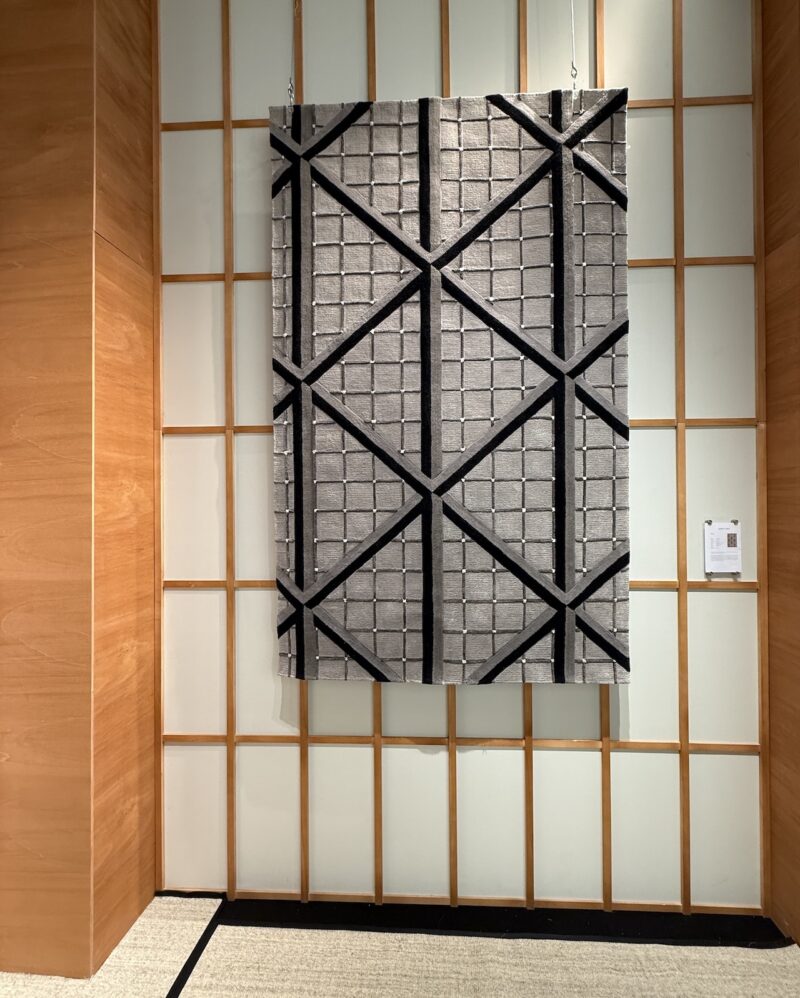
One of the most anticipated debuts of the week was the collaboration between the world-renowned Japanese architect Kengo Kuma and the Indian heritage brand Jaipur Rugs. Titled the "FACES" collection, the series of 16 rugs represents a sophisticated exercise in translating the rigid, three-dimensional language of architecture into the tactile, two-dimensional medium of hand-knotted wool and silk.
Kuma, known for his philosophy of "dissolving" architecture into its surroundings through the use of light and natural materials, applied a similar logic to this collection. The rugs are directly inspired by the facades of Kuma’s most iconic buildings, including the Suntory Museum of Art in Tokyo. Patterns such as "Sukima" and "Bokashi" (a Japanese term for shading or gradient) mimic the rhythmic striations of wood and stone that define Kuma’s structural work.
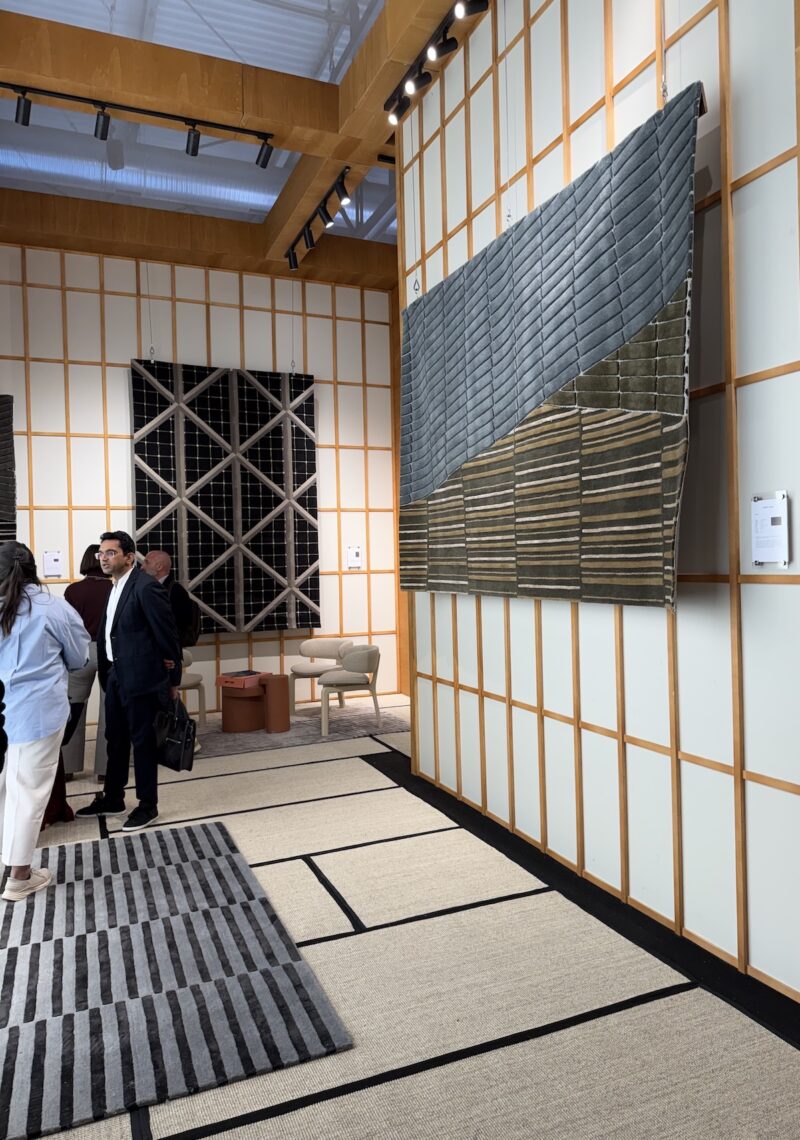
The collection was presented both within the fairgrounds and at an offsite installation, where the interplay of light and shadow was emphasized. By utilizing muted, earthy tones, the rugs evoke the way sunlight interacts with building exteriors at different times of day. This collaboration highlights a growing industry trend where architectural firms are sought after to bring structural discipline and mathematical precision to textile design.
2. Illulian: Merging Italian Luxury with Nepalese Craftsmanship
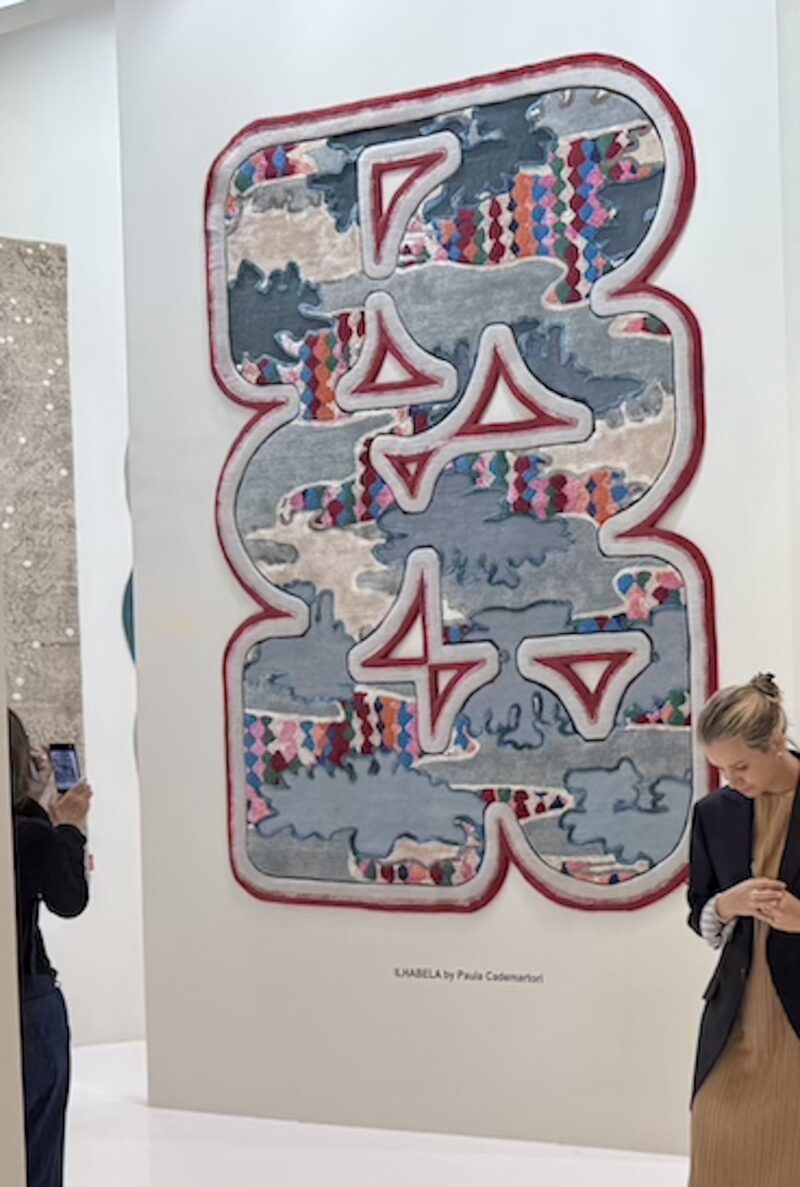
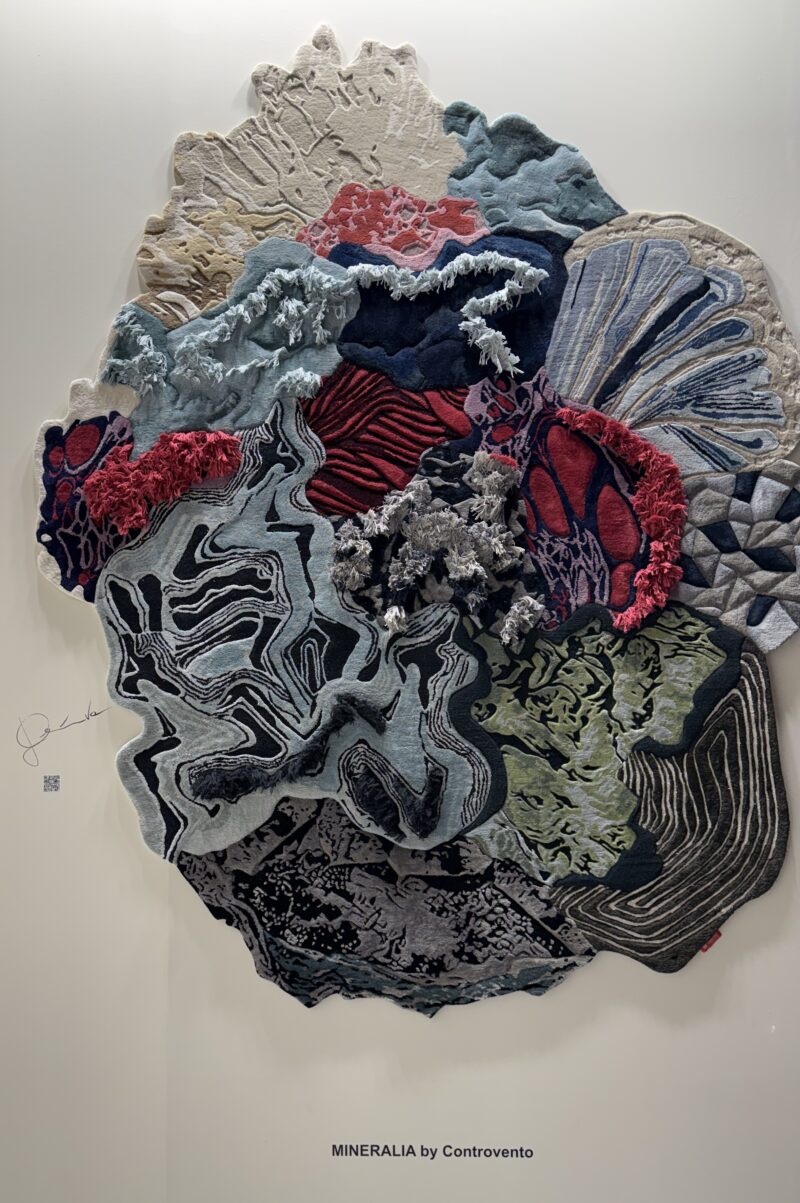
The Italian luxury brand Illulian utilized Milan Design Week to reinforce its position at the intersection of contemporary art and traditional craft. Showcasing pieces from their latest collections, including "Ilhabela" by Paula Cadematori and "Mineralia" by Controvento, Illulian demonstrated the technical prowess of their Nepalese artisans.
The "Ilhabela" rug, a standout within the NO LAND capsule collection, is a study in geometric precision and color theory. Cadematori, a designer known for her vibrant aesthetic, explored the chromatic transition from the deep blues of the ocean to the soft hues of a sunrise. The technical achievement of this piece lies in its 45-degree hand-cutting technique, which creates a sharp, architectural relief that adds physical depth to the visual gradient.
In contrast, the "Mineralia" rug by Controvento focuses on the organic. By varying pile heights and mixing different yarn textures, the design mimics the geological formations found in nature. This duality—the precise and the organic—serves as a microcosm for the current state of luxury rugs: a move toward "sculptural" flooring that provides a sensory experience beyond mere aesthetics.
3. New Origins: Aline de Laforcade and the GAN Jute Revolution
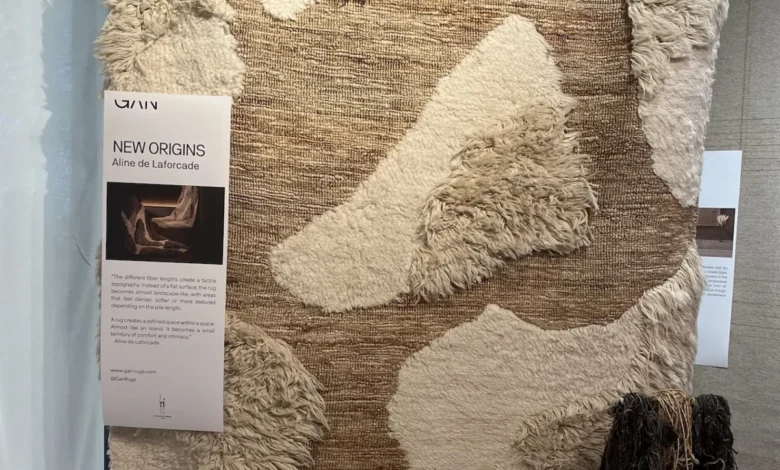
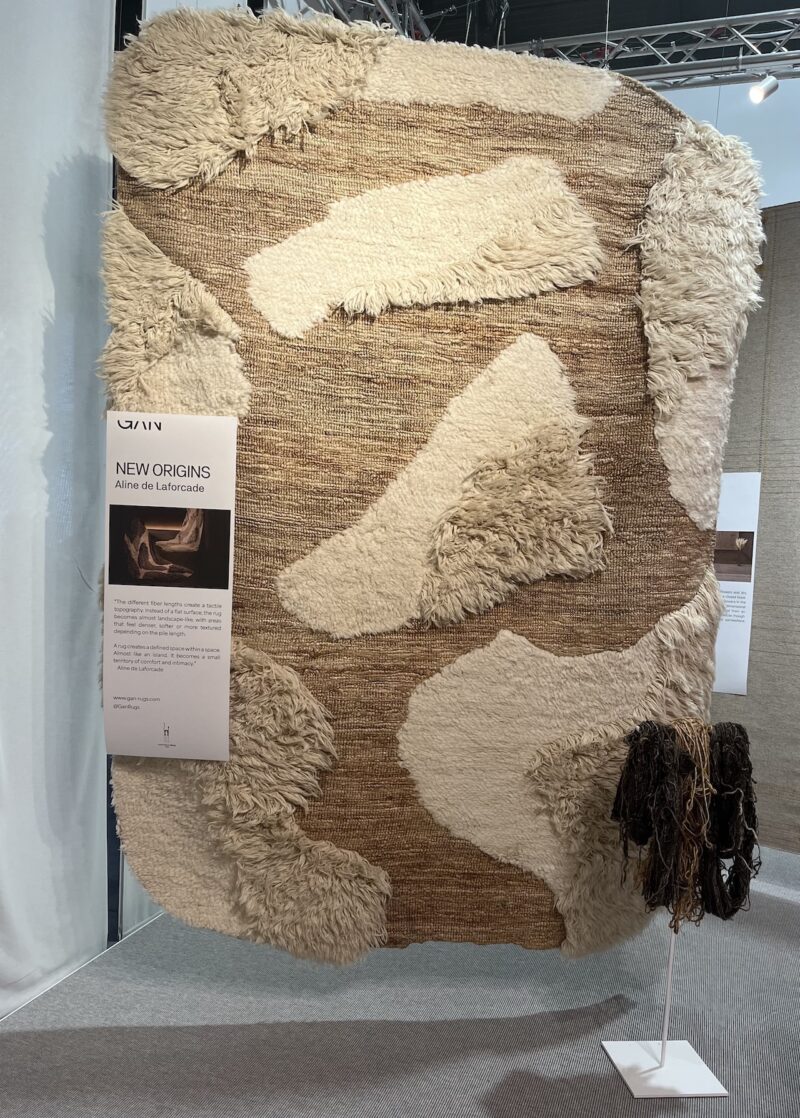
Spanish brand GAN, the rug-focused arm of the Gandia Blasco Group, has long been a pioneer in sustainable manufacturing and social responsibility. At Milan, their "New Origins" collection, designed by Aline de Laforcade, garnered attention for its rustic yet refined materiality.
Constructed from a blend of jute and wool, the rugs feature an oval silhouette and a high-texture finish that many observers likened to the very animals that provide the raw materials. According to GAN representatives, the production of the "New Origins" collection involves a complex dual-technique process: manual loom weaving combined with strategic hand-knotting. This allows for varying densities within a single piece, creating a "landscape" effect on the rug’s surface.
The collection reflects a significant industry-wide pivot toward "honest" materials. Jute, often relegated to utilitarian purposes, is here elevated to a luxury status through sophisticated design. The result is a product that resonates with the current consumer demand for "biophilic" design—interiors that foster a connection to the natural world.
4. The Eames Legacy: Nanimarquina and the Art of Lucia Eames
The presence of the Eames name is a perennial staple in Milan, but this year offered a unique perspective on the design dynasty. While the Triennale di Milano showcased a modular pavilion based on the 1949 Eames House, the Spanish firm Nanimarquina introduced a collection based on the archival drawings of Lucia Eames, the daughter of Charles Eames.
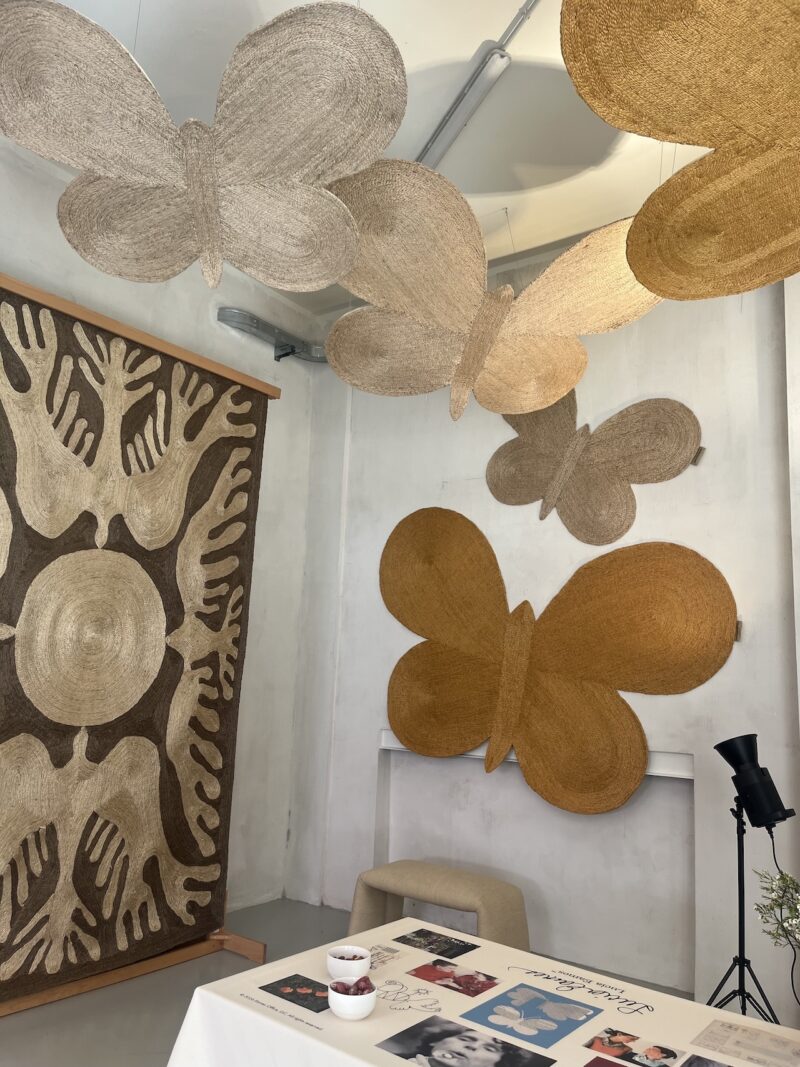
Lucia Eames was a prolific artist whose work often focused on the delicate forms of nature—butterflies, stars, and floral patterns. Nanimarquina’s interpretation of these drawings involved a wide array of techniques, including hand-tufting, hand-knotting, and intricate embroidery. The collection also debuted "sculptural tufting," a new development that allows for three-dimensional shapes to emerge from the rug’s surface.
The installation at the Salone del Mobile was particularly striking, with butterfly-shaped rugs suspended above the booth, emphasizing their lightness and artistic value. By using Afghan and New Zealand wool combined with hand-stitched jute, the collection plays with the contrast between matte and luminous fibers. This collection serves as a bridge between Mid-Century Modernism and contemporary textile technology, proving that legacy designs can be revitalized through innovative manufacturing.
5. Bieke Casteleyn x JOV: The Immersive Softness of "Clover"
In the Fuorisalone circuit, the collaboration between Belgian designer Bieke Casteleyn and the textile house JOV provided a moment of minimalist respite. Their "Clover" collection was presented as an "immersive landscape," designed to blur the lines between furniture and flooring.
The "Clover" rugs are characterized by their rounded, organic forms and can be utilized as both floor coverings and wall-mounted tapestries. This versatility addresses a growing trend in urban living, where textiles are increasingly used as acoustic dampeners and wall art. The simplicity of the form belies the complexity of the material research involved, as JOV utilized high-quality natural yarns to ensure a specific "bounce" and softness underfoot.
The success of the "Clover" collection in Milan underscores the market’s appetite for playful yet sophisticated forms that break away from the traditional rectangular rug format.
Chronology and Industry Impact: A Week of Transformation
The debut of these collections followed a rigorous timeline of development, often spanning two to three years from initial concept to the Milan showcase.
- April 2022–2023: Initial design consultations between Jaipur Rugs and Kengo Kuma, focusing on the feasibility of architectural patterns in hand-knotted wool.
- Late 2023: Prototype testing in Nepal (Illulian) and India (GAN/Jaipur), focusing on sustainable dyeing processes and pile height experimentation.
- April 2024: Official launch at Milan Design Week.
The reaction from the design community was overwhelmingly positive. Industry analysts noted that the "rug-as-art" movement is no longer a niche segment but a driving force in high-end interior specifications. "We are seeing a shift where the rug is the first item specified in a room, rather than the last," remarked one Milanese interior consultant during the Brera Design District events.
Analysis of Broader Implications
The collections showcased in Milan suggest several key takeaways for the future of the design industry:
- Sustainability as Standard: The use of jute, undyed wool, and natural silk across the GAN and Nanimarquina collections indicates that eco-conscious manufacturing is now a prerequisite for luxury status.
- Architectural Integration: The "FACES" collection by Kengo Kuma proves that there is a deep appetite for textiles that mirror the structural integrity of the buildings they inhabit.
- Tactile Versatility: The rise of wall-mounted rugs (Clover) and high-relief cutting (Illulian) suggests that the boundary between "textile" and "sculpture" is becoming increasingly porous.
As Milan Design Week concluded, it became clear that the humble rug has undergone a metamorphosis. No longer just a backdrop for furniture, the rugs of 2024 are complex, narrative-driven pieces that demand attention. They reflect a global design culture that is increasingly focused on the intersection of ancient craftsmanship and modern architectural theory, ensuring that the ground we walk on is as thoughtfully designed as the roofs over our heads.