Destination XL Group Board Recommends Shareholder Vote Against FullBeauty Brands Merger, Citing Dilution and Debt Concerns

The board of directors for Destination XL Group (DXL), a leading specialty retailer of men’s big and tall apparel, has formally recommended that its shareholders vote against a crucial issuance proposal necessary to finalize its previously announced merger with FullBeauty Brands. This recommendation, articulated in a preliminary proxy statement filed on Monday, July 21, 2026, marks a significant reversal in strategy, as the company now believes the proposed combination is no longer in the best interests of DXL or its stockholders.
A Strategic U-Turn: The Rationale Behind the Reversal
The decision to advise against the merger stems from a comprehensive reevaluation of the deal’s financial and strategic implications. DXL cited three primary concerns that ultimately led to the board’s change of heart: "FullBeauty’s level of indebtedness, concerns regarding FullBeauty’s potential negative equity value, and the substantial economic dilution that DXL stockholders would experience."
FullBeauty Brands, an omnichannel retailer specializing in plus-size women’s and men’s apparel, operates a portfolio of brands including Woman Within, Roaman’s, Ellos, Jessica London, and KingSize. While the initial rationale for the merger focused on creating a scaled, category-defining retailer in the inclusive apparel market, DXL’s recent assessment suggests that FullBeauty’s financial health, particularly its debt load, poses a significant risk to the combined entity. High levels of indebtedness can constrain a company’s financial flexibility, increase its cost of capital, and divert cash flow towards debt servicing rather than growth initiatives or shareholder returns. In the current economic climate, marked by fluctuating interest rates and tighter credit markets, such concerns are amplified, potentially making it harder for a highly leveraged combined company to navigate market challenges or pursue strategic investments.
Furthermore, the board’s apprehension regarding "FullBeauty’s potential negative equity value" indicates a deeper concern about the fundamental valuation of the acquiring entity. Negative equity value implies that a company’s liabilities exceed its assets, effectively making it a financial burden rather than a value-adding partner. If DXL were to merge with a company perceived to have negative equity, it could significantly impair DXL’s own balance sheet and shareholder equity.
The third critical factor, "substantial economic dilution that DXL stockholders would experience," directly addresses the impact on DXL’s existing investors. Under the original terms of the agreement, FullBeauty Brands was slated to own 55% of the combined company, with DXL shareholders retaining 45%. If FullBeauty’s true valuation or financial outlook had deteriorated since the initial agreement, DXL shareholders would effectively be exchanging a larger stake in a healthier, publicly traded company for a smaller stake in a combined entity with significant financial headwinds and a less attractive overall valuation. This dilution would diminish the value of their current holdings and their future earnings potential from the combined enterprise.
The Initial Vision: A "Merger of Equals"
The merger between Destination XL Group and FullBeauty Brands was first announced in December 2025, framed as a "merger of equals" designed to create a powerhouse in the inclusive apparel segment. The strategic rationale at the time was compelling: to combine DXL’s established brick-and-mortar presence and strong brand recognition in the men’s big and tall market with FullBeauty’s extensive digital capabilities and diverse portfolio of plus-size brands.
Proponents of the merger highlighted several potential synergies. These included enhanced scale, which could lead to greater purchasing power, improved supply chain efficiencies, and optimized marketing spend. The combination was also expected to create cross-selling opportunities, allowing each company to tap into the other’s customer base, potentially expanding market reach for both men’s and women’s inclusive apparel. The intent was to leverage FullBeauty’s digital expertise to accelerate DXL’s e-commerce growth, while DXL’s physical footprint could offer FullBeauty new avenues for customer engagement and brand visibility. At the time, the deal was lauded as a strategic move to address the evolving demands of a diverse customer base and consolidate market leadership in a growing, yet often underserved, retail niche.
A Tumultuous Timeline: From Agreement to Reconsideration
The path to the proposed merger has been anything but smooth, marked by several critical junctures that foreshadowed the board’s ultimate decision:
- December 2025: DXL and FullBeauty Brands announce their merger agreement, with FullBeauty shareholders set to own 55% and DXL shareholders 45% of the combined entity. The deal is positioned as a transformative step for both companies.
- May 2026: DXL publicly rejects an unsolicited "go-private" offer from Zodiac Partners. The offer, valued at approximately $46 million, or 82 cents per share, was deemed by DXL’s board to significantly undervalue the company. The board reiterated its commitment to the FullBeauty merger at this time, asserting that the proposed combination offered superior long-term value for shareholders.
- June 2026: DXL announces it is "reconsidering the merger" with FullBeauty Brands. This pivotal announcement signaled that the board was undertaking a fresh, critical review of the transaction, likely in response to evolving market conditions, updated financial assessments, or perhaps due to concerns raised by shareholders or independent analysts. This period of reconsideration introduced significant uncertainty into the future of the deal.
- Early July 2026: Zodiac Partners submits an updated "go-private" proposal, slightly increasing its offer to 84 cents per share. DXL’s board once again rejects this revised bid, maintaining that it still did not reflect the true value of the company. The continued rejection of alternative offers, even while reconsidering the FullBeauty merger, underscored the board’s conviction about DXL’s standalone value or its belief in a potentially better strategic alternative.
- July 21, 2026: DXL files a preliminary proxy statement formally recommending that stockholders vote against the issuance proposal required to complete the FullBeauty merger. This definitive stance cemented the board’s shift in strategy and effectively put the merger on the brink of collapse. The statement explicitly detailed the concerns regarding FullBeauty’s financial health and the dilutive effect on DXL shareholders.
A date for the special meeting, where shareholders will vote on the issuance proposal and other matters including a reverse stock split, has yet to be determined, adding another layer of suspense to DXL’s immediate future.
Financial Ramifications: Termination Fees and Shareholder Impact
The reversal by DXL’s board carries immediate financial implications. According to an updated proxy statement, FullBeauty Brands retains the right to terminate the merger agreement following DXL’s change in recommendation. Should FullBeauty exercise this right, DXL could be liable to pay a termination fee of $2.5 million. Additionally, DXL may be required to reimburse FullBeauty for out-of-pocket fees and expenses up to $950,000. These costs, totaling approximately $3.45 million, represent a direct financial penalty for the aborted deal, which DXL shareholders will ultimately bear.
Beyond the termination fees, the prolonged uncertainty surrounding the merger, coupled with the board’s dramatic reversal, could introduce further volatility to DXL’s stock price. Investors often react negatively to failed mergers, perceiving them as missed opportunities or indicators of underlying issues. However, in this instance, the board’s decision to walk away from a deal it deems detrimental could also be viewed positively by some investors who prioritize the protection of shareholder value from a potentially risky acquisition. The market’s reaction will largely depend on DXL’s ability to articulate a clear and compelling path forward.

The proposed reverse stock split, also slated for a vote at the upcoming special meeting, is another financial maneuver with significant implications. A reverse stock split reduces the number of outstanding shares while proportionally increasing the share price, effectively consolidating the stock. Companies often undertake reverse splits to boost their share price above minimum listing requirements, make the stock more appealing to institutional investors, or improve market perception. For DXL, this could signal an attempt to stabilize its equity value and position itself more favorably for future strategic moves, whether as an independent entity or in pursuit of a different partnership.
The Landscape of Inclusive Apparel: DXL’s Niche and Market Dynamics
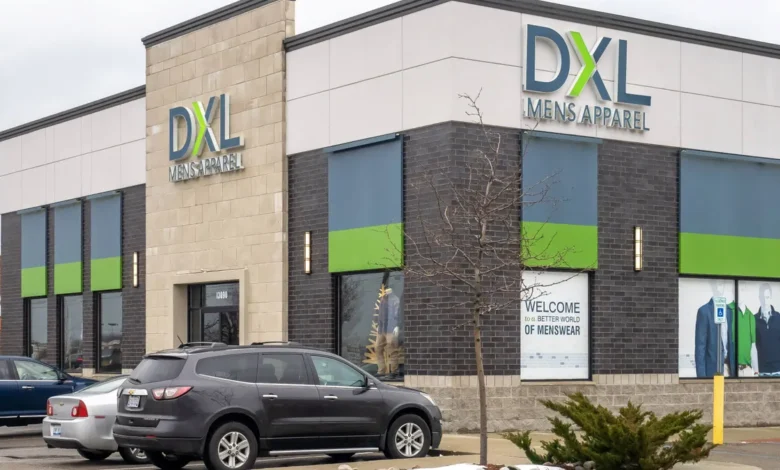
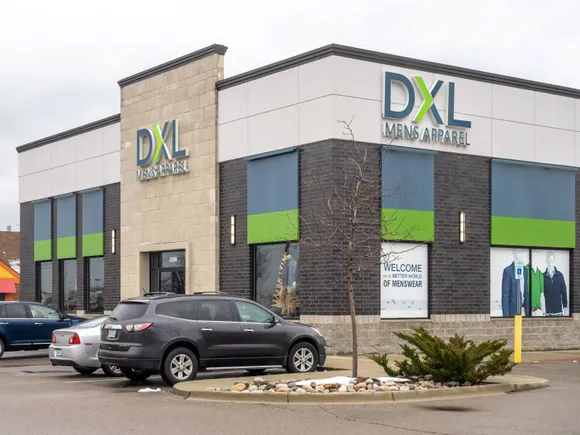
Destination XL Group operates in a distinct and growing segment of the retail apparel market: men’s big and tall clothing. This niche caters to a specific demographic that has historically been underserved by mainstream fashion retailers. DXL, through its DXL Men’s Apparel stores and e-commerce platforms, offers a wide range of sizes and styles, providing a specialized shopping experience that standard department stores often cannot match. The inclusive apparel market, encompassing both big & tall and plus-size categories, has seen consistent growth, driven by changing demographics, increasing awareness of body positivity, and a greater demand for stylish and well-fitting options across all sizes.
However, this market is also becoming increasingly competitive. While specialty retailers like DXL have carved out strong positions, they face challenges from large online retailers, evolving consumer preferences towards digital shopping, and the occasional entry of mainstream brands into extended sizing. The need for scale, robust supply chains, and sophisticated digital marketing capabilities is paramount for sustained success. The initial merger with FullBeauty was precisely aimed at addressing these competitive pressures by creating a larger, more diversified entity. With the merger off the table, DXL must now recalibrate its strategy to independently navigate this dynamic landscape, focusing on its core strengths while exploring avenues for organic growth and digital enhancement.
Beyond the Merger: DXL’s Path Forward
With the FullBeauty Brands merger seemingly derailed, Destination XL Group finds itself at a critical juncture, facing questions about its future strategic direction. The board’s rejection of the deal, despite the associated termination fees, underscores a strong belief in the company’s standalone value and a commitment to exploring options that better serve shareholder interests.
Several paths could now emerge for DXL:
- Independent Growth: DXL could choose to focus on organic growth initiatives, leveraging its existing brand strength, optimizing its store footprint, and accelerating its e-commerce capabilities. This would involve investing in product innovation, marketing campaigns tailored to its niche, and enhancing the customer experience both online and offline. The reverse stock split, if approved, could be part of a broader strategy to re-energize investor confidence and improve the company’s financial profile.
- Seeking New Partnerships: The retail landscape is rife with consolidation, and DXL might explore alternative strategic partnerships or acquisition targets that align more favorably with its financial health and strategic objectives. The rejection of FullBeauty does not necessarily preclude future mergers or acquisitions, but it signals a more stringent approach to due diligence and valuation.
- Revisiting "Go-Private" Offers: Although DXL twice rejected Zodiac Partners’ offers, the renewed independence from the FullBeauty merger might open the door for revised "go-private" proposals or interest from other private equity firms. These firms might see an opportunity in DXL’s specialized market position and potential for operational improvements, especially if its stock price faces short-term volatility.
The decision to recommend against the merger suggests that DXL’s board is prioritizing long-term shareholder value and stability over a potentially risky consolidation. The coming months will be crucial as DXL’s management articulates its updated strategic vision and seeks to reassure investors about its trajectory in the competitive retail market.

Industry Perspectives and Analyst Reactions
The retail sector, particularly apparel, has undergone significant transformations in recent years, driven by the acceleration of e-commerce, shifting consumer preferences, and macroeconomic headwinds such as inflation and supply chain disruptions. Mergers and acquisitions are common strategies for retailers seeking to gain scale, achieve efficiencies, or diversify their offerings in such an environment. However, the DXL-FullBeauty situation highlights the inherent risks in these transactions, particularly when initial valuations or financial assessments prove to be overly optimistic or when market conditions change dramatically between agreement and closing.
Market analysts will be closely watching DXL’s subsequent moves. The termination of a major merger can be interpreted in various ways – from a prudent decision to avoid a bad deal, to a sign of strategic uncertainty. Analysts will scrutinize DXL’s upcoming financial results, its cash flow management, and any new strategic initiatives announced by management. The success of any independent growth strategy will depend on DXL’s ability to demonstrate consistent profitability, expand its customer base, and effectively compete in both physical and digital retail channels. The inclusive apparel market remains attractive, but DXL must now prove it can capitalize on these opportunities without the anticipated synergies of the FullBeauty merger.
Conclusion: An Uncertain Future for DXL and FullBeauty
The Destination XL Group board’s recommendation against the FullBeauty Brands merger marks a pivotal moment for both companies. For DXL, it signifies a decisive step away from a deal deemed too risky, prioritizing the long-term interests of its shareholders despite the immediate financial cost of termination fees. For FullBeauty Brands, it necessitates a reevaluation of its own strategic path, potentially leaving it to pursue alternative growth strategies or seek new partners.
As DXL prepares for its special shareholder meeting, the retail world watches to see how this prominent specialty retailer will chart its independent course. The decision underscores the dynamic and often challenging nature of mergers and acquisitions in a volatile market, where even initially promising combinations can unravel under the weight of financial scrutiny and evolving strategic priorities. The future for DXL, while now less clear in terms of a merger, is also potentially more secure in the board’s estimation, freed from the financial burdens and dilution concerns of the FullBeauty deal.