From the Texas Panhandle to Alkemis Paint: How Price Latimer is Redefining the Intersection of Fine Art and Sustainable Design

The trajectory of Price Latimer, a multidisciplinary designer and the co-founder of Alkemis Paint, serves as a compelling case study in how early exposure to high art can catalyze a career dedicated to aesthetic innovation and environmental stewardship. Born and raised in the Texas Panhandle, Latimer’s childhood was uniquely influenced by her proximity to the Amarillo Museum of Art. This institution, which houses significant works by Georgia O’Keeffe, Larry Bell, and Louise Nevelson, served as the primary crucible for her developing visual language. Latimer recalls being wheeled to the museum in her pram by her grandmothers, spending hours observing the permanent collection long before she could walk. This foundational exposure to the "Light and Space" movement and mid-century modernism eventually led her to the Rhode Island School of Design (RISD), where she earned a bachelor’s degree and solidified her place within the contemporary art world.
Latimer’s professional journey is characterized by a series of strategic shifts across the creative industries. During her tenure in New York City, she worked for the neo-conceptual artist Peter Halley, a central figure in the "Neo-Geo" movement of the 1980s. Her work with Halley extended into the editorial sphere, where she contributed to Index magazine, a publication known for its raw, unfiltered interviews and avant-garde aesthetic. These early experiences provided Latimer with an insider’s view of the mechanics of the art market and the importance of multidisciplinary collaboration. Following her time in New York, Latimer relocated to Los Angeles, where she transitioned into the world of commercial design and entrepreneurship. She held roles at various local galleries and co-founded a pizza restaurant as Chief Creative Officer before joining the renowned Italian furniture manufacturer Kartell. At Kartell, Latimer functioned as a consultant for architects and interior designers, overseeing the furnishing of high-profile offices and large-scale hospitality projects.
The Genesis of Alkemis Paint and the Evolution of Sustainable Materials
In 2021, Latimer leveraged her extensive background in art and interior design to co-found Alkemis Paint alongside Maya Crowne. The company was born out of a perceived gap in the market for interior paints that were both high-performing and environmentally inert. Unlike traditional architectural coatings, which often rely on petrochemical-based binders and synthetic pigments that release volatile organic compounds (VOCs) into the atmosphere, Alkemis Paint utilizes an all-natural formulation. The primary component of their product is clear quartz, a mineral known for its durability and light-refractive properties. This is paired with a proprietary blend of pigments and minerals to create a finish that is both tactile and visually deep.

The environmental implications of this innovation are significant. According to the Environmental Protection Agency (EPA), interior paint is a leading source of indoor air pollution. By eliminating harmful chemicals, Alkemis Paint aligns with the growing "wellness-centered design" movement, which prioritizes the health of occupants alongside aesthetic considerations. Furthermore, the company’s commitment to keeping petrochemicals out of waterways reflects Latimer’s personal passion for ocean conservation, a theme that recurs throughout her creative and personal life.
Influences and Curatorial Inspirations
Latimer’s aesthetic sensibility is not merely a product of her professional training but is deeply rooted in a diverse array of cultural and natural influences. These inspirations frequently inform the palettes and textures developed by Alkemis Paint.

Performance Art and the Legacy of Leigh Bowery
One of the primary figures in Latimer’s pantheon of influences is Leigh Bowery, the Australian-born performance artist and club promoter who became a fixture of the 1980s London underground scene. Bowery is celebrated for blurring the boundaries between art and life, using his own body as a sculptural canvas. A recent comprehensive exhibition at the Tate Modern showcased Bowery’s iconic "Looks"—extravagant costumes and makeup that challenged conventional notions of gender and sexuality—as well as his collaborations with painter Lucian Freud and photographer Nick Knight. For Latimer, Bowery’s work represents the ultimate expression of creative provocation and the weaponization of aesthetics.
The Geology of the American Southwest
The landscapes of the Texas Panhandle and New Mexico continue to play a pivotal role in Latimer’s work. She highlights Palo Duro Canyon, the second-largest canyon in the United States, as a major source of inspiration. The canyon’s geological strata—composed of siltstone, shale, gypsum, and sandstone—display a kaleidoscopic array of oxidized reds, maroons, and lavenders. These natural color striations directly inspired "Hoodoo 53," a specific shade in the Alkemis Paint collection named after the tall, thin spires of rock found in the canyon. The region also holds historical significance as a stronghold for the Quahadi band of the Comanches and as a frequent subject for Georgia O’Keeffe, who taught art in the area during the early 20th century.

Land Art and Experimental Meditations
Latimer’s appreciation for site-specific installations is best exemplified by her visit to The Lightning Field by Walter de Maria. Commissioned by the Dia Art Foundation in 1977, this seminal work of Land Art consists of 400 stainless steel poles arranged in a precise grid in the high desert of New Mexico. The experience of visiting the site—which requires an overnight stay in a remote cabin—is designed to be meditative and transformative. Latimer describes the vast vistas and the interaction between the grid and the shifting desert light as "unforgettable," noting that such experiences reinforce her belief in the power of minimalism and spatial awareness.
Strategic Collaborations and Industry Impact
Since its inception, Alkemis Paint has positioned itself at the intersection of the fine art and design worlds through a series of high-profile collaborations. These projects demonstrate the versatility of the product and its ability to enhance curatorial narratives.

RISD Museum and the Celebration of Queer Feminism
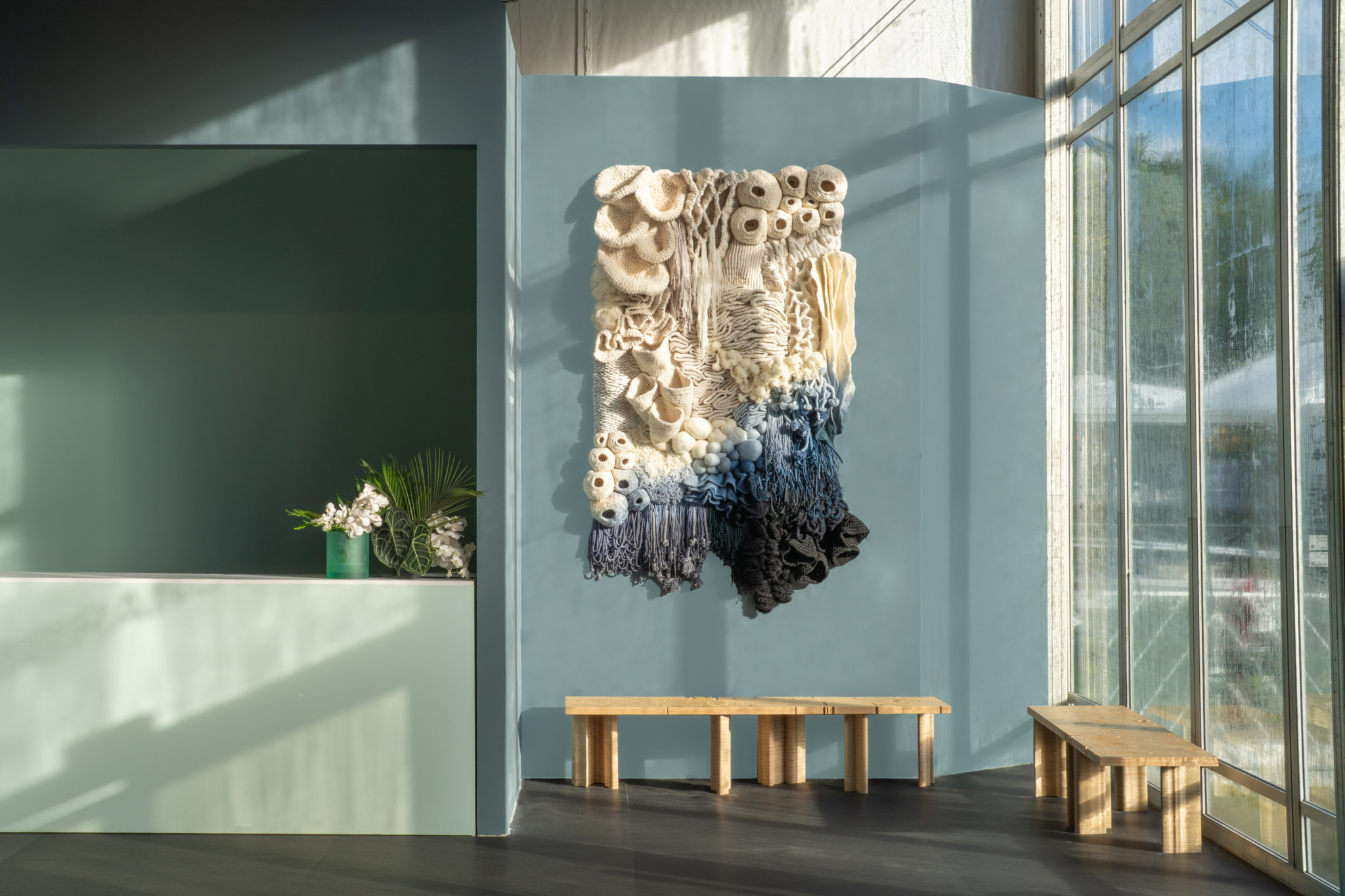
Returning to her roots, Latimer collaborated with the RISD Museum to develop the paint palette for the exhibition Liz Collins: Motherlode. Collins, a queer feminist artist known for her radical experiments with fiber and bold abstract patterns, required a backdrop that would complement her vibrant textile works. This collaboration highlights Alkemis’s ability to cater to the specific needs of institutional galleries that require non-toxic, high-quality finishes for sensitive art environments.
Design Miami and the Future of Art Fairs
For the past three years, Alkemis Paint has been a fixture at Design Miami, an international fair that serves as a global forum for collectible design. Working closely with the fair’s curatorial team, Latimer and Crowne have developed custom palettes that harmonize with the diverse array of objects on display. This partnership reflects a broader trend in the art world toward more immersive and color-conscious exhibition design, moving away from the "white cube" standard.

Objects USA and Experimental Gradients
In a recent collaboration with R & Company for the Objects USA exhibition, Alkemis Paint utilized meticulous gradient decorative painting techniques to guide attendees through a chronology of American design. Executed by muralist Nick Kuszyk, the gradient walls served as a deliberate antidote to traditional gallery settings, providing a vibrant visual innuendo that accentuated nearly 100 works by various artists and designers.
Broader Implications for the Design Industry
The work of Price Latimer and Alkemis Paint signals a shift in the interior design industry toward a more holistic approach to materiality. By integrating art history, environmental science, and entrepreneurial strategy, Latimer is challenging the traditional boundaries of the architectural coatings market.

Industry analysts suggest that the demand for "clean" building materials will continue to grow as consumers and professionals alike become more educated about the long-term health impacts of synthetic products. Latimer’s success in securing partnerships with major institutions like the RISD Museum and Design Miami indicates that the luxury design market is increasingly receptive to sustainable alternatives, provided they do not compromise on aesthetic quality.
As Latimer continues to explore "the far corners of the globe" and "offbeat, weird hidden gems," her findings will likely continue to manifest in the color stories of Alkemis Paint. Her career serves as a reminder that the most impactful innovations often arise from a deep-seated respect for the past—whether it be the geological history of a canyon or the provocative legacy of a performance artist—combined with a forward-looking commitment to the health of the planet. Through her various roles as an entrepreneur, designer, and advocate, Price Latimer remains a central figure in the ongoing dialogue between the art we live with and the world we inhabit.