Global Trade Tensions Escalate as Trump Administration Imposes New Double-Digit Tariffs Citing Forced Labor Concerns

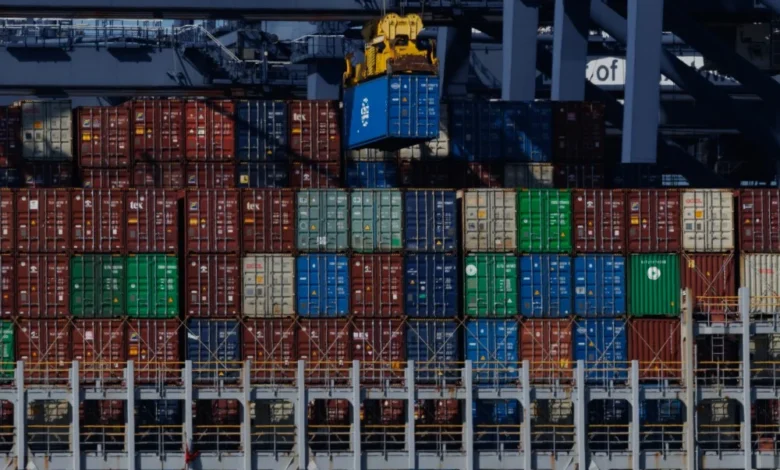
The Trump administration has ignited a fresh round of global trade tensions with the swift imposition of new double-digit tariffs on Thursday, marking the latest chapter in an enduring trade saga that has strained international relations. These duties, ranging from 10 percent to 12.5 percent, are the direct outcome of a Section 301 investigation initiated by the United States Trade Representative (USTR). The probe targeted various trading partners for their alleged failures to adequately impose and implement effective bans on imports produced with forced labor. The move has elicited immediate and varied reactions from nations and major trade blocs worldwide, some expressing hope for diplomatic resolution, while others voiced strong condemnation and disputed the underlying allegations.
A Deeper Dive into the New Tariff Regime and its Legal Foundations
The tariffs, which officially took effect on Friday, were not a standalone measure but rather a strategic replacement for the Trump administration’s global 10 percent duties previously levied under Section 122 of the Trade Act of 1974, which expired on the same day. This simultaneous expiration and implementation underscore a deliberate federal strategy to transition from one trade statute to another, ensuring a continuous imposition of duties under a more legally robust framework. The USTR’s focus on forced labor as the justification for these new tariffs signals an evolving emphasis in U.S. trade policy, intertwining human rights concerns with economic enforcement.
Section 301 of the Trade Act of 1974 is a powerful tool allowing the U.S. to take action, including imposing tariffs, against foreign trade practices that are deemed unfair or discriminatory and burden or restrict U.S. commerce. It grants the USTR broad authority to investigate and respond to such practices. Historically, Section 301 has been a cornerstone of U.S. trade enforcement, famously employed during the Trump administration’s initial trade disputes with China, leading to duties on hundreds of billions of dollars worth of Chinese goods that largely remain in place today. The current application of Section 301 against alleged forced labor violations represents an expansion of its traditional scope, signaling a proactive stance on global supply chain ethics.
The specific focus on "trading partners’ alleged failures to impose and implement effective bans on imports made with forced labor" highlights a growing international concern. While the U.S. has domestic legislation like the Uyghur Forced Labor Prevention Act (UFLPA) to block imports tied to forced labor from specific regions, this Section 301 action broadens the enforcement mechanism by penalizing countries that are perceived as not doing enough to combat forced labor within their own supply chains or those they import from. This shifts the onus onto trading partners to demonstrate robust national frameworks and enforcement capabilities against modern slavery practices.
Prior to Thursday’s official announcement, USTR Ambassador Jamieson Greer indicated that countries with existing trade agreements with the U.S. would likely be exempt from duties exceeding their agreed-upon tariff rate caps. This caveat offered a glimmer of hope for some allies, suggesting a nuanced approach rather than a blanket imposition. However, the broad sweep of the investigation and the significant economic impact of the tariffs have nevertheless sent ripples of concern through global markets.
Global Reactions: A Spectrum of Responses to the Tariffs
The international community’s response has been diverse, reflecting the complex web of trade relationships and varying national interests at stake.
European Union: Seeking Dialogue and Potential Exemptions
In a joint statement, the European Union adopted a measured and diplomatic stance. The bloc expressed optimism about engaging in discussions regarding potential exemptions from the trade action, noting positively that the outcome of the tariff imposition aligned with U.S. tariff commitments under the EU-U.S. Joint Statement, often referred to as the Turnberry Agreement. This statement suggests the EU’s preference for diplomatic engagement and a belief that a mutually agreeable resolution can be achieved, perhaps by leveraging existing agreements and commitments to mitigate the impact on European industries. The EU, a major trading partner, has historically sought to de-escalate trade disputes with the U.S. through negotiation rather than immediate retaliation, valuing the transatlantic economic partnership and the substantial trade volume it represents, which exceeded $1.3 trillion in goods and services in 2022.
Canada: Constructive Engagement Amidst Broader Trade Complexities
Canada, which is currently navigating a deeper and more multifaceted trade conflict with the U.S. – a situation exemplified by ongoing disputes over various sectors including dairy and timber – adopted a pragmatic and matter-of-fact assessment. Dominic LeBlanc, Canada’s minister responsible for U.S. trade, stated, "We will continue engaging constructively with the United States on this matter, as well as other outstanding issues, over the coming weeks to the mutual benefit of our citizens." This statement underscores Canada’s consistent approach of seeking resolution through dialogue, even as it manages a broader landscape of trade disagreements with its southern neighbor. The intricate dynamics of the U.S.-Mexico-Canada Agreement (USMCA), which governs a significant portion of their bilateral trade, often serve as a backdrop for these discussions, highlighting the persistent need for strategic engagement.
Australia: Vehement Rejection and Defense of Anti-Slavery Standards
In stark contrast, Australian Trade Minister Don Farrell expressed clear dissatisfaction with the USTR’s conclusions. "These tariffs are unjustified, inconsistent with our free trade agreement, and should be removed," he declared in a strongly worded statement. Farrell emphasized Australia’s robust legislative framework against forced labor and modern slavery, asserting that "Australia’s measures to combat forced labor and modern slavery are among the strongest in the world, and we are recognized globally, including in the U.S., for our leadership." Australia’s Modern Slavery Act 2018, for instance, mandates reporting requirements for large entities, demonstrating a proactive stance. This firm rejection highlights a fundamental disagreement over the factual basis of the USTR’s allegations, with Australia actively defending its national policies and their perceived effectiveness in addressing human rights issues within supply chains. The assertion of global recognition, even from the U.S. itself, suggests Australia believes it has been unfairly targeted despite its significant efforts.
Brazil: Condemnation and Accusations of Protectionism
Brazil, already reeling from 25 percent duties imposed by a separate Section 301 probe concerning footwear, now faces an aggregate tariff rate of 37.5 percent on certain exports to the U.S. The Brazilian government issued a scathing statement, accusing the U.S. of manipulating a critical human rights issue for protectionist ends. "Lacking a legal basis under domestic law to support its protectionist trade policy, the U.S. Trade Representative chose to manipulate an issue of great importance to human rights and workers’ rights movement," the statement read. This strong language reflects Brazil’s deep frustration, not only with the direct economic impact of the tariffs but also with the perceived misuse of human rights concerns as a pretext for trade barriers. The accusation of a "legal basis" challenge suggests a potential for future disputes over the legitimacy of the Section 301 application, possibly leading to a formal challenge at the World Trade Organization, similar to past U.S. tariff disputes.
China: Reiterating Calls for De-escalation and Multilateralism
Meanwhile, China, a frequent target of U.S. trade actions and the subject of previous Section 301 tariffs totaling over $350 billion, reiterated its long-standing position against tit-for-tat tariff escalations. China Foreign Ministry Spokesperson Lin Jian stated, "China’s position on China-U.S. economic and trade issues is consistent and clear. We oppose all forms of unilateral tariffs. Tariff wars and trade wars serve no one’s interests." This statement aligns with China’s consistent rhetoric advocating for multilateralism and condemning unilateral trade measures, especially in the context of its prolonged trade dispute with the U.S. While not directly implicated in this specific round of forced labor tariffs (as the article focuses on other partners), China’s reaction underscores the broader geopolitical context of U.S. trade policy and its potential to ignite wider economic friction. The reiteration of its stance highlights a foundational disagreement on the efficacy and fairness of such unilateral actions in global trade governance.
Chronology and the Strategic Legal Pivot in U.S. Trade Policy
The timing and legal framework of these new tariffs are highly significant, representing a deliberate strategic pivot aimed at fortifying the legal foundation of U.S. trade enforcement actions. This shift is a direct response to past legal challenges that have undermined previous tariff regimes.
Timeline of Key Events:
- 2017: Trump administration launches initial Section 301 investigation into China, leading to significant tariffs.
- Pre-Thursday Announcement: USTR Ambassador Jamieson Greer signals potential exemptions for trade partners with existing deals.
- Thursday: Trump administration announces new double-digit tariffs (10-12.5%) under Section 301, citing forced labor allegations.
- Friday: New Section 301 tariffs officially take effect. Concurrently, the Trump administration’s global 10 percent duties, levied under Section 122 of the Trade Act of 1974, expire. This synchronicity prevents any "gap" in duty collection.
- Earlier this Year: The Supreme Court strikes down the president’s "reciprocal" tariff regime, implemented under the International Emergency Economic Powers Act (IEEPA), deeming it without proper statutory authority. This ruling necessitates the refunding of approximately $166 billion in collected duties to importers.
- Almost Concurrently with Forced Labor Probe: A second Section 301 investigation is launched into structural excess capacity in 16 economies.
- Before Year-End (Anticipated): Results and potential duties from the excess capacity probe are expected to be announced.
The Supreme Court’s ruling against the IEEPA-based tariffs created a significant legal precedent, highlighting the imperative for trade actions to be grounded in clear statutory authority. Economist Marcos Carias of Coface observed this strategic evolution, noting, "They want to do this to an extent by the book this time. They got their fingers burned with the [International Emergency Economic Powers Act] experience." Carias elaborated that the administration is eager to establish a forward-looking tariff strategy based on statutes possessing "proper judicial justification" and not being "legally vulnerable." This approach, while more meticulous and time-consuming, is intended to create a more durable and defensible framework for future trade actions, even if they are inevitably challenged by disgruntled importers in court.
Unlike IEEPA, Section 301 explicitly permits the imposition of tariffs following a formal investigation by the USTR. This key distinction provides the administration with a much stronger legal footing, insulating its actions from the kind of constitutional and statutory challenges that plagued the IEEPA-based tariffs. The current administration aims to avoid a repeat of the IEEPA conundrum, where reliance on dubious legal authority could "discredit their threats when they are negotiating with other countries," as Carias pointed out. The rigorous investigation process mandated by Section 301, though lengthy, lends greater legitimacy to the eventual imposition of duties.
The Unfolding Trade Landscape: More Investigations on the Horizon
The newly imposed tariffs, while significant, may only be the first wave of upcoming trade actions. Almost concurrently with the forced labor probe, a second Section 301 investigation was launched into structural excess capacity in 16 economies. The results of this investigation have not yet been announced, but it is widely anticipated that this probe will also culminate in additional duties, which could be "stacked on top of the current round of Section 301 tariffs." This layering of tariffs could significantly increase the cumulative burden on affected economies and global supply chains.
The apparent silence surrounding the results of the excess capacity probe initially surprised some observers. Carias acknowledged this, stating, "Initially I was surprised by this silence, but you have to take into account just the enormous amount of work that’s on the desk of the U.S. Trade Representative." He emphasized the rigorous and resource-intensive nature of Section 301 investigations. While the seminal investigation into China in 2017 took nearly a year to complete, the USTR has been "racing against the clock" to implement the forced labor duties before the Section 122 tariffs expired, ensuring "there wouldn’t be a gap" in duties.
Now that the forced labor tariffs are implemented, Carias anticipates an acceleration of work on the excess capacity investigation. "And my working assumption is that it’s going to come before the end of the year," he projected. This suggests a concerted effort by the USTR to systematically address perceived trade imbalances and unfair practices through a series of legally robust, albeit time-consuming, investigations and tariff actions. The "excess capacity" investigation is particularly pertinent in sectors like steel, aluminum, and potentially emerging technologies, where global oversupply can distort markets and disadvantage domestic producers.
Broader Implications and Future Outlook for Global Trade
The strategic deployment of Section 301, particularly in relation to forced labor allegations, marks a notable evolution in U.S. trade policy. It signals an increasing willingness to use trade tools to enforce human rights standards globally, potentially reshaping ethical considerations within international supply chains. However, this approach is not without its drawbacks and broader implications.
Economic Impact and Supply Chain Resilience: For importers, the immediate effect is increased costs, which will likely be passed on to consumers in the form of higher prices or absorbed by businesses, potentially leading to reduced profit margins. For countries like Brazil, facing cumulative tariffs, the economic pressure could be substantial, affecting export competitiveness and domestic industries. The uncertainty generated by ongoing investigations also deters foreign direct investment and complicates long-term business planning. This environment encourages companies to de-risk their supply chains, accelerating trends towards diversification away from potentially tariff-hit regions, or "friend-shoring" towards politically aligned nations. While this could lead to more resilient and ethically compliant supply chains in the long run, it also entails significant upfront costs, logistical challenges, and potential inflationary pressures for businesses and consumers.
Geopolitical Ramifications and Multilateralism: The unilateral imposition of tariffs, even under a strengthened legal framework, risks exacerbating geopolitical tensions. While some allies may engage constructively, others like Australia and Brazil are likely to push back vigorously, potentially escalating disputes to international bodies like the World Trade Organization (WTO). The U.S. itself has faced numerous challenges to its Section 301 actions at the WTO in the past, often arguing that its domestic trade remedies are