Inside Allure’s Best of Beauty Awards: Editor-in-Chief Jessica Cruel Unveils the Secrets to Winning Industry Gold

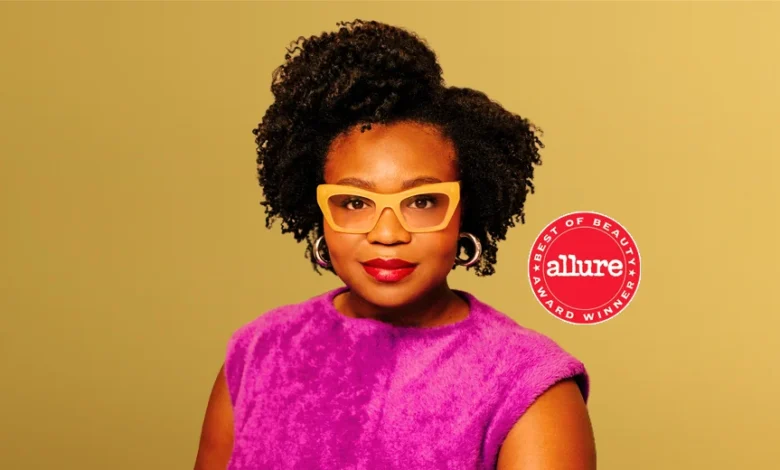
The global beauty and wellness market, valued at over $600 billion, operates on a complex ecosystem of consumer trust, retail dominance, and critical validation. Within this vast landscape, few accolades carry the commercial weight or historical prestige of Allure’s annual Best of Beauty awards. Established in 1996—just five years after Condé Nast launched the iconic beauty title on newsstands—the franchise has evolved from a simple magazine roundup into a powerful commercial engine. On the latest episode of the Glossy Beauty Podcast, hosted by Lexy Lebsack, Allure Editor-in-Chief Jessica Cruel pulled back the curtain on the grueling multi-month evaluation process, offering brands an unvarnished blueprint for capturing the coveted Best of Beauty seal.
The discussion, timed alongside the release of the highly anticipated 2026 award winners, offers a rare, insider-level look at how legacy media and digital-first beauty brands intersect. For three decades, the Allure seal has served as an institutional differentiator on crowded retail shelves. Cruel’s insights shed light not only on the mechanics of modern beauty journalism but also on the shifting expectations consumers place on skincare, cosmetics, and wellness goods in an era defined by hyper-education and digital noise.
The Anatomy of the Franchise: History and Commercial Power
To understand the gravity of the Best of Beauty awards, one must examine their trajectory since their mid-1990s inception. When Allure first introduced the awards, the beauty retail landscape was dominated by department store counters, traditional drugstores, and print advertising. Over the past thirty years, the advent of e-commerce, social media marketing, and the direct-to-consumer (DTC) boom have exponentially increased the volume of new product launches. Today, thousands of formulations compete for consumer attention annually.
Despite this market saturation, the Allure seal has maintained its potency. Cruel emphasized during the podcast that the franchise’s influence is grounded in proprietary consumer research.
“The seal can be licensed, so you can put it on your packaging, you can put it on your social media, you can put it in ads, and that’s because we know from our research that the seal helps that product move,” Cruel told Glossy. “We know that when people see that seal, the winning product is more likely to be purchased than the thing that’s sitting right next to it, so that seal has power.”
This commercial validation translates directly into measurable sales lifts for winning brands, particularly independent labels striving to break through in a market dominated by multinational conglomerates like L’Oréal, Estée Lauder, and Procter & Gamble. Consequently, preparation for the awards cycle is a year-round operational priority for public relations agencies, product developers, and brand founders alike.
Surviving the Crucible: The Elimination Process and Essential Standards
Winning an Allure Best of Beauty award is not merely about having a superior formula; it is about surviving a rigorous, multi-tiered elimination process. Cruel detailed the initial hurdles that eliminate numerous hopeful contenders before their active ingredients are even tested.
The first line of defense focuses on brand presentation and foundational credibility. While Allure’s editorial team enthusiastically champions independent and emerging brands, digital presentation matters. A substandard web presence or unpolished social media footprint can trigger immediate skepticism during preliminary screenings.
Beyond digital presentation, packaging and usability serve as critical second-tier filters. Cruel highlighted user-friendliness as a non-negotiable metric, noting that poorly engineered packaging can ruin a tester’s bathroom routine and sink a product’s chances.
Furthermore, the standards for inclusivity have shifted dramatically since the awards were founded in 1996. A narrow shade range is no longer acceptable in the modern beauty market.
“If a foundation only has 10 shades, that can’t win Best of Beauty, and that’s something that might have been OK when we first launched the list 30 years ago, but now that’s something we really consider,” Cruel explained. “Shade range is a really important part of what we award. There is a really important responsibility we have to the reader to make sure that if I’m giving you tips, or a blush or a foundation, that you feel that you can go find one that’s right for you.”
Demystifying Editorial Timelines and Combating Misconceptions
A recurring friction point in brand-media relations involves the timeline of product submissions. Cruel addressed common misconceptions among publicists and brand founders regarding the operational realities of running a modern, digitally integrated publication.
Even though print lead times no longer dictate the entirety of Allure’s output, rigorous product testing requires significant lead time. Cruel stressed that skincare products, for instance, must reach the editorial team at least two months prior to evaluation. This window allows editors to incorporate the items into their daily routines for a minimum of 28 days—the standard physiological skin cycle—to observe tangible efficacy before making editorial recommendations.
Cruel also offered a blunt clarification regarding the distinction between journalism and public relations, urging the industry to better understand her team’s core mission.
“It’s really important to let people know that the soonest you can get me the product, the better… And, honestly, I think some people think that my job is PR. My job is not PR, and I want everyone to know that,” Cruel stated. “What I do is help the reader determine what brands, what products are the most important to them right now. If you want to do something that’s more business-forward, more launch-forward, there are a lot of B2B publications that do that. I don’t serve the consumer in that way.”
Navigating the Future: Education, Wellness, and Cut-Through Value
Looking ahead, the Allure editor-in-chief expressed optimism regarding the evolving sophistication of the beauty consumer. Rather than viewing the proliferation of online skin-care advice and aesthetic procedures as a threat, Cruel sees a profound opportunity for authoritative media brands to serve as trusted guides.
Consumers today are bombarded with complex medical terminology, aesthetic tourism trends, and active ingredient breakdowns across platforms like TikTok and Instagram. From peptides and exosomes to conversations surrounding surgical interventions and holistic wellness, the modern beauty enthusiast is more engaged—and more vulnerable to misinformation—than ever before.
“The thing that is exciting to me right now is the fact that everyone is very educated,” Cruel noted. “We always say this about the beauty reader, but when I scroll through my social media feeds, I see more about facelifts, trips to Korea to get work done, exosomes and peptides… and that excites me because I see a huge opportunity. There is so much misinformation out there. As our industry leans more and more into wellness, full-body, holistic beauty, there is such a need for a brand like Allure because there’s a lot of bullshit out there.”
Broader Industry Implications and Analysis
The revelations from Cruel’s conversation with Glossy underscore several broader trends shaping the beauty and media landscapes in 2026.
First, the relationship between third-party validation and consumer purchasing decisions has intensified. As digital ad fatigue grows and consumers become increasingly skeptical of paid influencer endorsements, institutional seals of approval—backed by rigorous testing protocols—offer a vital anchor of trust. Brands that secure these accolades gain an immediate competitive advantage in conversion rates and retail placement negotiations.
Second, the definition of product excellence has broadened to encompass ethical, operational, and inclusive metrics. A product that performs well in a laboratory setting can no longer overcome deficiencies in shade inclusivity, sustainable packaging design, or transparent brand communication.
Finally, as the beauty industry continues its convergence with the broader wellness sector, media outlets like Allure are pivoting from traditional product directories to comprehensive curators of truth. By positioning themselves as arbiters of scientific accuracy against a backdrop of digital misinformation, legacy beauty publications are securing their relevance for the next generation of consumers.
Related posts: