Le Coq Sportif Launches Maradona Capsule, Signifying Major Brand Revival and Global Ambitions

PARIS – As the 2026 FIFA World Cup progresses into its second week, French athleticwear giant Le Coq Sportif is commemorating a pivotal moment in soccer history with the release of a special capsule collection. This launch, set for Monday, marks exactly 40 years since Argentine football legend Diego Maradona scored his infamous "Hand of God" goal during the 1986 World Cup quarterfinal match against England, a game that ultimately saw Argentina triumph en route to lifting the coveted trophy. Beyond its historical homage, this collection serves as a powerful statement of Le Coq Sportif’s aggressive turnaround strategy following a challenging financial period.
A Tribute to a Legend: The Maradona Capsule Collection
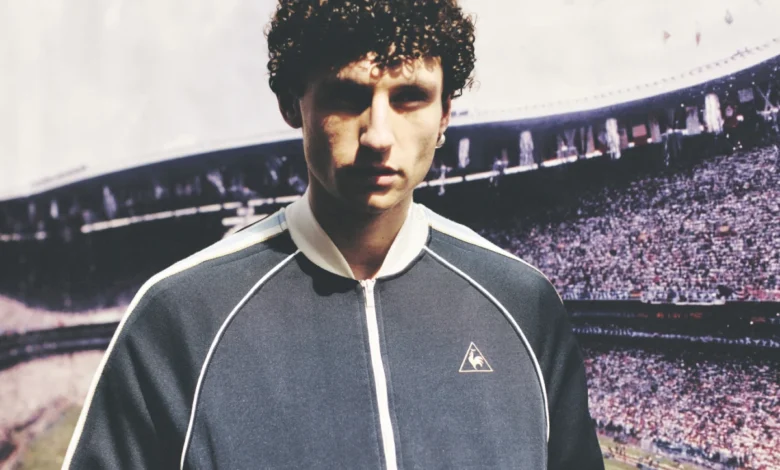
The new eight-piece capsule pays direct tribute to the iconic 1986 match and Argentina’s victory. Le Coq Sportif, the original supplier of Argentina’s kit during that historic tournament, has meticulously designed the collection around the distinctive off-white, sky blue, and deep slate colors of the "Albiceleste," the beloved nickname for Argentina’s national football team. The collection is envisioned as a versatile "head-to-toe wardrobe," crafted to seamlessly transition wearers "from the pitch to the street without looking like you made the journey," emphasizing a blend of athletic heritage and contemporary streetwear appeal. The lineup includes T-shirts, classic jerseys, a zip-up hoodie, a comfortable sweatshirt, shorts, and trousers, each piece reflecting the enduring legacy of Maradona and the spirit of ’86.
The launch of this capsule is not merely a nostalgic nod; it also serves as a strategic teaser for the forthcoming "Maradona Official" brand. This new venture is being created under license by Electa Global, in close collaboration with the estate of the late soccer icon, which is managed by his five children. The partnership underscores the enduring global appeal of Maradona and his unparalleled impact on sports and culture. Ash Pournouri, founder of Electa Global and the driving force behind the Maradona brand, emphasized the scale of this undertaking: "Diego is the biggest name the game has ever produced, and we’re building something the size of his legend. Le Coq Sportif made the legendary ’86 kit, so this partnership starts with soccer history on its side." This sentiment is echoed by Alexandre Fauvet, CEO of Le Coq Sportif, who described Maradona as "one of those rare names that transcends football entirely." For a brand founded on the conviction that "sport and culture are inseparable," this collaboration was deemed an undeniable and natural fit, leveraging a shared history and a legendary figure whose influence extends far beyond the pitch.
The capsule collection will make its debut at Le Coq Sportif’s flagship store on Boulevard Saint Germain in Paris. For the occasion, the store will be transformed into "a living tribute" to Maradona, offering an immersive experience for fans and fashion enthusiasts alike. Concurrently, the collection will be available on the French brand’s newly revamped international e-commerce website, ensuring global accessibility.
The Infamous "Hand of God" and 1986 World Cup Context

The 1986 FIFA World Cup, held in Mexico, is indelibly linked with Diego Maradona’s name. On June 22, 1986, in the quarterfinal match against England at the Estadio Azteca in Mexico City, Maradona scored two of the most famous goals in football history. The first, occurring in the 51st minute, was the controversial "Hand of God" goal, where Maradona used his hand to punch the ball past English goalkeeper Peter Shilton. Despite protests from the English team, the referee allowed the goal to stand. Maradona famously attributed it later to "a little with the head of Maradona and a little with the hand of God."
Just four minutes later, Maradona scored what is widely considered the "Goal of the Century." Dribbling past five English players – Peter Beardsley, Peter Reid, Terry Butcher (twice), and Terry Fenwick – from his own half before slotting the ball past Shilton, he showcased a breathtaking display of skill, agility, and determination. These two goals, representing both the audacious and the sublime aspects of his genius, secured a 2-1 victory for Argentina, propelling them into the semifinals. Argentina went on to defeat Belgium 2-0 in the semifinals, with Maradona scoring both goals, and then triumphed over West Germany 3-2 in a thrilling final to claim their second World Cup title. Maradona’s performance throughout the tournament, where he scored 5 goals and assisted 5 others, is often regarded as one of the greatest individual displays in World Cup history, cementing his status as a global icon.
Le Coq Sportif’s Journey Through Crisis and Revival
The Maradona capsule represents more than a celebratory release; it marks a significant milestone in Le Coq Sportif’s ambitious turnaround efforts following a tumultuous period. The brand, recognizable by its iconic rooster logo, faced severe financial difficulties in the wake of the 2024 Paris Olympics. Despite securing high visibility as the official uniform provider for the French Olympic teams, the company experienced consecutive quarters of substantial losses. The situation was further exacerbated by a lawsuit from the French Rugby Federation over unpaid jersey sponsorship fees. These challenges culminated in the brand being placed in receivership in November 2024, when its Swiss parent company, Airesis – which held a 75 percent stake – applied for judicial restructuring at the Paris Commercial Court. The crisis highlighted the intense competitive landscape of the sportswear industry, the pressures of major sponsorship deals, and the need for robust financial management.
A pivotal moment for the brand came in July 2025 with its acquisition by a consortium led by French-Swiss investor Dan Maname. This new ownership ushered in a wave of strategic changes, most notably the appointment of Alexandre Fauvet as CEO. Fauvet brought with him a wealth of experience, having spent nearly a decade as CEO and minority investor of the ski brand Fusalp, and also having advised Le Coq Sportif’s previous owners in the lead-up to the Paris Games. His deep understanding of brand revitalization and the sportswear market positioned him as the ideal leader to steer the company through its recovery.
Under Fauvet’s leadership and the new ownership, the turnaround initiative quickly took shape. Financial filings at the Troyes Chamber of Commerce revealed encouraging early signs: losses significantly slowed to 3.6 million euros in the second half of 2025, a stark improvement from the 20 million euros in losses recorded in the first half of the same year. This marked a substantial reduction from the staggering 60 million euros in losses accumulated throughout 2024, which had occurred against a turnover of 109 million euros. The immediate focus on cost control, operational efficiency, and strategic investment began to yield positive results.
A Comprehensive "Reset": Vision and Creative Direction

Le Coq Sportif’s strategic "reset" for 2026 has been multi-faceted. The year began with the brand once again outfitting French teams for the Milano Cortina 2026 Olympics, demonstrating a continued commitment to high-profile sporting events and national pride. In March, the company unveiled a complete overhaul of its visual identity, modernizing its aesthetic while respecting its rich heritage. This was accompanied by the launch of a new international e-commerce site, crucial for expanding its global reach and direct-to-consumer capabilities.
A key appointment in this revitalization was Pascal Monfort as creative director. Monfort, a celebrated multihyphenate industry veteran, brings a formidable track record to Le Coq Sportif. His previous roles include consumer culture and innovation director at Nike, fashion and image director at sports newspaper L’Équipe (where he was tasked with revamping its Sport & Style weekend supplement), and founder of the Paris-based trends marketing agency REC. His diverse experience across sports, fashion, and marketing makes him uniquely qualified to redefine Le Coq Sportif’s product and brand narrative.
In a joint interview with Fauvet, Monfort articulated the brand’s immense, yet untapped, potential. "I don’t know anyone who doesn’t know the brand," he stated, highlighting Le Coq Sportif’s global recognition. However, he quickly pointed out the discrepancy: "But when I look at the revenue, it’s global notoriety with the turnover of a niche brand." For Monfort, the missing element was "desirability," which he firmly believes "will come through the product."
Monfort’s blueprint for this new era is built on a "triangular brand essence." This framework combines an "irresistibly French" aura, a collaborative "teammate" mindset, and a "full forward" push into the future. While embracing innovation, the brand’s extensive archives remain a vital source of inspiration, allowing for a rediscovery of its spirit rooted in Emile Camuset’s invention of the modern tracksuit in the 1930s.
Equally important to this heritage are the "individuals who shaped the brand," beyond just Maradona. Fauvet highlighted other iconic figures such as tennis players Yannick Noah and Arthur Ashe. He elaborated on their significance: "They are personalities who stand out not because they have won plenty of championships or tournaments – Diego only won once – but they left their mark. I think this is super interesting." This philosophy emphasizes lasting impact and character over mere statistical victories, aligning with the brand’s message of perseverance and personal achievement.
Beyond the Podium: A Broader Vision of Sport and Lifestyle
The challenges faced during the Paris Games, despite being a dark period financially, paradoxically clarified a renewed vision for Le Coq Sportif. This vision embraces the concept that "the city is the stadium," as Fauvet articulated. It positions the brand as one that is "not about aesthetics, not about winning at all costs," but rather "about a form of emancipation, of well-being for oneself." This human-centric approach aims to connect with a broader audience who engage with sports as part of their lifestyle, for health, self-expression, and personal growth, rather than solely for competitive triumph.

Another significant asset, highlighted by Fauvet, is the brand’s 144-year-old history of accompanying "all sports, collective and individual, which is really rare." This versatility positions Le Coq Sportif uniquely in the market. Furthermore, it is "the only brand that is balanced on textile and footwear, the two pillars in terms of business, and speaks equally to men and women." This balanced portfolio and inclusive appeal provide a stable foundation for growth and market penetration.
Made-in-France Manufacturing and Global Expansion
A cornerstone of Le Coq Sportif’s revitalized strategy is its commitment to local production. The brand’s manufacturing facility in Romilly-sur-Seine, located approximately 90 minutes outside Paris in central France, enables small-series runs of up to 400 pieces with international distribution capabilities. This commitment to "Made in France" manufacturing is not merely a logistical choice but a strategic one that adds significant value and appeal. As Monfort noted, this trajectory will demonstrate that "we can do things thought, imagined, designed and produced in France, an hour and half outside Paris. It adds magic and we know that internationally, this has value." This focus on quality, craftsmanship, and French identity resonates strongly in global markets.
Looking ahead, Le Coq Sportif plans to showcase further developments at upcoming fashion weeks in the fall, and by early 2027, the brand intends to present denser, made-in-France men’s and women’s collections, signaling a robust expansion of its product offerings and a deeper integration into the fashion landscape.
The company has set an ambitious financial goal: to surpass 150 million euros in sales by 2028, with a significant one-third of this business projected to originate from the U.S. market. Early indicators are highly encouraging, with spring 2027 orders already showing a remarkable 50 percent increase. Fauvet revealed that the U.S. market, despite lacking physical distribution for many years, has emerged as the second-largest market after France, particularly since the launch of its international e-commerce platform. This growth, currently representing a 10 percent share of the business, has occurred "without any marketing activity" specifically targeting the U.S. This organic traction underscores the latent demand and brand recognition for Le Coq Sportif. To capitalize on this potential, a dedicated marketing initiative in New York is slated for September, promising to further accelerate growth in this critical market.
As Monfort succinctly summarized, the mission for Le Coq Sportif’s leadership team is clear: "We are going to offer Le Coq Sportif again the commercial, reputational and prestige success that the brand deserves. That is our only mission." With a strategic blend of historical reverence, innovative design, operational efficiency, and ambitious market expansion, Le Coq Sportif is poised to reclaim its rightful place as a leading global athleticwear brand. The Maradona capsule is not just a collection; it is a symbol of this powerful resurgence.