Asics Redefines Recovery Footwear with the Launch of the High-Cushion Gel-SlowCush

While the lion’s share of commercial attention and marketing budgets traditionally goes to elite, high-performance running shoes engineered to help athletes shatter personal records and cross finish lines faster, sportswear giant Asics is turning its focus toward the often-overlooked category of recovery and easy-pace running. Expanding its legendary Gel banner, the brand has officially unveiled a brand-new model designed explicitly for low-intensity training, recovery days, and casual, comfort-first jogs: the Asics Gel-SlowCush.
The introduction of the Gel-SlowCush marks a significant strategic shift in how major footwear manufacturers approach the modern runner’s rotation. Rather than leaning into the ongoing industry arms race for carbon-plated propulsion and hyper-light race-day foams, Asics is leaning into a philosophy that honors physical restoration. Set to debut globally on October 1, the new silhouette brings a specialized engineering approach to the slower miles that form the foundation of any serious endurance training program.
Engineering Maximum Comfort: Inside the Gel-SlowCush Technology

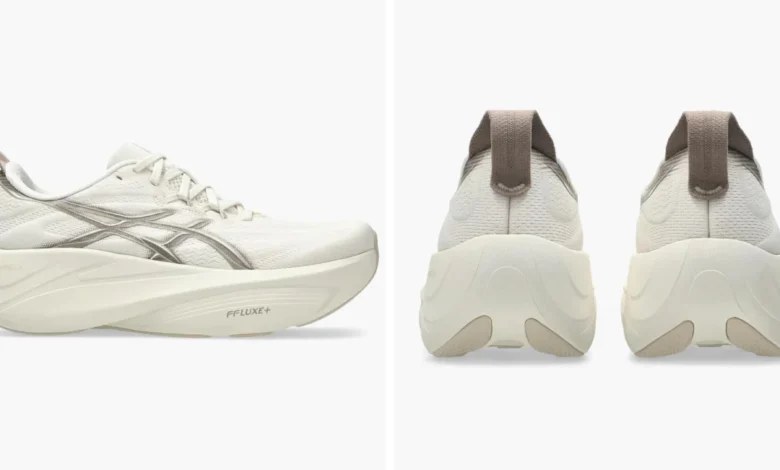
At the heart of the Asics Gel-SlowCush are two proprietary cushioning innovations making their market debut. The shoe relies heavily on the newly developed FF Luxe Plus foam, a midsole compound meticulously engineered to deliver ultra-plush tactile feedback underfoot. Working in tandem with FF Luxe Plus is an upgraded iteration of Asics’ signature cushioning technology, PureGel Plus. Strategically placed within the heel and midfoot, PureGel Plus provides enhanced softness and superior shock absorption, mitigating the repetitive impact forces that accumulate during long, slow recovery jogs.
The upper construction matches the plushness of the underfoot platform. Built using a specialized engineered mesh, the upper wraps the foot in a secure yet breathable cocoon. To maximize step-in comfort, Asics designers incorporated generous padding along the collar and tongue, ensuring that pressure points are minimized even during extended wear.
According to product developers, every single element of the shoe was scrutinized through the lens of comfort. The goal was to eliminate any rigid structural components that might detract from a relaxed, stress-free running experience, positioning the shoe as a wearable sanctuary for tired legs.
Technical Specifications and Market Positioning

When it comes to physical dimensions, the Asics Gel-SlowCush does not shy away from the maximalist footwear trend currently dominating the running shoe market. The shoe features an imposing stack height, measuring 48mm at the heel. This places the Gel-SlowCush in elite company alongside other ultra-cushioned behemoths in the running industry, such as the Nike Vomero Plus—which boasts a 46mm heel stack—and the Hoka Skyward X, which matches the Asics at 48mm.
The shoe maintains an 8mm heel-to-toe drop, sloping down to a substantial 40mm at the forefoot. Despite its towering profile and heavy-duty foam allocation, engineers managed to keep the weight relatively controlled, tipping the scales at 298 grams for a standard men’s size 9.
Priced at $200, the Gel-SlowCush occupies the premium tier of the running footwear market. It will be available for purchase starting October 1 through the official Asics website, company-operated retail storefronts, and specialized running specialty boutiques worldwide.
The Strategic Philosophy Behind Slow Running

The conceptualization of the Gel-SlowCush stems from a growing recognition within sports science regarding the physiological necessity of easy runs. Paul Lang, Asics senior manager of performance running footwear, shed light on the brand’s motivations during the official product rollout.
"We saw an opportunity to create a completely new comfort experience within our running range," Lang stated in a press release. "Rather than focusing on speed or performance gains, we started with a simple question: how can we make easy runs feel even more enjoyable? The combination of technology was developed to deliver an exceptionally soft and comfortable ride, while the overall construction was carefully refined to create a premium experience from the moment runners step into the shoe. Every element was designed with comfort in mind."
This perspective aligns with modern endurance coaching methodologies, which emphasize polarized training models. In these frameworks, roughly 80% of a runner’s weekly mileage should be performed at an easy, conversational pace, while the remaining 20% is dedicated to high-intensity threshold and speed work. By dedicating a flagship product specifically to the 80% category, Asics is addressing a massive, underserved segment of the consumer base.
Elite Endorsement: Validating the Recovery Routine

To validate the performance and utility of the Gel-SlowCush, Asics enlisted elite distance runner John Korir. Known for his stellar performances on the global marathon circuit—including a phenomenal outing at the Chicago Marathon that earned him the tenth-fastest marathon time in history—Korir understands the delicate balance between hard training and adequate rest.
"The easy days are just as important as the hard days in marathon training," Korir explained. "They give your body the chance to recover while still building the consistency that every runner needs. The Gel-SlowCush shoe feels incredibly soft and comfortable underfoot, making it a shoe I can reach for when I want to slow things down and simply enjoy the miles. Sometimes the best runs are the ones where you’re not thinking about pace at all."
Korir’s endorsement highlights a crucial psychological aspect of running culture: the mental liberation that comes with abandoning pace metrics. In an era dominated by GPS watches, heart rate monitors, and digital sharing platforms like Strava, runners are constantly bombarded with data regarding their speed and efficiency. A shoe explicitly branded around the concept of slowness offers a psychological counter-narrative, encouraging athletes to run purely for therapeutic and recreational enjoyment.
Chronology of Development and Industry Impact

The journey toward the Gel-SlowCush began several years ago as internal market research revealed a fascinating consumer trend. While sales of carbon-plated super shoes continued to surge among competitive runners, casual runners, weekend warriors, and high-mileage endurance athletes alike were increasingly seeking footwear that could alleviate joint fatigue during recovery days. Traditional daily trainers often proved either too firm or too responsive for days when legs felt heavy and battered from intense intervals.
Asics responded by tasking its research and development teams in Kobe, Japan, with rethinking foam densities and gel placement configurations. The result was the parallel development of FF Luxe Plus and PureGel Plus. Following rigorous field testing by both biomechanical laboratories and elite roster athletes throughout late 2024 and 2025, the final specifications of the Gel-SlowCush were locked in ahead of its October production rollout.
Broader Market Implications for Athletic Footwear
The launch of the Asics Gel-SlowCush could trigger a broader industry movement toward specialized recovery footwear. For years, the running shoe market has been segmented primarily into racing shoes, daily trainers, trail shoes, and stability models. Recovery running has traditionally been absorbed by standard daily trainers, leaving a gap for footwear specifically optimized for low-impact, high-cushion ambulatory comfort.

As running participation continues to expand globally—driven by post-pandemic fitness booms and a rising demographic of holistic wellness practitioners—the definition of a "runner" has diversified. Consumers are no longer exclusively chasing personal bests; many view running as a mental health practice, a social activity, or a longevity strategy. Products like the Gel-SlowCush directly cater to this lifestyle-oriented consumer base, proving that innovation in footwear does not always have to be measured in seconds saved per mile, but can instead be measured in cumulative physical well-being and injury prevention.
As the October 1 release date approaches, industry analysts will be closely monitoring consumer adoption rates to see if the market is ready to embrace a dedicated "slow running" category. If the overwhelmingly positive early feedback from elite testers like John Korir is any indication, Asics may have successfully unlocked a lucrative new frontier in athletic footwear design.
Related posts: