Photography and the Black Arts Movement, 1955–1985 Reclaims the Visual Legacy of a Cultural Renaissance

The power of visual storytelling to shape sociopolitical movements takes center stage in a landmark exhibition currently captivating audiences in Los Angeles. Titled Photography and the Black Arts Movement, 1955–1985, the expansive presentation brings together roughly 150 works that trace the evolution, zenith, and enduring impact of an era that fundamentally redefined Black identity, culture, and political expression. Curated by Philip Brookman and Deborah Willis, the exhibition is currently on view at the Getty in Los Angeles through mid-June before traveling to the Mississippi Museum of Art, where it will run from July 25 through November 8, 2026.
By shifting the focus from traditional fine art mediums to lens-based media, the exhibition offers a vital reassessment of a transformative three-decade period. It highlights how photographers did not merely record history as passive observers, but actively catalyzed political mobilization, challenged mainstream narratives, and championed a profound re-envisioning of Black life across the African diaspora.
Main Facts and Curatorial Vision
At its core, Photography and the Black Arts Movement, 1955–1985 serves as a sweeping historical survey and a visual mosaic. The exhibition showcases works by more than 100 artists, photographers, and activists, weaving together contributions from American, British, Nuyorican, and Caribbean creators.

Rather than relying solely on iconic, widely circulated images of civil rights protests and racial violence, the curators intentionally curated a dynamic mix of canonical photographs and lesser-known archival pieces. This deliberate blending highlights the multifaceted role of photography during the mid-twentieth century. While some images were generated explicitly for political organizing, others focused on celebrating Black self-fashioning, community resilience, and everyday dignity.
Mazie Harris, assistant curator at the Getty, emphasizes that the exhibition challenges the historical marginalization of photography as a secondary medium. "Photography is sometimes thought of as peripheral to history—as mere documentation of what happened in the past," Harris explains. "But photographs don’t just record social transformations; they play crucial roles in motivating political change—swaying public opinion, focusing attention on important causes, spurring solidarity."

Chronology and Historical Context
The exhibition’s timeline—spanning from 1955 to 1985—captures a critical epoch defined by immense turbulence and monumental victories.
The year 1955 marks the foundational roots of modern civil rights mobilization, symbolized by watershed events such as the Montgomery bus boycott and the tragic murder of Emmett Till, whose open-casket photographs galvanized a national movement. Throughout the late 1950s and 1960s, lens-based media became an indispensable tool for civil rights organizations. Images of marches, voter registration drives, and peaceful demonstrations were rapidly reproduced in magazines and newspapers, piercing the bubble of regional indifference and bringing the realities of Jim Crow segregation into living rooms nationwide.

As the movement transitioned into the late 1960s and 1970s, the Black Arts Movement emerged as the cultural and aesthetic arm of the Black Power movement. Artists and photographers increasingly turned their lenses inward, focusing on self-determination, Afrocentric aesthetics, community solidarity, and radical imagination. The timeline closes in 1985, marking a period when the foundational aesthetics of these earlier decades had firmly embedded themselves into contemporary fine art practices, paving the way for generations of modern image-makers.
Notable Works and Artistic Highlights
The exhibition features a vast array of historically significant photographs and mixed-media pieces, each capturing a distinct facet of the diaspora’s cultural and political landscape.

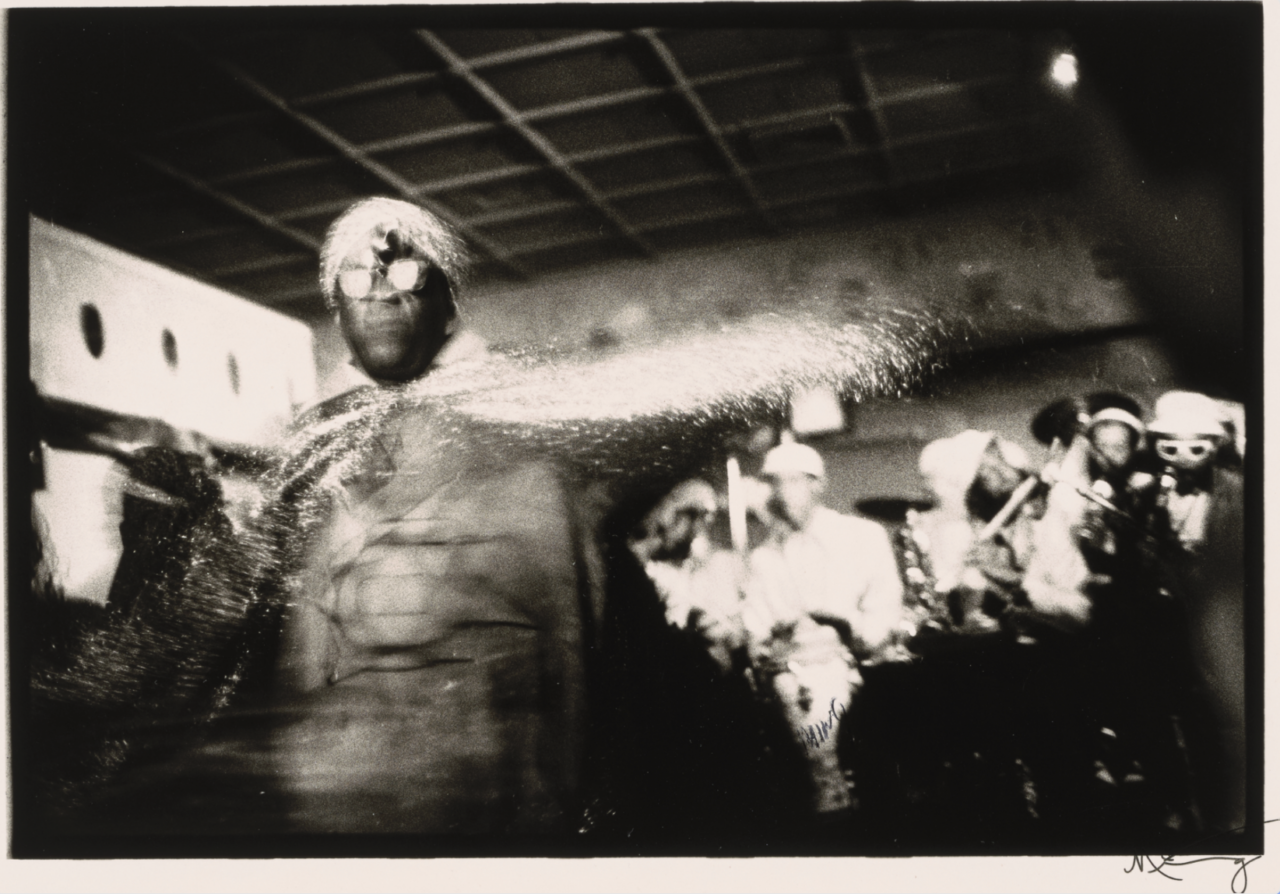
Among the prominent pieces is Ming Smith’s 1978 gelatin silver print, Sun Ra Space II, New York, New York. Using an extended exposure, Smith captured the avant-garde jazz pioneer seemingly floating outward, surrounded by a swirling cosmic constellation. Curators note that the image exemplifies the insistent, liberatory futurism of Sun Ra’s imaginative cosmology, proving timeless nearly 50 years after its creation.
Another cornerstone of the exhibition is Darryl Cowherd’s 1960s photograph The Time is Now, which greets visitors at the entrance. Capturing graffiti scrawled onto a weathered door, the phrase has been adopted by the curatorial team as the thematic anchor of the entire presentation.

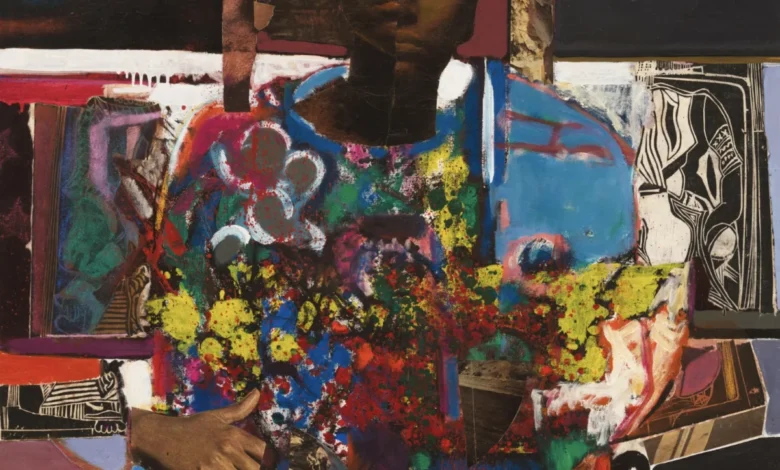
Other historical touchstones include Ernest C. Withers’ powerful documentation of the 1968 Memphis sanitation workers’ strike, featuring the iconic "I Am a Man" placards; Moneta Sleet Jr.’s intimate portrayal of young supporters at the 1965 Selma March; and Gordon Parks’ evocative 1963 portrait of Ethel Sharrieff in Chicago. By juxtaposing these historic photojournalistic milestones with nuanced studio portraits, family scenes, and experimental collages—such as works by Carrie Mae Weems and David Clyde Driskell—the exhibition constructs a holistic portrait of an era driven by both resistance and joy.
Supporting Data and Institutional Collaboration
The realization of Photography and the Black Arts Movement, 1955–1985 is the result of years of rigorous academic research and institutional partnership. Spearheaded by Philip Brookman, a prominent photography curator at the National Gallery of Art in Washington, D.C., alongside Dr. Deborah Willis, a distinguished photography historian, curator, and professor at New York University, the project draws from major institutional archives and private collections nationwide.

Loans from repositories such as the National Gallery of Art, the Getty, the Mississippi Museum of Art, Temple University Libraries, the Gordon Parks Foundation, and university archives ensure that the historical record is represented with depth and accuracy. The inclusion of works originating outside the traditional fine art ecosystem—such as pamphlets, movement flyers, and activist press imagery—undersores the populist origins of much of the material on display.
Broader Impact and Implications
In an era marked by renewed national debates over civil rights, historical memory, and the policing of public expression, the themes explored in the exhibition carry striking contemporary resonance.

Art historians and cultural analysts note that while modern digital technology and social media have vastly accelerated the distribution of imagery, the core challenge remains identical to that of the 1960s and 70s: cutting through the noise of mainstream media to command attention and foster empathy. By re-examining how mid-century artists successfully weaponized aesthetics in the service of human dignity, the exhibition offers a blueprint for contemporary creators and activists navigating their own turbulent political landscapes.
Ultimately, museum officials hope visitors leave the galleries not only with a deeper appreciation for photographic history, but with a renewed sense of personal agency. As Harris reiterates through the rallying cry of Darryl Cowherd’s featured artwork, the exhibition serves as an enduring reminder that the work of shaping a more just society is an ongoing imperative—and that the time to act is always now.