Rania Matar Captures the Resilience of Lebanese Youth in Fifty Years Later – Where Do I Go?

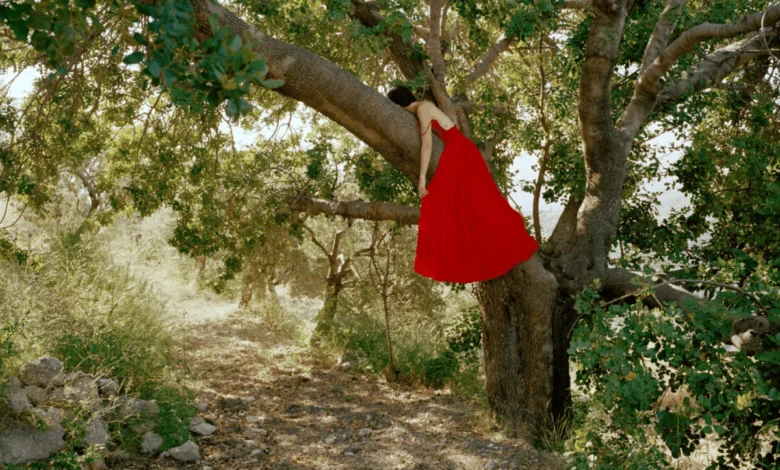
The intersection of history, personal memory, and contemporary geopolitical crisis forms the foundation of photographer Rania Matar’s latest multidisciplinary project, Fifty Years Later – Where Do I Go? Currently on view at the Sidney and Lois Eskenazi Museum of Art through August 2, 2026, the solo exhibition brings together approximately 128 striking color portraits of young women living in Lebanon. The exhibition runs concurrently with the release of a photobook of the same title, capturing a generation caught at a precarious historical and geographical crossroads.
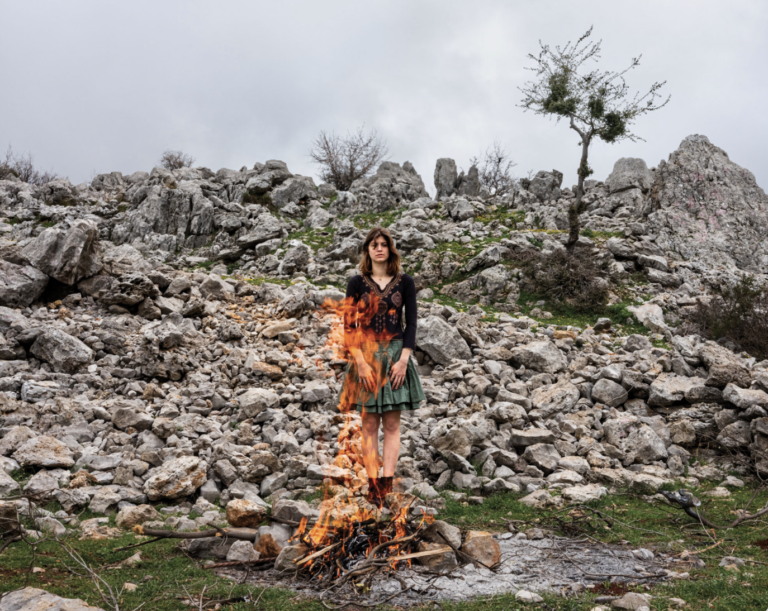
At the core of the project is a poignant question scrawled on a concrete wall in Beirut: Where do I go? For the subjects of Matar’s lens, this is not a rhetorical or abstract query; it is an immediate, daily reality dictated by recurring conflict, severe economic collapse, and an increasingly volatile future. Through a deeply collaborative photographic process, Matar offers an intimate look at the emotional landscape of modern Lebanon, framing the country’s ongoing turmoil through the eyes of its young women.
The Genesis of a Lifelong Project: History Repeating Itself
The thematic architecture of Fifty Years Later – Where Do I Go? is inextricably linked to the personal history of its creator. In 1984, at the height of the Lebanese Civil War (1975–1990), a young Rania Matar faced a defining dilemma: whether to remain in her homeland amidst escalating violence or to emigrate. She ultimately chose to leave, relocating to the United States under the assumption that her absence would be temporary. Decades later, she found herself recognizing that exact internal fracture in the faces of contemporary Lebanese youth.

The project itself was galvanized by a specific catalyst: the catastrophic August 4, 2020, explosions at the Port of Beirut. That disaster, which compounded an already crippling national economic crisis, propelled a new generation of young women into abrupt adulthood. Left to sift through physical and metaphorical rubble, these individuals were forced to confront the same impossible binary that Matar and millions of Lebanese before them had faced: stay and attempt to rebuild from the ground up, or leave in search of stability, severing deep-rooted ties to family, culture, and home.
The initial intent behind the commemorative project was to mark the 50th anniversary of the onset of the Lebanese Civil War spanning from 1975 to 2025. However, the tragic irony of the region’s geopolitical climate means that the exhibition’s release coincides with a new wave of widespread displacement and active conflict, rendering the core themes of the work painfully prescient.

A Collaborative and Intimate Methodology
Unlike traditional photojournalism that often relies on candid observation or detached documentation, Matar’s creative process is rooted in profound collaboration and shared agency. The creation of each portrait begins well before the camera is raised. Matar typically initiates contact through open calls on social media platforms, followed by extensive telephone conversations with prospective participants. These preliminary discussions allow her to understand each woman’s personal narrative, her connection to her environment, and what Lebanon signifies to her.
Locations are neither heavily scouted nor artificially staged in advance. Instead, Matar and her subjects meet organically, allowing the portrait to evolve through a mutual exchange of ideas, emotional states, and artistic experimentation. This working method fosters an environment of trust and mutual respect, transforming the photographic session into an empowering experience for the participants.

The resulting images are layered with rich symbolism. Matar frequently employs recurring motifs—such as natural light filtering through architectural ruins, mirrors reflecting alternate realities, and women juxtaposed against the rugged terrain of the Mediterranean landscape—to articulate the duality of their existence. These visual metaphors capture the tension between the devastation of structural wounds and the indomitable resilience of the human spirit.
Chronology of Crisis and Displacement
To fully understand the weight of Matar’s exhibition, one must contextualize the timeline of modern Lebanon’s socioeconomic and political trials:

- 1975–1990: The Lebanese Civil War ravages the country, leading to mass emigration and deep demographic shifts, prompting Rania Matar’s initial departure for the United States in 1984.
- October 2019: Widespread anti-government protests erupt across Lebanon, triggered by worsening economic conditions, government corruption, and a collapsing currency.
- August 4, 2020: A massive ammonium nitrate explosion at the Port of Beirut kills over 200 people, injures thousands, and leaves hundreds of thousands homeless, serving as the immediate catalyst for Matar’s project.
- 2021–2025: Lebanon undergoes what the World Bank describes as one of the worst global economic depressions in modern history, severely impacting infrastructure, education, and employment prospects.
- 2024–2026: Renewed military escalations displace approximately a quarter of Lebanon’s total population, disproportionately affecting communities in South Lebanon and heightening the urgency of Matar’s thematic inquiry.
Broader Impact and Implications in a Time of War
In an era where modern media frequently reduces complex humanitarian crises to numbers, statistics, and fleeting headline data, Matar’s exhibition serves as a vital counterweight. By restoring individuality, dignity, and visual presence to her subjects—many of whom hail from the heavily impacted regions of South Lebanon—the project humanizes the scale of the ongoing displacement crisis.
The implications of Fifty Years Later extend far beyond the gallery walls of the Eskenazi Museum of Art. As current events force a fresh wave of citizens from their homes, the subjects of Matar’s photographs have once again demonstrated extraordinary resilience. Rather than succumbing to despair, many of these same young women have taken active roles in relief efforts—organizing community kitchens, distributing food, sourcing essential supplies, and supporting those rendered homeless by the conflict.

Through these portraits, Matar has documented more than just a historical moment; she has captured an enduring testament to generational perseverance. The exhibition stands as a visual love letter to the resilient spirit of a population that repeatedly refuses to surrender its hope for the future, bridging the gap between those who left, those who stayed, and those who remain tethered to home across geographical divides.