Nuyarn Technologies and Takisada Corporation Secure 2026 Performance Days Innovation Award for Breakthrough Open-Net Wool Fabric

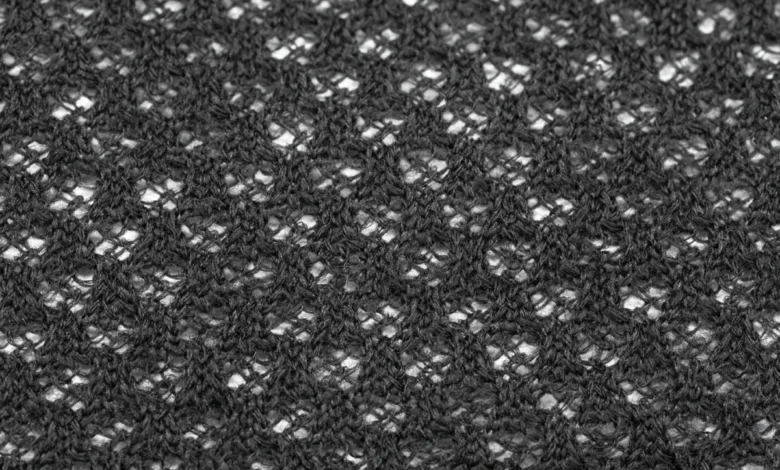
The landscape of high-performance technical apparel is undergoing a significant transformation as natural fibers reclaim territory previously dominated by synthetics. On November 11, 2026, the textile industry recognized this shift by awarding a prestigious 2026 Performance Days Innovation Award to a collaborative project between New Zealand-based Nuyarn Technologies and Japan’s Takisada Corporation. The accolade highlights a novel open-net wool fabric construction that promises to bridge the gap between the thermal advantages of merino wool and the structural requirements of high-intensity endurance gear. By moving away from traditional, restrictive yarn-spinning methods, this innovation addresses long-standing limitations in wool’s durability and moisture management, signaling a potential paradigm shift for the outdoor and sports apparel markets.
The Evolution of Wool in Performance Textiles
For decades, the textile industry has relied on synthetic polymers—specifically polyester and nylon—to achieve the moisture-wicking and rapid-drying characteristics required for high-intensity athletic performance. While these materials are effective at moisture transport, they often lack the thermoregulation and natural odor resistance of merino wool. Conversely, traditional wool spinning involves tightly twisting fibers, a process that inherently suppresses the wool’s natural loft, elasticity, and vapor-management capabilities.
Nuyarn Technologies, headquartered in the textile innovation hub of Levin, New Zealand, has spent years researching the mechanical limitations of traditional yarn. The company’s proprietary twist-free spinning technology represents a departure from the conventional wisdom of the spinning frame. By eliminating the tight twist, Nuyarn allows the individual wool fibers to maintain their natural crimp and structural integrity. When combined with the engineering expertise of Takisada Corporation, this fiber technology has been integrated into an open-net construction, creating a textile that acts more like a high-performance mesh than a traditional woven or knitted wool cloth.
Technical Specifications and Material Science
The award-winning fabric is a technical blend consisting of 67% Merino wool and 33% polyamide. Despite its lightweight profile—clocking in at a mere 105 grams per square meter (gsm)—the material exhibits mechanical properties that significantly outperform traditional merino equivalents.

The data provided by the development team indicates that the open-net structure, facilitated by the twist-free yarn, allows for a drying rate up to five times faster than conventional merino wool. Furthermore, the inclusion of polyamide in the core-spun configuration enhances structural durability, resulting in an abrasion resistance rating up to 8.8 times higher than standard wool fabrics of a similar weight. This combination of speed and strength is critical for endurance athletes, who often avoid natural fibers for fear of fabric saturation and premature wear in high-friction zones.
A Chronology of Innovation
The path to this 2026 recognition began several years ago as global textile manufacturers sought sustainable alternatives to oil-based synthetic fabrics. The chronology of this specific development reflects a methodical approach to material science:
- Early 2024: Nuyarn Technologies initiates a feasibility study on integrating low-twist, high-loft wool yarns into open-net, high-ventilation mesh structures.
- Late 2024: Formal collaboration begins with Takisada Corporation, a Japanese textile house known for its technical fabric finishing and supply chain integration.
- Mid-2025: Initial prototypes undergo stress testing in laboratory conditions to measure vapor transmission and mechanical strength against industry benchmarks.
- Early 2026: Finalizing the 67/33 blend ratio to balance thermal comfort with long-term garment longevity.
- November 2026: The fabric is unveiled and subsequently awarded the Performance Days Innovation Award, marking a successful entry into the commercial market.
Official Responses and Industry Reception
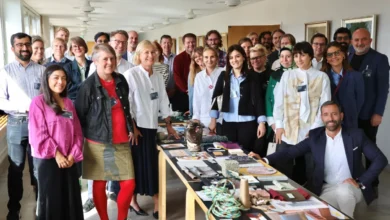
The award, presented at the Performance Days exhibition, serves as a validation of the ongoing collaboration between Nuyarn and Takisada. Andy Wynne, CEO of Nuyarn Technologies, emphasized the importance of synergy in modern textile development. "This award reflects our ongoing drive to push the boundaries of performance textiles," Wynne stated. "Alongside our partners at Takisada Corporation, it demonstrates what is possible when strong partnerships come together to solve fundamental material science challenges."
Industry analysts at the event noted that the partnership is a strategic move for both companies. For Takisada, it provides a unique, high-margin, sustainable product to offer their global client base. For Nuyarn, the collaboration provides the industrial scale and finishing expertise necessary to move from boutique innovation to mass-market adoption.
Broader Implications for the Textile Market
The implications of this innovation extend far beyond the niche of high-performance sportswear. As the apparel industry faces increasing pressure from regulators and consumers to move away from microplastic-shedding synthetic fabrics, the ability to replicate—and exceed—the performance of synthetics using natural fibers is of paramount importance.

- Sustainability and Circularity: By utilizing a higher percentage of wool, garments become more biodegradable and rely on renewable raw materials. The added durability ensures that garments last longer, directly countering the "fast fashion" cycle that has plagued the industry for the last decade.
- Market Expansion: This fabric is positioned for a wide range of applications. In the running and endurance sports sector, the light weight and breathability are paramount. However, the architecture of the open-net structure also makes it an ideal candidate for professional-grade alpine base layers, where moisture management during stop-and-go activity is essential to prevent hypothermia.
- Future Development Pathways: The success of this 67/33 blend sets a new benchmark. It forces competitors to look closer at their own yarn-spinning processes. If twist-free technology can be adapted for heavier-weight fabrics or different fiber blends, the industry may see a rapid decline in the reliance on pure-polyester meshes.
Analyzing the Competitive Landscape
While the performance metrics provided by Nuyarn are impressive, the market entry of this fabric will face challenges. Synthetic fabrics remain significantly cheaper to produce, and the supply chain for high-quality merino wool is subject to the volatility of agricultural markets. However, the current trend toward "premiumization" in the outdoor apparel market—where consumers are increasingly willing to pay a premium for natural materials that do not sacrifice performance—favors this new development.
Moreover, the Performance Days award acts as a "seal of approval" for procurement managers at major global apparel brands. These brands often attend the event specifically to scout for materials that can help them meet their ESG (Environmental, Social, and Governance) targets. A textile that is simultaneously high-performing and sustainable is the "holy grail" for such companies, providing a dual value proposition that is difficult to ignore.
Conclusion
The development of this open-net wool fabric is a testament to the fact that innovation in textiles is no longer just about chemical treatments or synthetic fiber engineering. By returning to the inherent properties of wool and utilizing advanced, twist-free mechanical processes, Nuyarn Technologies and Takisada Corporation have successfully challenged the status quo.
As the textile industry moves toward 2027 and beyond, this collaboration serves as a model for how legacy materials can be reinvented for a modern, performance-driven audience. With the award in hand, the focus now shifts to the commercialization phase. If the fabric can be scaled successfully across global supply chains, it may well become a standard component in the next generation of performance apparel, proving that the most advanced technology is sometimes found by simply letting nature perform as it was designed to.