Redefining Maritime Luxury: How Viking and Rottet Studio Brought the Warmth of Modern Scandinavian Design to the Open Sea

The global cruise industry has long been defined by a maximalist architectural philosophy. For decades, major cruise liners have vied for passenger attention through oversized, highly ornate interiors complete with sprawling atriums, flashing neon displays, gilded staircases, and heavy, theatrical decor reminiscent of Las Vegas casinos. However, a profound shift in consumer taste toward wellness, mindfulness, and understated luxury has prompted a radical rethinking of floating hospitality. Leading this transformation is Viking, which has systematically positioned contemporary Scandinavian design—often characterized by light-filled spaces, pale woods, clean lines, and an overarching sense of calm—at the center of its fleet’s global identity. Translating this minimalist, residential aesthetic to the constrained and structurally complex environment of a cruise ship has required an extraordinary engineering and architectural feat, orchestrated largely by Richard Riveire, founding principal of Rottet Studio.
The Evolution of Nordic Modernism at Sea
Viking’s collaboration with Rottet Studio spans the design of the brand’s entire fleet of river, ocean, and expedition vessels. Rather than treating Scandinavian design as a static visual trope characterized merely by stark whites and basic minimalism, Riveire and his architectural team have embraced a contemporary evolution often described as "New Nordic." This design vocabulary bridges the gap between traditional Scandinavian restraint and a lived-in, residential warmth.

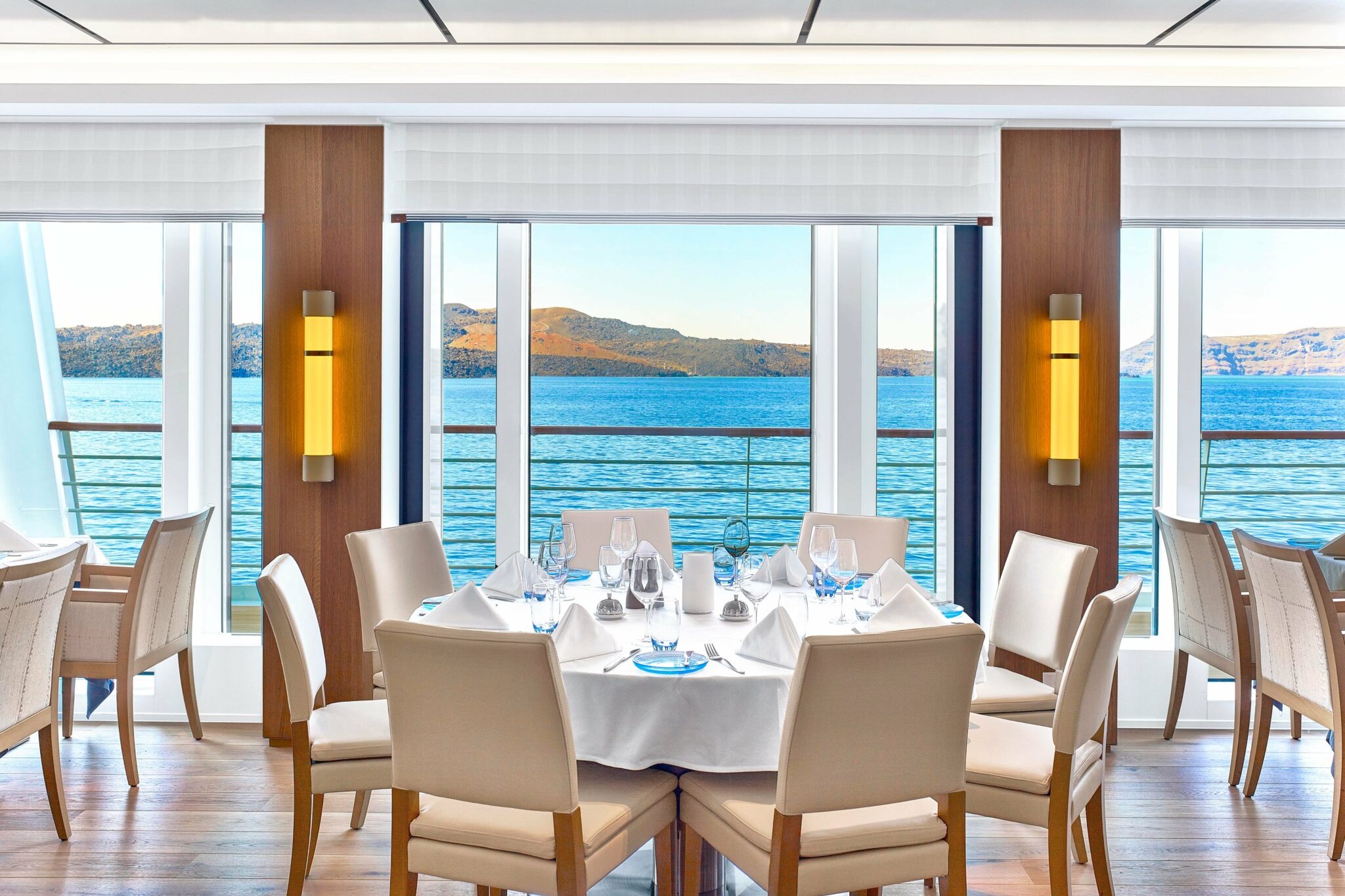
The core philosophy guiding the fleet’s architecture relies on five fundamental pillars: residential modernism, nature, craft, heritage, and exploration. By establishing a restrained architectural foundation using pale woods, natural stone, and subtle textiles, the design team avoids the visual clutter typical of mass-market vessels. Instead, tactile details such as woven leather lounge chairs, intricate wooden ceiling lattices, and sculptural wall accents introduce human scale and authenticity. This approach allows guests to experience an environment that feels less like a commercial passenger ship and more like a thoughtfully curated private Scandinavian residence drifting across international waters.
Framing the Elements: Navigating Dynamic Maritime Light

One of the most complex challenges in translating terrestrial Scandinavian architecture to a marine vessel involves managing natural light. On land, architects can meticulously predict the position of the sun and how daylight will traverse a building across changing seasons. At sea, however, lighting conditions are vastly more variable and dynamic.
During Arctic summer sailings, for instance, the sun may remain visible for 24 hours, presenting unique challenges for spatial comfort, privacy, and glare reduction. Rottet Studio addressed this by integrating expansive floor-to-ceiling windows paired with adaptive architectural elements, adjustable curtains, and specialized glazing. Rather than shutting out the exterior world, these openings intentionally frame the passing landscape—whether it is a steep Norwegian fjord, a winding European river, or an icy Antarctic coastline—turning the natural environment into an ever-changing, immersive piece of art within the interior.

Furthermore, the integration of biophilic design principles ensures that the psychological benefits of the Nordic landscape permeate every corner of the ship. References to birch trees, lichen, moss, driftwood, and stone appear throughout staterooms, common areas, and spa facilities. In public corridors and restrooms, subtle auditory elements, such as the gentle chirping of birds, enhance the multisensory experience, connecting the passenger directly to the outdoors.
Rooting Interiors in Regional Culture and Craft

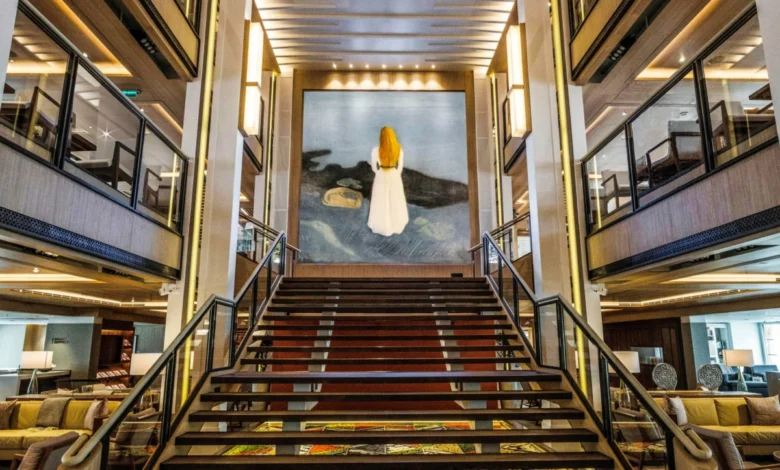
The interior narrative of Viking’s ships extends far beyond visual minimalism, deeply embedding regional culture, history, and craft into the passenger experience. Cultural references are woven explicitly into the onboard art collections and material selections. Original works by renowned Norwegian painter Edvard Munch anchor major circulation spaces, such as the atrium stairwells, providing an immediate cultural touchstone.
Textile and material selections similarly pay homage to Nordic traditions. Staterooms feature blankets utilizing classic Norwegian geometric knitting patterns, such as the traditional Marius design, while dining spaces incorporate translucent aqua glassware inspired by Finnish design icon Alvar Aalto. Additional textile contributions by Dutch designer Hella Jongerius further elevate the material culture of the vessels.

To reinforce the theme of exploration—a nod to the inquisitive nature of Viking passengers—public spaces integrate carefully curated collections of maritime artifacts, vintage maps, globes, and deep blue built-in bookcases displaying shells, coral, and historical literature. These elements successfully merge the comfort of a residential home library with the adventurous spirit of global discovery.
Mastering Acoustics and Concealing Technology

Achieving a true sense of hygge—the Danish and Norwegian concept of comfort, coziness, and well-being—requires meticulous attention to non-visual sensory inputs, particularly acoustics and technology integration. On a large passenger vessel, engine vibration, machinery hum, and foot traffic generate significant ambient noise that can easily disrupt a tranquil environment.
To counteract this, Rottet Studio implemented rigorous acoustic engineering strategies throughout the fleet. Sound-absorbing textile wall panels, acoustic carpet underlays, and heavily upholstered surfaces are strategically deployed to dampen ambient noise in public lounges and staterooms. Simultaneously, modern technology is discreetly concealed within custom wood joinery and architectural details. Underfloor heating in stateroom bathrooms, integrated climate control systems, and subtle lighting panels operate silently in the background, ensuring that functional infrastructure never compromises the calming atmosphere of the space.

Addressing Scale through the Cocoon Principle
Designing intimate, residential spaces inside expansive multi-level vessels presents a formidable spatial paradox. Public hubs, such as grand atriums and sprawling dining rooms, inherently possess vast volumes that can feel sterile or overwhelming if improperly proportioned.

To resolve this architectural hurdle, Rottet Studio implemented what designers refer to as the "cocoon principle" or the "house-within-a-house" concept. This spatial strategy breaks down massive public areas into smaller, human-scale zones by utilizing clever furniture groupings, semi-private seating nooks, and slatted wooden dividers. By carefully orchestrating how guests move through and inhabit these spaces, the design ensures that passengers can seamlessly transition from lively social hubs to quiet, reflective corners without feeling exposed or overwhelmed by the scale of the ship.
Broader Implications for the Hospitality and Cruise Industry

The widespread critical acclaim and commercial success of Viking’s Scandinavian-inspired fleet signal a broader structural evolution within the travel and hospitality sectors. As travelers increasingly prioritize mental well-being, sustainability, and authentic cultural engagement over overt displays of wealth and high-octane entertainment, designers of large-scale passenger transport are forced to adapt.
The strategy pioneered by Viking and Rottet Studio demonstrates that luxury no longer requires ornamentation, heavy gilding, or visual excess. By proving that minimalist, biophilic, and craft-driven principles can be successfully scaled to a maritime environment, the project has established a new benchmark for contemporary passenger ship architecture. As other cruise lines and hospitality brands observe these shifting consumer preferences, the future of global travel design is likely to see a permanent pivot toward spaces that champion calm, restraint, and a profound, respectful connection to the natural world.