Sharmistha Ray Transforms Pittsburgh Pickleball Courts into Immersive Geometric Public Art Installation at New Arts Landing Civic Space

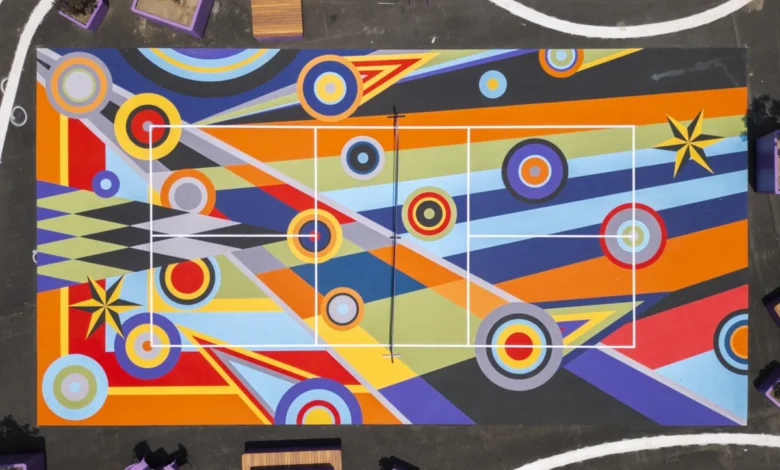
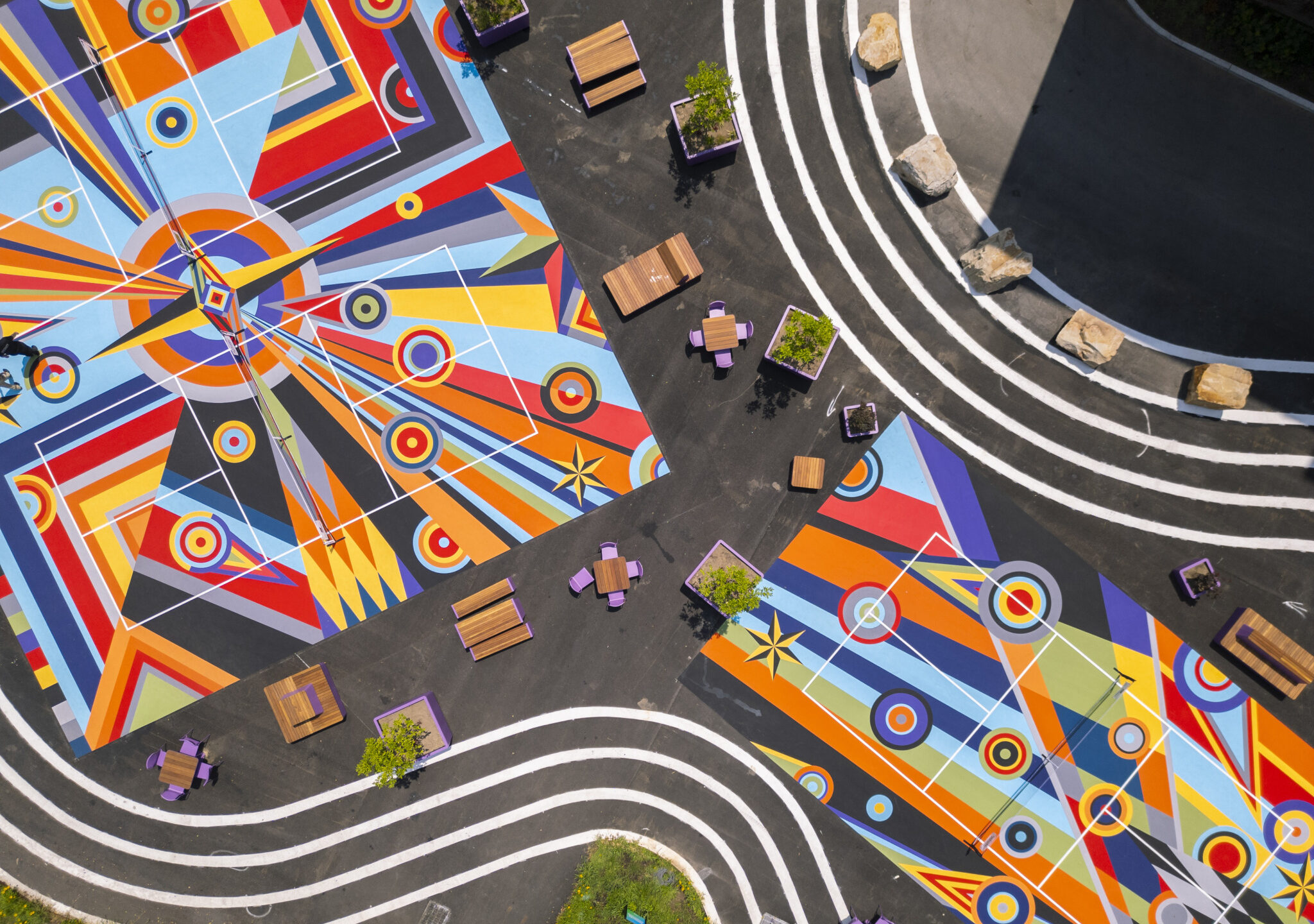
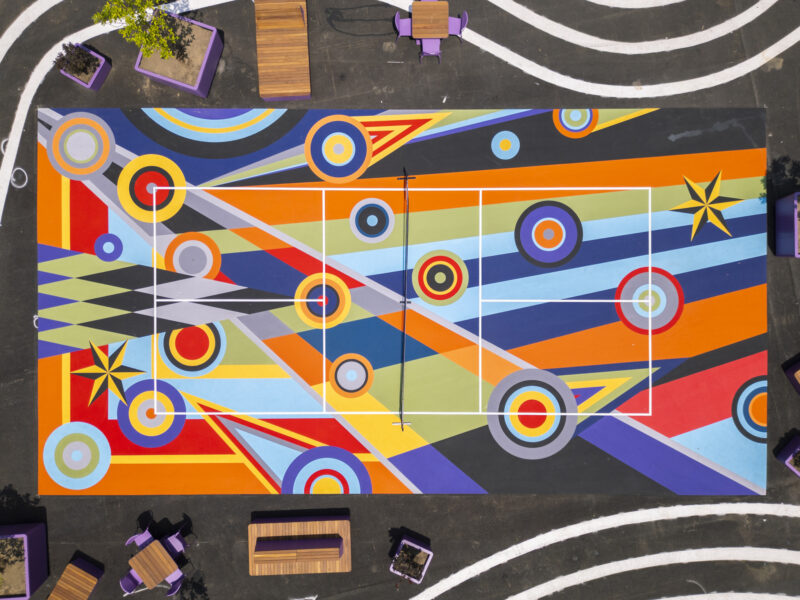
The intersection of athletic recreation and contemporary art has reached a new milestone in Pittsburgh’s Cultural District with the unveiling of Geometry of Play, a site-specific installation by artist Sharmistha Ray. Commissioned by the Pittsburgh Cultural Trust as part of the ambitious $31 million Arts Landing development, the project reimagines a pair of standard pickleball courts as a vibrant, multi-layered geometric mural. Unlike traditional public art intended for passive observation, this installation is a functional, playable surface that invites the community to step directly into the composition, effectively turning every match into a kinetic performance.
The project represents a significant evolution in the city’s approach to urban design and public engagement. Located at the newly established Arts Landing, the courts serve as a centerpiece for a broader civic revitalization effort. By integrating high-concept abstraction with the fastest-growing sport in the United States, the Pittsburgh Cultural Trust and Sharmistha Ray have created a "social sculpture" that bridges the gap between the elite world of fine art and the accessible realm of community sports.
Artistic Vision and the Logic of Play
The conceptual framework of Geometry of Play is rooted in the historical and visual logic of board games. Ray, an interdisciplinary artist known for exploring themes of identity and belonging through geometric abstraction, drew significant inspiration from the Indian game Pachisi. Dating back to the 4th century and later adapted into the Western game Parcheesi, Pachisi’s cross-and-circle design provides a structural foundation for the mural.
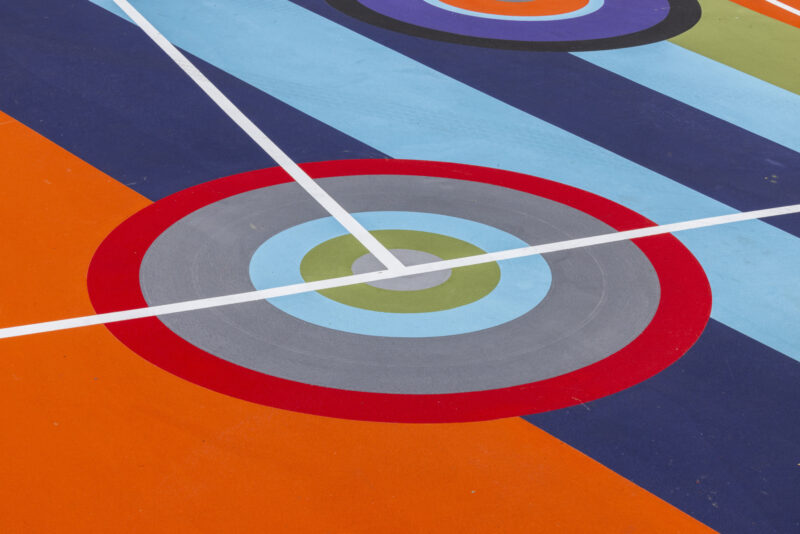
The mural features an intricate layering of interlocking circles, triangles, grids, and pathways. These shapes are not merely decorative; they are strategically placed to interact with the white boundary lines of the pickleball courts. The result is a kaleidoscopic composition that utilizes the full ROYGBIV (Red, Orange, Yellow, Green, Blue, Indigo, Violet) color spectrum. This rainbow palette serves a dual purpose: it acts as a universal symbol of inclusion and diversity, and it creates a shifting visual relationship for the players. As participants move across the court, the perspective of the shapes and the vibrancy of the colors change, mirroring the dynamic and unpredictable nature of the game itself.
Ray’s work suggests that play is a fundamental human language that transcends cultural and social boundaries. By utilizing the geometry of ancient games, the artist connects the modern urban resident to a long lineage of human interaction and strategic competition. The "geometry" in the title refers not just to the shapes on the ground, but to the social geometry formed by the players as they navigate the space.
The Evolution of Arts Landing and the Cultural District
The debut of Geometry of Play is a key component of the Arts Landing project, a transformative development situated along the Allegheny River. Designed by the world-renowned landscape architecture firm Field Operations—the same firm responsible for New York City’s High Line—Arts Landing is intended to be a premier gathering space that merges performance, recreation, and ecological restoration.
The $31 million development is the result of years of planning by the Pittsburgh Cultural Trust. The Trust, which has spent four decades converting a formerly blighted downtown area into a thriving arts corridor, envisions Arts Landing as the final "link" connecting the Cultural District to the city’s waterfront. The project includes not only the artist-designed pickleball courts but also seven other major public art commissions.
These inaugural installations feature a diverse roster of contemporary artists, including Vanessa German, Thaddeus Mosley, Shikeith, Mikael Owunna and Marques Redd, Lenka Clayton and Phillip Andrew Lewis, Darian Johnson, and John Peña. By placing Ray’s pickleball courts alongside works by these prestigious figures, the Trust is making a clear statement about the validity of functional art. The installations are scheduled to remain on view for at least one year, providing a rotating gallery experience that evolves with the seasons.
Supporting Data: The Pickleball Phenomenon and Urban Placemaking
The decision to feature pickleball courts as a canvas for public art is backed by significant demographic trends. According to the Sports & Fitness Industry Association (SFIA), pickleball has been the fastest-growing sport in America for three consecutive years, with participation increasing by nearly 160% since 2020. As of 2023, an estimated 36.5 million people have played the sport, which is lauded for its accessibility to all age groups and its inherently social nature.
In urban planning, this project falls under the category of "creative placemaking." Data from the American Planning Association suggests that integrating art into public infrastructure can increase property values, improve mental health outcomes for residents, and foster a stronger sense of community identity. By transforming a utilitarian sports surface into a destination-worthy artwork, Pittsburgh is positioning itself at the forefront of this movement.
The inclusion of the ROYGBIV spectrum also aligns with broader civic goals regarding inclusivity. In a city that has worked hard to reinvent its image from an industrial hub to a diverse tech and cultural center, the rainbow motifs in Geometry of Play serve as a permanent welcome sign to the LGBTQ+ community and other marginalized groups, reinforcing the "public" in public art.
Chronology of the Project
The timeline for Geometry of Play reflects the meticulous nature of high-stakes public art commissions:
- Late 2023: The Pittsburgh Cultural Trust announces the finalization of the Arts Landing master plan, appointing Field Operations as the lead landscape architects.
- Early 2024: A call for artists is issued for several site-specific commissions. Sharmistha Ray is selected based on their history of large-scale geometric installations and their ability to weave cultural narratives into abstract forms.
- Spring 2024: Ray begins the design phase, researching the history of game boards and coordinating with court surfacing experts to ensure the mural’s durability and slip-resistance.
- May 2025: Construction of the Arts Landing physical site reaches completion, and the surface preparation for the pickleball courts begins.
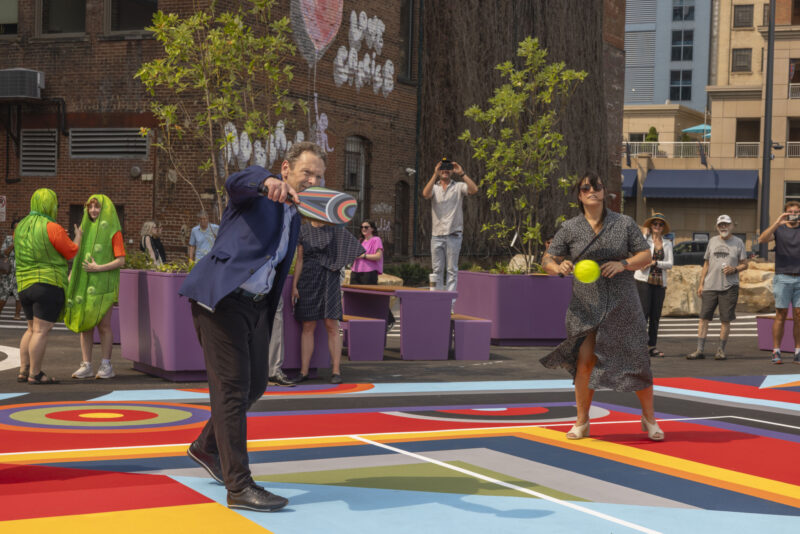
- June 2026: The official unveiling of Arts Landing takes place. Geometry of Play is inaugurated with a public event featuring exhibition matches, where the community is invited to play on the artwork for the first time.
- Present: The courts are open daily from 7 a.m. to 10 p.m., integrated into the city’s recreational schedule.
About the Artist: Sharmistha Ray
Sharmistha Ray’s contribution to Arts Landing is a continuation of an interdisciplinary practice that has gained significant international attention. Born in Kolkata, India, and raised in Kuwait, Ray eventually moved to the United States, bringing a unique transnational perspective to their work. This background is evident in the way Ray blends South Asian visual traditions—such as the aforementioned Pachisi—with the Western tradition of hard-edge abstraction.
Ray’s portfolio includes several high-profile projects that explore the concept of "future-making." Their recent installation at Grand Central Terminal, titled Hilma’s Ghost, and a commission for the new terminal at Pittsburgh International Airport, demonstrate a mastery of scale and a commitment to transforming transit hubs into contemplative spaces. Ray has also ventured into digital and auditory realms, collaborating with Grammy Award-winning musician Arooj Aftab to create animated works set to original scores.
In Geometry of Play, Ray applies this expansive methodology to a horizontal plane. The artist’s focus on "identity and belonging" is manifested in the way the mural invites people of different backgrounds to share a common space and engage in a common activity.
Official Responses and Community Impact
While official statements from the Pittsburgh Cultural Trust emphasize the project’s role in urban revitalization, the response from the local community has focused on the "joy" of the space. Early visitors to the unveiling noted that the vibrant colors of the court made the sport feel more festive and less like a standard workout.
"The goal of Arts Landing was always to lower the barriers to entry for the arts," a representative for the Pittsburgh Cultural Trust noted during the opening ceremony. "By putting world-class art on a pickleball court, we are telling the public that art is not something you just look at in a museum; it is something you can live on, play on, and own as a community."
Reactions from the local athletic community have also been positive. Local pickleball enthusiasts have praised the Trust for providing high-quality courts in the downtown core, noting that the artistic element adds a "destination" quality to their weekly games. For many, the courts have become a "third space"—a place outside of home and work where social bonds are forged.
Analysis of Implications: Art as Infrastructure
The success of Geometry of Play offers a blueprint for other cities looking to modernize their public spaces. It challenges the notion that public art must be a statue or a wall mural. Instead, it suggests that every piece of urban infrastructure—from bike lanes to sports courts—is an opportunity for aesthetic and cultural expression.
Furthermore, the project highlights the economic viability of the arts. The $31 million investment in Arts Landing is expected to drive tourism and support local businesses in the Cultural District. By creating a unique, "Instagrammable" landmark, Pittsburgh is leveraging the power of visual culture to enhance its brand as a hub for innovation and creativity.
As the inaugural commissions remain on view through the next year, the city will monitor the wear and tear on the surface, providing valuable data for future "playable art" projects. For now, Geometry of Play stands as a testament to the power of color, the history of human competition, and the enduring importance of public spaces that encourage us to stop, look, and play.
Arts Landing is free and open to the public daily from 7 a.m. to 10 p.m. Visitors are encouraged to bring their own paddles and balls to experience the artwork in its intended active state.