Yinka Ilori’s New Book Chairman Celebrates a Decade of Playful Furniture Design, Bold Color, and Storytelling

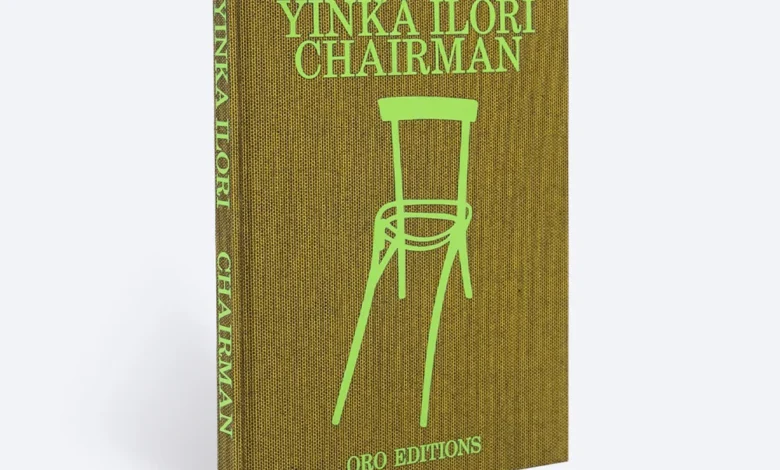
The contemporary design landscape is frequently dominated by restraint, monochromatic palettes, and a strict adherence to minimalism. Against this backdrop of muted grays and neutral tones, British-Nigerian designer and artist Yinka Ilori has carved out a vibrant niche as an unapologetic champion of color, imagination, and unbridled playfulness. Often celebrated in the global design community as an "architect of joy," Ilori has spent more than a decade transforming the mundane into the extraordinary. His distinctive philosophy—which merges traditional Nigerian storytelling with contemporary British design—now takes center stage in a comprehensive new monograph titled Chairman. Published by ORO Editions, the book offers an extensive visual and narrative deep dive into Ilori’s furniture practice, capturing a decade of work that challenges the conventions of how everyday functional objects are perceived, constructed, and valued.
Main Facts and the Release of Chairman
Chairman serves as the definitive retrospective of Ilori’s furniture design career, documenting the evolution of a practice that began on the streets and in the charity shops of London. The hardcover publication, featuring a textured brown cover embossed with the vibrant green outline of a chair, chronicles more than ten years of creative exploration. Within its pages, readers are introduced to a world where colorblocking, high-gloss lacquers, contrasting hues, and whimsical architectural details reign supreme.
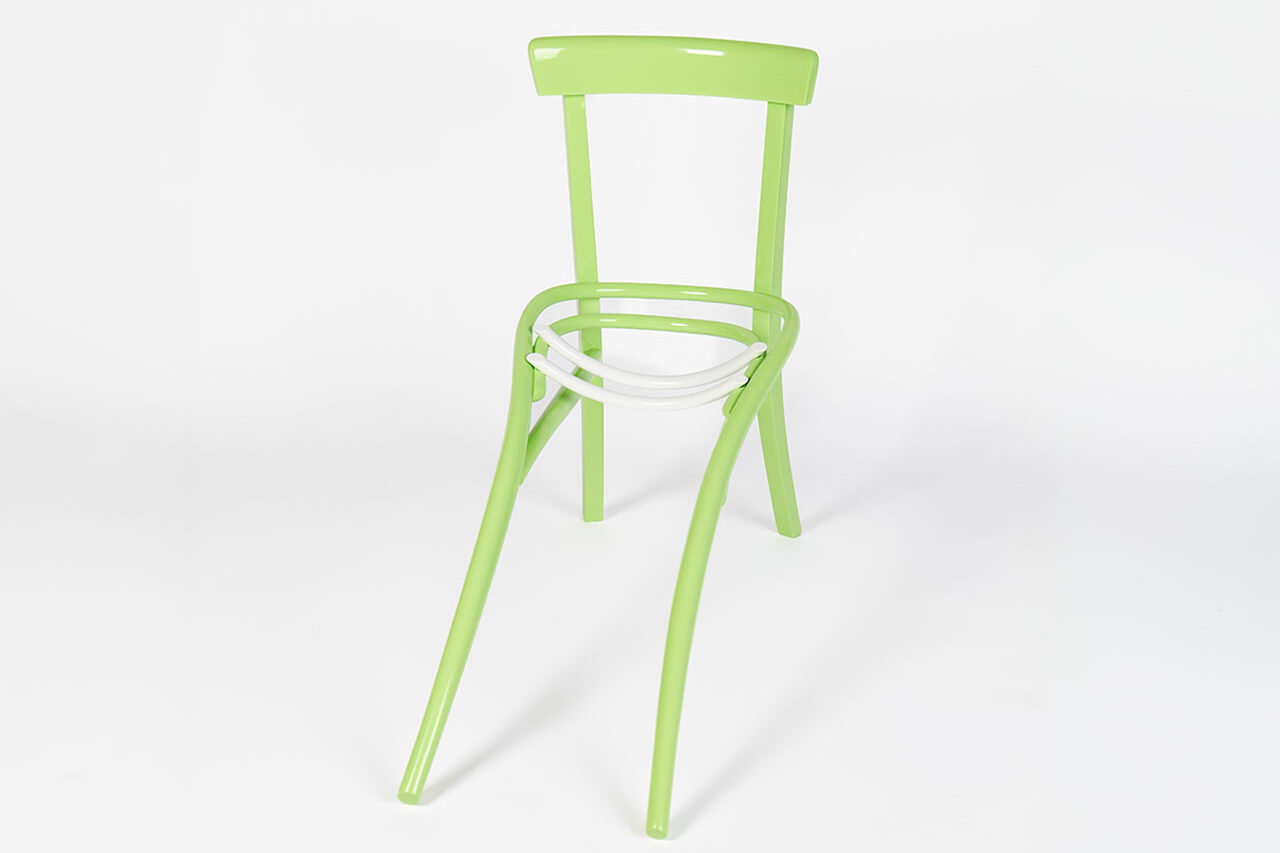
At the heart of the book are the vintage chairs that Ilori meticulously sourced from various London charity shops and second-hand markets. Rather than approaching these pre-owned items as mere blank canvases awaiting a modern update, the designer viewed them as historical artifacts laden with pre-existing narratives. By integrating vibrant textiles, intricate geometric patterns, and unexpected structural modifications—such as attached candles, artificial succulents, or dangling clothes hangers—Ilori breathes new life into discarded objects, turning them into expressive sculptural portraits.
Chronology and the Evolution of Ilori’s Practice
To fully understand the significance of Chairman, one must examine the chronological trajectory of Yinka Ilori’s career, which transitioned from localized upcycling projects to large-scale international architectural and public art installations.
Growing up between London and Nigeria, Ilori was deeply influenced by the rich storytelling traditions, vibrant textiles, and bustling communal atmospheres of his Nigerian heritage. These cultural touchstones laid the foundation for his creative sensibilities long before he formally entered the design industry.

In the early 2010s, Ilori began his journey as a furniture designer by rescuing discarded chairs from London charity shops. During this foundational period, he focused heavily on the anthropomorphic qualities of furniture, treating each battered wooden seat as an individual character with a unique personal history. This phase of his career was defined by intimate, hands-on craftsmanship, where upcycling served as both an environmental statement and a narrative vehicle.
As the decade progressed, Ilori’s distinct aesthetic caught the attention of curators, cultural institutions, and global brands. By the mid-2010s, his portfolio expanded beyond singular chairs into comprehensive interior installations, exhibitions, and public art projects across the United Kingdom. His breakthrough moments included vibrant public basketball court transformations and large-scale architectural pavilions that similarly prioritized color, community engagement, and play. The release of Chairman by ORO Editions synthesizes this decade-long evolution, bridging his early intimate furniture interventions with his contemporary status as a globally recognized multi-disciplinary designer.
Supporting Data and the Psychology of Play in Design
The release of Chairman arrives at a time when psychologists, urban planners, and designers are increasingly examining the psychological toll of urban grayness and the necessity of play for adult well-being. According to environmental psychology research, built environments dominated by monochromatic color schemes can contribute to feelings of fatigue, isolation, and sensory deprivation. Conversely, studies indicate that saturated colors, biophilic elements, and whimsical design interventions can significantly boost mood, reduce stress, and foster a sense of community belonging.

Ilori’s work directly addresses these spatial and psychological deficits. In contemporary interior architecture, decorative elements and complex patterning are frequently deployed with extreme caution to avoid visual clutter. Ilori subverts this standard by letting his color combinations sound off with maximum intensity. By applying these bold choices to something as ubiquitous and functional as a chair—an object found in every household, office, and public institution—he forces an encounter with the unexpected. Statistics from the global design sector indicate a rising consumer appetite for expressive, personality-driven interiors, moving away from the sterile minimalism that dominated the 2010s. Ilori’s monograph arrives as a manifesto for this broader cultural shift toward emotional resonance in design.
Statements and Critical Reception
While individual commentary from institutional reviews and design critics highlights the disruptive nature of Ilori’s portfolio, the designer himself has frequently articulated the deep personal connections that drive his work. Reflecting on his extensive collection of transformed vintage seating, Ilori has noted the profound empathy that guides his upcycling process.
"For me, those chairs felt like people with stories," Ilori stated regarding the vintage pieces documented in Chairman. "I became genuinely attached to them because it was so personal and so meaningful." This sentiment underscores a central paradox of his practice: while the visual output is undeniably loud, humorous, and celebratory, the conceptual genesis is rooted in care, preservation, and historical respect.

Design critics and architectural historians have similarly praised Ilori’s ability to democratize art and design. By taking ordinary objects—chairs that might otherwise have been consigned to landfills—and elevating them into high-concept artistic statements, he challenges elitist boundaries within the design world. Reviewers of Chairman have emphasized that the book captures not just a catalog of objects, but a philosophy of optimism. In an era often characterized by socio-political uncertainty and environmental anxiety, Ilori’s work offers a tangible antidote: a reminder that imagination and silliness are vital tools for human resilience.
Broader Impact and Industry Implications
The publication of Chairman by ORO Editions marks a significant milestone not only for Yinka Ilori as an individual creator, but for the broader trajectory of contemporary design discourse. As cities become denser and interiors more standardized, the demand for human-centric, emotionally resonant spaces has never been higher.
Ilori’s success demonstrates that commercial viability and deep cultural storytelling are not mutually exclusive. His collaborations with major global brands, alongside his public art installations and community-focused architecture, prove that audiences are hungry for spaces that invite interaction rather than passive observation. By challenging adults to embrace play—to sit in a chair that might feature a built-in candle, an artificial plant, or mismatched neon legs—Ilori questions the rigid functionalism that has governed industrial design since the mid-20th century.

Furthermore, Chairman highlights the vital role of upcycling and sustainable thinking in modern luxury and collectible design. By demonstrating that historical materials can be radically reinterpreted without losing their intrinsic narrative value, Ilori offers a blueprint for sustainable creativity that avoids the sterile aesthetic often associated with eco-design.
Ultimately, Chairman is much more than a retrospective monograph of a prominent designer’s furniture portfolio. It is a visual and intellectual challenge to the design establishment, urging creators and consumers alike to strip away their fear of color, abandon the constraints of strict minimalism, and rediscover the transformative power of joy. As Chairman makes its way into bookstores and libraries worldwide through ORO Editions, Yinka Ilori’s vibrant vision is permanently inscribed into the annals of modern design history, ensuring that the conversation around play, color, and storytelling will continue to shape the spaces we inhabit for decades to come.
Related posts: