Sophisticated Restraint and European Elegance Define the New Charles & Julia Lounge at New Orleans Hotel Perle

The hospitality landscape of New Orleans has long been defined by a "more is more" aesthetic, characterized by the vibrant neon of Bourbon Street, the ornate wrought iron of the French Quarter, and a design palette often saturated with the traditional purple, green, and gold of Mardi Gras. However, a new arrival on St. Charles Avenue is challenging these established visual cues. Charles & Julia, a sophisticated cocktail lounge and rooftop destination located within the recently debuted Hotel Perle, represents a significant departure from local design tropes. Orchestrated by the design firm Anna Nicole Interiors, the project prioritizes a "residential-first" philosophy, transforming a historic industrial shell into a series of intimate, European-inspired environments that favor layered textures and quiet sophistication over overt cultural iconography.
A Century of Architecture: From Motorcars to Mixology
The foundation of Charles & Julia is rooted in the industrial history of the American South. The venue occupies the ground floor and rooftop of a structure built in 1916, which originally served as a dealership for the Stutz Motorcar Company. During the early 20th century, Stutz was a premier American manufacturer of high-end sports cars and luxury sedans, most notably the Stutz Bearcat. The building’s architecture—defined by soaring ceilings, expansive floor-to-ceiling windows, and rugged exposed brick—reflects the functional grandeur of the automotive era.
The transition of this space into a hospitality venue required a delicate balancing act. The design team was tasked with preserving the character of the 1916 shell while mitigating the coldness often associated with industrial architecture. Spanning approximately 3,000 square feet on the ground level alone, the lounge presented a spatial challenge: how to make a cavernous room feel private and inviting without the use of permanent partitions that would obscure the building’s original proportions.
To achieve this, Anna Nicole Interiors utilized "residential strategies" typically reserved for private estates. The floor plan was organized into a sequence of "smaller moments" through the strategic placement of vintage rugs, generous drapery, and conversational seating groupings. This approach allows guests to feel cocooned within a large space, fostering the intimacy of a private parlor rather than the anonymity of a standard hotel lobby bar.
The Ground Floor: A Collected European Aesthetic
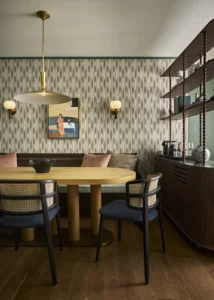
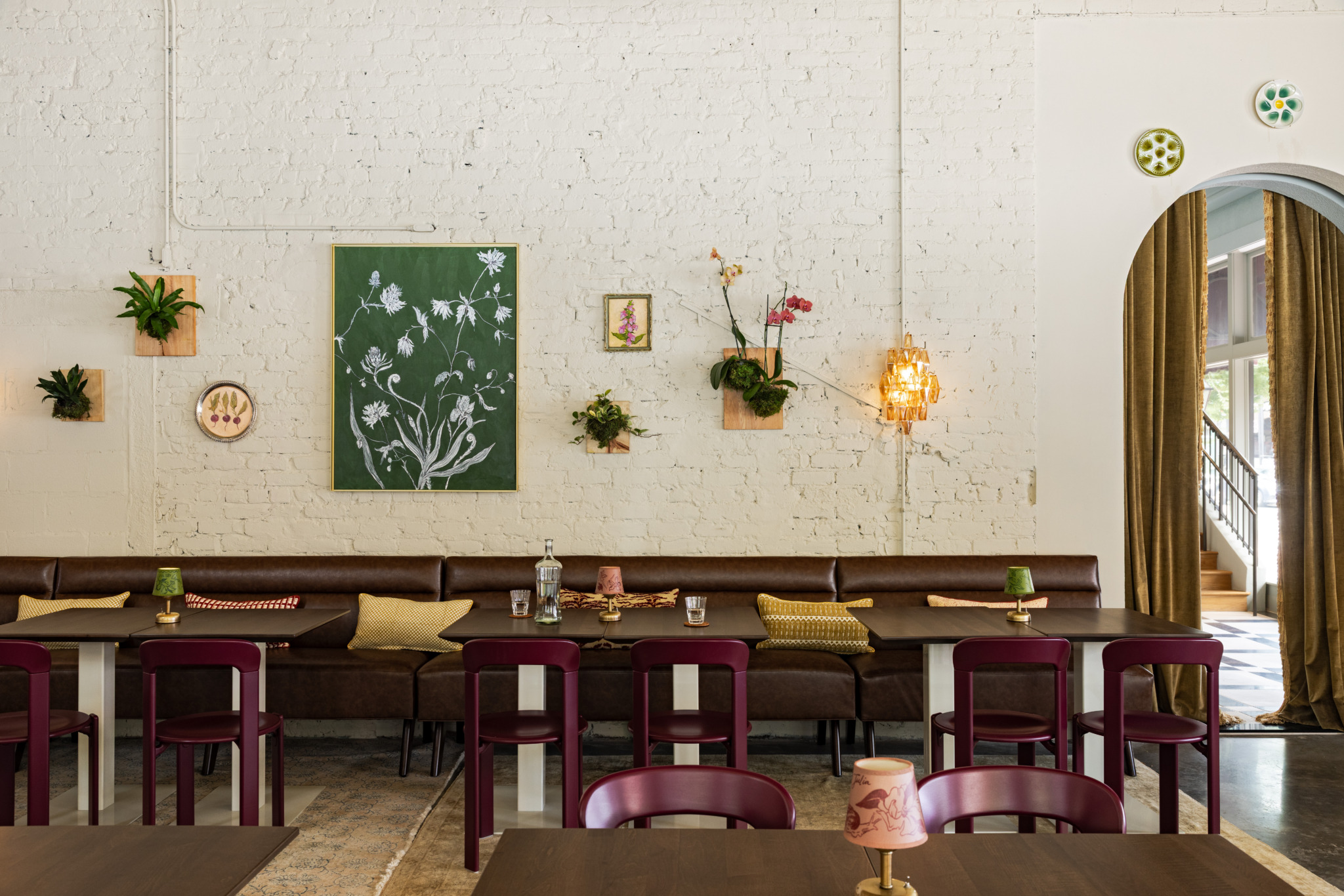
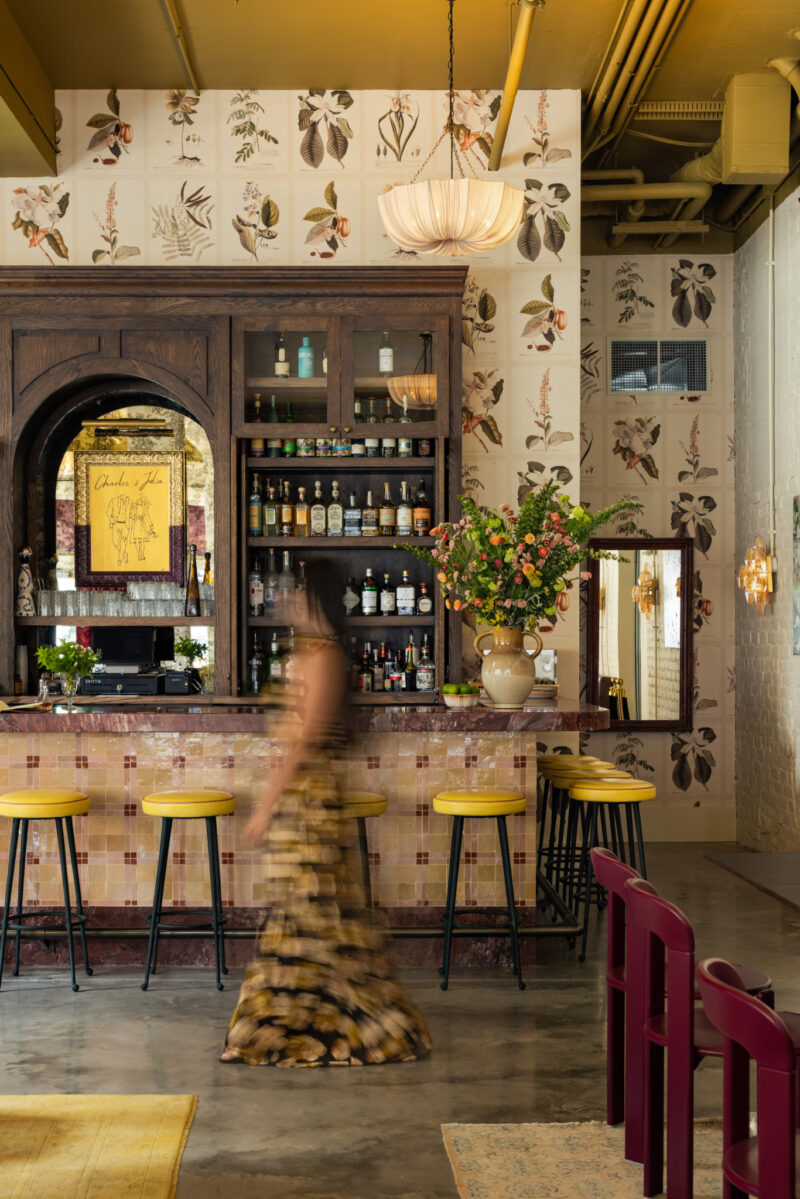
The ground-floor lounge at Charles & Julia is designed to feel "collected rather than decorated," a distinction that implies a sense of history and evolution over time. The material palette is heavy and rich, grounding the airy volume of the room. Oxblood velvet drapery frames the street-facing windows, providing both acoustic dampening and a sense of theatricality.
The furniture selection blends mid-century modernism with antique European finds. Notable pieces include grape-toned chairs designed by Bruno Rey—the Swiss designer known for his 1971 "Rey Chair" which utilized a unique screwless wood-to-metal connection. These sit alongside layered kilim rugs and vintage furnishings that suggest a space furnished by a well-traveled collector.
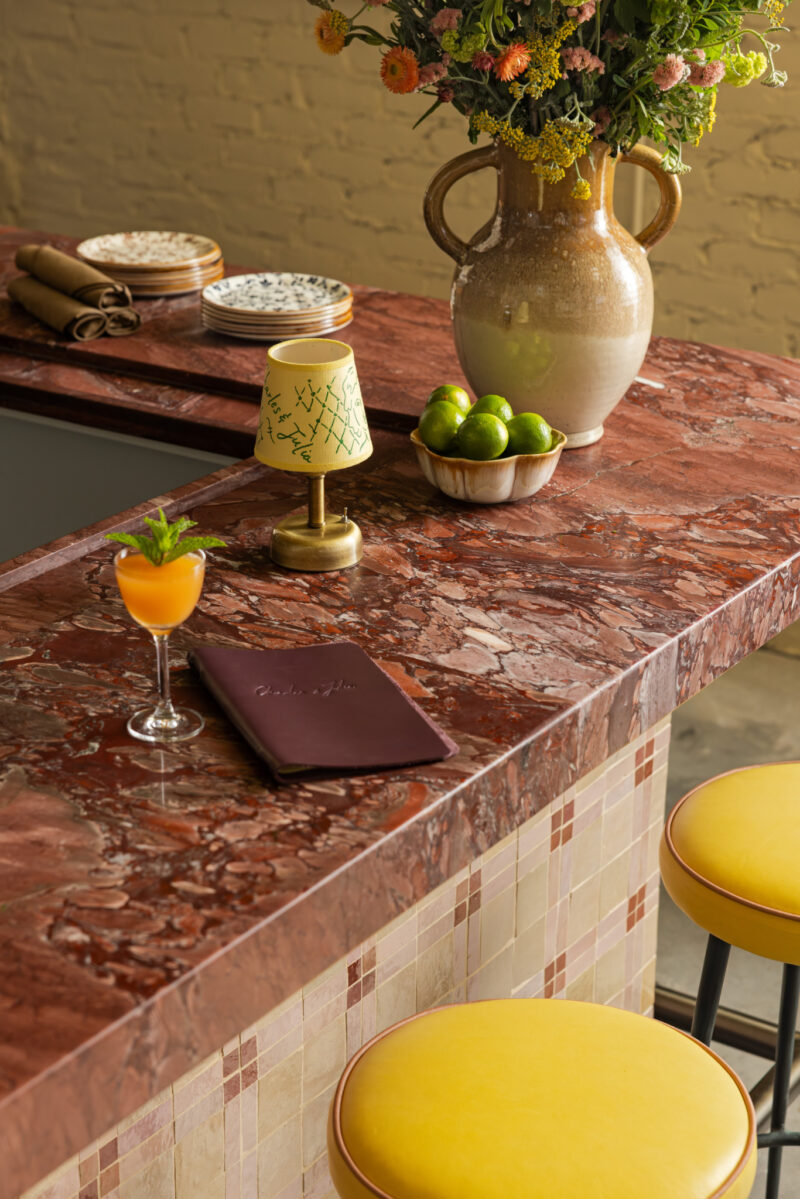
Central to the room is a custom-stained oak back bar, which serves as a visual anchor. This is complemented by a dramatic bar counter crafted from Calacatta Viola marble. Fabricated locally, the marble features deep purple veining that echoes the room’s color story. To soften the transition between the hard surfaces of stone and brick, the designers introduced botanical wallpaper inspired by George Ehret’s 1773 Plantae Selectae. Ehret, one of the most influential botanical artists of the 18th century, was known for his scientific accuracy and aesthetic grace; his work adds a layer of intellectual and visual texture that aligns with the lounge’s sophisticated atmosphere.
The Narrative of Charles & Julia
The venue’s name and aesthetic are loosely tied to a fictional narrative—a romance between the eponymous Charles and Julia. Their imagined journey through the capitals of Europe informs the layered, "lived-in" aesthetic of the interiors. Rather than presenting this story through literal memorabilia or themed décor, the design team opted to let the narrative unfold through materiality.
The ground floor represents the more formal, interior-focused portion of their journey—heavy on wood, stone, and velvet. In contrast, the rooftop terrace represents the Mediterranean portion of their travels. This narrative approach allows for a cohesive design language that spans two very different environments while maintaining a sense of mystery and discovery for the guests.
The Rooftop: A Sicilian Counterpoint
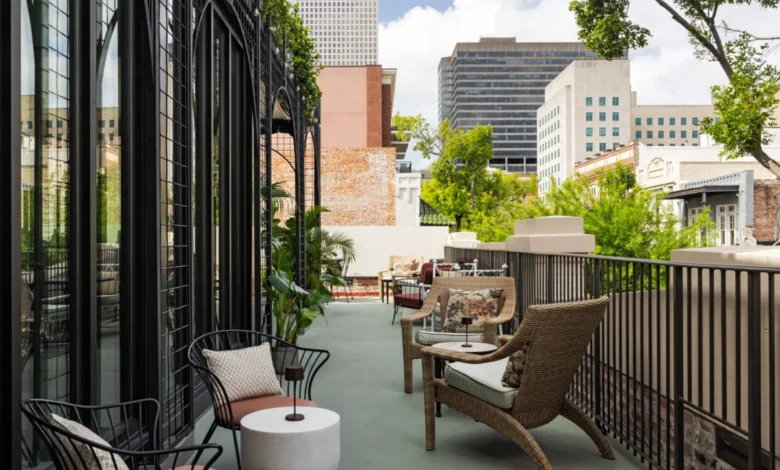
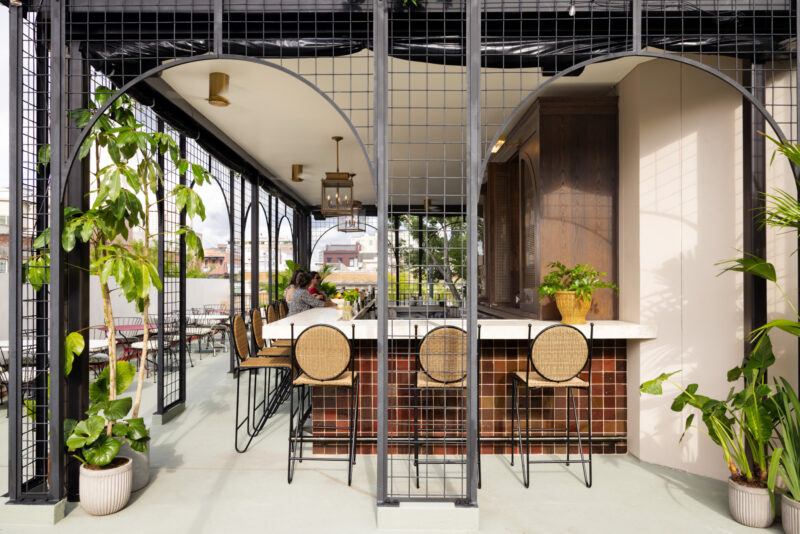
While the ground floor is enveloping and moody, the rooftop terrace at Hotel Perle offers a stark, refreshing contrast. Inspired by the coastal aesthetics of Sicily and Southern Europe, the outdoor space is designed to feel like an elevated garden.
The rooftop utilizes sculptural iron furnishings and woven textures to create a lighter, more relaxed atmosphere. Lush greenery is integrated throughout the space, acting as a natural screen against the urban backdrop of downtown New Orleans. From this vantage point, the city’s skyline serves as a panoramic wallpaper, grounding the European design in its Louisiana context. The rooftop functions as the lounge’s "daylight" counterpart, providing a breezy, open-air experience that complements the intimate, nocturnal feel of the downstairs bar.
Redefining the New Orleans Palette
One of the most nuanced aspects of the Charles & Julia project is its handling of local color. The design team intentionally avoided the "Mardi Gras palette" in its literal form. Instead, they utilized a restrained, muted version of the city’s signature colors.
- Muted Chartreuse: A sophisticated nod to the traditional green.
- Aubergine and Oxblood: Deep, wine-inspired takes on the traditional purple.
- Warm Gold: Used in lighting and hardware to provide a glow that avoids the flashiness of bright yellow.
By shifting the saturation and tone, the designers created a palette that feels timeless and globally relevant while remaining quietly connected to the New Orleans spirit. This subtle approach reflects a broader trend in high-end hospitality where "place-making" is achieved through mood and material rather than clichés.
Local Craftsmanship and Community Integration
A critical component of the project’s success is its reliance on local artisans and makers. This collaboration ensures that despite the European inspiration, the project remains a product of New Orleans craftsmanship.
The interior is punctuated by bespoke elements, including:
- Hand-painted lampshades: Created by Rachel Loyacono, adding a layer of artisanal detail to the lighting.
- Original Artwork: Pieces by local artists Tracy Mose, Jenn Leverett, and Casey Langteau are integrated into the lounge, ensuring the walls reflect the city’s contemporary art scene.
- Botanical Installations: Curated by Luna Botanicals, the greenery throughout the space bridges the gap between the industrial architecture and the organic themes of the wallpaper.
- Custom Fabrications: The Calacatta Viola marble and custom upholstery were handled by local workshops, reinforcing the project’s commitment to the regional economy.
Chronology and Development Timeline
The transformation of 757 St. Charles Avenue has been a multi-year endeavor:
- 1916: Construction of the original Stutz motorcar dealership, a symbol of the "Automobile Row" that once defined parts of St. Charles Avenue.
- 20th Century: The building served various commercial purposes as the automotive industry shifted away from city centers.
- 2023-2024: Extensive renovations began to convert the historic structure into Hotel Perle, a boutique hospitality concept.
- 2024 (Current): The official opening of Charles & Julia, marking the completion of the building’s public-facing social spaces.
Analysis of Implications: The Rise of "Quiet Luxury" in NOLA
The opening of Charles & Julia signifies a shift in the New Orleans hospitality market. For decades, the city’s tourism was driven by high-energy, high-volume experiences. However, a growing demographic of "experience-led" travelers is seeking something different: "quiet luxury." This trend prioritizes authenticity, historical preservation, and high-quality materials over spectacular, themed environments.
By choosing a "quiet approach," Anna Nicole Interiors and Hotel Perle are positioning themselves to capture a market that values the city’s history but seeks a contemporary way to experience it. This project suggests that New Orleans can be elegant, restrained, and European in its sensibilities without losing its unique soul. It sets a new benchmark for adaptive reuse in the city, proving that industrial heritage can be successfully married to high-end residential design.
Conclusion
Charles & Julia is more than just a new bar; it is a case study in the power of restraint. By looking toward the residential traditions of Europe and the industrial history of New Orleans, Anna Nicole Interiors has created a space that feels both familiar and entirely new. Through the use of rich materials, local craftsmanship, and a narrative-driven design, the venue offers a sophisticated alternative for those looking to experience the Crescent City through a more refined lens. Located at 757 St. Charles Avenue, it stands as a testament to the idea that the most resonant designs are often the ones that speak in a whisper rather than a shout.