The Shifting Sands of Sneaker Culture: Established Giants Face Headwinds as Challenger Brands Leverage Social Media in a Contracting Market

The global sneaker market is undergoing a significant transformation, with sales experiencing a notable downturn in 2025 and projections indicating further deterioration through 2026. This contraction challenges the long-held growth trajectory of an industry once characterized by relentless expansion and hype. However, amid this challenging landscape, a cohort of challenger brands is demonstrating remarkable agility and strategic prowess, capitalizing on the potent influence of social media to dramatically increase their brand visibility and market presence. This bifurcation highlights a crucial shift in consumer preferences and marketing effectiveness, forcing established titans to re-evaluate their strategies in an increasingly competitive and digitally-driven environment.
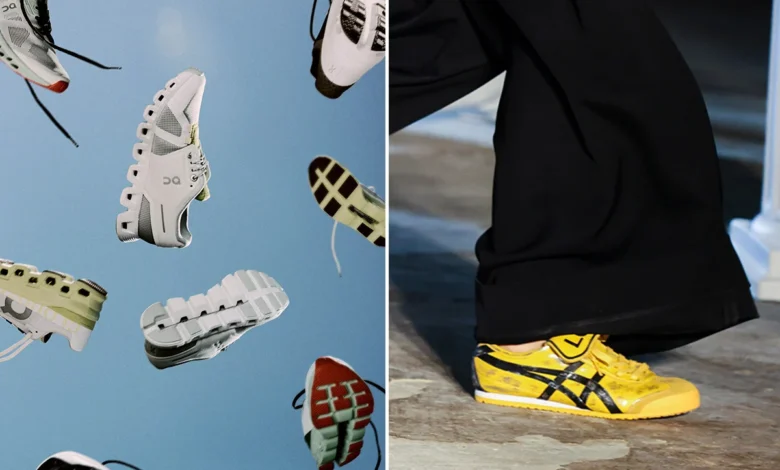
Heuritech, a prominent trend forecasting firm leveraging sophisticated AI-powered technology, has provided granular insights into these evolving dynamics. Their analysis for 2025 revealed that while the overall market contracted, several brands achieved exceptional gains in social media visibility. Mizuno led this charge, posting an impressive 30 percent average increase in visibility throughout 2025. Following closely was On, which saw an average growth of 21 percent, and Onitsuka Tiger secured the third spot with a robust 19 percent average growth. These figures underscore a clear trend: brands that effectively harness digital platforms, particularly social media, are uniquely positioned to capture mindshare even when the broader market is in decline. The ability of these brands to resonate with consumers online suggests a deeper understanding of contemporary engagement strategies, moving beyond traditional advertising to foster authentic connections and community.
The Landscape of Decline and Digital Ascent
The projected downturn in sneaker sales is not merely a transient blip but indicative of deeper market forces. For the fourth quarter of 2025, Heuritech forecasts a 5 percent decline in the European market and a 3 percent drop in the U.S. market, signifying a widespread cooling of consumer demand. This anticipated slump comes after years of unprecedented growth fueled by athleisure trends, celebrity endorsements, and a vibrant resale market. Industry analysts suggest that factors such as market saturation, evolving fashion sensibilities away from overt athleticwear, economic uncertainties impacting discretionary spending, and a general fatigue with the "hype" cycle have contributed to this deceleration. Consumers are increasingly seeking value, versatility, and authenticity, rather than simply chasing the latest limited-edition drop.
Despite this broader contraction, the success of brands like Mizuno, On, and Onitsuka Tiger points to a strategic blueprint for growth. Their digital visibility gains were particularly pronounced within the women’s market, a segment often seen as a bellwether for fashion trends. In this crucial demographic, Mizuno exhibited consistent strength across all four quarters of 2025, culminating in an astounding 12-month average increase of 44 percent in visibility. Onitsuka Tiger, while starting slower, gained significant momentum in the latter half of the year, ranking second in the fourth quarter with a 28 percent average growth. On secured third place with a 22.5 percent 12-month average. This dominance in the women’s market highlights the effectiveness of their tailored marketing campaigns and product offerings that resonate specifically with female consumers, often emphasizing comfort, style versatility, and performance attributes suitable for a range of activities from daily wear to specialized training.
Established Giants and Their Strategic Crossroads
The market’s re-calibration presents a formidable challenge for the established titans of the sneaker industry. Among the top three brands by market share – Nike, Adidas, and New Balance – only New Balance managed to achieve significant visibility growth, recording a 15 percent increase. Adidas saw a modest 5 percent rise, while Nike, the undisputed global leader, experienced an 8 percent decline in social media visibility. This divergence suggests that market dominance does not automatically translate into digital agility, and the sheer scale of operations can sometimes hinder rapid adaptation to shifting consumer engagement models.
For Nike and Adidas, these figures are a wake-up call. While they remain the top global performers (Nike at No. 1, followed by Adidas and New Balance rounding out the top three globally), their declining or subdued social media visibility indicates a potential erosion of their connection with a digitally native consumer base. This could prompt a strategic pivot towards more authentic, community-driven content, increased collaborations with micro-influencers, and a re-evaluation of their product innovation pipelines to meet evolving demands for sustainability, personalized fit, and functional versatility.
The men’s market presented a different picture, characterized by more subdued visibility trends. Heuritech noted that "no brand showed significant upward momentum" in this segment. Skechers emerged as a relative leader, maintaining the highest and most stable quarter-on-quarter growth of 22 percent in 2025 compared to 2024. On and Mizuno also saw respectable growth of 20 percent and 15 percent, respectively, although these percentages reflected a gradual slowdown over the year. Among the top three market share holders, Adidas grew by 5 percent, New Balance by 3.6 percent, and Nike again faced a decline of 2 percent. This stability in the men’s market, particularly for brands like Skechers known for comfort and accessibility, suggests a more pragmatic, less trend-driven purchasing behavior compared to the women’s segment.
Chronology of a Shifting Market: 2025 Performance and 2026 Forecasts
The year 2025 marked a crucial inflection point. Following years of robust expansion, the sneaker market began to show tangible signs of contraction. The data from Heuritech confirms that the slide began in earnest, with overarching sales figures pointing downwards. Looking ahead, 2026 is projected to continue this downward trajectory, with further declines anticipated across key categories.
- Q4 2025: European market forecasted to fall 5%, U.S. market to decline 3%.
- Overall 2026: Continued "gradual downward trend over the next 12 months."
Despite the overall negative outlook, specific segments are poised for growth, offering a lifeline for brands willing to adapt. The retro trainer category stands out as a significant bright spot, forecasted to grow 7 percent for both genders in 2026. This resurgence of vintage styles, harking back to earlier decades, represents a powerful counter-trend against the backdrop of broader market slowdowns. It speaks to a consumer desire for nostalgia, timeless aesthetics, and often, more durable and versatile footwear that transcends fleeting trends.
Demographic Insights: Who is Buying and Why
Understanding consumer demographics is paramount in a contracting market. Heuritech’s analysis revealed nuanced differences in demand across age groups and genders.
- Women’s Market (EU): Projected to fall 4 percent, representing the steepest drop across all segments.
- Women’s Market (U.S.): Expected to grow incrementally by 0.6 percent, indicating a more resilient, albeit slow, expansion.
- Male Markets (EU & U.S.): Relatively stable, with forecasted declines of 0.5 percent in both regions.
These regional disparities suggest varying economic conditions, cultural influences, and fashion cycles at play. The steeper decline in the EU women’s market could be attributed to a faster shift away from athleisure trends, or perhaps greater economic pressures affecting discretionary fashion spending. Conversely, the marginal growth in the U.S. women’s market might reflect a sustained demand for comfort and versatile footwear, albeit at a slower pace than previous years.
Age demographics also present an intriguing picture. Women’s sneaker demand was slightly more concentrated in the 36 to 45 age range and the 45-plus age group, implying that older demographics are driving a significant portion of the purchasing power. Younger women, often the traditional target for trend-driven sneaker releases, represented a smaller share of the market. This could indicate a saturation among younger consumers, a shift in their spending priorities, or perhaps a greater adoption of alternative footwear styles. Among men, demand was more evenly distributed across age groups, though younger segments (ages 16 to 25 and 26 to 35) played a more significant role than in the female market, aligning with the stereotype of sneaker culture often being male-dominated and youth-centric.
Category-Specific Performance and Hidden Gems
Beyond overall market trends, a closer look at product categories reveals pockets of opportunity and areas of concern.
-
Women’s Market Product Categories (2025 Performance / 2026 Forecast):
- Performance running sneakers: Led the way in 2025 (up 21%), but expected to fall 4% in 2026.
- Lifestyle running sneakers: Posted a 9% gain in 2025, expected to decline 6% in 2026.
- Retro trainers: Grew 12% in 2025, expected to grow another 6% in 2026 – the sole growth category.
-
Men’s Market Product Categories (2025 Performance / 2026 Forecast):
- Performance running sneakers: 26% market share in 2025, projected 6% decline in 2026.
- Lifestyle running sneakers: Up 11% in 2025, expected to see a 9% decline in 2026.
- Retro trainers: Grew 6% in 2025, expected to grow 8% in 2026.
- Trail sneakers: Up 6% in 2025, forecasted to gain 9% in 2026 – another significant growth area.
The consistent growth of retro trainers across both genders underscores a powerful consumer desire for classic designs and enduring style. Furthermore, the emergence of trail sneakers as a growth category in the men’s market points to a broader lifestyle shift towards outdoor activities and wellness, presenting an avenue for brands to diversify their offerings beyond traditional urban and performance segments.
Brand-Specific Triumphs in Niche Categories
Several brands demonstrated exceptional performance within specific sport and fashion segments, further illustrating the fragmented nature of the market.
- Puma’s Diverse Leadership: A notable surprise was Puma, which Heuritech’s data identified as the top growth leader for both men and women in running (up 26% and 32%, respectively) and in fashion (up 42% and 38%, respectively). The Puma Speedcat, in particular, recorded an astonishing 206 percent growth among women in 2025 versus 2024, signaling a powerful resurgence of retro-inspired fashion sneakers. This broad success suggests a well-executed strategy combining performance innovation with compelling lifestyle and fashion offerings, often amplified by strategic collaborations and effective marketing.
- New Balance’s Athletic Focus: New Balance continued its strong trajectory, leading the training category among women with a 46 percent growth. It also topped the women’s yoga and pilates segment, up 19 percent, slightly edging out Puma at 18 percent. This indicates New Balance’s successful positioning as a go-to brand for authentic athletic performance and wellness-focused activities, moving beyond its "dad shoe" reputation to embrace a wider, health-conscious demographic.
- Asics and Adidas: Asics headed up the men’s training category with a 34 percent growth, solidifying its reputation for specialized athletic footwear. In the men’s market, the Adidas Adizero was a significant growth leader, up 150 percent, showcasing Adidas’s continued strength in high-performance running.
Implications and the Path Forward
The findings from Heuritech paint a vivid picture of a sneaker market at a crossroads. The era of consistent, across-the-board growth appears to be waning, replaced by a more nuanced landscape where specific brands, categories, and digital strategies dictate success. For major players like Nike and Adidas, the challenge is to regain agility and re-establish authentic connections with consumers, particularly through digital channels where challenger brands are thriving. This may involve revisiting product development cycles, investing more in data analytics to predict micro-trends, and fostering more community-centric marketing approaches.
For challenger brands, the current climate offers an unprecedented opportunity to further consolidate their gains. Their success underscores the power of a clear brand identity, targeted marketing, and an innate understanding of digital engagement. The emphasis on social media visibility highlights that the modern consumer journey often begins online, driven by peer recommendations, influencer content, and authentic brand storytelling.
The sustained growth of retro trainers and the emergence of trail sneakers suggest that consumers are increasingly seeking variety and purpose-driven footwear. Brands that can tap into these enduring trends—whether it’s nostalgia, functionality for specific activities, or a blend of both—will be best positioned to navigate the forecasted downturn. Ultimately, the sneaker market of 2026 and beyond will likely be defined by adaptability, digital savviness, and a keen understanding of the evolving cultural and lifestyle shifts that underpin consumer demand. The days of simply releasing new products and expecting them to sell are over; the future belongs to those who can connect, innovate, and truly understand their audience in a digitally-first world.
Related posts: